




هذا التقرير متاح أيضًا بـ العربية
In the Turkish capital, Ankara, the decision by the 36th Civil Chamber of the Regional Court of Appeal was not merely a new chapter in an internal dispute within the opposition Republican People’s Party, or CHP. The ruling annulled the results of the November 2023 party congress, removed party leader Ozgur Ozel and his administration, and opened the door for his predecessor, Kemal Kilicdaroglu, and his team to return to the helm.
That came after the court found that the will of the congress delegates — the representatives of party branches authorized to elect the leadership — had been influenced through money, jobs, and promises of positions and nominations.
The court’s declaration of the congress as one of “absolute nullity” transformed the dispute from an internal party disagreement into a rare political crisis, embodied in an elected leadership removed by judicial order and a former leadership returning to the forefront. Thus, the party founded alongside the republic, and for decades the most prominent face of Türkiye’s opposition, found itself confronting a central question about who holds its legitimacy.
From here emerged the bigger question: Can Ozel turn the court’s decision from an organizational blow into a new point of departure, as Turkish President Recep Tayyip Erdogan did after the banning of Islamist parties — Welfare in 1998 and Virtue in 2001 — in a moment that paved the way for the founding of the Justice and Development Party? Or will breaking away from the mother party remain a costly gamble that may grant Ozel temporary protest legitimacy, but deprive him of the name, organization, municipalities, and memory that made the CHP powerful?
The ruling that shook the party
Within the party, the judicial decision returned Kemal Kilicdaroglu to the scene after it had seemed that the chapter of his leadership had closed with the 2023 presidential defeat and Ozel’s rise to the top. This return was not merely symbolic; it also brought back to the forefront an old wing within the party that still has a broad network inside it and believes Ozel’s leadership emerged from an internal process tainted by violations that cannot be ignored.
By contrast, Ozel treated the decision as an assault on the will of the 2023 congress. He refused to leave party headquarters and clung to the rhetoric of “defending the party’s will” and the “house of the fathers,” trying to present himself as an elected leader defending the legitimacy of the grassroots and the delegates. In that sense, Ozel does not want to be cast as a dissenter, but rather as the side trying to protect the party from having its leadership run from outside its internal mechanisms.
That image was reinforced by the results of the parliamentary bloc’s closed meeting on May 23, 2026, when CHP lawmakers re-elected Ozgur Ozel as head of the parliamentary group by an almost unanimous majority, signaling that his first battle remains inside the party, not outside it.
From that moment on, the dispute within the party was no longer merely administrative. Ozel’s supporters saw the decision as not only annulling the leadership, but also opening the door to redefining the relationship between the judiciary and party life. Kilicdaroglu’s supporters, meanwhile, treated it as a correction to the course of a congress they say was not sufficiently fair.
For their part, the Turkish press and research centers read the crisis from different angles. Platforms close to the opposition saw the decision as a blow to a party that emerged strong from the 2024 municipal elections, and argued that its political impact goes beyond the legal details. Newspapers close to the government, by contrast, focused on the CHP’s internal divisions, saying the crisis reflects an organizational dysfunction within the party itself, not an external conspiracy against it.
The debate was no longer only about whether violations had occurred at the congress, but about whether the party is capable of restoring its internal legitimacy without splitting into two parties: an official party led by an administration restored by court order, and a political bloc that sees itself as the extension of the will of the grassroots and the municipalities, and part of the opposition camp.
This is precisely where Ozel’s calculations become more complicated. The man is not only facing the possibility of losing the leadership, but also the prospect of the party becoming an institution whose course he can no longer control. His first question, then, becomes: Does he fight within the CHP to reclaim it, or begin thinking about a new political framework if a return becomes impossible?
Following Erdogan’s path and the obstacle of the mother party
When Ozel speaks of the “house of the fathers,” the comparison with Erdogan’s experience seems unavoidable. In the late 1990s and early 2000s, the banning of Islamist parties — especially Welfare and Virtue — became a founding moment for the Justice and Development Party.
Erdogan did not merely inherit the old current. He broke out of the mantle of “Milli Gorus” — an Islamist movement founded by the late Necmettin Erbakan — and presented a new party in broader language that attracted conservatives, businesspeople, and liberals, combining democratic rhetoric with an economy open to the European Union and the markets.
Erdogan turned the experience of party bans into an opportunity to establish a new political project, while Ozel today is trying to turn the leadership crisis inside the CHP into a moment of defending the “party’s will” and what he calls the congress’s “legitimacy.” But the similarity largely ends there. Erdogan emerged from a current whose crisis with the state and the law opened the way for a new mold, whereas Ozel stands inside a party unlike ordinary parties.
This party is tied to the name of the republic and its founder, Mustafa Kemal Ataturk, as well as to a network of headquarters, a social base, a parliamentary bloc, and major municipalities. Leaving it therefore means giving up a political asset that cannot easily be replicated quickly. Here the obstacle of the mother party becomes clear: If Ozel founds a new party, he will not automatically take with him the CHP’s name, symbols, funding, or local structure.
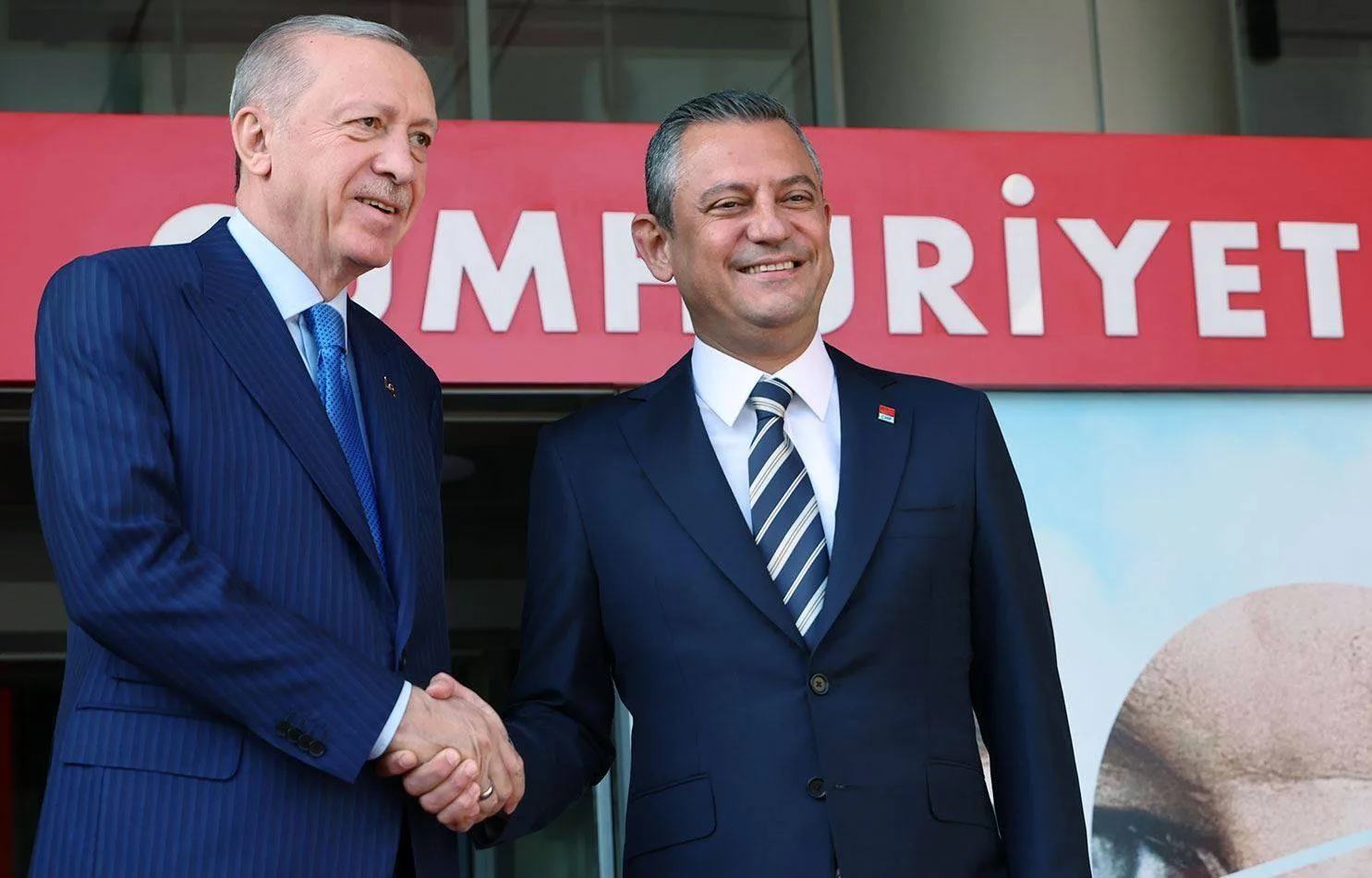
Legally, Ozel can establish a party with a limited number of founders, but the problem goes far beyond that to building a national organization capable of contesting elections, opening branches, attracting members, securing funding, and convincing the traditional Kemalist voter that the new party is not a split that weakens the opposition, but rather a continuation of what he calls the party’s “legitimacy,” which he believes was taken from it.
The parliamentary bloc represents another obstacle. Lawmakers can politically move to a new party without automatically losing their seats, but the cost is high. A lawmaker who defects may be accused, depending on who is judging, either of betraying the mother party or of courageously defending the will of the grassroots. So the matter is not only about the law, but also about public image and the calculations of party loyalty and the next elections.
As for the major municipalities, they are the real heart of any new project. The CHP’s municipal victories in 2024 — especially in Istanbul, Ankara, and Izmir — gave the party an alternative political base and broad popular legitimacy.
If those municipalities remain politically with Ozel, he may possess a solid base even outside the central headquarters. But if they hesitate or split, the new party will look like little more than an elite project without a sufficient local base. That is why the option of founding a new party does not yet appear to be Ozel’s first choice, especially since he has publicly denied any intention to do so and has stuck to the rhetoric of remaining inside the “house of the fathers.”
And the Turkish website T24 reported that the priority for Ozel and his team is not to hand over the party and to “continue resisting from within,” while a new party is viewed only as a last option if the legal and organizational paths are closed off, or if the country heads into early elections while he is outside the party game.
To succeed, Ozel needs clear alignment from jailed former Istanbul Mayor Ekrem Imamoglu and Ankara Mayor Mansur Yavas, in addition to the support of the major municipalities and a weighty parliamentary bloc. He also needs a discourse that does not alienate the traditional Kemalist base, while not closing the door to Kurds, the left, and conservative voters who backed the opposition in the local elections.
Most importantly, he must convince voters that the new party is not a personal project, but an extension of the party they know at a moment of internal deadlock.
2028: A new party or a new opposition?
The question of a new party cannot be separated from the presidential election scheduled for 2028. The crisis is not only about the party’s headquarters or leadership, but about who will lead the opposition in this battle and with what legitimacy.
If Ozel manages to reclaim the CHP from within, he will emerge from the crisis stronger than before and present himself as the leader who defended the party’s will and succeeded in winning it back. In that case, the crisis could turn into political capital, especially if he draws on an angry grassroots base, the major municipalities, and the results of the 2024 elections that gave the opposition an unexpected boost.
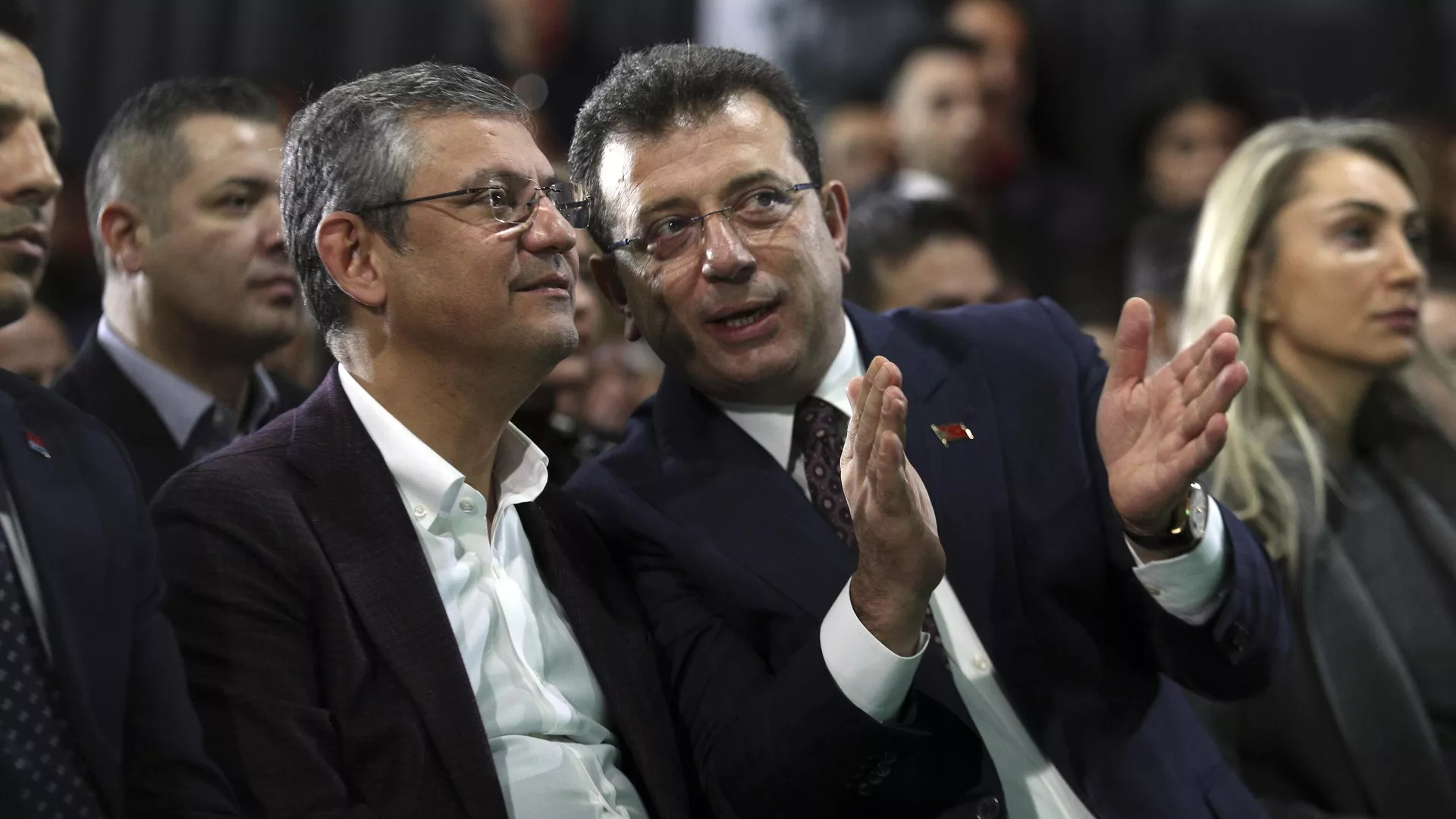
But if Kilicdaroglu’s return is cemented, or if the legal and organizational crisis drags on, the opposition will face a double dilemma: an official party under old leadership, and a broad political bloc leaning toward Ozel, potentially creating competition over legitimacy itself. In that case, the danger will not only be the loss of some votes, but the transformation of the opposition into two rival centers before a presidential battle that requires one candidate, one message, and one organizational machine.
Ekrem Imamoglu remains the most sensitive name in this equation. He has the broadest popular appeal within the opposition, and for years his name has been linked to the possibility of challenging Erdogan. But his legal situation, after his imprisonment and trial on corruption charges, makes his role more complicated and reduces the likelihood of his entering the race himself, while his support for Ozel or for any new framework could become a decisive factor in determining the direction of the opposition base.
Mansur Yavas, meanwhile, represents a different equation. The Ankara mayor maintains a calmer image and enjoys acceptance among nationalists, conservatives, and centrist voters. Therefore, if the party splits, he may try to keep his distance from the conflict, or become a bridge between opposition currents. In either case, no new party can become a serious presidential project without a clear position from Yavas and Imamoglu.
Opinion polls give Ozel an important indicator, but they are not enough to declare the birth of a fully formed alternative. A Metropoll survey, published in the Turkish newspaper Karar, showed that 65.8% of CHP voters said they might vote for a new party led by Ozel, compared with 21.7% for a party led by Kilicdaroglu.
Among the broader electorate, 34.7% said they might vote for Ozel’s potential party, compared with 21.4% for the Kilicdaroglu option, while 40.7% said they would vote for neither. But these figures remain only an indicator of mood at a moment of crisis. Metropoll itself warned that the results in May may differ, meaning that sympathy for Ozel in the poll does not automatically translate into votes on election day, especially if voters feel that a new party could divide the opposition rather than unite it.
Legally, the 2028 file remains open to delicate calculations. If the election is held on schedule, Erdogan’s candidacy for another term would require a political or constitutional way out, such as early elections approved by parliament or a constitutional amendment. For that reason, the CHP crisis is expected to overlap with the calculations of both the ruling camp and the opposition, as each side enters the coming years watching whether the opposition will reach 2028 united or divided.
In that sense, the question is not only about the birth of a new party, but about the Turkish opposition’s ability to turn the CHP crisis into a process of reconstruction, rather than allowing it to become a split that gives its rivals an electoral advantage.