









هذا التقرير متاح أيضًا بـ العربية
In Taiz, the Yemeni city whose residents have borne the largest share of the bitterness of a war that has raged for nearly 11 years, geography no longer appears as mere terrain, but as lines of forced separation and open scars in the body of the city. From east to west, residential neighborhoods stretch across the city, torn by politics and weapons into two halves: a southern part administered by the internationally recognized government, and a northern part under the control of the Houthi group.
These neighborhoods, now known in the Yemeni lexicon as “front lines,” are not merely dividing boundaries, but a belt of fire surrounded on all sides by hills and high ground. On the peaks of those mountains, snipers are stationed, turning any human movement below into a potential target, watching passersby and civilians in transit, so that lives often become prey suspended between one step and the next.
In this fear-saturated space, it takes no more than a small spark for violent clashes involving heavy and medium weapons to erupt without warning. Survival itself thus becomes a daily gamble devoid of the most basic guarantees of safety, an open wager on luck that residents confront bare-chested every day.
From bitter displacement to an even more bitter return
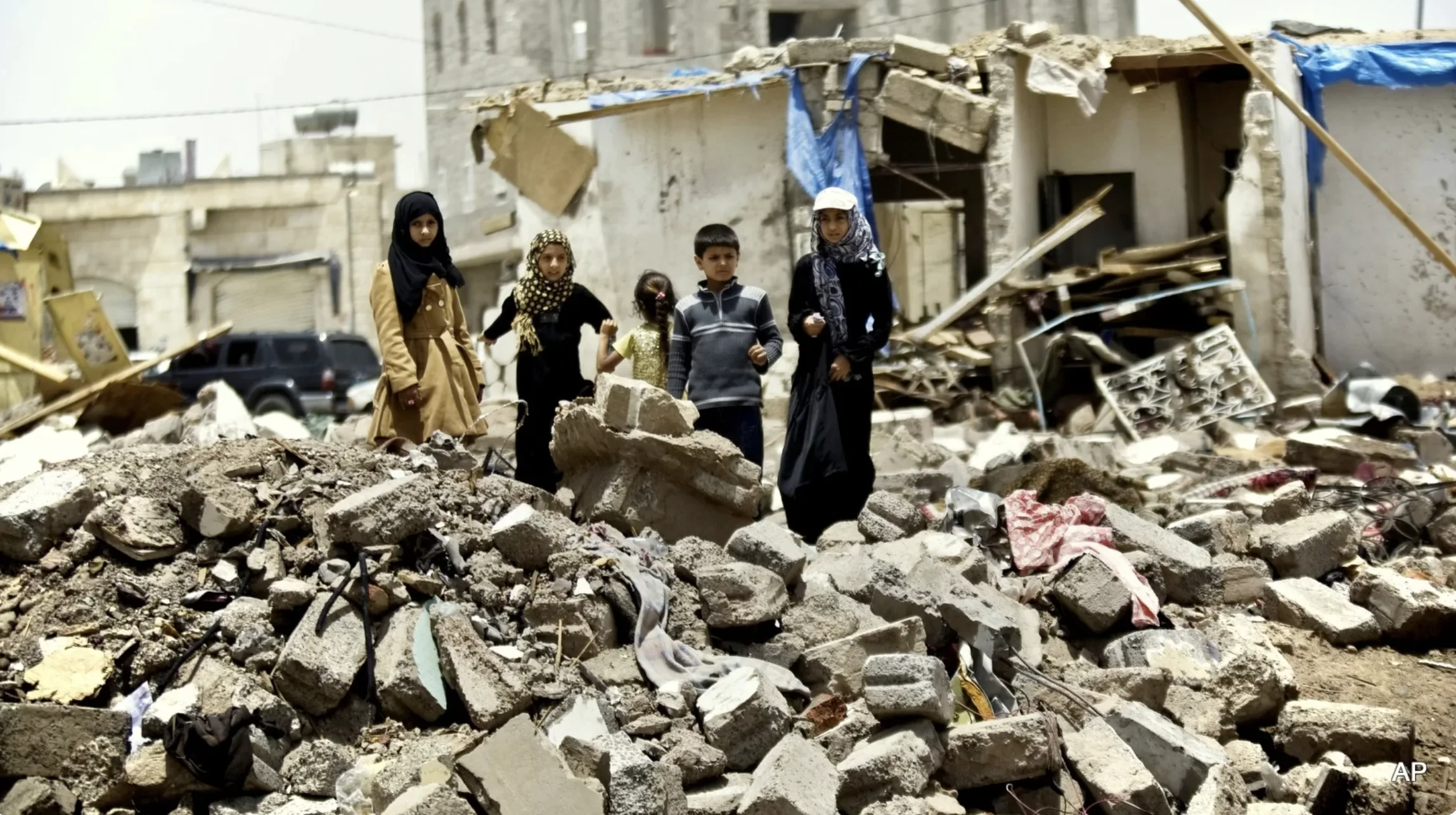
With the first bullets that signaled the outbreak of war, residents of these neighborhoods were forced into mass flight, leaving behind the harvest of their lives and all they had built over many years. They ran under indiscriminate shelling and the din of fighting in search of a safe haven, hoping their absence would be temporary and their return near. But the years of displacement dragged on, and temporary refuge turned into an exile that has lasted more than a decade.
During those lean years, the abandoned homes were far from safe. Many were subjected to systematic looting and theft, with furniture, doors, windows, and electrical wiring stripped away by armed men who exploited the owners’ absence and the lack of oversight.
Today, with the economic crisis deepening, savings eroding, and the ability to bear the burdens of displacement declining, many of these residents have found themselves facing two equally bitter choices: either continue a life of dislocation, with all its poverty, deprivation, and instability, or return to homes exhausted by war and confront a danger still lurking behind every corner and along the front lines.
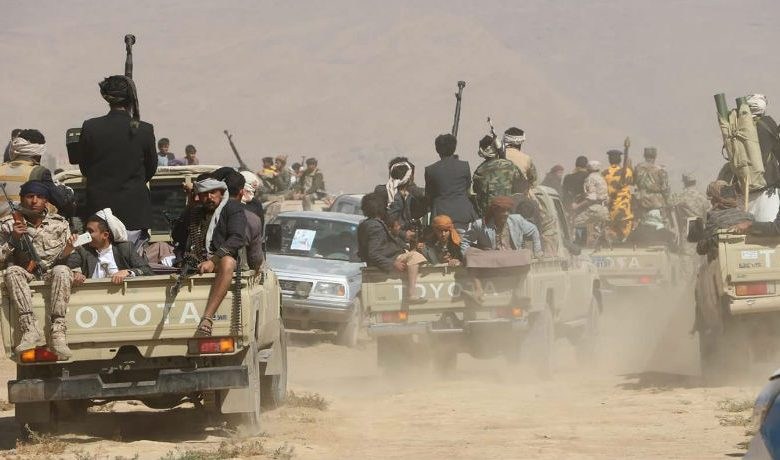
In this context, Abdul Karim Shaiban, a member of parliament and head of the committee negotiating the opening of access routes into Taiz, told Noon Post that the return of some families to frontline areas does not mean conditions have become safe in any sense, but has come as a result of harsh necessity and the absence of housing and livelihood alternatives.
Shaiban explained that the return to those areas remains limited and rare because of the continuing security risks, noting that the war has drained citizens’ savings and led to deteriorating economic conditions, rising prices, and the collapse of income sources and jobs. This has pushed some families to return to homes located in frontline areas despite the dangers surrounding them, because they are completely unable to secure alternative shelter.
He added that many of those returning understand the scale of the danger they face, but are compelled to risk their lives to secure a roof over their children’s heads after years of war and poverty have worn them down and drastically narrowed their options.
MP Abdul Karim Shaiban also stressed that services in Taiz are suffering near-total collapse. He explained that state electricity is absent, water is scarce, and infrastructure is deteriorated, while services are almost entirely nonexistent in frontline areas because of the difficulty of carrying out maintenance work or operating basic facilities amid repeated shelling and the ongoing risk of attack.
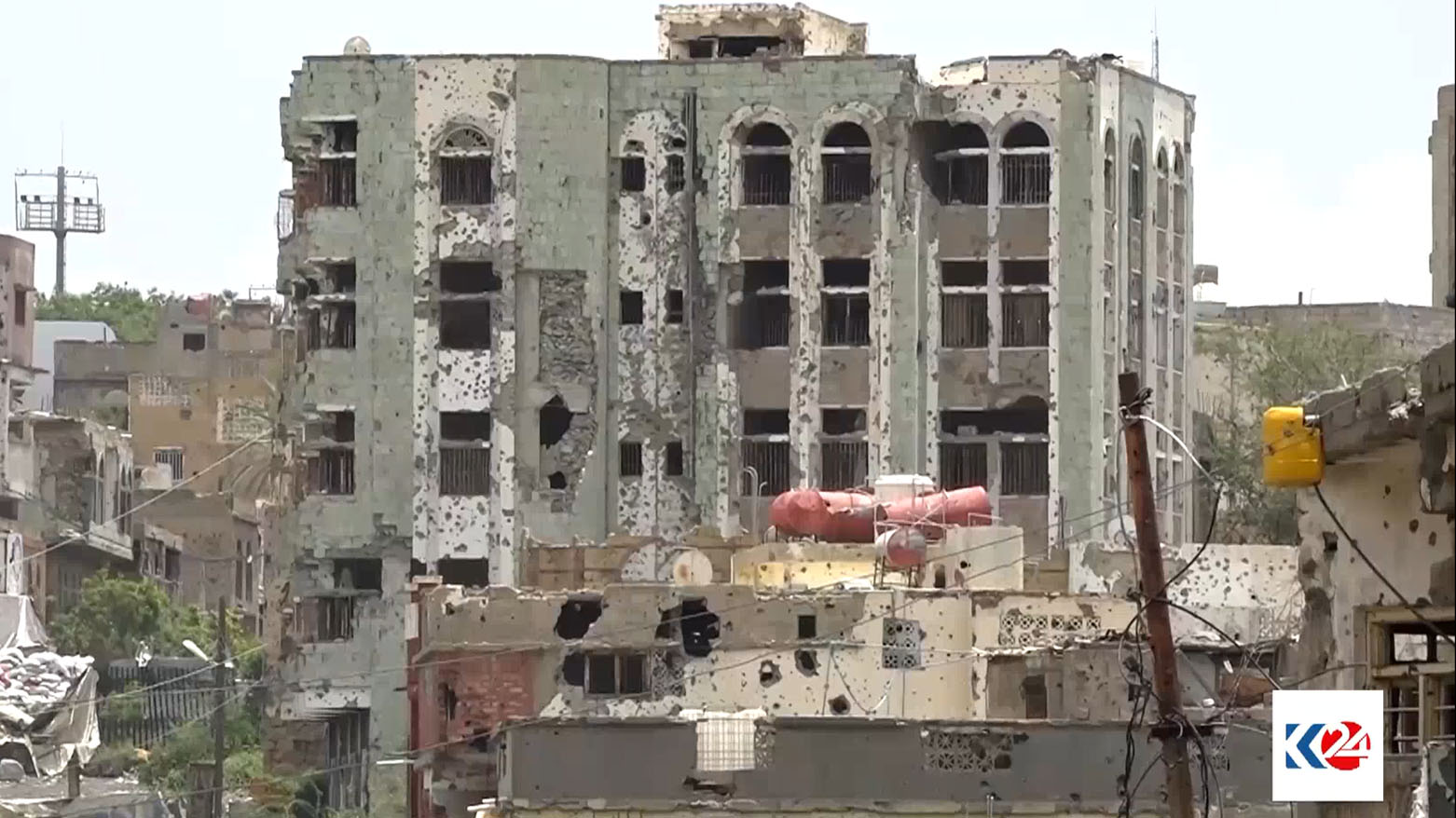
Faced with this grim reality, residents have been forced to devise rudimentary means of adaptation. Solar panels have spread across some rooftops to provide a limited amount of electricity, barely enough to light a bulb or charge a mobile phone.
As for water , it has become a daily financial burden weighing on returning families. Residents rely almost entirely on mobile water tankers, while many drivers refuse to enter these neighborhoods for fear of shells or sniper fire. Some agree to deliver water only in exchange for high fees far above normal prices, compounding the burden on families already living under extremely harsh economic conditions.
The suffering does not stop at the absence of basic services, but extends to efforts to repair what the war has destroyed. When homeowners on the front lines try to restore their damaged houses to make them habitable, they face another obstacle: construction workers and contractors are reluctant to work in these dangerous areas.
In cases where some workers do agree to come, they demand high wages in return for risking their lives, which is beyond the means of many families drained by years of war and displacement.
Abdul Karim Shaiban pointed to the extensive destruction inflicted on buildings along the front lines, explaining that a large number of homes have been completely destroyed or severely damaged as a result of shelling and direct military operations, at a time when many of these areas remain difficult to access for an accurate assessment of losses.
He added that what is currently taking place is largely limited to partial and temporary repairs, such as fixing windows or addressing water leaks and minor damage, while comprehensive restoration remains a perilous option given the possibility that homes could be shelled again at any moment.
Between the guillotine of rent and the fire of the front lines
This insistence on repairs, despite the steep cost and security risks, is not a matter of comfort or choice, but a forced attempt to escape economic pressures no less harsh than the war itself. In the city’s safer neighborhoods, housing rents have reached unprecedented levels, while many property owners, amid the absence of government oversight and fluctuations in the local currency’s exchange rate, have resorted to demanding rent in foreign currencies such as the Saudi riyal or the US dollar.
These economic pressures have placed thousands of families before a brutal equation. While high rents hem them in within safer areas, abandoned homes on the lines of fire, despite the destruction and danger surrounding them, appear to be the only remaining option for preserving a minimum level of stability.
That is why many have returned to their old homes, repeating in different words that staying in their own houses is easier to bear than being unable to secure shelter for their families.
In this context, Munir Hamid Saif, a member of the local council in Sala district and the district’s former director general, told Noon Post that the return of a number of residents to their homes came as a direct result of difficult living conditions and rising rental costs, noting that a broad segment of the population, including some local officials, live in areas close to the front lines.
Recalling his personal experience, he said: “As a local council member and former director general, I also live on the front lines, and we have become accustomed to the sound of bullets and shells. Despite the panic that grips children and families when homes shake from explosions, life goes on, and afterward we return to our daily routines.”
The former local official concluded his testimony by noting that owning a home, even in a dangerous area under threat of snipers and shelling, has become for many families a major advantage compared with the suffering of renting and its high costs in other neighborhoods of the city.
An extended geography of terror
The tragic scene in Taiz’s geography of suspended death does not change much when moving from the east of the city to the west. The tragedy is nearly the same, even if the names and locations of neighborhoods differ. On the western outskirts, residents live under a constant threat no less severe, as Houthi gunmen positioned on the hills overlooking the “Air Defense” area and the extension of “30th Street” continue to repeatedly target civilians.
MP Abdul Karim Shaiban returned to explain the nature of this danger, saying that frontline areas are among the most dangerous in the city, as sniper fire or shooting can begin at any moment and without warning. He pointed to recorded incidents in which civilians were targeted while carrying out simple daily tasks, such as turning on lights in their homes at night or stepping outside to meet basic needs.
He stressed that the proximity and overlap of positions held by the national army and the Houthis in some areas leave civilians trapped in an exposed space between the two sides, increasing the likelihood of direct targeting and making danger a near-constant presence in the details of their daily lives.
At the heart of this suffering stands citizen Mahyoub al-Sharabi, one of the residents still living near the lines of fire in the “Air Defense” neighborhood, as a witness to the daily details of the tragedy his family endures. He told Noon Post: “We had no choice left but to return to our home here in Air Defense. We were left with no way out and found ourselves trapped between two merciless hells.”
He continued, describing life in the neighborhood: “The security threat is still present at every moment because of repeated targeting by Houthi gunmen. At the same time, we live in near-total isolation, as the neighborhood has turned into something like an abandoned area, while basic services are completely absent.”
The effects of this reality do not stop at material losses or security risks, but extend to residents’ psychological well-being. In this context, Abdul Karim Shaiban noted that years of war and siege have left severe psychological scars on civilians, especially women and children, as many residents are forced to remain inside their homes from the evening hours onward for fear of shelling or sniper fire.
He also pointed out that the siege imposed on Taiz has not truly ended, despite the partial opening of some roads in recent years. Movement still faces major restrictions and difficulties, while alternative roads continue to pose risks and witness repeated incidents, adding new burdens to residents’ suffering and deepening their sense of isolation and instability.
In response to these complaints and field-level fears, Col. Abdul Basit al-Bahr, deputy head of the Moral Guidance Division at the Taiz Axis Command, told Noon Post that the city’s security and military agencies are making ongoing efforts to protect civilians returning to areas near the front lines, noting that this task faces complex challenges imposed by the nature of the war and the persistence of Houthi threats.
Al-Bahr explained that the security committee has designated a safe zone ranging from 800 meters to 1 kilometer from the direct lines of confrontation, stressing that areas within that distance are classified as extremely dangerous because of the possibility of sniper fire, shelling, or sudden clashes.
He added that the relevant authorities have put in place a set of measures and field plans aimed at protecting residents and reducing risks, while recognizing at the same time that humanitarian and economic pressures are driving many families to return despite their awareness of the scale of the threats surrounding them.
This military assessment aligns with the view put forward by MP Abdul Karim Shaiban, who stresses that any return to frontline areas does not mean there are real guarantees of safety. The field situation, he said, remains volatile and liable to deteriorate at any moment, while government forces are trying to dissuade residents from living in areas directly facing the lines of engagement in order to protect their lives. But the necessities of survival often outweigh security warnings.
The absence of budgets and field complications
In the context of documenting the repercussions of war and siege in Taiz province, Khaled Alwan al-Asbahi, director general of the Central Statistical Organization in the province, told Noon Post that the agency conducted a field study in 2021 focused on assessing the effects of the siege on government institutions and offices.
Al-Asbahi noted that the other part of the study, related to social surveys and documenting damage to homes and private facilities, stalled because of the lack of necessary funding and support, especially in the absence of an independent operating budget for the agency. He added that carrying out such studies in Taiz requires broad coordination and special field procedures because of the complex security risks in frontline areas, including sniper fire, land mines, and difficulty accessing some sites.
Al-Asbahi stressed that Taiz today, more than ever, needs a comprehensive study documenting the scale of destruction inflicted on infrastructure, homes, and civilian facilities, emphasizing that such work requires financial and technical support, along with broader partnerships among the relevant parties to ensure the production of accurate data that reflects reality as it is.
Until then, many of Taiz’s residents remain trapped between a war that has not yet ended and an economic reality that grows tighter by the day. They live inside homes marked by bullet holes and shell fragments, confronting each day a brutal equation imposed by both geography and war. Between cracked walls, absent services, and unrelenting danger, the lives of thousands of families remain suspended between temporary survival today and a threat that may come knocking tomorrow.