














As the U.S.-Israeli war on Iran enters its fourth week, Western intelligence assessments claim that thousands of airstrikes have “successfully” wiped out much of the surface infrastructure of Iran’s missile program.
Yet a striking military paradox has emerged: ballistic missiles continue to be launched from beneath the ground, albeit at a sharply reduced pace compared to the early days of the war. This has once again drawn attention to Iran’s so-called “missile cities.”
What are Iran’s “missile cities”?
The term “missile city” first appeared in the mid-2000s, when the Islamic Revolutionary Guard Corps (IRGC) revealed for the first time a network of deep tunnels used to store ballistic missiles, some of which could also be launched from within.
From the outset, the disclosure served both deterrent and propaganda purposes, as Tehran promoted the idea that such underground facilities existed in every province.
Over time, the term has come to encompass a range of facilities rather than a single fixed model. Some function solely as storage depots and transport tunnels, while others house launch platforms and command rooms embedded within mountains.
Certain coastal locations, such as Qeshm Island, have been designated for anti-ship cruise missiles, in line with Iran’s capacity to threaten navigation in the Strait of Hormuz.
Until the outbreak of the current war, Western and Israeli estimates pointed to around 24 missile sites in western Iran, distributed across tunnel complexes. Western correspondents also confirmed at least five known sites in Kermanshah, Semnan, and near the Gulf.
Israeli strikes on above-ground facilities in 2024 pushed Tehran to double down on investment in underground infrastructure to reduce vulnerability to attack.
Despite variations in size, “missile cities” share core features. According to an assessment by the Jewish Institute for National Security of America (JINSA), these complexes are typically located in mountainous terrain in western Iran and include multiple प्रवेश points that allow vehicles to move launch platforms in and out rapidly.
In larger complexes, such as the Konsh Canyon near Kermanshah, dozens of tunnels extend some reaching a kilometer or more in length housing storage halls for mobile missile launchers, along with vehicles dedicated to warheads and fuel.
In Hajiabad, in Hormozgan province, the same report identified rotating missile racks that enable rapid reloading, facilitating sustained and continuous launch capability.
Western reports have also indicated that some mountain-dug bases may reach depths of up to 500 meters below ground, housing storage facilities and launch platforms for missiles such as Shahab-3, Sejjil, and Khorramshahr. Such depth complicates targeting the internal cavity with bunker-buster bombs, though it does not prevent strikes on entrances.
On the other hand, security experts have criticized aspects of these facilities’ design. Storing missiles and their warheads in long, connected tunnels without blast-resistant partitions or isolation doors could turn a single successful penetration into a chain of internal explosions.
Iranian media has also published material showing underground naval bases near the Strait of Hormuz, believed to be connected to coastal launch sites for cruise missiles targeting ships, making them harder to detect from the air.
Nevertheless, Western sources such as the Foundation for Defense of Democracies argue that part of this image falls within the realm of psychological warfare, noting that many tunnels’ exact locations and functions remain unknown.
How protected are they?
Despite extensive defensive measures, recent attacks suggest that the design of “missile cities” does not protect all components equally. Supporting facilities outside the mountains such as fuel depots, supply stations, and transport infrastructure remain relatively exposed.
The core challenge is not always penetrating the mountain itself, but disabling its use. Drones and precision-guided munitions can seal entrances or destroy mobile launchers and supply infrastructure, which may be sufficient to halt missile operations without destroying the internal cavity.
Analysts warn that destroying a main entrance could turn a facility into a tomb for missiles and vehicles. Reuters recently reported that Iran buried tunnels around nuclear sites such as Isfahan and Natanz to absorb strikes making access more difficult, but also potentially isolating the contents.
The length and multiplicity of tunnels can also be a double-edged sword. Precision strikes may cause internal collapses, sever supply lines, and trap vehicles. Still, disabling a facility does not necessarily mean its total destruction.
According to experts at the Center for Strategic and International Studies (CSIS), “hunting missiles” from the air remains an extremely complex task. Even if bunker-buster bombs inflict damage, confirming total destruction often requires ground operations.
The Israeli military acknowledges that striking underground facilities is far more difficult than destroying surface bases, as it requires precise knowledge of entry and exit points. Targeting tunnels also demands repeated strikes to prevent reopening.
The challenge is compounded by the limited number of deep-penetration munitions such as the GBU-57, required to reach significant depths. This difficulty stems from the design itself, which relies on two core principles:
-
Burial: leveraging rocky terrain to absorb blast waves
-
Distribution: dispersing assets across multiple sites to prevent a single strike from eliminating them
Entrances are carved into mountain slopes and often concealed with rock-like doors or winding access routes. Iran also constructs hidden secondary entrances for emergency use, with doors operated remotely and reinforced with thick steel walls.
Inside these networks are side roads for vehicle movement, as well as command rooms and storage areas for supplies and rocket fuel. Spain’s El País has reported the presence of powerful ventilation systems to prevent exhaust buildup and avoid thermal detection by satellites.
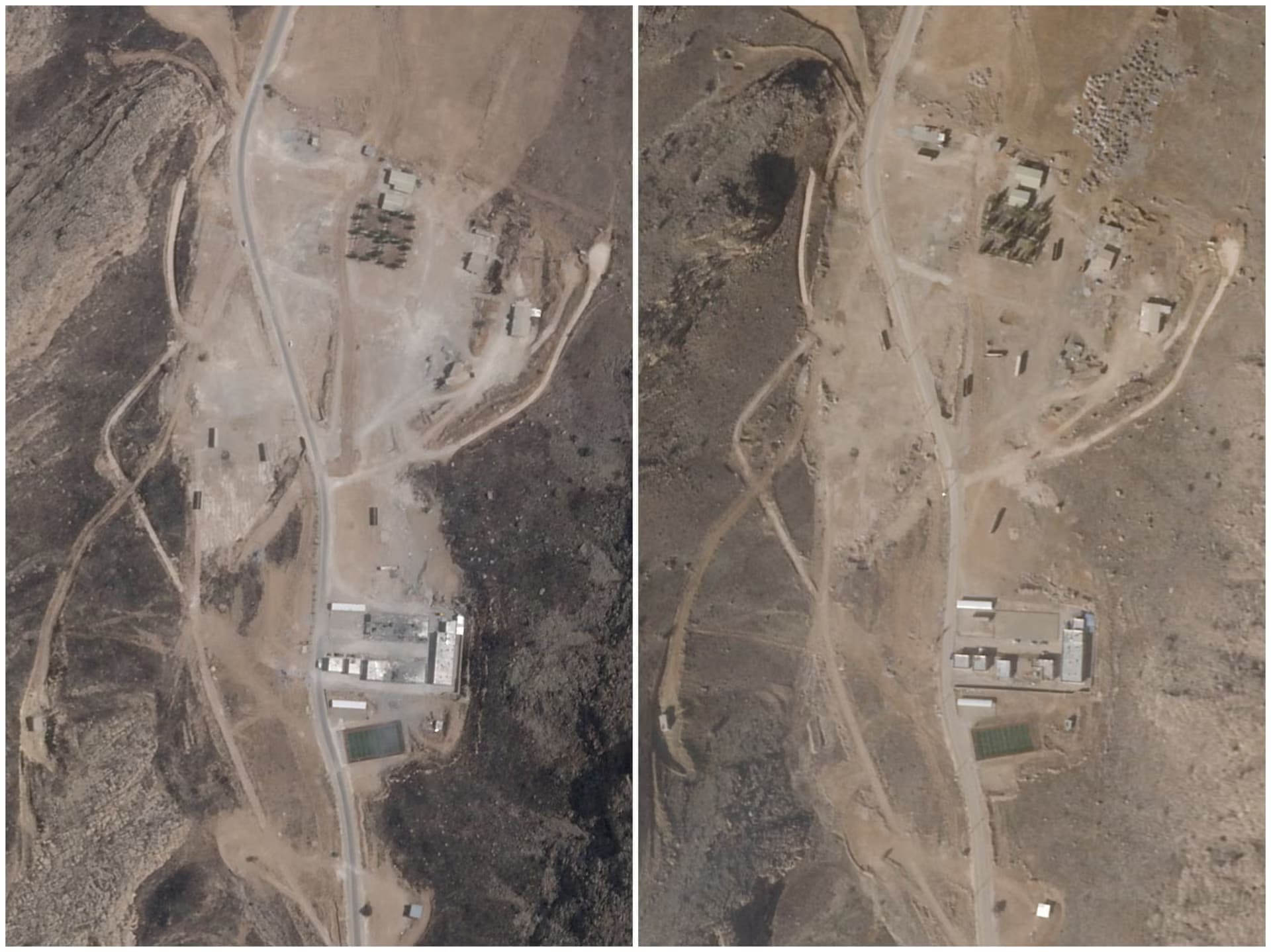
Following the 2025–2026 strikes, satellite imagery showed Iran burying tunnel entrances at nuclear and missile facilities and adding concrete barriers above some of them.
Reuters also reported that after 2024, Iran built a massive concrete dome over one facility to cover a new opening an attempt to absorb bomb impact and redirect blast force sideways.
What has the 2026 war revealed?
At the outset of the current conflict, U.S. and Israeli strikes focused heavily on missile launch and storage facilities in western and northern Iran.
A report by Israel’s Alma Research Center revealed that bases in Khorgo, Isfahan, Khorramabad, and Tabriz were subjected to intense strikes that destroyed entrances and surface infrastructure. The Tabriz base reportedly contained an older tunnel network that had been refurbished in 2025.
Satellite images published by Radio Free Europe showed that tunnel entrances at the northern Tabriz base had completely collapsed following strikes on March 1 apparently aimed at preventing missile launches.
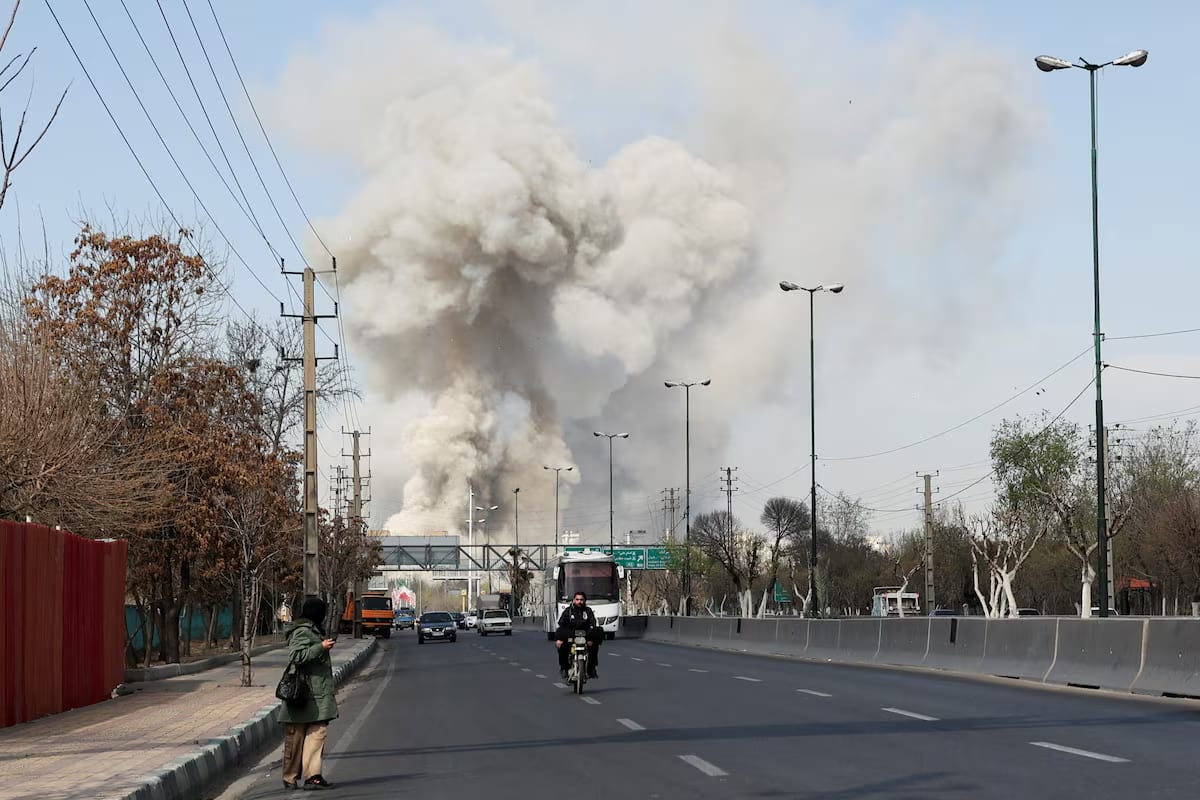
The ACLED data project recorded the use of B-1 and B-2 bombers by U.S. forces to strike “fortified underground missile facilities” during the first week of the war, while other raids targeted storage sites and launch platforms across roughly 26 provinces.
By the third week, the pace of Iranian missile and drone launches toward Israel and Gulf states had declined, according to Reuters, after launch sites and infrastructure were degraded.
The Israeli military also announced for the first time that it had struck an “underground missile storage site,” signaling that the war had penetrated deep into the tunnel network.
The U.S. Department of Defense claimed that ballistic missile launch rates dropped by nearly 90% compared to the early days of the war following the destruction of launch platforms and logistical support, forcing Iran to rely more heavily on drones.
From a strategic perspective, “missile cities” have reshaped the nature of Iran’s threat in recent years. By moving its arsenal underground and dispersing it across a complex network, Iran has made it significantly harder to neutralize.
These facilities provide survivability after a first strike and give Iranian leadership greater confidence in mounting a second response enhancing deterrence against adversaries. Underground bases near the Strait of Hormuz also enable threats to maritime navigation, raising the cost of any attack.
However, the current war has exposed the limits of this model for several reasons:
-
Not all facilities are unknown; Western sources had already identified sites in Kermanshah, Semnan, and the Gulf, with others pinpointed via satellite imagery.
-
The ability to strike supporting infrastructure and entrances has proven that disabling operational use may suffice without destroying tunnels.
-
Some tunnel designs may represent a vulnerability if a single breach triggers a chain explosion.
-
Reconstruction is costly; Reuters noted that Iran rushed to repair some tunnels after strikes but required significant engineering effort and time.
Finally, observers believe that U.S. and Israeli superiority in intelligence and surveillance allows them to track launcher movements and intercept communications, reducing the suprise and turning “missile cities” into part of a fast-evolving battlefield rather than an absolute safe haven.


