






هذا التقرير متاح أيضًا بـ العربية
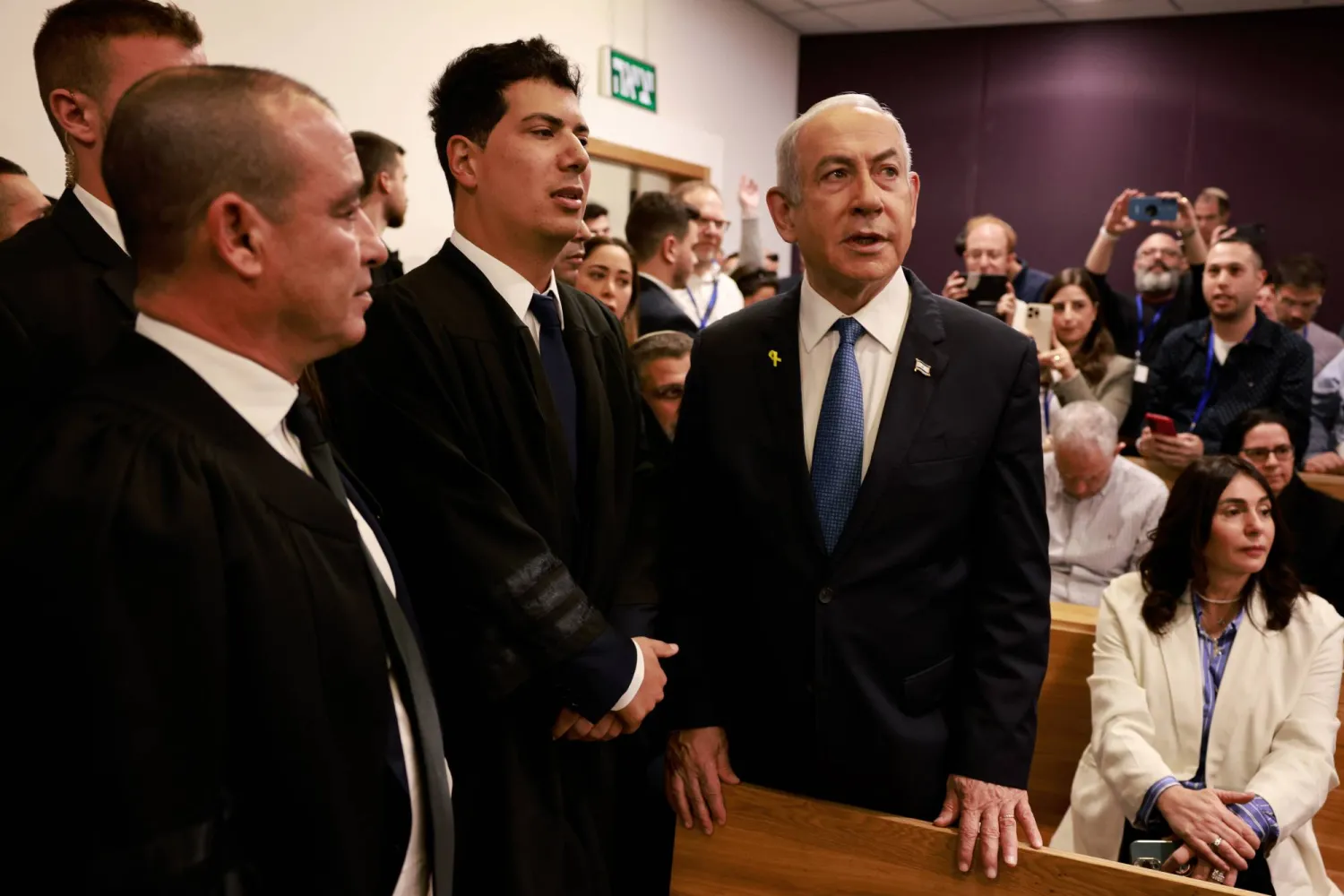
For years, charges of bribery, fraud, and breach of trust have dogged Israeli Prime Minister Benjamin Netanyahu, but the scene today is no longer merely a legal dispute within the halls of the courtroom.
There are now discussions about the possibility of turning a presidential pardon request into a legal-political settlement track that would lead to ending Netanyahu’s trial and removing him from political life.
So far, this file is moving in a gray area: neither a direct pardon nor a final rejection, but rather an attempt to push the parties toward negotiations at a highly sensitive electoral moment.
What’s new in Netanyahu’s case?
Recent Hebrew leaks say that Israeli President Isaac Herzog is refusing to issue an immediate decision on the pardon request Netanyahu submitted at the end of 2025, insisting instead on exhausting efforts to reach a plea deal before making any decision.
At the end of April, the newspaper Israel Hayom explained that the call to open mediation talks does not bind any party, and that the trial is continuing in parallel, according to messages sent by the president’s legal adviser to the lawyers.
Media outlets carried varying leaks about this move. The New York Times said Herzog had decided not to grant a pardon and was instead seeking to mediate a deal.
The Hebrew outlet Walla also confirmed that the Israeli president had not promised any pardon and believes the talks could ease political polarization. As for the outlet “Srugim“, it repeated that the presidency sees reaching an agreement as a prelude to considering the request.
By contrast, the newspaper “Globes” reported that Attorney General Gali Baharav-Miara informed the president of her readiness to begin talks without preconditions and without delaying the trial, which was confirmed by The Jerusalem Post, which noted that the prosecution wants dialogue on the condition that court hearings continue.
On the official side, the pardon department at the Justice Ministry issued a memorandum clarifying that Netanyahu’s request does not meet the conditions because it was submitted before a final ruling and without an admission of guilt or remorse, a legal position that strengthens the presidency’s argument for not making a decision now.
Meanwhile, Yedioth Ahronoth and Channel 12 reported that the Israeli president sees his mediation as an attempt to reduce social and political tensions, but understands that the road to an agreement is still long, because Netanyahu still refuses to admit guilt and the prosecution insists on a “moral turpitude” finding.
How difficult is a deal?
The difficulty lies in the difference between a presidential pardon and a plea deal. The former is an exceptional measure that comes after a final judgment, under which the ruling is canceled or the sentence reduced. Traditionally, a pardon requires an admission of guilt and remorse.
Granting it to someone who has not yet been convicted would also be a dangerous precedent, which is why the pardon administration rejects the current request due to the absence of both conviction and confession. A plea deal, by contrast, is an agreement between the defendant and the prosecution in which the former admits guilt in exchange for a reduced sentence or the dropping of some charges.
In Netanyahu’s case, legal sources indicate that any deal would include a “moral turpitude” finding, a judicial determination that the offense carries a morally disgraceful character, barring the person who receives it from holding public office for at least seven years.
Netanyahu is seeking to avoid that stigma because he sees it as ending his political career, but former Attorney General Avichai Mandelblit made clear that a deal without such a finding is out of the question.
There is also a proposed “exit” arrangement under which Netanyahu would commit to retiring from public life in exchange for a pardon or a halt to the trial, a proposal that is more political than legal.
The law does not provide for the possibility of trading a pardon for retirement, and it also raises questions about the legitimacy of binding Herzog to a deal of this kind. It could be seen as interference in the will of voters.
Politically, Netanyahu insists on his innocence and describes his trial as an “attempted coup” by the judiciary and some of his rivals. So far, he has not publicly expressed acceptance of any deal involving either an admission or an exit from political life.
By contrast, opposition leader Yair Lapid said that any pardon must be preceded by an admission of wrongdoing, an expression of remorse, and the imposition of moral turpitude, otherwise it is unacceptable. Meanwhile, former Prime Minister Naftali Bennett announced that he would support a pardon if Netanyahu leaves political life “to turn the page on division.”
On the other hand, the prosecution opposes any delay or suspension of the trial and insists that hearings continue even if negotiations begin, putting pressure on Netanyahu as the court proceeds slowly but steadily.
Why has the case been reopened now?
The timing factor adds enormous pressure to the case. The official date for the next elections was set for October 27, 2026, but media reports said Netanyahu is considering moving them up to June 2026 to secure political gains, perhaps to reap the benefits of expected diplomatic agreements with new countries.
That is why the approaching elections make the pardon file a thoroughly political deal, because any settlement could alter the map of competition.
Recent polls show a close picture. A poll by Kan gave Netanyahu’s camp 52 seats, compared with 58 for the opposition camp and 10 for Arab parties, meaning there is no clear majority without Arab support (61 seats are needed to form a government).
Another poll by Maariv gave the opposition 61 seats without the Arabs, with Likud (Netanyahu’s party) and the joint “Together” party of Bennett and Lapid tied at 24 seats each. These figures show that both camps remain far from decisively winning the race, and that a few seats could change the outcome.
These balances reinforce the importance of Netanyahu’s legal case in the political arena, as the unification of Bennett and Lapid with former Chief of Staff Gadi Eisenkot under the “Together” list indicates an attempt to run as a new bloc capable of competing with Likud, while Yisrael Beiteinu leader Avigdor Lieberman is considering joining them to form a broad front.
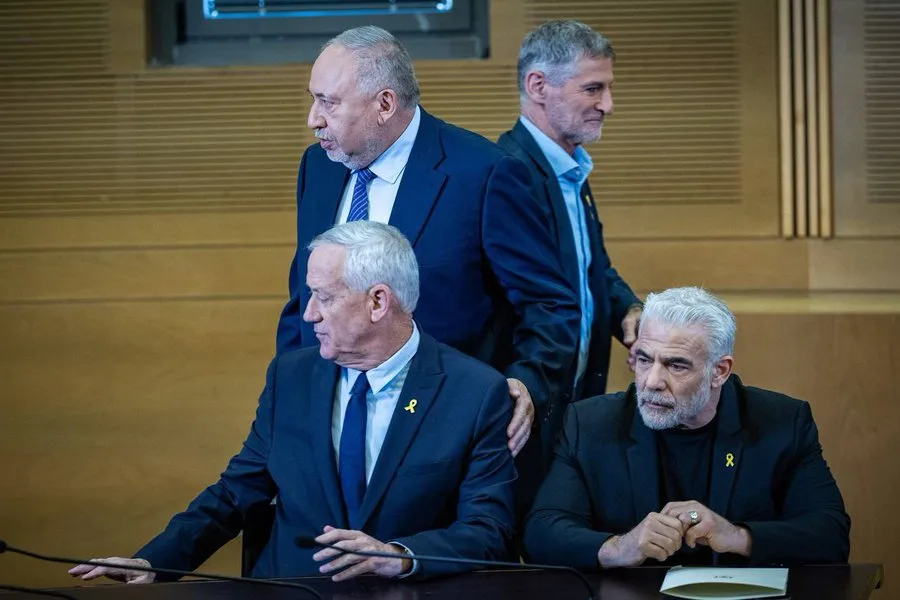
For the opposition, any deal that prevents Netanyahu from running in the elections represents a golden opportunity, which is why they insist on the condition of admission and retirement.
On the other side, Netanyahu uses the continuation of his trial to mobilize his base. His preferred narrative is that the judiciary, the media, and the elite are trying to bring him down through “fabricated cases,” reinforcing a sense of victimhood among his supporters.
That is why a pardon or plea deal involving moral turpitude or a political exit could be interpreted within Likud as submission and concession, potentially weakening morale.
As for the continuation of the trial without a deal, it gives him a platform to attack his rivals and rally his audience even if the verdict remains unknown. The issue is therefore no longer merely legal; it has become part of the battle over who enters the elections and who is forced out of them.
What are the main scenarios?
1- The trial continues and Netanyahu enters the elections under legal pressure: this is the most likely scenario so far.
In this scenario, Netanyahu refuses to confess and the trial continues, while a verdict may be issued after the elections, allowing him to run while facing an indictment.
2- A plea deal with an admission: this would happen if Netanyahu agrees to admit guilt and accept a moral turpitude finding that would remove him from politics for seven years.
This would settle the case quickly, but it would mean a temporary exit from the political scene. So far, neither the government nor Likud has shown signs of accepting this scenario.
3- A pardon or conditional settlement: this is being proposed by some politicians such as Bennett, and is based on Netanyahu retiring from political life in exchange for a pardon.
However, this option is not based on any clear legal text and may face judicial objections, while neither Herzog nor the prosecution has announced any willingness to discuss it officially.
4- Mediation fails and the case turns into election fuel: talks may stall because of the prosecution’s insistence on moral turpitude and Netanyahu’s refusal to confess, with each side then using the case as an electoral weapon.
Here, the opposition exploits “Netanyahu’s stubbornness” to portray him as clinging to power, while Likud stresses that the judiciary is politicized.
5- A gray settlement: an unusual solution involving reduced charges or delaying the trial without a moral turpitude finding, a scenario observers see as weak because of the prosecution’s opposition and its legal complications.