













هذا التقرير متاح أيضًا بـ العربية
Alaa, a forty-year-old Egyptian worker in Kuwait, did not expect the repercussions of the American-Israeli war against Iran to spill over into his daily life and threaten the future he had long dreamed of. He suddenly found himself facing two harsh choices: either give up his job or keep it in exchange for a salary cut. He was not alone in this predicament; the decision affected more than 150 expatriate workers of various Asian and Arab nationalities employed by the same company.
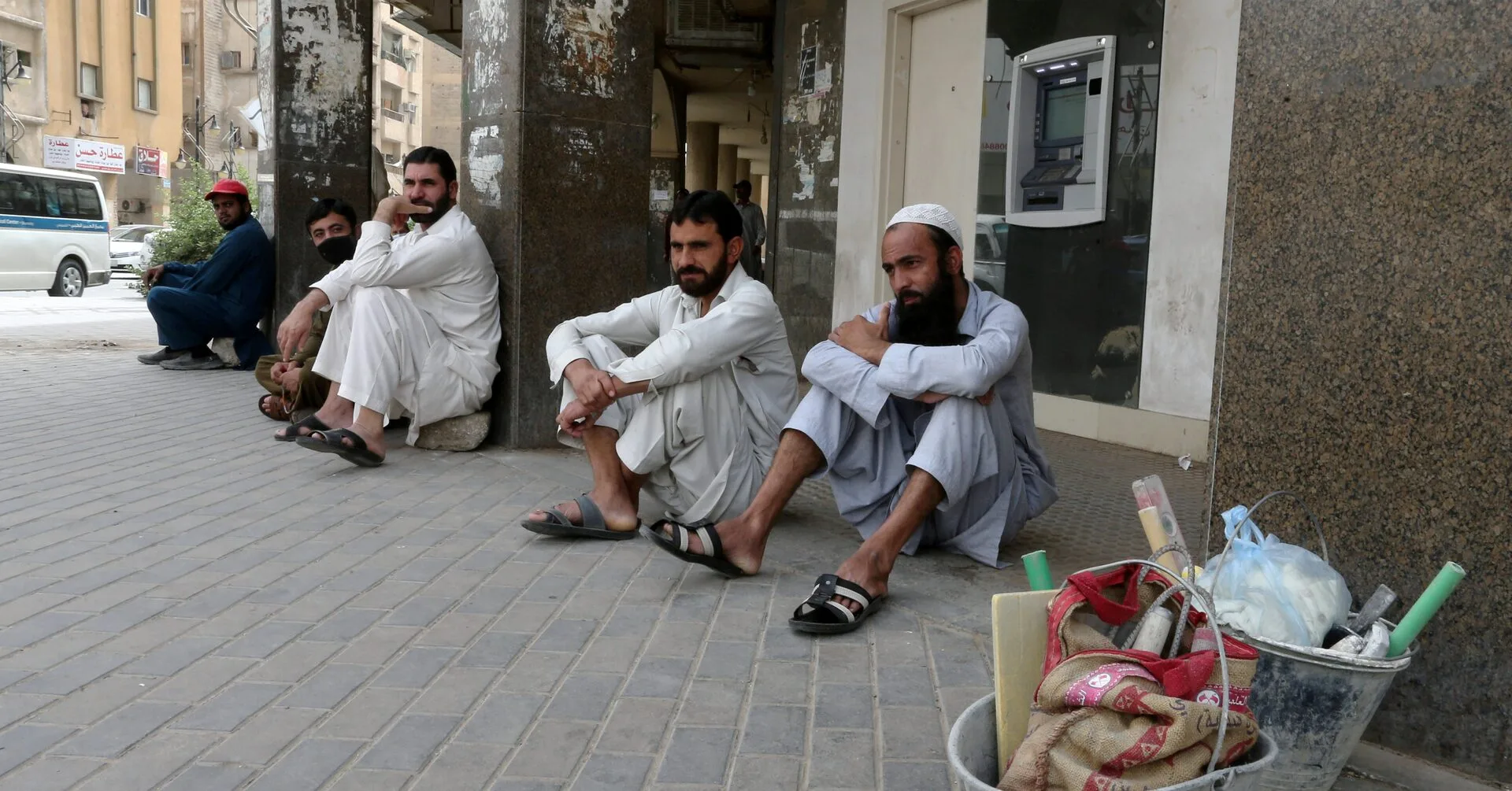
The effects of this war, which has been raging since late February, have not stopped at the military, political, or even economic level, nor have they been confined to its direct parties. In the Gulf states, they have extended to around 35 million workers expatriates who suddenly found themselves at the heart of a crisis they did not choose, but which imposed itself on their lives and stability.
The suffering is worsening day by day, and fears are growing over the loss of jobs that, for many, represent a source of security for their families back home. Between the pressure to accept wage cuts or leave involuntarily, these workers are left facing difficult choices, none of which seem satisfactory or acceptable. Complex calculations are confronting expatriate labor with an unprecedented reality of challenges, raising broad questions about the future of millions of foreign families in the Gulf who depend on these jobs to make ends meet.
3.5 Million Jobs at Risk
The report issued by the “United Nations Development Programme,” titled “Military Escalation in the Middle East: Economic and Social Implications for the Arab States Region” paints a troubling picture of the war’s repercussions, predicting a severe shock to labor markets in the Gulf states. According to estimates, around 3.5 million people could lose their jobs, with unemployment rates rising by nearly 4% and close to 4 million more people falling into poverty.
The losses do not stop at the labor market. The report indicates that Arab economies could incur losses ranging from $120 billion to $194 billion, with the Gulf states bearing the largest share, between $103 billion and $168 billion in GDP losses. It warns that the repercussions will not remain merely economic, but will extend deeply into social conditions and living standards.
The estimates reveal ongoing economic bleeding, with monthly Gulf losses ranging between $75 billion and $80 billion as a result of blows to vital sectors such as oil, gas, tourism, and aviation. Unemployment rates in the Gulf states are also expected to rise by between 3.6% and 9.4%.
At the heart of this complex equation stand around 35 million foreign expatriates in the Gulf states, making up more than 40% of the total population. This percentage rises sharply in some countries, such as the UAE, where it reaches 74%, and Qatar, where it stands at 76.7%, making them the most affected by any economic or social turmoil hitting the region.
Between Deportation and Wage Cuts… War Alarms Expatriates
In the first days after the outbreak of the war, expatriates in the Gulf reacted with no more than the usual concern over the possible closure of airports or delays to travel plans back home. But as the conflict continued and its economic repercussions on the region’s countries widened, that concern gradually turned into deep fear over job security and living stability.
Ahmed Attia (40), an Egyptian engineer working in Saudi Arabia, says the first signs of impact began to emerge about two weeks ago, when company management informed them that some projects would be temporarily suspended pending how the situation developed. It did not stop there; it was also decided that only the basic salary would be paid, amounting to half or less of the total monthly income he had previously received.
Attia told Noon Post that this measure was not an exception but had spread to dozens of companies, especially in areas such as NEOM and the Eastern Province. He stressed that a state of anxiety now dominates expatriate workers there, prompting some to make difficult decisions, including sending their families back to their home countries, such as Egypt and India, in anticipation of harsher developments.
The situation is not much different for Noor, an Indian programmer working for a company in Kuwait. He explains that just two weeks after the war broke out, his company’s management moved quickly to cut salaries significantly, especially with the shift to remote work.
The Indian programmer told Noon Post that this decision has increased the suffering of employees of all nationalities, including Kuwaitis themselves, amid the sharp rise in living costs, from rents to essential goods, which have seen clear jumps across the Gulf since the crisis began.
In the same context, a number of expatriate workers told Noon Post in similar accounts that the message they received from their company management was clear and direct: either accept austerity measures, including cuts to salaries and incentives, or face the option of leaving. Between the two, many found themselves forced to accept the reality, despite growing concern over the continuation of the war and the repercussions it may bring, which could ultimately force them to depart without any real alternatives.
Decline in Expatriate Remittances
Economic experts believe that the slowdown the war has imposed on growth rates in Gulf economies, along with the losses suffered by key sectors and the accompanying austerity measures, will directly affect the income and wages of expatriate workers. Accordingly, it is expected that their financial remittances abroad will be affected, with forecasts pointing to a noticeable decline in the coming period.
Remittances from expatriate workers in the Gulf states are estimated at more than $130 billion annually, led by Saudi Arabia at around $44.1 billion, followed by the UAE at $38.5 billion, then Kuwait at about $8.28 billion. Meanwhile, India tops the list of recipient countries for these remittances, with transfers from Indian workers abroad reaching nearly $125 billion in 2023, according to World Bank estimates.
These remittances are of enormous importance, as they represent the main—and sometimes only—source of income for tens of millions of families in labor-exporting countries. Therefore, any decline in them would have direct repercussions on living standards and could intensify the economic and social pressures on those families.
In sum, despite the negative repercussions affecting expatriate labor in the Gulf states, the current impact remains relative and manageable if conditions improve and regional escalation is contained. However, the continuation of the war and the widening of its scope would significantly intensify the pressure, potentially leading to a deeper wave of job losses and income erosion, placing millions of workers and their families behind them in the face of real economic risks.
The repercussions do not stop at expatriate labor, but extend to the economies of labor-exporting countries, which rely heavily on these remittances as a major source of foreign currency, in addition to their role in easing pressure on local labor markets. Accordingly, any sharp and prolonged decline in these remittances could negatively affect financial stability and living standards in those countries, adding a broader regional dimension to the cost of the conflict.