
هذا التقرير متاح أيضًا بـ العربية
Since last March 2026, Lebanon has entered a path considered among the most complex in its modern history, especially in the period following the end of the civil war, when sensitive equations and temporary settlements were formed on which a political system heavily influenced by the region was built, one that has constantly turned into an arena for the intersection of the interests of regional and international players.
The current political and field test carries a high level of complexity, as the equations that governed Lebanon for decades come under unprecedented pressure. This intersects with the official side’s effort to move forward on a political path that could lead to new arrangements, at a time when it is opposed by a major Lebanese party represented by Hezbollah, which views these transformations as an encroachment on its position and role.
At the same time, the party is moving to redefine the rules of engagement with “Israel”, alongside reorganizing its political presence, in an attempt to restore the balances that existed before October 7, 2023, within a rapidly changing regional environment whose effects are reflected across the broader balance of the Middle East.
Amid this entanglement, Lebanon’s memory remains burdened with difficult milestones that offer clear examples of where political disputes can lead when they exceed the bounds of internal consensus or are managed through unilateral tracks. In this context, “Israel” is working to exploit internal differences within an approach backed by U.S. pressure and escalating regional influences, complicating the paths of dialogue and pushing toward higher levels of tension in an environment whose outcomes are difficult to predict.
The complex balance: How was the weapons file managed in Lebanon?
The issue of weapons in Lebanon constitutes one of the key entry points to understanding the structure of the political system in the post-civil war period, which ended with the signing of the Document of National Accord on October 22, 1989, after negotiations held in the Saudi city of Taif under Syrian-Saudi mediation, bringing to an end a war that had lasted fifteen years.
In its explicit text, the agreement contained a clear clause: “the announcement of the dissolution of all Lebanese and non-Lebanese militias and the surrender of their weapons to the Lebanese state within six months.” However, practical implementation produced an exception that shaped what followed, as the state found itself facing a field reality represented by the continuation of the “Israel”i occupation of the south, at a time when Hezbollah was engaged in armed confrontation on that front. Within this context, the distinction took shape that governed the Lebanese scene for decades by keeping Hezbollah’s weapons as those of a “resistance force,” not a militia, with its role confined to confronting the occupation in the south.
Hezbollah relied on the literal text of the agreement to justify this with one exception, as the document ratified by Parliament on November 5, 1989 stated: “Taking all necessary measures to liberate all Lebanese territory from “Israel”i occupation and extend the sovereignty of the state over all its lands.” As implementation began, the party’s weapons were dealt with within this framework, based on the continuation of the occupation, which entrenched the distinction between the weapons of political parties and the weapons of the resistance.
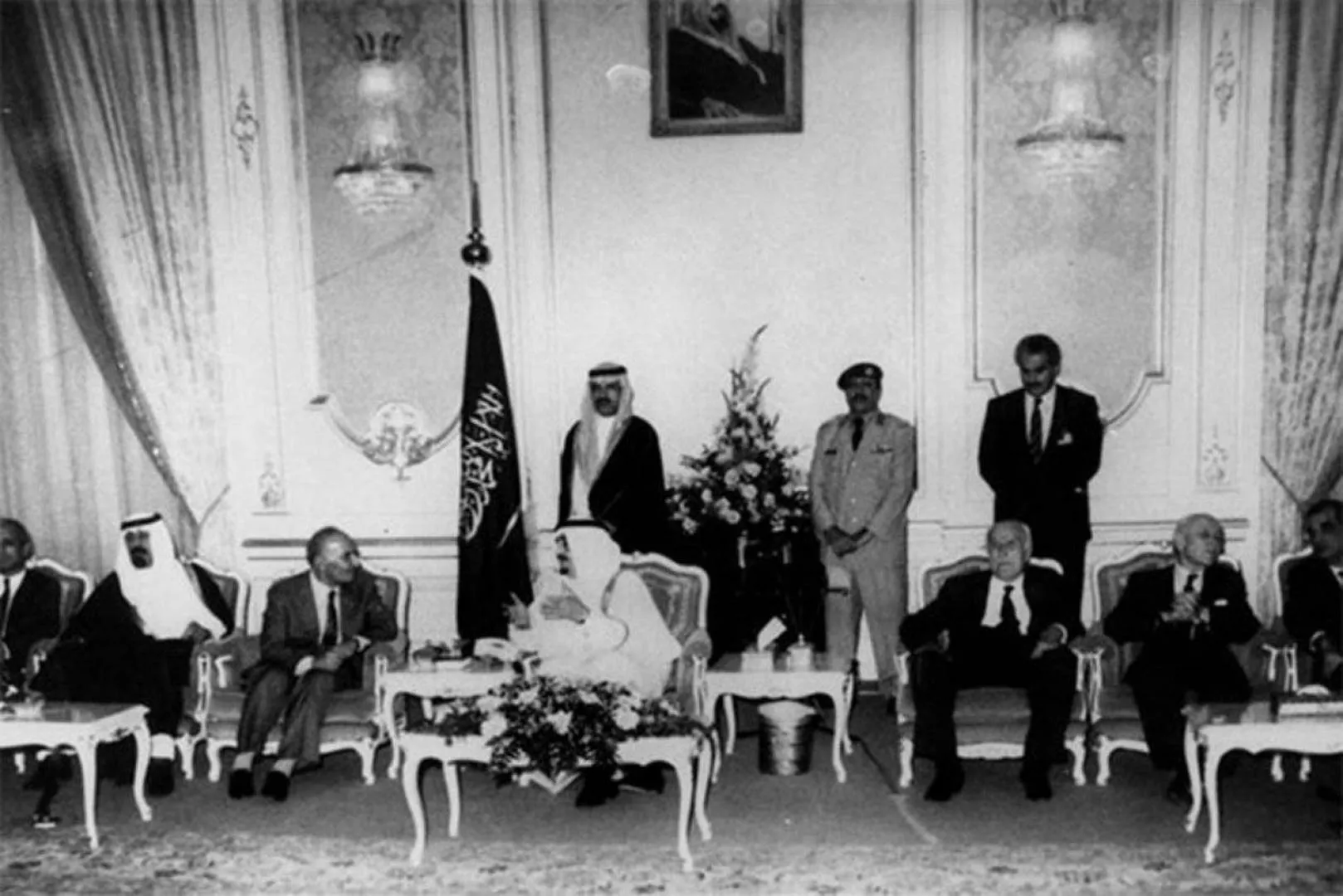
Lebanese legal experts summarized this dilemma by saying: “Taif stipulated the dissolution of all militias, but it preserved the concept of resistance for the liberation of Lebanese territory. Therefore, Hezbollah interprets it in the way it wants, allowing it to keep its weapons under this slogan. Hence, this cannot be considered a guaranteeing phrase; rather, it is open to much ambiguity and interpretation.”
On May 25, 2000, the “Israel”i army completed its withdrawal from southern Lebanon, ending an occupation that had lasted twenty-two years. This moment opened the door for the issue of weapons to move to a new level, as the debate became internal over the justification for keeping the weapons and who held the decision to use them. The political system dealt with this shift by producing a consensual formula titled “the army, the people, and the resistance,” which appeared in successive ministerial statements.
Political analyst Michael Young described this formula as an expression of a middle-ground settlement between those who support the state’s monopoly on the use of force and the camp that supports granting Hezbollah’s weapons legal cover. This formula reflected an existing reality more than it offered a decisive vision, as it left the question of the decision of war and peace open and kept the relationship between the army and the armed force outside its framework in an ambiguous space, allowing coexistence to continue without resolution.
On May 5, 2008, the government of Fouad Siniora issued two decisions that appeared administrative on the surface: the first stipulated that Hezbollah’s telecommunications network was “illegitimate and illegal and constitutes an assault on state sovereignty and public funds”; the second stipulated the dismissal of the head of security at Beirut International Airport, Brigadier General Wafiq Shuqair, from his post and his return to the army roster.
The response came swiftly; as considered Hezbollah Secretary-General Hassan Nasrallah the dismantling of the communications network to be a “declaration of war” against the party and the resistance “in the interest of America and Israel,” while Speaker of Parliament Nabih Berri described the dismissal decision as a step that “means touching the forbidden, not just the red lines.”
On May 7, moved Hezbollah and Amal Movement forces toward West Beirut, took control of Future Movement offices and burned them, closed the airport road, and air traffic came to a halt amid the withdrawal of security forces and the army. The clashes resulted in the deaths of 71 people.
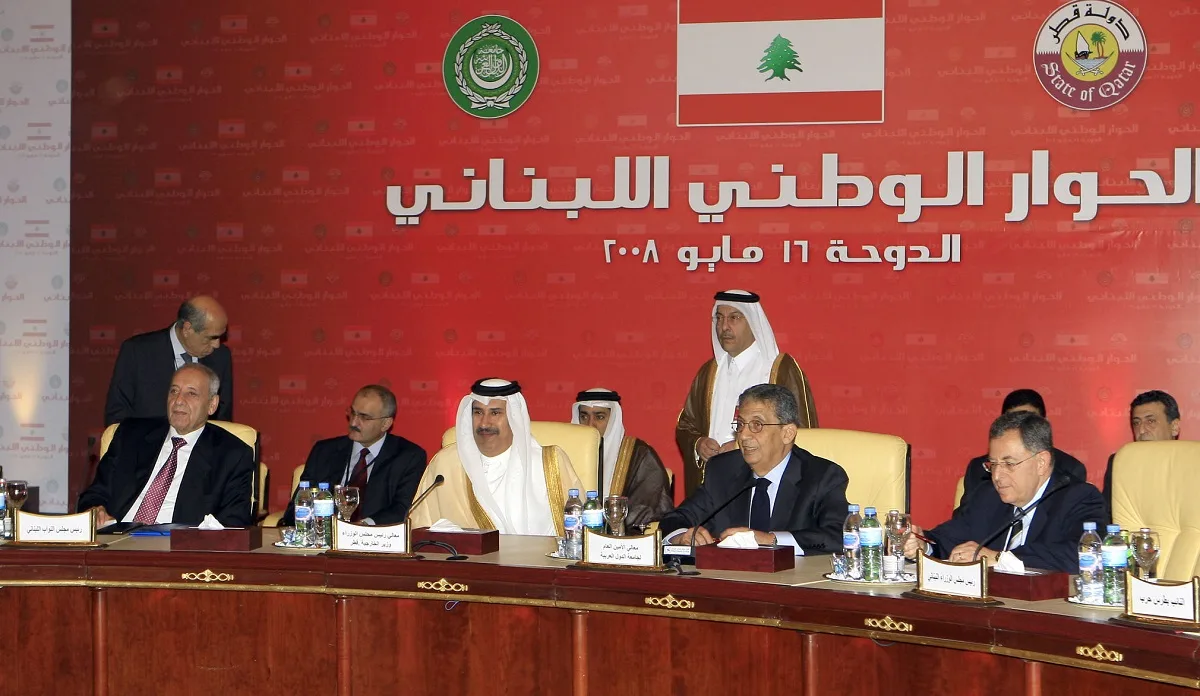
On May 21, 2008, under Qatari sponsorship, the Doha Agreement was signed, stipulating the withdrawal of fighters from the streets, the reopening of Beirut airport road, the election of General Michel Suleiman as president of the republic, and the formation of a unity government in which the opposition would be granted one-third of the ministerial seats.
This blocking third marked a shift in Hezbollah’s position within the system, as it came to possess a direct tool to influence government decision-making. MP Walid Jumblatt, who played a role in pushing toward the two decisions, acknowledged taking responsibility for the escalation, saying: “I made many mistakes, and May 7 was one of them… I caused May 7 and miscalculated, and there were those who encouraged me to do so.”
The events of May 2008 reveal more than just a political crisis; they represented a direct test of the balance of power within the system. Although the government at the time possessed constitutional legitimacy, the actual instruments of enforcement remained beyond its reach in a country fundamentally governed by delicate balances. Hezbollah viewed the government as lacking balance and subject to external pressure, which led it to regard its decisions as a direct attack on its weapons.
These events led to a long-term outcome that further entrenched the party’s position within political life and strengthened its ability to influence major decisions, amid governments that came to take into account the balance of power imposed by that confrontation.
The Moment of Regional Fracture
The successive “Israel”i strikes on Hezbollah between September and October 2024 marked a qualitative turning point that redrew the party’s position within the Lebanese and regional equation; on September 17, 2024, “Israel”i intelligence carried out an unprecedented operation in which it detonated thousands of “pagers” carried by Hezbollah fighters in Lebanon and Syria, followed the next day by the detonation of walkie-talkies, resulting in the deaths and injuries of more than four thousand members. Later, Mossad chief David Barnea revealed that planning for the operation had begun at the end of 2022, describing it as “the strongest blow in the history of Hezbollah’s conflict with “Israel”, and it shattered its morale.”
Events then accelerated rapidly, and on September 27, 2024, assassinated “Israel” Hezbollah Secretary-General Hassan Nasrallah in an airstrike targeting a party operations room in Beirut’s southern suburbs, using dozens of tons of explosives.
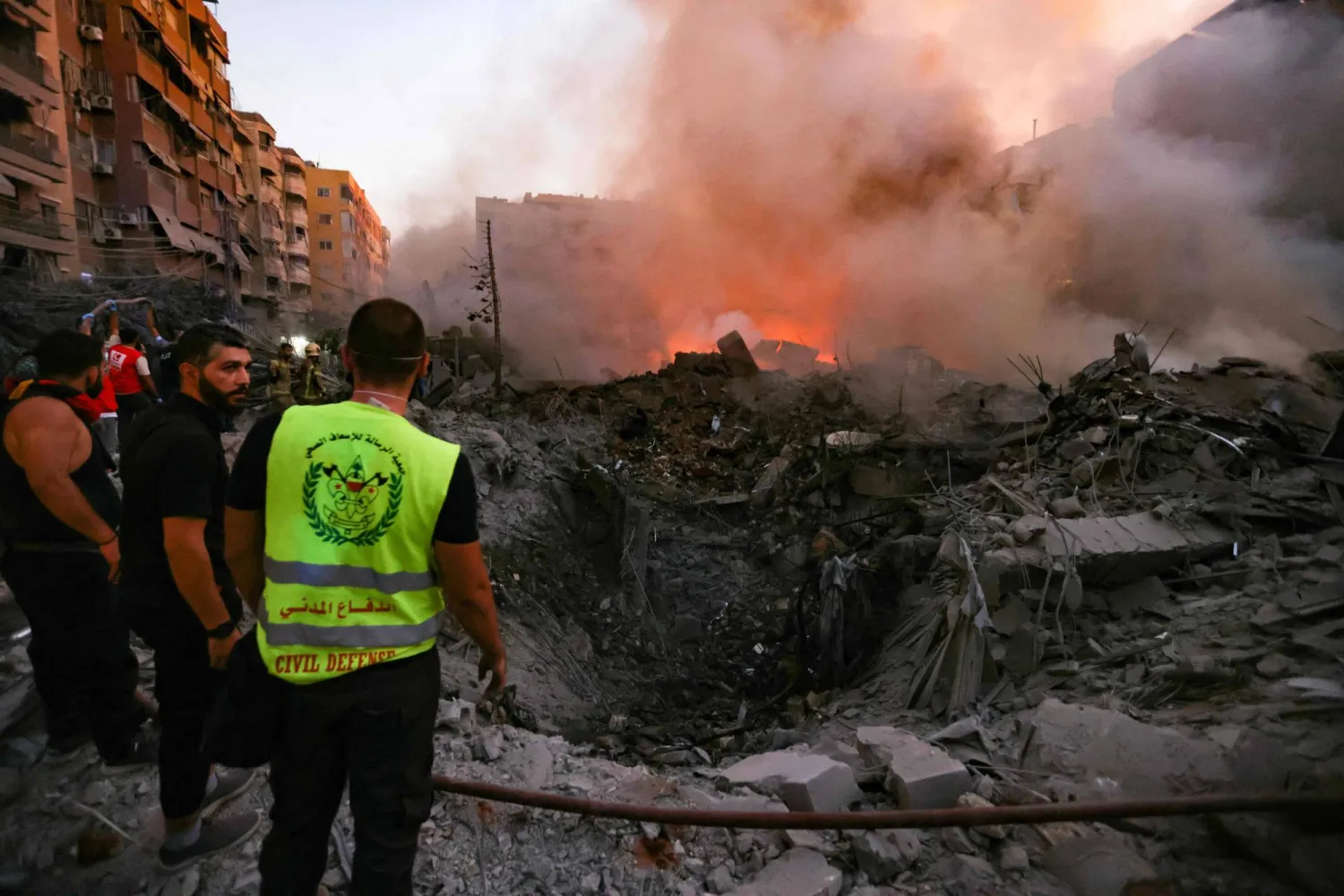
With Naim Qassem assuming the party’s leadership in late October 2024, clear signs emerged of the scale of the losses it had suffered, as it was announced that around 17,000 casualties had fallen during the fighting, including 5,000 who lost their lives, alongside “Israel”i claims that nearly 80 percent of Hezbollah’s missile arsenal had been destroyed.
This trajectory coincided with a broad regional shift. On December 8, 2024, fell the regime of Bashar al-Assad, who fled to Moscow, bringing to an end a rule that had lasted more than five decades, in a shift that removed one of the most prominent pillars of support Hezbollah had relied on, whether in terms of supply routes, rear bases, or political cover.
The new Syrian authorities also imposed strict restrictions on the flow of weapons into Lebanon. In this context, stated Israeli Prime Minister Benjamin Netanyahu that “Nasrallah’s killing fractured the axis of evil and caused Assad’s fall.”
These developments were reflected in how many observers read the party’s position, as they considered what had happened to represent the “end of an era” in Hezbollah’s history, as it entered a new phase concerning the future of its military arsenal and its political role. A report by the Egyptian Institute for Studies also indicated that, after Nasrallah’s assassination, the party found itself in a situation lacking unified leadership and effective regional cover, with its ability to influence Lebanese decision-making declining compared with previous stages.
In light of this reality, an awareness took shape among multiple parties within Lebanon that a pivotal moment had emerged, based on a reading that the party’s declining capabilities opened the way to revisiting its place within the Lebanese system, starting with the issue of its weapons, according to the premise that weakening the party militarily created room through which the balance of power could be reset in favor of the state.
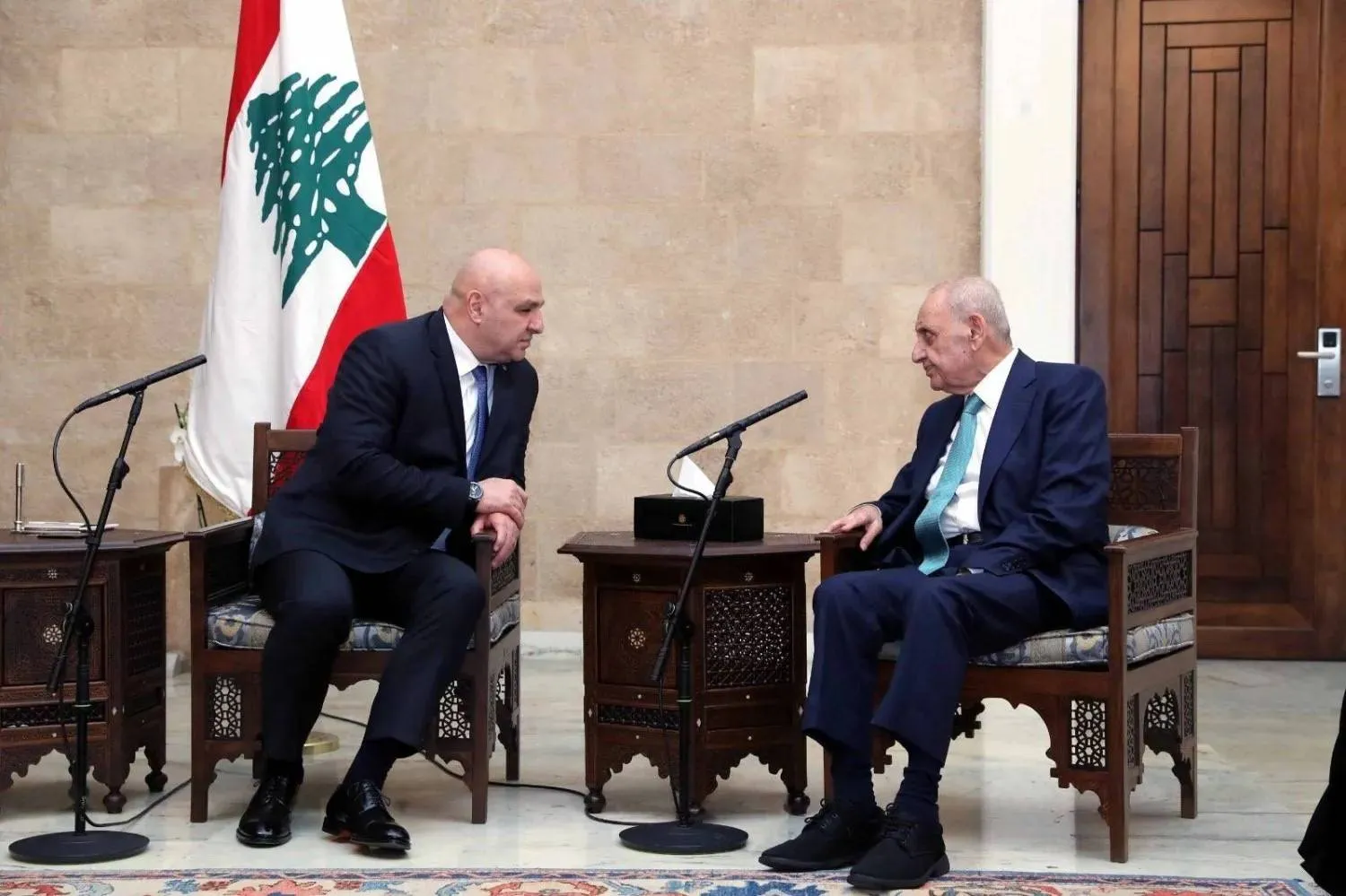
This orientation was reflected in political steps taken by the new executive authority formed at the beginning of 2025, following the election of Joseph Aoun as president of the republic and the designation of Nawaf Salam to form the government. Among the most notable of these steps was the removal of the “resistance” clause from the ministerial statement, in an unprecedented move that broke with a norm in place since 2000. This carried political implications that went beyond wording to redefining the state’s position in managing the issue of force.
By contrast, Hezbollah approached this phase within a framework tied to its existential position, seeing the transformations as a path affecting the very foundation of its political and military presence and its historical legacy, with a deep awareness of the impact of losing its supportive regional environment, especially with the decline of the Syrian role and the related challenges affecting the continuity of its military structure. This was reflected in the party’s adherence to its core choices and its linking of any internal discussion to broader contexts related to regional security and balances of power.
In light of this, the contours of a new phase took shape, one that can be read as a process of reshaping the Lebanese equation, shifting from managing the balance between the state and the party to an attempt to redistribute the sources of power between them. This transformation has advanced at a rapid pace that exceeds the Lebanese system’s ability to produce gradual settlements, as the official track moved toward confining the decision over force within state institutions, while the party maintained its position as an independent actor on both the field and political tracks.
Lebanese memory and experiences of political conflict erupting
Lebanon’s modern history has shown that sharp political polarization has been part of political practice throughout the most sensitive periods in Lebanese memory, making the invocation of those periods more than a mere narrative backdrop, and that issues touching on the distribution of power among its main components always carry the potential to move from the dialogue table to the street.
On May 17, 1983, Lebanon and “Israel” signed an agreement under direct U.S. sponsorship, which explicitly included mutual commitments. The agreement stipulated a gradual Israeli withdrawal from Lebanon over a period ranging from eight to twelve weeks, under the supervision of a joint committee from the two countries sponsored by the United States, the establishment of liaison offices as a prelude to trade agreements, and the termination of the state of war between the two countries.
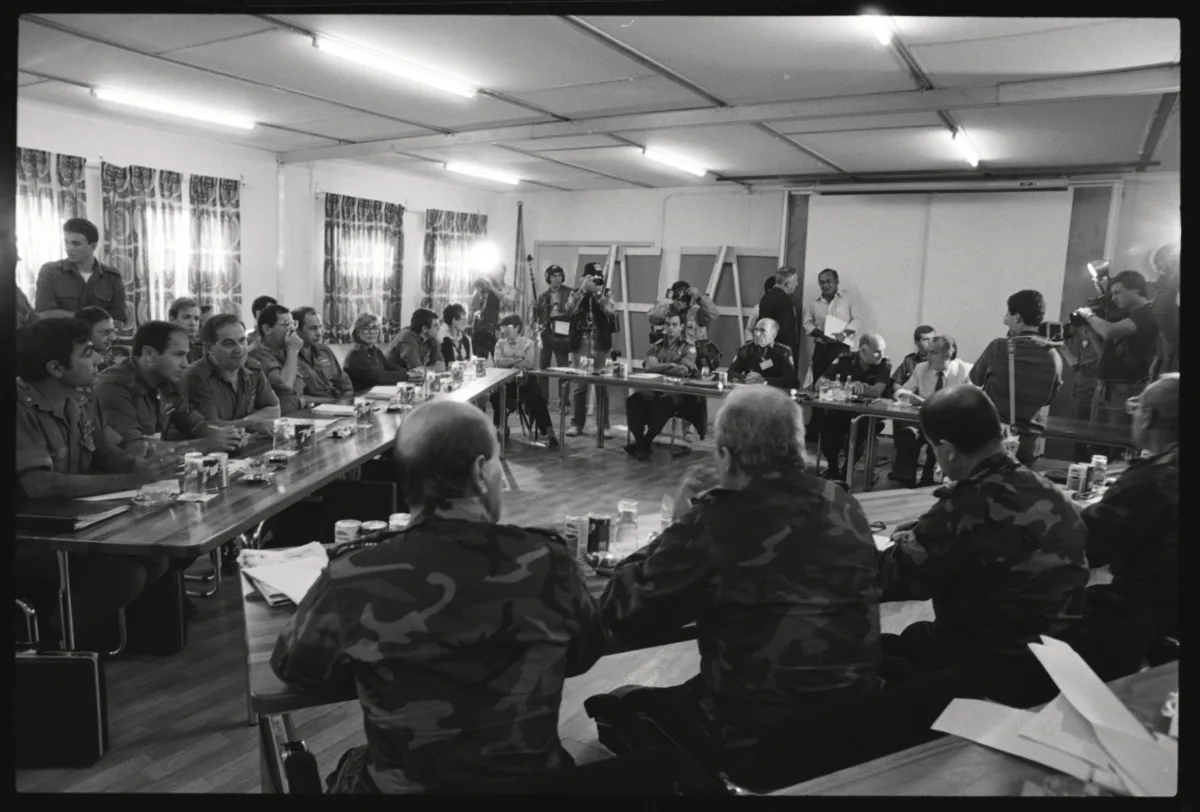
The Lebanese Parliament approved the agreement in a session held on June 13 and 14, 1983. Sixty-five deputies supported it, only two opposed it, four abstained, and nineteen were absent. Yet this parliamentary vote, despite its constitutional symbolism, did not reflect the actual balance of power within Lebanon and the surrounding region.
Syrian regime president Hafez al-Assad made the most decisive regional stance. Four hours after U.S. envoy Richard Murphy explained the details of the agreement to him in Damascus, Assad said bluntly: “This agreement will not pass.” On the Lebanese domestic front, Parliament Speaker Nabih Berri declared from in front of Baabda Palace immediately after the signing that the agreement had been “born dead.”
Popular rejection escalated quickly, and in May 1983 Lebanon witnessed the outbreak of the Mountain War, followed by the uprising of February 6, 1984, in Beirut, when forces opposing the agreement took control of the western part of the capital. On March 5, 1984, announced President Amin Gemayel the cancellation of the agreement, the severing of relations with “Israel”, and a move closer to Syria, less than ten months after it had been signed.
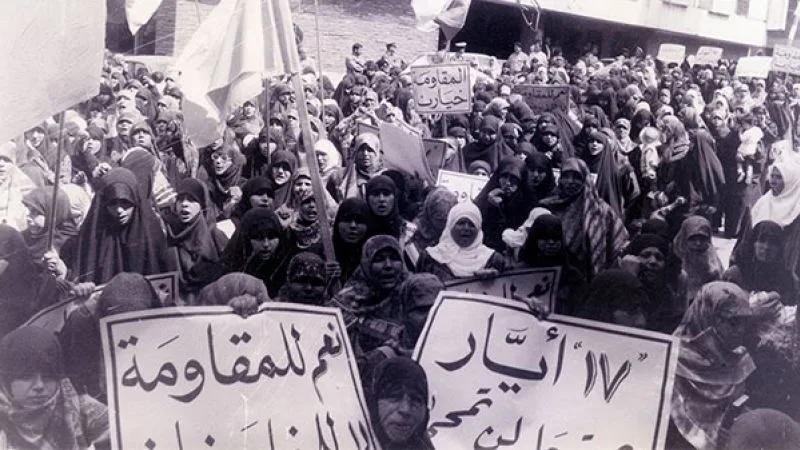
In light of how it ended, the experience of May 17 reveals a constant rule in Lebanese politics: any negotiating track that advances without genuine national consensus and sufficient regional cover is doomed to be brought down. This rule is not nullified by changes in names, faces, and circumstances between 1983 and 2026. MP Najah Wakim, one of thefor two MPs who voted against the agreement at the time, noting that “the negotiations were not conducted between Lebanon and “Israel”, but between the Israeli delegation and the American delegation,” an observation that carries striking resonance when read in the context of Washington’s current negotiations.
Twenty-five years later, the events of May 2008 came with a different model in form but connected in essence. What brought together the 1983 experience and the 2008 experience, despite differences in detail, was the similarity in structure: on both occasions there was an attempt to redefine the balance of power without sufficient internal consensus, and both led to an outcome fundamentally different from what the decision-makers had intended. The agreement was brought down in 1983. In 2008, the dispute moved to the street and ended with the party’s position being strengthened. In both cases, the actual balance of power, not the official texts, showed who ultimately held the decision.
This reading gains added importance in light of the current phase, which is witnessing a deeper and more radical attempt to recast the relationship between the state and the party. What is happening today goes beyond localized government decisions as happened in 2008, and beyond a negotiated agreement as happened in 1983, to touch the structure of the balance that has been entrenched since Taif.
At the same time, current shifts point to elements of difference that should not be ignored: the Syrian regime that regionally protected the rejection of settlements has fallen, the Iranian backing has receded after the blows it sustained, and within Lebanon there has emerged growing fatigue over the cost of confrontations, reflected in a social and political discourse that was not this sharp in earlier stages.
Yet these elements do not negate the weight carried by Lebanese memory, as the issue of weapons and political representation remains tied to sectarian and political sensitivities that have not yet matured enough for resolution. As the opposing rhetoric over the legitimacy of arms and the legitimacy of official decision-making escalates, an environment is taking shape that is capable of reproducing division, especially if political steps advance at a pace beyond the Lebanese system’s ability to absorb them a pace that today, in light of accelerating external pressure and the demands of Washington’s negotiations, appears faster than fragile internal settlements can bear.
The South as a Testing Ground
During the fifteen months between the November 2024 truce and the return of clashes in March 2026, southern Lebanon was not living in calm; rather, a new reality was quietly taking shape there. Despite Hezbollah’s implicit commitment to the truce, “Israel” continued its airstrikes at an almost daily pace, targeting the party’s cadres and its supportive environment. It maintained its military presence at five strategic points from which it refused to withdraw, and continued sweep operations and ground movements in southern villages in violation of the terms of the ceasefire agreement. This produced a reality resembling open-ended one-sided attrition: Hezbollah bleeds daily without responding, while the Lebanese state manages its diplomatic track through international channels without possessing corresponding tools of pressure on the ground.
Over time, an awareness took shape within Hezbollah that the continuation of this situation was reshaping the rules of engagement in “Israel”’s favor, and that the de-escalation imposed after its military setback had come to constrain it without constraining its adversary. At the same time, it needed to grant the necessary time to the official track represented by the Lebanese state to exhaust all available room for exposing the limits of diplomatic capacity based on American sponsorship fully aligned with “Israel”i rhetoric and objectives. This was evident in speeches by the party’s secretary-general, Naim Qassem, in which he sought to place responsibility on the state for protecting the south and stopping “Israel”i attacks.rnrn
rnrnAnd when the appropriate regional moment arrived with the assassination of Iran’s Supreme Leader Ali Khamenei and the outbreak of war between Washington and Tehran on February 28/November 2026, launched Hezbollah launched its rockets on March 2, and however much this return to confrontation may appear to be a purely regional decision, the reality indicates a convergence between the party’s objective need to reimpose new rules of engagement and the Iranian moment and capitalize on it. As an report by Al Jazeera Centre for Studies noted, the party entered this round aware that it has neither existence nor future if it loses the Iranian incubator after losing the Syrian lifeline.
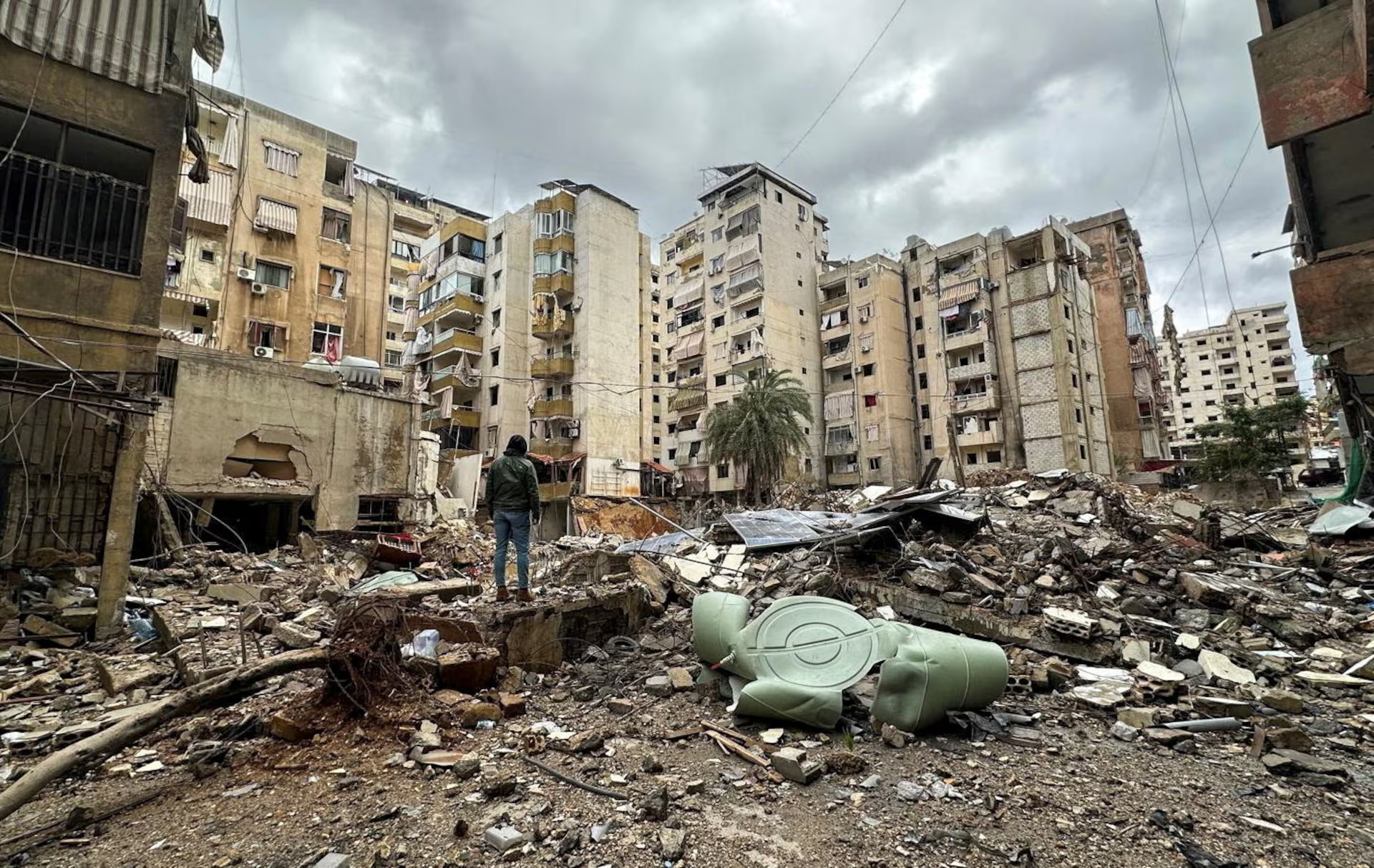
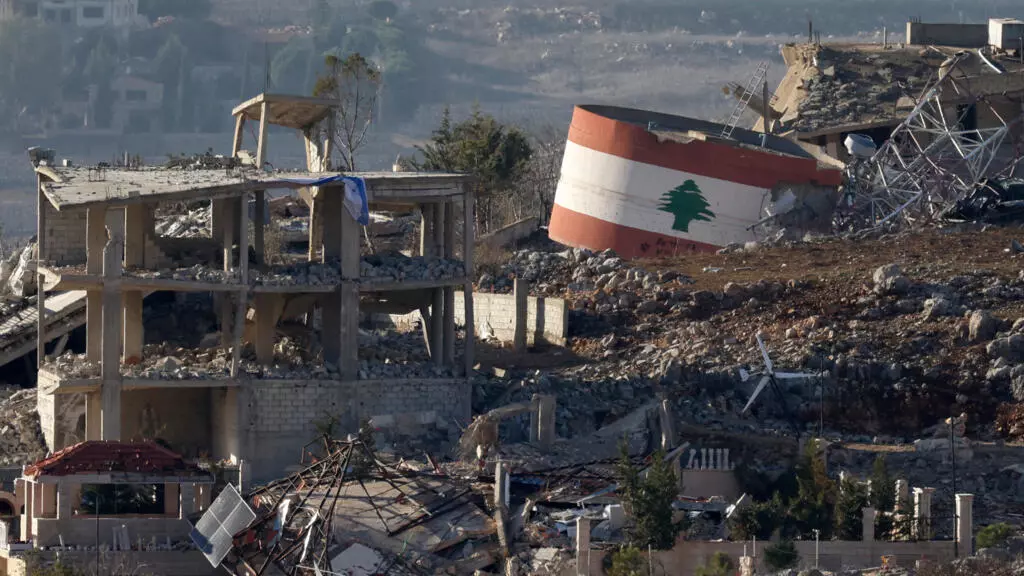
“Israel” responded with a broad operation that went beyond proportionate military retaliation toward a logic of re-shaping the geography in its entirety on the ground, and it quickly moved to seize strategic areas in the south, issued evacuation orders for more than eighty villages, and carried out systematic destruction operations that affected entire villages.
At the same time, Washington opened a parallel diplomatic track that aligned with a diplomatic push to stop the war on Iran as well. On April 9, a schedule was announced for the first round of direct negotiations between the Lebanese and “Israel”i governments since 1993, and on the fourteenth of that month, the representatives sat at one table at the U.S. State Department.
Netanyahu set two conditions for these talks: “We want Hezbollah to be disarmed, and we want a real peace agreement that lasts for generations.” A senior U.S. official also confirmed in press statements that the ceasefire negotiations in Lebanon are separate from the talks hosted by Islamabad between Washington and Tehran.
In this equation, the existence of two tracks became clearly evident: Washington’s track aims to negotiate with the Lebanese state as the sole official representative, separating it from Hezbollah and trying to achieve an agreement that falls within a broader context tied to reshaping regional alignments.
Mohammad Raad, head of Hezbollah’s political council, clearly expressed his position openly when he called on the Lebanese authorities to withdraw from the negotiations, considering that “any official communication or meeting bringing together a Lebanese and an “Israel”i party amid the ongoing war will not enjoy Lebanese national consensus whatsoever.”
By contrast, a completely different track is underway in Islamabad, as Pakistan proposed on April 5, 2026, A draft to reach a temporary Iranian-American ceasefire aimed at negotiating a full agreement, which both sides approved on April 7, and Pakistani Prime Minister Shehbaz Sharif announced that the agreement includes all fronts, including Lebanon.
However, “Israel” and the United States explicitly denied that, although Iran had included the Lebanon file among its ten demands for the negotiations, and suspended its participation in Islamabad when “Israel” continued its operations in the south, stressing through its parliament speaker Mohammad Bagher Ghalibaf that a ceasefire in Lebanon is a condition that must be implemented before negotiations begin.
Between these two tracks, the stakes of Lebanon’s domestic scene are taking shape. Hezbollah is betting that the success of the Islamabad track could lead to a comprehensive de-escalation that pushes “Israel” toward withdrawal and re-establishes rules of engagement that oblige it to halt its attacks, which would help restore its domestic standing and reinforce its equation as a resistance force.
By contrast, the Lebanese government is betting that the Washington track can achieve long-term stability that lays the groundwork for a phase in which the role of the state is reformulated and the narrative of exclusive arms and monopoly over sovereign decision-making is entrenched.
Thus, three parallel tracks are taking shape in the south, none of which is producing a real settlement: the Lebanese state negotiates in Washington and demands withdrawal and the return of the displaced; “Israel” continues its operations in the south and conditions any withdrawal on the disarmament of the party; and Hezbollah continues its confrontation, rejecting the talks and demanding a full withdrawal.
The Political System Under the Pressure of Transformation
When the first round of direct negotiations between the Lebanese government and “Israel” convened in Washington on April 14, 2026—the first of its kind since 1993—the event became a test of how much pressure Lebanon’s political system could withstand and how much division it could endure. That single day alone ignited an internal debate in which accusations reached the level of treason and disgrace, revealing that the divide goes beyond the method of negotiation to the very identity of the state itself.
X turned into an open virtual battleground between differing views; while supporters of the negotiations adopted a “state first” discourse and considered them a necessary step to break out of the cycle of escalation, opponents described them as “disguised normalization” that strips sacrifices of their meaning. Some users saw entering direct negotiations as a pivotal moment to disengage from regional axes. Opponents of the talks described April 14 as “Tuesday of Shame,” while others saw it as a moment to reclaim state sovereignty.
As for Hezbollah’s official position, it was unequivocal, as declared Wafiq Safa, a prominent member of Hezbollah’s Political Council, that the party would not abide by any agreements that might result from the talks, saying: “As for the results of these negotiations between Lebanon and the “Israel”i enemy, we are not concerned with them and they do not concern us at all.”
He also confirmed that Hezbollah is not currently in direct contact with President Aoun or Prime Minister Salam, and that all their communications go through Parliament Speaker Nabih Berri. Mahmoud Qamati, deputy head of the Political Council, went even further, warning that the government’s anti-Hezbollah stance could lead to internal division and push Lebanon toward chaos.
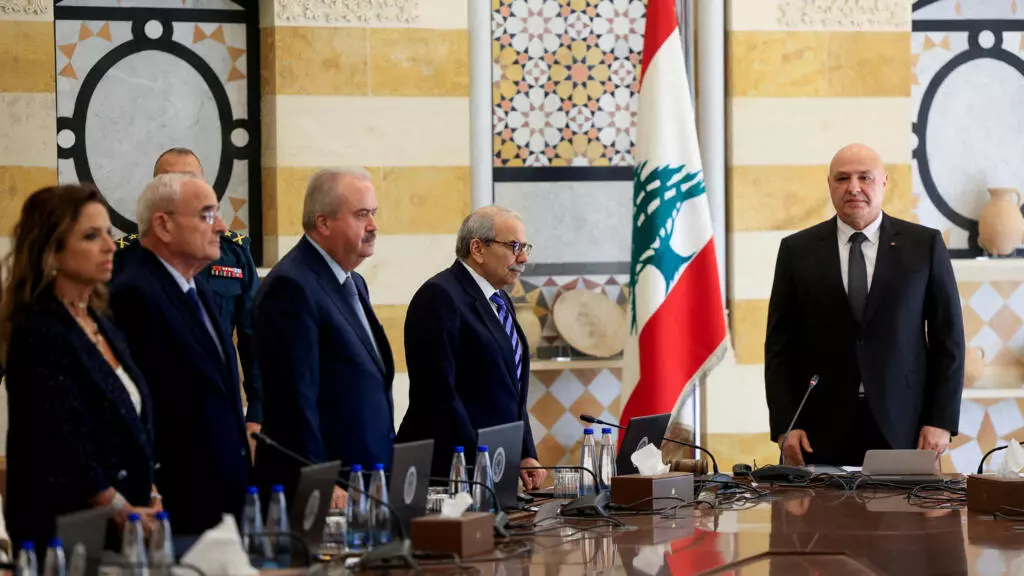
In the face of this rejection, President Aoun responded with a sharp statement on April 27, saying: “Those who dragged us into war are now holding us accountable because we chose negotiation,” in a direct reference to Hezbollah. He announced that this course “will face criticism and political attacks, but it is a historic necessity that could open the door to something like a second independence, restoring Lebanon’s stability and its role as a fully sovereign state.”
But the rift was not limited to the dividing line between the government and the party; differences also emerged even within the traditional opposition forces to Hezbollah. Walid Jumblatt prefers seeking a update to the framework of the 1949 Armistice Agreement rather than moving toward more sensitive options domestically, far from any path of normalization or a comprehensive peace agreement. Nabih Berri considered Aoun’s statements about the negotiation track to be “inaccurate,” revealing a gap across the various camps.
What further complicates the scene is that this division is unfolding amid regional escalation that is feeding into it. The escalation linked to the war on Iran has created a sharper regional environment, pushing Gulf and regional parties to adopt more direct positions in dealing with Iran’s influence and its allies in Lebanon.
A report by the Institute for Politics and Society pointed to a deeper structural dilemma rooted in the fact that the Lebanese state suffers from a duality in defining its role and is no longer clear in its position toward confronting aggression. When Lebanon enters any international negotiations, it does not possess enough leverage to support its position amid these divisions: the state negotiates without possessing the tool of pressure on the ground, while the party possesses that tool without having official negotiating legitimacy. The result is that Lebanon enters existential negotiations without a unified national position that could give them real momentum.
At this very moment, what may be called the deeper test of the system becomes clear: can the political system, built on fragile consensus, produce fateful decisions at a moment of pressure like this? And can the formula that was built on absorbing contradiction rather than resolving it withstand what is now being asked of it? Lebanon’s history answers with great reservation. Every time this question has been posed with such intensity, it has not been settled by politics alone.
Are the fragile balances reaching a crossroads?
Historically, Lebanon has managed to pass through major crisis crossroads by producing its own settlement formulas ones unlike any other political model and sustainable only within it. Yet these formulas accumulated fragile balances that did not lead to building a stable state or effective institutions so much as they reproduced a system based on mutual obstruction and the sectarian “mithaqiyya.”
Today, these equations are being put to an unprecedented test amid rapid regional transformations and a more assertive international environment, led by a populist administration in Washington and a far-right government in Tel Aviv seeking to reshape the region. These transformations place Lebanon at the heart of a storm that is once again raising its deferred questions about sovereignty, weapons, and the nature of the system.
The current trajectory, in which “Israel” is pushing toward an equation of de-escalation with the Lebanese state while continuing the war with Hezbollah, carries deep risks. These lie in an ongoing attempt to separate the political and military tracks and to open the door to agreements that may take shape within the path of direct negotiations in Washington, without broad Lebanese consensus.
By contrast, Hezbollah is betting on regaining the initiative through engagement in the south and on reestablishing the rules of deterrence, drawing on a broader regional track tied to the ongoing understandings with Iran. At the same time, it aims to restore its narrative as a resistance movement, strengthen its domestic position, and preserve the legitimacy of its weapons within the existing balance-of-power equation.
Within the same framework, Lebanon’s political authority continues to face a structural dilemma linked to the nature of the consensus-based system. The current government, despite moving beyond the equation of the blocking third, remains constrained by delicate balances and a precarious legitimacy, limiting its ability to impose a unilateral political course, especially if Hezbollah succeeds in reasserting its field and political presence.
Against this backdrop, Lebanon remains open to divergent paths, ranging from reproducing the balance of power in a new form, to continued political paralysis, to slipping into higher levels of internal friction. More acute possibilities are also emerging, including a return to federalist rhetoric or direct regional interventions seeking to impose new balances.
Ultimately, the conflict goes beyond the form of de-escalation and the future of Hezbollah’s weapons, extending to the identity of the state, how power is managed within it, and what formula can ensure its survival. Amid these questions, Lebanon once again stands at a crossroads, where domestic dynamics intertwine with developments in its surroundings in a way that makes separating the two exceedingly complex.