






هذا التقرير متاح أيضًا بـ العربية
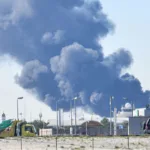
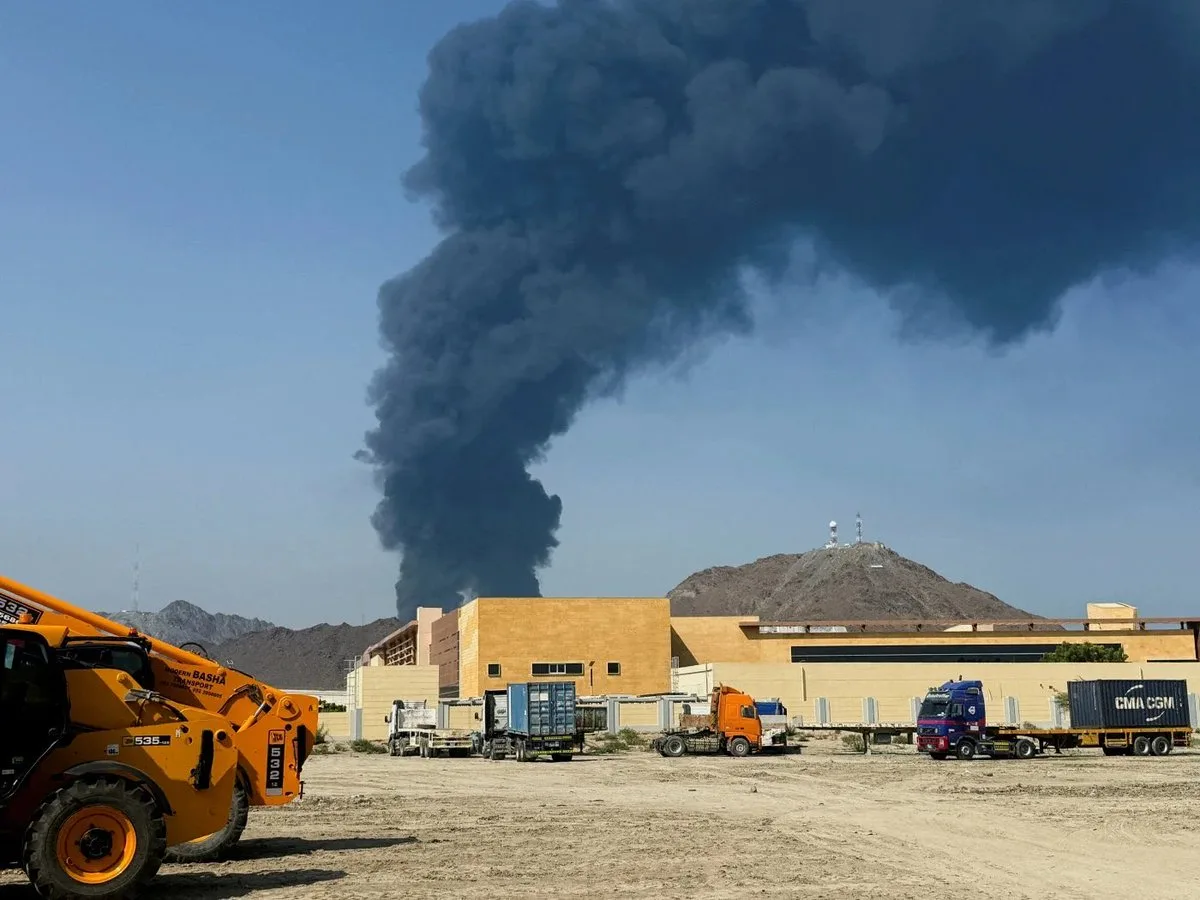
Iran’s targeting of the Fujairah area in the UAE on Monday, May 4, and the resulting injuries and fires at vital ship-fueling facilities, sparked a broad wave of questions about the significance of choosing this particular location, especially as it coincided with U.S. military movements around the Strait of Hormuz and attempts to prevent warships from entering it.
These developments came after U.S. President Donald Trump announced his country’s intention to intervene to free ships stranded in the strait, a move that drew a sharp Iranian response. Ebrahim Azizi, head of the Iranian parliament’s National Security Committee, said that any external intervention in managing navigation would constitute a violation of existing understandings, stressing that the strait and Gulf waters cannot be subjected to unilateral decisions.
In this context, the focus on the UAE as a central symbol of these operations raises broader questions about its place in Iran’s strategy, why it has emerged as a primary target for attacks compared with other Gulf states, and Tehran’s motives behind an approach that suggests using the oil-rich state as a pressure card and a platform for direct and indirect political messages to the United States and its allies.
Why Fujairah Specifically?
Before dealing with the UAE as a general arena for escalation, the targeting of Fujairah in particular carries special significance as a calculated rather than random step. The emirate lies on the eastern coast and directly overlooks the Gulf of Oman, giving it open access to the Arabian Sea and then the Indian Ocean, far from the geographic constraints associated with the Strait of Hormuz. This location makes Fujairah a strategic pivot in the equation of energy security and regional shipping movement.
Fujairah’s importance also stands out as an alternative outlet that allows the strait to be bypassed, as it lies about 70 nautical miles outside it. This gives Abu Dhabi greater room to maneuver in managing its exports and imports away from any potential pressure in Hormuz. The location also strengthens the UAE’s ability to maintain trade and energy flows and relatively weakens the effectiveness of any restrictive measures linked to the strait, giving this corridor growing strategic value in the calculations of regional powers.
In this context, the targeting of Fujairah can be read as a message that goes beyond the tactical dimension to touch on broader calculations related to reshaping the balance of navigation in the Gulf. Undermining the role of this alternative outlet would reduce the room for maneuver available to the UAE and other states, and refocus attention on the strait as a central node in the equation of maritime influence, reflecting the use of geography in managing regional conflict.
Iran’s Arena for Responding to the American Blockade
Iran appears to have sought to respond to the U.S. pressure imposed on its ports in recent weeks through the Emirati arena, viewing it as a less costly and more effective front than the rest of the Gulf fronts. In this framework, Tehran has brought Gulf oil routes into a new escalation equation, limiting the effectiveness of any attempts to open safe shipping corridors, such as the initiatives proposed by Trump.
According to this approach, Iran has redefined the scope of its control over the Strait of Hormuz from both sides by expanding pressure to include Emirati ports, including movements linked to Ras Al Khaimah port, which is reflected in the movement of ships and oil tankers in the region.
This suggests that Tehran is seeking to narrow the alternatives available to shipping routes east of the strait, including the opposite coasts in the UAE and the Sultanate of Oman, which could lead to the disruption of oil export routes from vital facilities such as Fujairah.
This shift carries direct implications for Emirati plans related to increasing production and expanding export capacity following its withdrawal from OPEC, especially those relying on infrastructure that bypasses the strait, such as pipelines extending to Fujairah. It also redraws regional balances by broadening the scope of maritime pressure, raising the cost of any international arrangements to guarantee freedom of navigation, and placing additional pressure on the UAE and its allies, as Tehran seeks to reshape the rules of influence in the Gulf.
Multi-Dimensional Messages
Abu Dhabi’s presence in Iranian rhetoric was neither incidental nor a matter of chance; rather, it reflects a set of geopolitical considerations that have entrenched this approach. The UAE lies directly opposite Iran across the Arabian Gulf and in very close proximity to the Strait of Hormuz, making it an automatic party to any escalation related to navigation or threats to close the strait, as part of the geographic sphere most affected by such developments.
In addition, the UAE’s importance stems from its role as a global logistics hub, supported by a sophisticated port network, foremost among them Jebel Ali Port, making it a central node in trade and re-export flows. Accordingly, any threat to this infrastructure is directly reflected in regional and international supply chains, giving Tehran an indirect pressure tool with broad impact that goes beyond the local framework.
The UAE’s close ties with the West, especially the United States, alongside its strong relationship with the Israeli entity, also add a further political dimension to this prominence, as Abu Dhabi becomes a platform for conveying strategic messages in the context of regional tensions.
In this sense, Tehran seeks to send indirect deterrent signals to Washington and Tel Aviv through their allies, conveying that any escalation against it could be met with repercussions for U.S. partners in the region, which would in turn affect calculations of power and international image, especially amid reports of Israeli-Emirati arrangements to respond to Iranian attacks.
An Attempt to Consolidate a New Deterrence Equation
According to current indicators, Iran appears to be moving toward entrenching a new deterrence equation centered on the Strait of Hormuz as a strategic pivot. Iranian Parliament Speaker Mohammad Bagher Ghalibaf expressed this direction, saying that this equation has entered a “phase of consolidation” and will not be comfortable for Washington, which he accused of violating ceasefire understandings through the naval blockade in a way that threatens maritime security and energy flows.
In the same context, Iranian Foreign Minister Abbas Araghchi stressed that what the United States is promoting under the name of the “freedom project” in the strait is nothing more than a “dead end,” arguing that current developments reflect Tehran’s effort to establish a new deterrence equation that demonstrates the limits of military solutions to the crisis.
Ultimately, the region appears to be heading toward a reshaping of the rules of engagement, between an equation Tehran seeks to impose by expanding the scope of its influence over the strait and integrating Gulf oil into its toolkit, and an approach led by the Trump administration aimed at preserving the status quo while strengthening America’s role in managing vital corridors.
Between these two visions, and with maritime corridors, energy economics, and the future of peoples being used as tools of mutual pressure, amid the arrogance overshadowing both sides’ rhetoric, the arena remains open to multiple possibilities, including an escalation of tensions to sharper levels, which could come at a high cost to all parties. The most important truth in this conflict remains that what comes after this war will in no way be the same as what came before it.