





هذا التقرير متاح أيضًا بـ العربية
Thousands of children are enrolled in special education schools and attend rehabilitation centers to develop their abilities and skills, with the aim of easing the effects of the cognitive and developmental problems they suffer from. Their conditions were stable and the results promising, then the war of extermination came, and education stopped and the occupation destroyed a number of schools, killed and wounded students and teachers, while the rest were scattered across different parts of the Gaza Strip due to displacement. The war cast its shadow over them, causing their conditions to regress and their abilities to decline, while others joined them whose problems emerged from the horror of what they lived through during the genocide.
As education has gradually resumed and attention has returned to it, special education schools have begun to regain their presence little by little. Some have reopened their doors, albeit with limited resources and almost nonexistent funding, amid a host of ongoing obstacles. Despite the growing importance of these schools, given the expanding number of people in need of their services, they still suffer from a clear lack of support because of the harsh reality.
These schools provide services to students with physical, hearing, and visual disabilities, in addition to cognitive and developmental disabilities. Those with physical disabilities may be able to integrate into mainstream education if appropriate support is available, but students with cognitive and developmental disorders, such as learning difficulties and autism spectrum disorder and Down syndrome, face greater difficulties integrating, which requires specialists to work with them. Delayed therapeutic intervention or its interruption may also lead to severe setbacks that undermine the progress achieved.
Because of the war
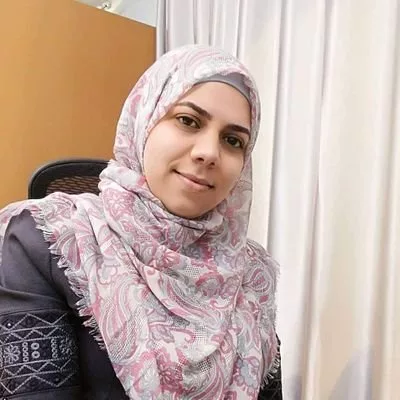
Ihab overcame a malignant tumor that struck him in his early years, and he was close to overcoming its consequences, were it not for the war, which caused a sharp deterioration in his condition and set him back from seventh grade to fourth.
His mother, Yasmin al-Hindi, says the cancerous tumor was in his brain, affecting his concentration and balance. Even so, Ihab, 12, was able to continue his education alongside his peers and was earning average grades.
She adds: “After the war broke out, he was out of school for nearly a full year. During that time, I never stopped following up with him at home. I wanted at least to preserve his ability to read and write,” continuing: “After in-person classes resumed, I had to change his school several times in search of what was best and most suitable for him. He became distracted between schools, and his problem with poor concentration worsened.”
Recently, she found a special education school close to her home, one her son could reach on foot without needing special transportation, so she enrolled him without hesitation. She explains: “After the assessment, the school told me they would place him in fourth grade, even though he should be in seventh grade for his age. I agreed because I know the extent of the regression he suffered because of the war.”
She notes: “He joined only two months ago, but the improvement is completely clear now. He loves the school, has committed himself to studying and doing his homework, because he found special care there and individual follow-up, and that is what he needs. It is unlike the regular school, where there are dozens of students in one classroom. He used to come home with clean notebooks, without writing a single word in them. He understood nothing and did not participate in class, so he felt inferior to his peers.”
Based on this clear difference, al-Hindi hopes circumstances will allow her son to continue attending his school there without interruption, for fear of another relapse. She says: “Despite my sadness for my son, when I enrolled him in a special education school, I realized he is better off than many children. Every time I go to the school, I see new students in difficult conditions, most of whose problems were caused by the war. So there must be special and continuous attention to this group.”
4 hours for 15 minutes
The war deprived Hiba al-Sharafa of hearing her son’s voice since his birth. He has reached the age of six and still has not spoken, as he suffers from a “communication disorder.” His family has moved between doctors since he was six months old, and after a long journey she understood that he needed full rehabilitation. She began searching for a school that could meet all his needs, found one, and enrolled him there, but before he could settle in, the war broke out.
About two hours going and the same returning, in exhausting transport, on a crowded road, at a cost of more than $10 a day: this tiring and costly trip is what Hiba al-Sharafa endures with her son Youssef twice a week from their home in Gaza to his school in Deir al-Balah.
Al-Sharafa says: “We were displaced from Gaza City to the south of the Strip, moving from one place to another. I found neither a school nor a center for my son. His condition was deteriorating before my eyes day by day, especially in the tent, with all its suffering and lack of resources. I felt embarrassed and apologized to the neighbors because of the sound of his constant crying, and I could not even find the simplest toys in the market to use in his treatment.”
She adds: “When our displacement eventually brought us to Deir al-Balah, I found a special education school, and as soon as he enrolled there he began to improve despite its limited resources.” She continues: “A short time later came the truce agreement at the start of 2025, so we returned to Gaza. I searched extensively there but found no place that could accommodate Youssef.”
She explains that with the second displacement in September of the same year, she found the opportunity suitable to return her son to the school, and he improved again. Then his condition relapsed once more when the family returned to Gaza after the truce agreement last October.
Inside simple rooms and with limited resources, Gaza’s blind children trace letters in Braille, clinging to their right to education despite the bitter circumstances pic.twitter.com/Y0Qq7duAc1
— NoonPost (@NoonPost) April 21, 2026
She notes: “I searched again and found only one center offering group sessions rather than individual ones, bringing together children with different problems, and I completely reject that for fear that my son will be affected by the symptoms others suffer from. So I had no choice but to return to the school despite the distance and the difficulty of transportation.”
Al-Sharafa points out that one reason she clings to the school is her fear of renewed displacement. She wants to secure a place for her son that will be ready for him if the family is forced to return to Deir al-Balah later.
She notes that “the hardship of searching for treatment for Youssef affects the whole family, which understands the matter. The exhaustion I endure on session days means I need rest, so I do nothing at home after returning from the school, not to mention the draining costs,” explaining: “No one can imagine how difficult the road is except those who have tried it. Transportation now is not what it used to be. Carts pulled by cars or animals cause severe pain and carry great danger, while the congestion and rough roads make the trip longer.”
Al-Sharafa says: “Youssef needs long and repeated sessions. Two sessions a week, each only 15 minutes long, are absolutely not enough for him. But this is the only option available to me, and I cling to it in the hope of finding something better. I refuse to stop because I have seen the negative results myself. Interrupting the sessions means major regression.”
She adds: “I never stop searching. I go to any doctor I hear about, and I try hard to arrange for a specialist to treat him at home, but everyone refuses for reasons related to transportation and the difficulty of reaching my house, and because I live on the eighth floor and the elevator is out of service due to the lack of electricity to run it.”
She continues: “The little time Youssef spends in sessions has benefited him, so what would it be like if he received his full right to treatment? I believe he would become a completely normal person, just as the specialists told me, but reality is depriving him of that.”
“An emergency point,” not a school
The fact that Jusour al-Amal Special Education School is located in the central governorate, where the occupation claims it is a “safe zone“, did not grant it any special protection. The bombing destroyed the building and wiped out its resources and supplies. Even so, those running it insisted on continuing to provide services during the war.
The school’s executive director, Rawiya Abu al-Kass, says everything changed during the war: the premises, the resources, the students, their numbers, and the many setbacks in their conditions, not to mention those whose problems emerged because of the war.
She adds: “Since 2017, the school had operated in a building equipped with many resources, but because the premises were bombed, we rented land in another area of the same city and reopened it. This time, however, it consists of tents and sheet metal. The resources are now basic, funding is almost nonexistent, and the work is nearly voluntary. The method of education and rehabilitation has also changed and shrunk.”
She continues: “We used to target students with physical and cognitive disabilities in the central governorate and Khan Younis, and our capacity ranged between 300 and 350 male and female students. Currently the number is fewer than 200, including about 80 with cognitive problems. That is the largest number we can receive.”
She explains that the school used to provide transportation for students to and from the school, but now, amid the transportation crisis, with high costs and shortages, families themselves bring their children, so most students live near the school.
Some families bear the hardship and cost of the road, traveling distances from one governorate to another so their children can receive a therapy session lasting no more than 20 minutes. They do this two or three times a week. They understand their children need longer daily sessions, but they accept this small amount of treatment out of necessity because of the shortage of special education schools.
Abu al-Kass indicates that the number of children needing the school’s services has increased because of the war and its effects. For example, before the war the school received only one autism case per month; now several cases appear every day.
She describes the school as an “emergency point,” where families turn for treatment for their children, and where institutions working in the field refer numbers of children after their own projects end, explaining: “Projects end while the child’s need for treatment continues, so those running them advise families to enroll in our school.”
Leading his classmates’ rows.. A Gazan child who lost his limbs in the “Israel”i war of extermination on the Gaza Strip was not prevented by his wheelchair from continuing his studies. pic.twitter.com/bCxCZiP8cu
— NoonPost (@NoonPost) April 7, 2026
In the face of this increase, the school has increased working hours and shortened the duration of therapy sessions to accommodate as many children as possible, but conditions are preventing sufficient expansion, according to Abu al-Kass.
In addition to the increase in cases, the war has led to a sharp deterioration in the conditions of those with cognitive problems because of the interruption of their education and rehabilitation. With repeated displacement and the periodic complication of security conditions, the child’s interruption from school is repeated, and so are the setbacks.
Abu al-Kass explains: “We put in great effort with the child, and he improves clearly, then he stops follow-up for a period for one of the reasons related to the war. When he returns to us, we do not find him at the zero point from which we began treatment, but several levels below it. In this way, the setbacks and their consequences keep recurring.”
She notes that setbacks do not occur only because of interrupted education, but also because of what the child lives through under the harsh conditions of war, such as loss and living in a tent. These are the same reasons that have caused new children to develop such problems.
As for what hinders expansion and better service provision, she says: “We do not collect fees from students in consideration of people’s difficult circumstances, and we have no fixed source of funding. We receive some aid at widely spaced intervals, and some institutions implement projects for students through us. An employee’s salary does not exceed $100.”
She adds: “In teaching these cases, it is not possible to explain things through traditional methods. For a student to understand even the simplest piece of information, substantial resources are needed, such as models for learning numbers and arithmetic, and these are not currently available in the Strip. We make teaching aids from cardboard and water bottle caps,” continuing: “In special education schools, the number of students in one class cannot exceed 10 to 15, and we do not have enough space or a large enough staff.”
She explains that the pressure on the school has pushed it to prioritize receiving younger children to achieve better results, which worsens the problem for older ones.
Great efforts, limited resources
For his part, Dr. Khaled Fadda, Director General of Educational Counseling and Special Education, says that before the war there were 25 special education schools and 21 centers in the Gaza Strip, providing services to children with various disabilities—physical, hearing, visual, cognitive, and developmental. He adds that the number of students benefiting from the schools ranged between 3,000 and 5,000 with diverse disabilities, about half of whom suffered from cognitive and intellectual disabilities.
He continues: “The ministry used to follow up with the schools and centers, and the level of service was good, with great benefit for those who received it.” But now, according to Fadda, the situation has changed completely, as the work of those schools has almost entirely stopped until very recently, for reasons related to the war, such as the destruction of buildings and security conditions.
He explains: “Students were used to attending schools and areas around where they lived, but now they have been scattered by repeated displacement, and with the shortage in the number of schools, the service is no longer available to a large proportion of them.”
He stresses that interrupting this group’s access to education and rehabilitation in the places designated for them leads to major deterioration in their conditions, explaining: “All students have suffered three years of learning loss, so what about those with special conditions? Major and obvious setbacks appear in them.”
Recently, some schools have begun to return again, but very slowly. Those in charge are working with great effort and limited resources, amid severe weakness in funding, according to Fadda.
He says the obstacles facing special education schools are many, foremost among them funding and the lack of necessary resources in the Gaza Strip, even simple ones such as stationery and assistive tools. He adds: “There are obstacles related to students’ families, most of whom are from vulnerable groups, meaning they are unable to pay fees for their children and provide their needs.”
Fadda points out that children with autism are the most harmed by this reality, because of the difficulty of integrating them into regular schools and their need for special interventions in rehabilitation centers, which is currently impossible. He notes that a small number of them are in government schools, and they have mild autism.
He stresses that “the ministry is keen to provide services to this group and cooperates extensively with those schools and centers in the hope of being able to help the students, but the circumstances are difficult, resources are weak, and funding is scarce.”
He notes that “among the ministry’s efforts are the presence of 110 special education teachers in its schools, the accommodation of 14 cases of children with Down syndrome, and the provision of shadow teachers for a number of children with autism enrolled in government schools.”