















هذا التقرير متاح أيضًا بـ العربية
In a move reflecting a significant escalation in the tools of U.S. pursuit of influence networks linked to Iran, announced the U.S. Department of Justice on May 15, 2026, the arrest of Mohammed Baqir Saad Dawood al-Saadi, one of the prominent leaders of Iraq’s Kataib Hezbollah, after he was detained in Turkey during a transit journey bound for Moscow, before being transferred to the United States to appear before a federal court in Manhattan on terrorism-related charges and planning attacks targeting American and Israeli interests in several countries, including the United States itself.
The importance of this case goes beyond al-Saadi himself and the scale of the charges against him; it lies in the nature of the operation itself and the indications it carries of a shift in Washington’s approach to dealing with leaders of factions allied with Tehran.
It chose to carry out an arrest operation beyond its borders, in coordination with a regional state, and transfer the accused to U.S. soil for a public trial, in a move suggesting that Washington is seeking to expand its tools in managing the conflict with Iran and its allies.
The timing of the operation carries added significance, as it came during an extremely sensitive phase of the open confrontation between the United States and Iran, months after the clash between the two sides shifted from a pattern of proxy war to more direct confrontations. In this context, al-Saadi’s arrest appears to be part of a layered message aimed at Tehran, the armed factions allied with it, as well as the regional states that serve as transit points or potential safe havens for the leaders of these organizations.
From a Transit Journey to a Federal Court in Manhattan
The arrest of Mohammed Baqir al-Saadi was an exceptional event in terms of the nature of the operation and its political and security messages. According to the U.S. Department of Justice, he was arrested on Turkish soil during a transit journey bound for Moscow, before being transferred directly to the United States to appear before a federal court in Manhattan, in a rare step reflecting Washington’s shift from a policy of remote pursuit to carrying out physical arrest operations and transferring wanted individuals to its territory for public trial.
The U.S. administration was keen to give the operation a political dimension that went beyond the bounds of a conventional judicial procedure, as described FBI Director Kash Patel described al-Saadi as a “high-value target” responsible for “mass terrorist acts on a global scale,” noting that tactical and elite FBI units took part in the operation in cooperation with security and diplomatic agencies in several countries.
He also thanked the U.S. ambassador to Turkey, Tom Barrack, confirming that he played a pivotal role in coordinating and ensuring the success of the operation. For his part, explained U.S. Attorney for the Southern District of New York Jay Clayton said that al-Saadi faces serious charges related to coordinating attacks against American interests around the world, including attempts to carry out killings inside the United States itself.
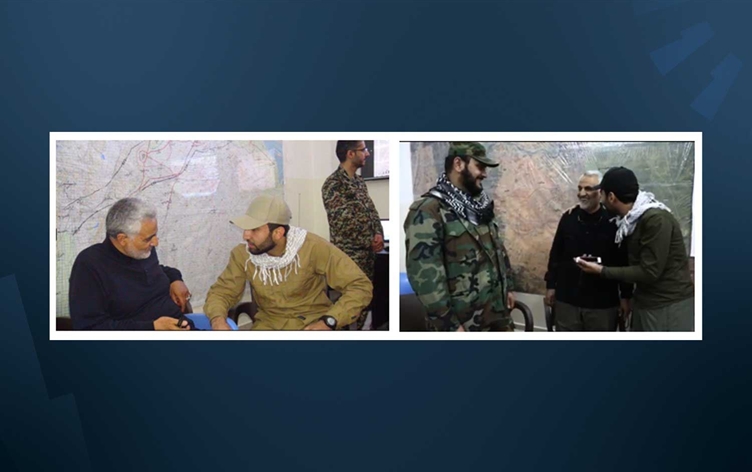
Although the U.S. Department of Justice refrained from disclosing extensive operational details about how the operation was carried out, the available information reflects a high level of security and diplomatic coordination, as showed flight-tracking data that an aircraft belonging to the U.S. Department of Justice, usually used in international transfer operations, headed to Turkey and then returned via Morocco before landing in the New York area. Defense counsel also confirmed that his client was detained in Turkey at the request of the United States and handed over to U.S. authorities without being given the opportunity to challenge the legality of his detention or transfer procedures.
Federal prosecutors brought six main criminal charges against al-Saadi main, including conspiracy to provide material support to Iraq’s Kataib Hezbollah and Iran’s Revolutionary Guard, conspiracy to provide support for terrorist acts, actually providing such support, conspiracy to bomb public places, and destruction of property using explosives. Some of these charges carry potential penalties of life imprisonment.
The indictment reveals a broad operational network stretching from Europe to North America. According to the U.S. prosecution, al-Saadi played a central role in coordinating attacks targeting American and Israeli interests through an organizational front called the “Islamic Companions of the Right Hand Movement.”
Operations attributed to the network included a bombing targeting a Bank of New York Mellon building in Amsterdam, a shooting at the U.S. consulate in Toronto, the stabbing of two Jewish individuals in London, and the foiling of a bombing attempt targeting Bank of America in Paris. U.S. authorities also accuse him of attempting to coordinate the bombing of a synagogue in New York and planning to target other Jewish sites inside the United States.
In his first appearance before the U.S. judiciary, al-Saadi appeared before Judge Sarah Netburn in federal court in Manhattan, where it was decided that he would remain in custody pending completion of judicial proceedings. During the session, described the defense team described their client as a “political prisoner and prisoner of war,” in an attempt to frame the case within a broader political and legal context and challenge the legitimacy of his arrest and transfer to the United States.
Al-Saadi… One of the Most Prominent Faces of the Second Generation of Iran’s Allies
Mohammed Baqir al-Saadi represents a model of the second generation of leaders of Iraqi factions linked to Iran; that generation which did not participate in founding these organizations during the years of the U.S. occupation of Iraq, but grew up within their organizational structure, inherited their networks and regional ties, and trained under their founding leaders before developing its methods of operation in line with the nature of the conflict in its current phase.
In this sense, al-Saadi’s importance is tied not only to the charges against him, but also to the position he occupied within the system that Iran rebuilt after the assassination of Qassem Soleimani and Abu Mahdi al-Muhandis in early 2020.
Born al-Saadi in Baghdad in 1993, he is described by the U.S. Department of Justice as a senior member of Iraq’s Kataib Hezbollah and as having been involved since 2017 in activities related to coordinating, inciting, and providing logistical support for attacks targeting American and Israeli interests in Europe, Canada, and the United States. But this legal description alone does not fully capture the role he played, as the available information reveals a figure operating at the heart of the most sensitive network of relationships within the axis of Iranian influence in Iraq.

Al-Saadi’s particular significance lies in the fact that he worked directly with Qassem Soleimani, the former commander of the Quds Force, and with Abu Mahdi al-Muhandis, the historic leader of Kataib Hezbollah. He also maintained close ties with Soleimani’s successor, Esmail Qaani, and with the secretary-general of Harakat al-Nujaba, Akram al-Kaabi. These relationships reflect his position as a link between several centers of influence within Iran’s regional system, beyond the limits of his direct organizational affiliation.
Functionally, al-Saadi was not a traditional field commander so much as he played an operational role combining planning, coordination, incitement, and network management. The charging documents show that he directed cells spread across more than one country and used organizational fronts and modern communication tools to coordinate operations and manage the accompanying media messaging. This type of role gives its holder particular importance because it combines organizational knowledge with the ability to move across multiple levels of political, security, and media work.
And indicates the U.S. Department of Justice that al-Saadi published a message in February 2026 calling for targeting everyone who supports the United States and Israel, including civilian and military targets, marking a shift in the traditional patterns of operation of factions allied with Iran. Al-Saadi thus embodies a model of a generation more capable of using the digital sphere, managing cross-border networks, and building flexible organizational fronts, while maintaining close ties with the upper levels of the Quds Force and allied Iraqi factions.
The Political and Security Implications of the Operation
The arrest of Mohammed Baqir al-Saadi carries implications that go beyond the criminal case itself, as it reveals signs of a significant development in the way the United States pursues figures linked to factions allied with Iran. At the same time, it sends direct messages to regional states that serve as transit spaces or safe environments for the movements of these leaders, and it sheds light on possible shifts in the operating patterns of armed factions and their security calculations in the coming phase.
The first of these implications is that Washington has begun expanding its tools for managing the conflict with Iran and its allies. For many years, the United States relied primarily on economic sanctions, airstrikes, and in absentia judicial prosecutions. In this case, however, it chose to carry out an extraterritorial arrest operation and transfer the accused to its territory for trial before federal Judiciary on the model of the operation carried out against Venezuelan President Nicolás Maduro.
This shift reflects an American desire to use the judicial tool as an extension of the security tool, achieving two parallel goals: disrupting pivotal figures within hostile networks and producing a long-term deterrent effect that goes beyond immediate field results.
The operation also reveals that security cooperation with Washington on wanted persons has become part of the political calculations of regional states. Although Ankara did not issue an official statement clarifying the nature of its role, al-Saadi’s detention on its soil and his handover to U.S. authorities indicate that states hosting or receiving wanted figures can no longer assume that this file can be isolated from their relationship with the United States. This means that leaders of factions and organizations listed on U.S. terrorism lists will be forced to reassess the map of countries they rely on for movement, residence, or transit.
Another important implication is that the operation sends a direct message to Iran-linked factions that the equation now includes new variables and that traditional protection systems no longer provide the previous level of security. Geographic distance from the United States, the absence of extradition treaties, and political relations with some countries are no longer sufficient factors to guarantee immunity. Intensive use of the digital sphere, managing networks through social media, and openly claiming operations all give intelligence agencies greater opportunities for tracking, surveillance, and evidence collection.
The timing of the operation is especially important, as it came during an open phase of escalation between the United States and Iran. This makes al-Saadi’s arrest part of a layered message to Tehran that Washington is not content with targeting military or nuclear infrastructure, but also has the ability to reach the figures who manage cross-border operational networks. It also gives Washington an additional pressure card in any future negotiating track or political confrontation by demonstrating the depth of its penetration into the environment of the Iranian axis.
Even so, the practical impact of the operation should be assessed with a degree of realism. The arrest of a prominent figure does not mean dismantling the system to which he belongs, especially since the Iran-linked Iraqi factions possess a flexible organizational structure and the ability to replace leaders and redistribute tasks. The political and security environment in Iraq, and the margins of influence it provides these organizations, still exists and has not fundamentally changed because of this case alone.
In addition, the case may turn into a legal testing ground regarding the legitimacy of methods of arrest and transfer beyond borders, especially in light of the defense team’s assertion that al-Saadi was handed over to the United States without being given the opportunity to challenge the legality of his detention or extradition procedures. If the defense succeeds in raising influential procedural issues, this could affect the course of the case and the limits of using this method in future files.
A Precedent With Consequences
The real significance of al-Saadi’s arrest lies not in the fate of one man, but in the fact that it reveals a new phase in which intelligence, judicial, and diplomatic tools overlap in managing the conflict between the United States and the Iranian axis. If this model is repeated in other cases, al-Saadi’s arrest could become a reference point in redrawing the rules of international pursuit of armed faction leaders, and the resulting shifts in the structure of deterrence and calculations of movement in the region.