









هذا التقرير متاح أيضًا بـ العربية
The U.S.-Israeli war on Iran has placed Egypt before a delicate equation: how can it reassure the Gulf states that it is not distant from their security without becoming a direct party to the conflict?
From day one, stressed Egypt stressed the need to avoid the war’s expansion and warned of its repercussions on the global economy. But after criticism, it was compelled to move beyond cold neutrality and provide political and operational support to its Gulf allies, while remaining careful not to appear as an offensive party against Tehran.
This report tracks how Cairo’s rhetoric and level of involvement changed: from de-escalation and non-entanglement, to regional mediation, then raising the ceiling of political support, and finally to a defensive military presence in some Gulf states.
Caution and balancing relationships
When the war broke out, Egypt’s position was marked by caution. During a public meeting in mid-March, President Abdel Fattah el-Sisi warned that the Middle East was passing through a “critical” phase, and said that Egypt was making “every effort to extinguish the flames of war,” because the continuation of the confrontation would harm the global economy.
Foreign Minister Badr Abdelatty also confirmed that Cairo had not received any official request from Gulf states to send forces, warning that the region was “on the verge of explosion.”
This rhetoric conveyed a dual message: Egypt is politically supportive of its Gulf allies, but it does not want to slide into a direct military confrontation.
This was not complete neutrality so much as calculated caution. Cairo was balancing between avoiding a clash with Iran and preserving its Gulf alliances and interests tied to investments, energy, and Egyptian labor in the Gulf.
Mediation as a safe space
As the war escalated, Egypt did not stop at statements but engaged in a regional mediation track. Pakistan hosted talks that included the foreign ministers of Egypt, Turkey, and Saudi Arabia to discuss de-escalation and reopening the Strait of Hormuz.
Later, Abdel Aty stated that Egypt was working with Pakistan to prepare a lasting peace plan between the United States and Iran, in coordination with Turkey and Saudi Arabia, to protect the Gulf and stabilize energy markets.
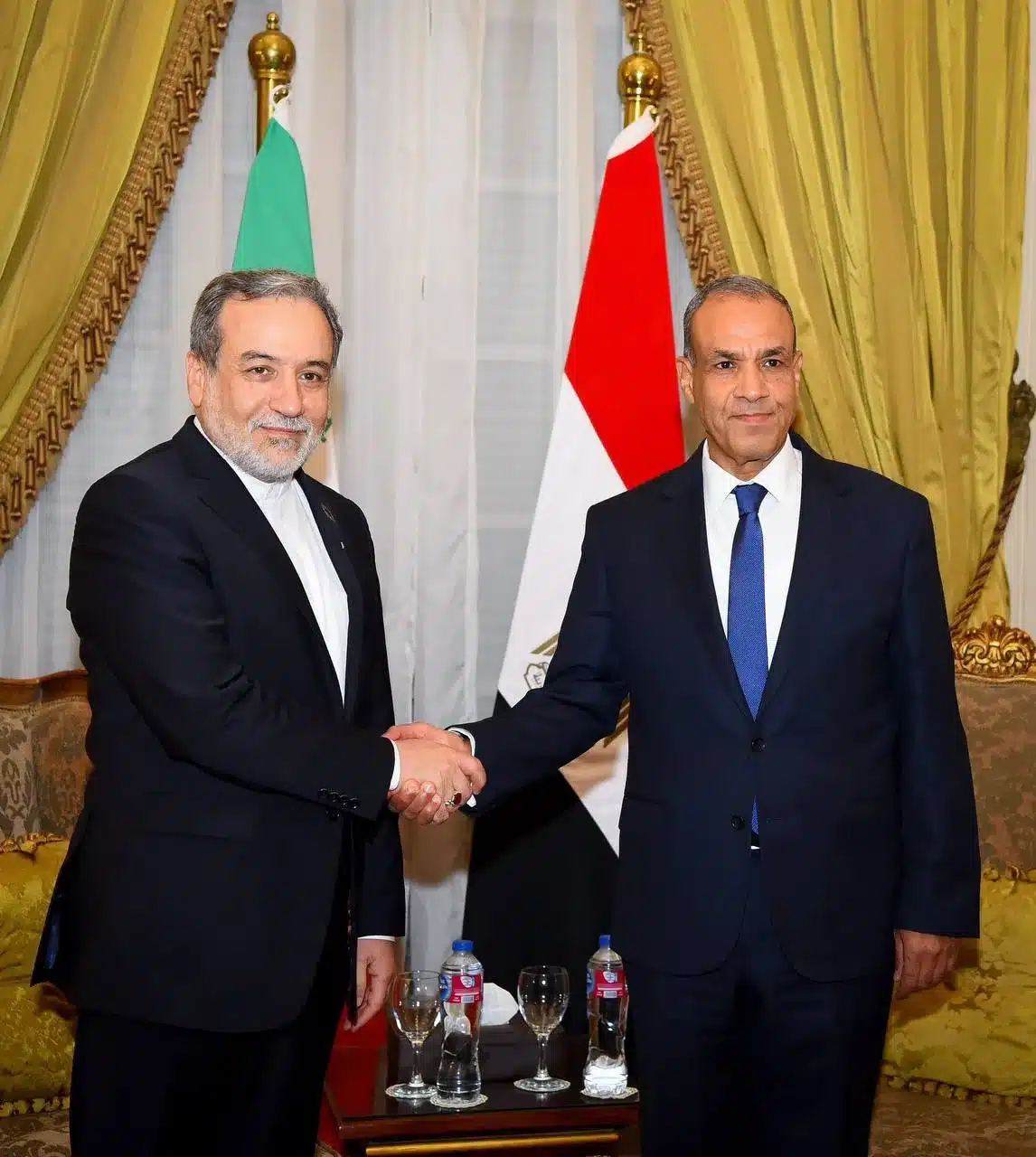
He also held talks with U.S. envoy Steve Witkoff and Iranian Foreign Minister Abbas Araghchi to discuss de-escalation proposals.
In this way, Cairo found in mediation a safe space: it could move to protect regional stability, Gulf interests, and supply chains without appearing as a military party in the war or as part of an offensive campaign against Iran.
Gulf pressure narrows the margin for caution
While Cairo focused on de-escalation and mediation, some Gulf voices began speaking about the limits of Egypt’s role. On X, UAE presidential adviser Anwar Gargash wondered about the absence of an “Arab role” in confronting Iranian attacks and criticized the silence of Arab and Islamic institutions.
Gulf analyses and articles also tracked a broader debate over whether Cairo was doing enough for its allies at a moment of direct threat. Still, these criticisms largely remained within the media and unofficial political sphere.
At the Washington Institute, American researcher Ben Fishman read Gargash’s tweet as an implicit pressure message directed at Cairo, after the latter questioned the absence of “major Arab and regional states” at a time when Gulf countries were under Iranian attack.
Another reading in Responsible Statecraft went further, arguing that Gargash’s questions were aimed at Egypt because Gulf decision-makers expect Cairo—with the largest Arab army and after receiving Gulf financial support—to be more proactive in defending the Gulf states.
Linking Gulf security to Egyptian security
Cairo understood that de-escalation statements alone were no longer enough. In early May, the ceiling of Egyptian political rhetoric rose, and the Foreign Ministry issued statements condemning the latest Iranian attacks on the UAE and affirming support for Gulf measures.
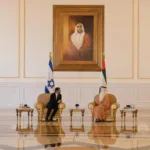
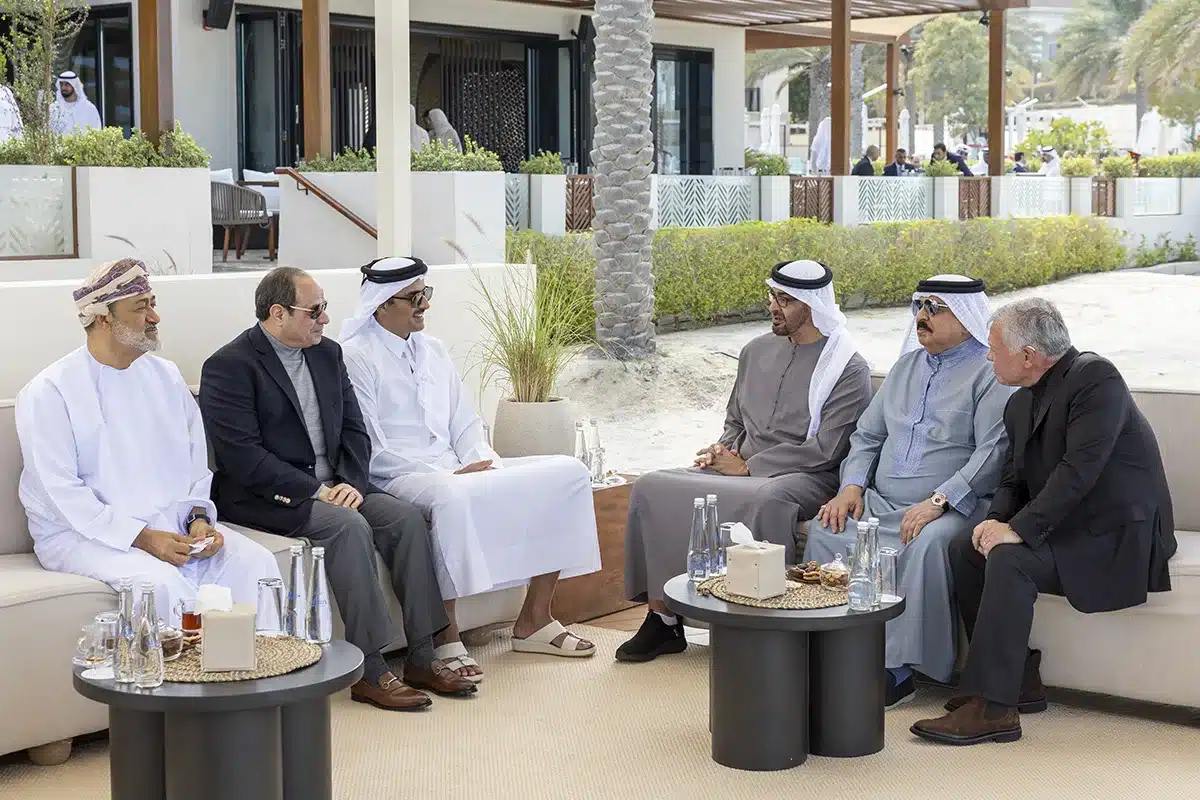
During a visit to Abu Dhabi, Sisi declared that “what affects the UAE affects Egypt,” stressing that Gulf security is part of Egypt’s national security.
This language was not merely protocolary. It moved Cairo from a position of general de-escalation to rhetoric of direct security commitment toward the Gulf.
It also provided political cover for any subsequent defensive move, so that it would appear as part of protecting allies rather than offensive participation in the war.
The appearance of Egyptian Rafales in the UAE
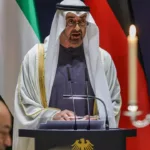
On May 7, the UAE Ministry of Defense revealed the presence of a detachment of Egyptian Rafale fighter jets in the UAE, during a visit by Sisi and UAE President Mohammed bin Zayed to inspect the pilots and readiness.
The accompanying images showed members of the Egyptian Air Force, including 13 men in flight suits, inside a hangar containing at least one Egyptian Rafale fighter jet. But official statements did not specify the number of aircraft, the rules of engagement, or the detailed nature of the mission.
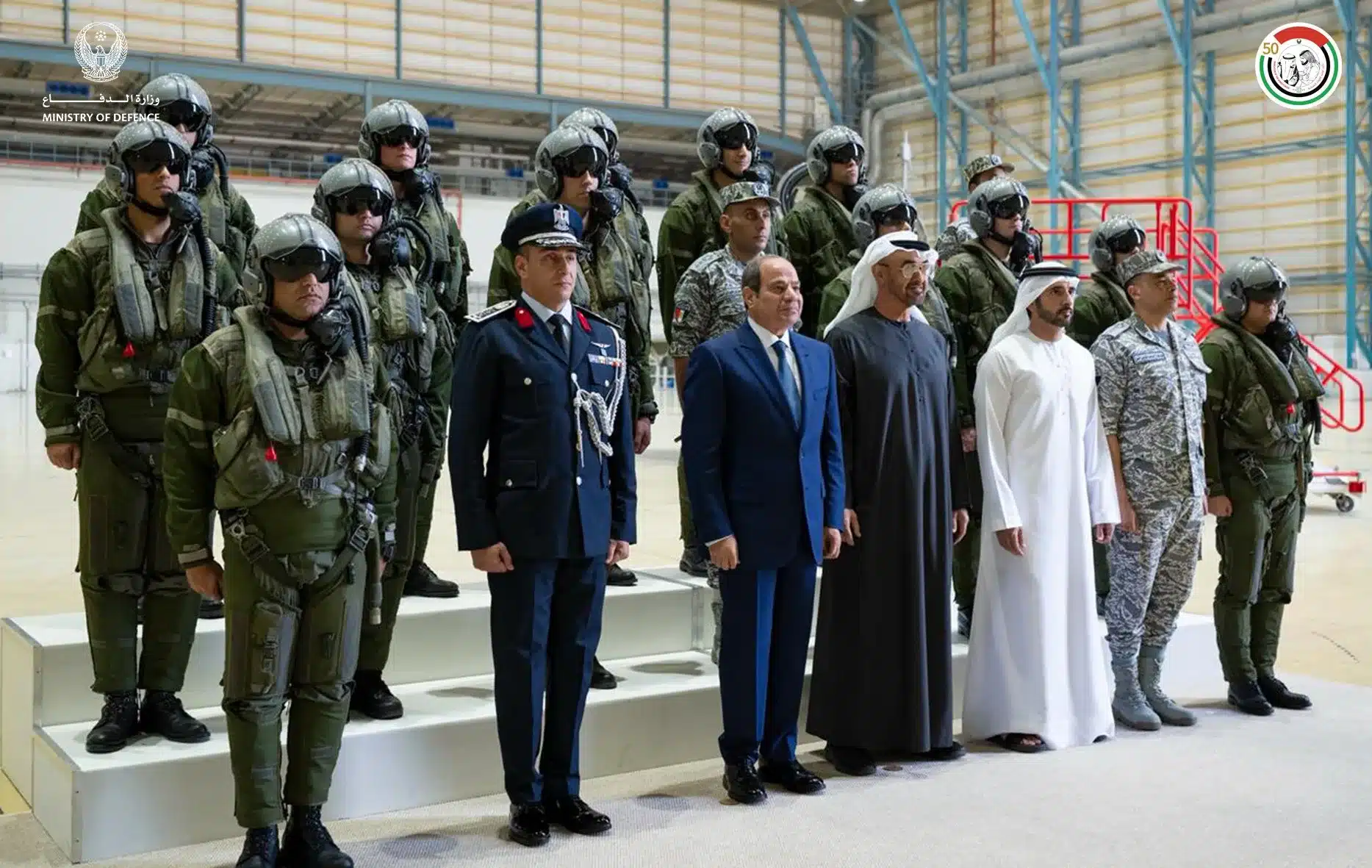
This public appearance carried multiple messages: reassurance to the UAE that Egypt is present on the ground alongside it, political deterrence toward Iran that the Gulf is not alone, and a signal that Cairo is ready to move from verbal solidarity to a tangible defensive presence.
At the same time, however, it did not include any announcement of offensive action against Iran, keeping the move within the bounds of demonstrative defensive support.
Air defenses and an open mediation line
Days later came the most significant revelation from The Wall Street Journal, which reported citing informed officials that Egypt had sent advanced air defense systems and personnel to operate them to Saudi Arabia, the UAE, and Kuwait. But neither Cairo nor the Gulf capitals announced the type of these systems, their number, or their deployment locations.
If this revelation is accurate, it represents a deeper level of involvement than the Rafale deployment. The fighters in the UAE were a public message with a clear deterrent and political character, whereas air defenses and operating crews mean direct operational support to protect Gulf airspace from missiles and drones.
At the same time, Cairo did not close the door to mediation. Abdel Aty continued his contacts with his Iranian counterpart and the U.S. envoy, while Egypt avoided a sharp response to Iranian objections that spoke of “foreign forces” increasing instability.
In this way, Cairo tried to preserve its delicate equation: defensive support for its Gulf allies while keeping the diplomatic channel open with Tehran and Washington.
In sum, Egypt did not move from neutrality to war, but from caution to defensive backing. It tried to reassure the Gulf that it is not distant from its security, while reassuring Tehran at the same time that it is not seeking a direct confrontation.