


هذا التقرير متاح أيضًا بـ العربية
The issue of the UAE’s involvement in Sudan’s war is no longer a disputed matter traded between accusation and denial behind closed doors. In recent weeks, it has become a wide-open file before Western parliaments, international courts and U.N. mechanisms. What was once contained through diplomatic pressure and public relations campaigns has now become the subject of parliamentary resolutions, documented testimony and criminal investigations a clear sign that the cost of the UAE’s bet on the Rapid Support Forces militia has entered a phase of rapid accumulation, and that the margin of denial Abu Dhabi relied on for more than three years is steadily disappearing.
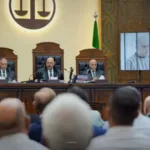
In an unprecedented shift, the European Parliament on July 9 adopted a resolution that explicitly names the UAE, for the first time, as a party involved in and fueling Sudan’s war, calling for concrete measures to end that support.
The significance of the resolution lies in the fact that it broke a rule of silence observed by European diplomats and policymakers since the war erupted in April 2023. Mentioning the UAE by name had remained a red line that European capitals were careful not to cross in order to preserve their economic and strategic partnerships with Abu Dhabi.
The resolution, numbered 2026/2799 (RSP), went beyond merely naming the UAE. It was accompanied by explicit calls to impose sanctions on Abu Dhabi-based Global Security Services Group, or GSSG, and its CEO, Mohamed Hamdan Al Zaabi — who is close to a senior official in the Abu Dhabi Presidential Court — because of the company’s documented role in recruiting Colombian mercenaries who were transported through Emirati military bases before being deployed in Sudan on behalf of the RSF, according to documentation by Human Rights Watch, which confirmed the presence of Colombian fighters at the moment El Fasher fell.
In its most sensitive dimension, the resolution also called on member states to activate procedures to assess designating the RSF militia as a terrorist organization under the European Union list. If completed, that step would turn any support for the militia financial or military into direct dealings with a terrorist entity, with all the legal consequences that would entail for its backers, foremost among them Abu Dhabi.
The resolution won the support of 476 votes, against 28 opposed. Despite the strength of the adopted language, political blocs within Parliament such as the Socialists and Democrats had pushed for tougher measures, including suspending ongoing trade talks between the EU and the UAE. But that proposal was blocked by other party alliances seeking to preserve the strategic and economic balance with the UAE.
More telling still, the resolution passed despite an intensive Emirati lobbying campaign ahead of the vote aimed at removing the country’s name from the final text and keeping the condemnation in general terms denouncing foreign interventions without naming anyone. According to a report published by Dark Box, Emirati diplomats held meetings with lawmakers and political advisers across parliamentary blocs, presenting their country as a state committed to peace, humanitarian aid and diplomatic mediation not a party accused of prolonging the war.
Abu Dhabi understood that a general condemnation could be managed diplomatically, whereas explicit naming in an official European parliamentary record could become the basis for sanctions, investigations and future scrutiny of the companies and financial and logistical networks linked to the conflict.
But the official voting records revealed the campaign’s resounding failure. The phrase “including the United Arab Emirates” was subjected to a separate vote, as was the reference to GSSG in the context of violations of the U.N. arms embargo. Parliament could have passed the general condemnation while deleting both references, yet a majority of lawmakers chose to keep them both.
Dark Box concluded that the outcome represents a political setback for Abu Dhabi inside European institutions that goes beyond a tactical loss in Strasbourg. It points to a gradual erosion in the ability of Emirati lobbying efforts to contain Sudan-related criticism through diplomatic engagement alone, and to a shift in debate within European institutions from the question of strategic partnership with the UAE to the question of political and legal responses to reports of its role in the war.
The collapse of the diplomatic shield
The significance of this shift becomes clearer when compared with what happened just a few months ago. In November 2025, the UAE succeeded in stripping a similar European Parliament resolution of any reference to it after an intensive lobbying campaign led by Minister of State Lana Nusseibeh, who personally traveled to Strasbourg with a team of diplomats and met European Parliament President Roberta Metsola and lawmakers from various blocs during the plenary session.
Those efforts which Politico described as a blitz lobbying campaign succeeded in defeating all amendments introduced by left-wing blocs to name the UAE and halt free-trade negotiations with it, with votes from the European People’s Party and right-wing blocs. Even the sanctions adopted by the Council of the European Union that month were limited to one name: Abdel Rahim Dagalo, the militia’s deputy commander, while every Emirati official or entity remained outside the circle of targeting.
But what held in November did not hold in July. The difference between the two resolutions is explained less by a shift in parliamentary bloc balances than by the accumulation of evidence and atrocities: the El Fasher massacre, which is no longer deniable despite attempts by Sky News UAE to obscure it; the scenario unfolding in El Obeid, reproducing what happened in North Darfur before the world’s eyes through daily drone strikes targeting water, fuel and electricity; and a flood of U.N. and human rights reports that tightened the noose around the Emirati denial narrative. Thus, what had been a forbidden exception in European discourse became written text in an official European Parliament document.
– Sky Group announced its withdrawal from its joint news production venture with the United Arab Emirates in the channel “Sky News Arabia,” relinquishing its strategic and operational ownership.
– Sky UK signed a multiyear trademark licensing agreement allowing the channel, owned by IMI (controlled by Mansour bin… pic.twitter.com/dmKnrSmGlR
— NoonPost (@NoonPost) June 1, 2026
War crimes investigator’s testimony shakes Westminster
The scandals surrounding Emirati involvement were not confined to Strasbourg. In London, the file of Abu Dhabi’s involvement entered a more embarrassing phase last month, when Nathaniel Raymond a war crimes investigator and executive director of Yale University’s Humanitarian Research Lab testified before the U.K. House of Commons International Development Committee as part of a parliamentary inquiry into the United Kingdom’s response to preventing mass atrocities.
On June 23, Raymond told the committee that the advanced drones, artillery, command-and-control systems, electronic warfare capabilities and mercenaries that enabled the RSF militia to tighten its grip on El Fasher came directly from the UAE. He said the British government had received intelligence, satellite imagery and detailed analysis from his team for more than two years warning that the siege of the city would end in famine and mass killing, but that the British government had prioritized its economic, security and diplomatic ties with Abu Dhabi over its duty to prevent genocide.
The testimony revealed shocking details about the extent of the UAE’s exposure, including that the attack on El Fasher temporarily halted after U.N. Security Council Resolution 2736 was issued, out of fear that it could carry political consequences for Abu Dhabi, before the militia resumed operations as soon as it became clear the international community would impose no sanctions. It also said British officials asked Yale’s lab to publish sensitive tracking data linking facilities inside the UAE to the militia because the British government was unable to confront Abu Dhabi directly.
The testimony sent real shockwaves through the British scene. Sarah Champion, chair of the International Development Committee, described the evidence as deeply shocking and sent an official letter to Baroness Chapman, minister of state for international development and Africa, demanding a detailed explanation from the Foreign Office of what it had done after receiving those warnings. The committee published the letter publicly and set a deadline for a response, moving the matter from the realm of accusations into direct parliamentary accountability.
View this post on Instagram
The repercussions did not stop at the Foreign Office. Calls escalated inside Parliament to review British arms exports to the UAE and reassess political, economic and even sporting ties with it. Questions also began reaching areas that had long remained outside the controversy, foremost among them the relationship between UAE Vice President Mansour bin Zayed and Manchester City, and Emirati influence deeply embedded in British sports.
Raymond himself summed up this dimension when he told the committee that the greatest form of accountability for the UAE would be a popular boycott, and that if people in Manchester burned Emirates shirts, the conversation today would look very different a sign that the immunity provided by Emirati soft power in Britain can no longer be taken for granted.
A judicial breakthrough in The Hague
On the legal track, another serious development came from the International Criminal Court. Deputy Prosecutor Nazhat Shameem Khan announced, after visiting refugee camps in eastern Chad, that the court had made a breakthrough in its investigations into Darfur crimes by obtaining strong and concrete evidence linking crimes committed on the ground through what are known as linkage evidence to specific individuals in positions of command, in the ongoing investigations into the El Fasher and El Geneina massacres, which the United Nations has said bear the hallmarks of genocide.
This development directly affects Abu Dhabi as the militia’s principal sponsor. Any judicial path that reaches the RSF leadership places the supply, financing and arming chain that enabled that leadership under the same legal microscope, especially since expert files submitted to the court identified the UAE as a backer of the militia, and human rights and legal circles have already referred senior Emirati and regional officials to the court over their role in Sudan’s atrocities.
Even with the prosecutor acknowledging that the court’s jurisdiction applies to individuals contributing to crimes rather than states, the mere approach of the investigations toward the leadership level means the legal cover under which the Emirati support network operated has become thinner than ever, and that specific names within that network may find themselves within the scope of prosecution.
The ICC’s judicial breakthrough coincided with a parallel blow delivered by the U.N. Independent International Fact-Finding Mission on Sudan, which concluded in a new report that the RSF militia committed brutal mass killings in El Fasher, systematic abductions of women and girls, widespread gang rape and deliberate starvation, and that these atrocities constitute distinctive indicators of crimes of a genocidal nature, based on its earlier report titled Hallmarks of Genocide in El Fasher.
The report documented testimony from survivors who said they were raped in rooms where the bodies of their relatives were still lying on the floor. It also documented patterns of detention, torture, ransom demands and enforced disappearance affecting thousands of civilians. The mission warned that the same El Fasher patterns encircling the city, targeting infrastructure and choking humanitarian routes are now being repeated in El Obeid.
It announced the opening of an urgent investigation into violations there under a mandate from the Human Rights Council, stressing that responsibility lies not only with the parties to the fighting, but also with those enabling them through weapons, drones and other forms of support.
View this post on Instagram
Sen. Bernie Sanders’ statement
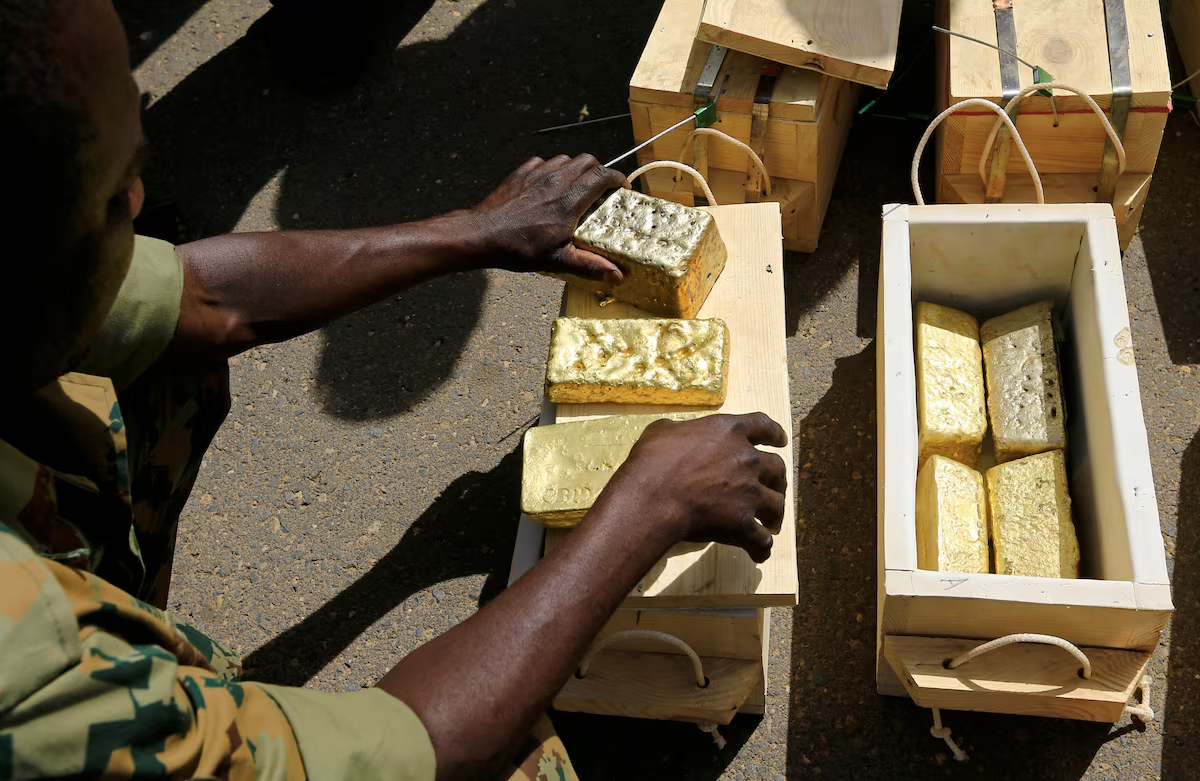
On the same date the European Parliament resolution was issued July 9 prominent U.S. Sen. Bernie Sanders released a statement describing what is happening in Sudan as genocide, placing direct responsibility on the UAE by saying that Trump’s close ally, the UAE dictatorship ruled by one of the wealthiest families in the world, has financed and enabled this genocide for years, and that billions of dollars in looted Sudanese gold are flowing directly into the pockets of Emirati elites.
He stressed that this involvement has been documented by the United Nations, investigative journalism and international human rights organizations.
Sanders also called on Congress to force the UAE to halt its military support for the militia, extending a track he had already begun with a group of Democratic senators who in recent months sought to block U.S. arms deals to Abu Dhabi over the Sudan file. Regardless of the prospects for these legislative efforts in a Republican-dominated chamber, the entry of a figure of Sanders’ stature into the line of public accusation deepens the shift of the file in Washington from a marginal issue into a live factor in the debate over the broader U.S.-UAE relationship, and multiplies the political cost of Emirati involvement.
From Human Rights Watch to The New York Times
The next day, Human Rights Watch published an article by researcher Mohamed Osman, who described the resolution as a watershed political step because it is the first European parliamentary text to name the UAE as a party participating in and fueling the war, after diplomats and policymakers had consistently opposed that step since the conflict began a delay that long deprived the European Parliament of condemning Emirati support for the militia.
Osman reviewed the findings of his organization’s research documenting the passage of Colombian military contractors, recruited by a UAE-based company, through Emirati military bases before being deployed in Sudan, and their presence when the militia took control of El Fasher, in addition to the militia’s receipt of weapons and ammunition, some of them European-made, in violation of the U.N. arms embargo on Darfur.
He said this was further evidence that the UAE is helping the militia and materially contributing to its ability to commit war crimes. Osman urged the European Union not to stop at the resolution, but to translate it into targeted sanctions including GSSG and its CEO Mohamed Hamdan Al Zaabi, as well as airlines and airport operators involved in the Emirati air bridge to the RSF.
Just one day later, the wave reached one of the broadest platforms in American journalism. Prominent columnist Nicholas Kristof devoted his New York Times column to the issue under the headline “Let’s Name the Country Financing Mass Murder,” noting that human rights experts had warned for many months that the RSF militia was on the verge of overrunning El Fasher and slaughtering its residents, while President Trump and the rest of the world’s leaders merely shrugged, allowing the militia to storm the city and kill about 60,000 people in just a few weeks. He warned that the same scenario is now being repeated in El Obeid, home to half a million people or more.
Sixty thousand dead in #ElFasher, and a new city under siege..
🔴 #Sudan is nearing another massacre, while the world continues to ignore the state arming #RapidSupportForceshttps://t.co/0nkgu3TW9F#WarInSudan
— NoonPost (@NoonPost) July 12, 2026
Kristof drew on testimony he personally gathered from survivors on the Chad-Sudan border about the militia’s systematic killing of men and boys over age 10 and the gang rape of women and girls on an ethnic basis. The core of his argument is that preventing the next massacre does not require military action or even money; it may be enough for leaders to raise their voices and call things by their names, foremost among them the name of the state financing the killing machine a direct reference to the UAE, which the headline itself pointed to.
The publication of such an article in one of America’s most prestigious opinion platforms, in such explicit terms, reflects the widening circle of public naming from parliamentary chambers to broad Western public opinion the very arena in which Abu Dhabi has long invested to shape its image.
Multiple fronts undermine the UAE’s containment diplomacy
Taken together, these developments reveal a qualitative shift in the nature of the pressure bearing down on Abu Dhabi. Until recently, the UAE managed the file through a tried formula: categorical official denial, preemptive diplomatic pressure on decision-making centers, and heavy use of investments and economic partnerships to raise the cost of any accountability. That formula proved effective in November 2025, when it stripped the European Parliament resolution of its substance.
But what has happened since then indicates that the formula has reached its limits. Pressure is no longer able to keep pace with fronts multiplying faster than Emirati diplomacy can contain them: a European Parliament that names and calls for sanctions; a British parliamentary committee that investigates and questions the government; an international criminal court approaching the leadership level; a U.N. mission documenting hallmarks of genocide; voices in Congress raising the stakes; and prominent writers openly calling for the UAE to be named as a principal instigator and enabler of the war and atrocities in Sudan.
More important than the multiplicity of fronts is the change in their nature. Condemnation is no longer coming from Abu Dhabi’s traditional adversaries or from platforms that are easy to discredit, but from established Western institutions that form the core of the environment in which the UAE built its image and influence such as European and British parliaments, international justice, U.N. mechanisms and the halls of Congress.
The accusations have also moved from insinuation to documentation, and from generalities to technical details that are legally actionable: names of companies and individuals, aircraft and shipment routes, communications data linking Emirati facilities to the RSF militia, and linkage evidence reaching the leadership. This kind of accumulation cannot be washed away by public relations campaigns, because it becomes a permanent institutional record that will be invoked at every coming juncture, from EU free-trade negotiations to U.S. arms deals to sports investment files in Britain.
Looking ahead, we believe the momentum against the UAE will continue to rise along three parallel tracks. The first is parliamentary and legislative: the precedent of European naming will provide the basis for further resolutions and questioning, while the file of El Obeid if the El Fasher scenario is repeated there will keep pressure at its peak and embarrass every capital that remained silent.
The second is judicial, as the coming months will determine whether The Hague’s breakthrough translates into arrest requests targeting the militia’s leadership a development that would place its backers before an unprecedented legal and political dilemma, especially if it coincides with completion of the European track to designate the militia as a terrorist organization.
The third is popular and reputational, and it is the most strategically dangerous in the long term, because the spread of questions to Manchester City and sports influence targets the symbolic capital Abu Dhabi spent decades and billions building.
Unlike his brothers, Mansour bin Zayed prefers to work in the shadows. While he appears as the owner of Manchester City, his hidden face remains one of building ties with coup leaders and war criminals and financing genocide in Sudan pic.twitter.com/j5Unzf1LRg
— NoonPost (@NoonPost) November 1, 2025
By contrast, the UAE will continue to bet on its usual sources of resilience, such as Western governments’ economic interests and its close relationship with the Trump administration. But the crucial difference is that these cards now come at a mounting and escalating cost, and that every day of the war adds to the record in ways that make defending partnership with Abu Dhabi heavier even for its own allies. The question is no longer whether the UAE will pay a price for its involvement in Sudan, but how high that price will be and how quickly it will come due.
Finally, one paradox in this picture deserves pause. While the consciences of Western politicians, parliamentarians and writers from Strasbourg lawmakers to Westminster committees to New York Times columns are moving to name the UAE and hold it accountable for its role in Sudan’s bloodletting, Sudanese politicians present themselves as advocates of ending the war and representatives of the Sudanese people, foremost among them former Prime Minister Abdalla Hamdok and his colleagues in the Sumoud coalition leadership, even as their actual political conduct reveals a tireless effort to exonerate the UAE, dilute the criticism directed at it and divert attention from its role.
One scarcely finds in their discourse any explicit naming of Abu Dhabi or any call to hold it accountable, even as the European Parliament, Congress and the Western press call things by their proper names.
This position becomes all the more strange and grave in light of the weight of the accumulated evidence of Emirati involvement, all of it documenting a broad Emirati network of training camps, supply lines, arms smuggling and mercenaries into Sudan. When foreigners become bolder in naming the executioner of the Sudanese than some of Sudan’s own politicians, the question is no longer about the credibility of the evidence, but about the credibility of those who claim to represent the victims while working to conceal the name of the one who armed their killers.