









هذا التقرير متاح أيضًا بـ العربية
Agriculture in Idlib is no longer governed by inherited expertise; it has become hostage to sharp climate swings, oscillating between severe drought and sudden floods. These shifts have redrawn the province’s agricultural map, forcing farmers to abandon traditional divisions and replace their crops to adapt to a changing environment and unfamiliar levels of soil moisture.
The pressures have not been limited to climate. Economic challenges have also emerged as a decisive factor in farmers’ decisions. The sharp rise in production costs — from seeds and fertilizers to taxes and debt — has pushed many to turn away from costly, high-risk crops such as fava beans and cumin, and toward cheaper, safer options such as wheat and barley, despite their limited financial returns.
These overlapping pressures have also changed the place of agriculture for many families, reducing it from a primary source of income to a secondary activity. That has driven many to turn to trade, supporting professions or migration. As uncertainty has widened, long-term crop cycles have receded, replaced by short-term seasonal planning governed by caution and anticipation.
A volatile climate redraws Idlib’s agricultural map
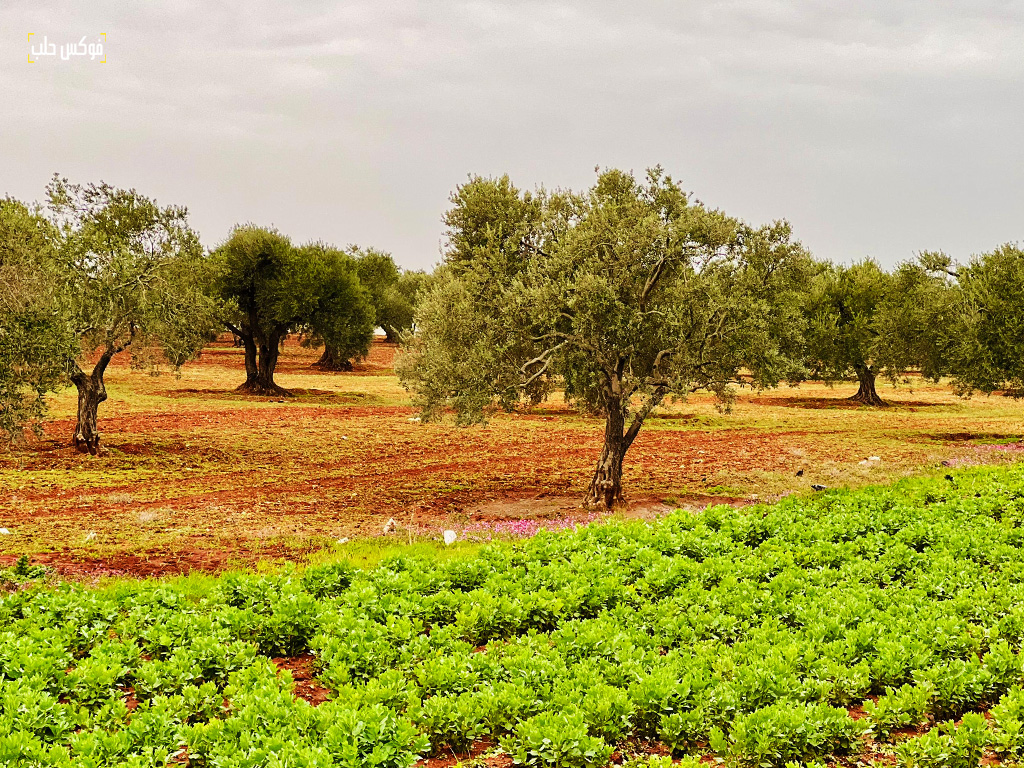
Climate change continues to inflict widespread damage on crops and farmland in Idlib province in northwestern Syria. After years of drought that left crops parched, the latest rainy season came and flooded vast areas, reshaping the province’s agricultural map once again.
Crops vary in how much water they can tolerate and how much they need, forcing changes in the division of agricultural projects according to crop type. Some can withstand heavy rainfall, while others are damaged by it.
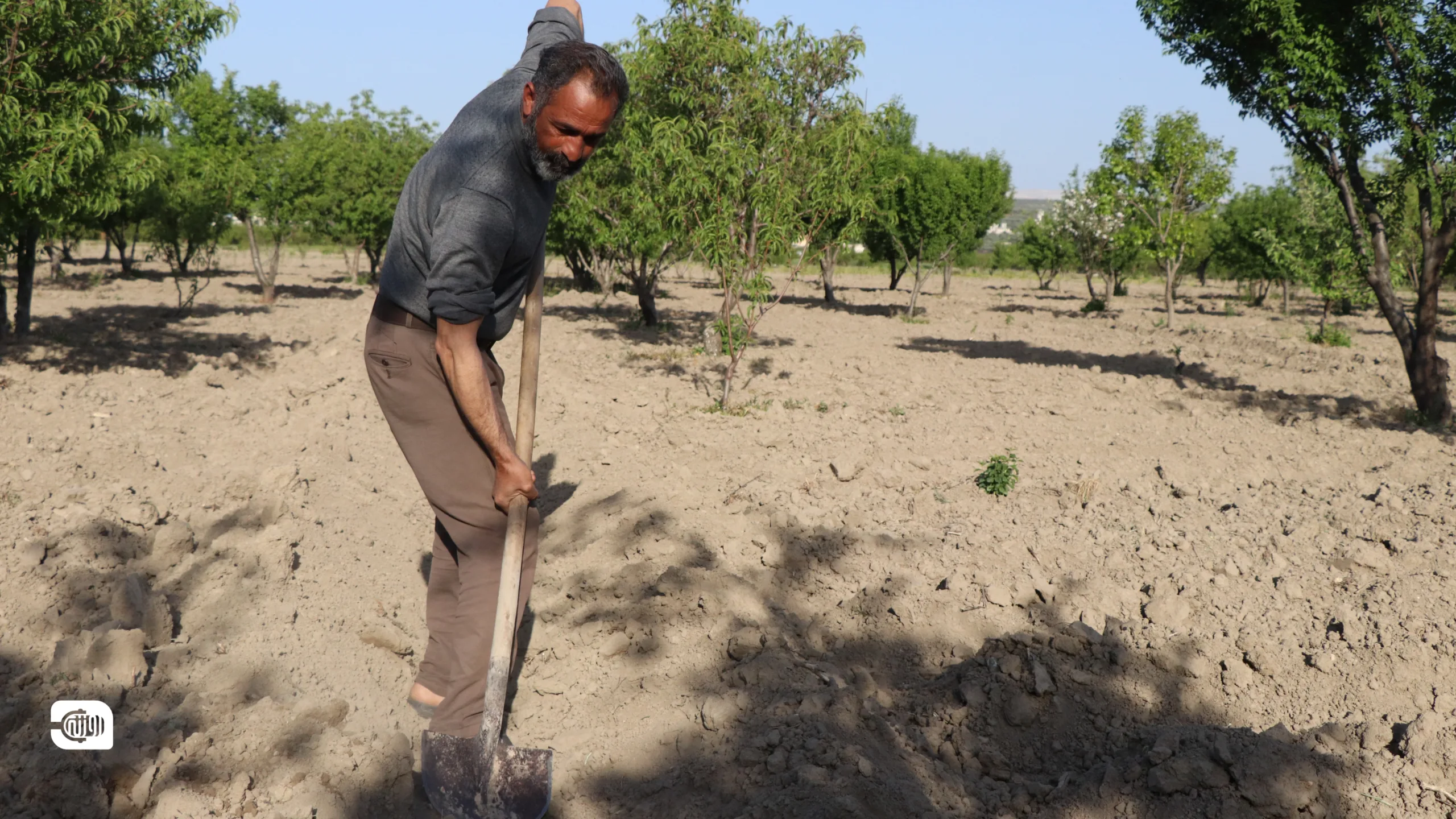
In an interview with NoonPost, Hajj Abdul Majeed Abu Jamil, a farmer from the Idlib countryside, said: “Farmers prepared their land for sowing this year and relied on intensive irrigation because the rains were delayed. But the rains later came with unexpected intensity, recording very high levels and adding to the quantities of water with which the land had already been irrigated.”
When an area planted with a crop such as fava beans is damaged by flooding, the farmer is forced to drain the excess water and replace the ruined crop with another that consumes more water, such as wheat. According to Hajj Abdul Majeed, this has led to an expansion in the areas planted with crops capable of consuming larger quantities of water, at the expense of other crops whose cultivated areas have shrunk across the province.
Farmers in Idlib now take into account factors that previously did not receive the same level of attention, such as the nature of the soil and how close the rock layer lies to the surface. These factors affect the land’s ability to absorb and store water, contributing to changes in crop distribution across the province.
In an interview with NoonPost, Mustafa Mahmoud Sammaq, director of water resources in Idlib province and an agricultural engineer, said climate changes “have led to a shift in agricultural stability zones and the downgrading of some of them to lower classifications.”
Sammaq explained that agricultural land in Syria is classified into five zones, beginning with the first stability zone, where annual rainfall exceeds 350 millimeters, and ending with the fifth stability zone, where annual rainfall ranges between 100 and 150 millimeters. He added that these zones have experienced sharp and unexpected fluctuations in rainfall levels, affecting the province’s agricultural map and farmers’ decisions on crop selection.
The end of agricultural risk-taking
Risk-taking has long been part of the mindset of Idlib’s farmers, who inherited agricultural knowledge and methods over many generations. But caution has become more pronounced in recent years, and with it farmers’ willingness to embark on uncertain ventures has declined.
According to a number of farmers interviewed by NoonPost, risk has become an option many now rule out after successive losses in crops such as cumin, anise, black seed and potatoes. These crops consume large amounts of organic matter in the soil, and their failure brings heavy financial losses.
Cumin tops the list of crops most vulnerable to failure in recent years. Hassan Mardati, a grain broker and trader from the Idlib countryside, said one grain facility received only 2 tons of cumin this year, compared with an annual average that used to reach about 200 tons.
Farmers in Idlib are turning to varieties better able to withstand climate fluctuations, such as wheat, barley and alfalfa, as lower-risk and more stable options.
Engineer Mustafa Sammaq added that “farmers are now turning to crops that can withstand scarce rainfall, while crops that require large quantities of water are declining. In some cases, the farmer keeps the same crop but uses seeds that are more adapted to drought.”
Sammaq explained that wheat farmers, for example, have turned to planting the hard variety “Sham 3” and the soft variety “Douma 2” because they are better able to withstand drought, instead of varieties they were accustomed to planting, such as the hard variety “Sham 7” and the soft variety “Sham 10.” He noted that similar shifts have affected other varieties as well, and will ultimately be reflected in the types and quantities of crops produced by the province.

Crippling costs push farmers to narrow their options
Mohammad Jamil, a farmer from the city of Binnish in the Idlib countryside, told NoonPost that the agricultural season now requires capital equal to twice what it used to require. He added that taxes imposed on imported agricultural supplies have driven up the prices of some items by as much as 100 percent. The price of a bag of fertilizer rose from $21 to $40, while the increase in the prices of some pesticides exceeded 100 percent. For example, the price of a liter of the herbicide “Gramoxone” rose this year from $5 to $11.
A research report published by the Danish Refugee Council in May 2026 noted that seeds, fertilizers and insecticides are being sold at prices beyond the financial means of most farmers. This drives many to buy production inputs on credit, compounding their financial burdens, alongside rising operating costs, including wages for day laborers, the rental of agricultural machinery such as tractors, and the purchase of fuel needed to run water wells.
The report, which examined the challenges facing farmers in Syria, added that high transportation costs hinder their access to markets and to their land. In some cases, farmers are forced to sell their products to traders at low prices because they cannot bear transport expenses. Farmers in some areas also reported that they were forced to dispose of their crops after shipping costs exceeded the expected profits from selling them. These losses are compounded by fluctuating market prices and shrinking profit margins.
Idlib’s farmers are increasingly dependent on groundwater wells, imposing additional financial burdens that begin with drilling costs and do not end with operating expenses. Engineer Mustafa Sammaq explained that wells powered by fuel or electricity raise agricultural spending, while solar-powered wells are cheaper to operate but require periodic maintenance that in turn adds new burdens on farmers.
When the land is no longer enough..
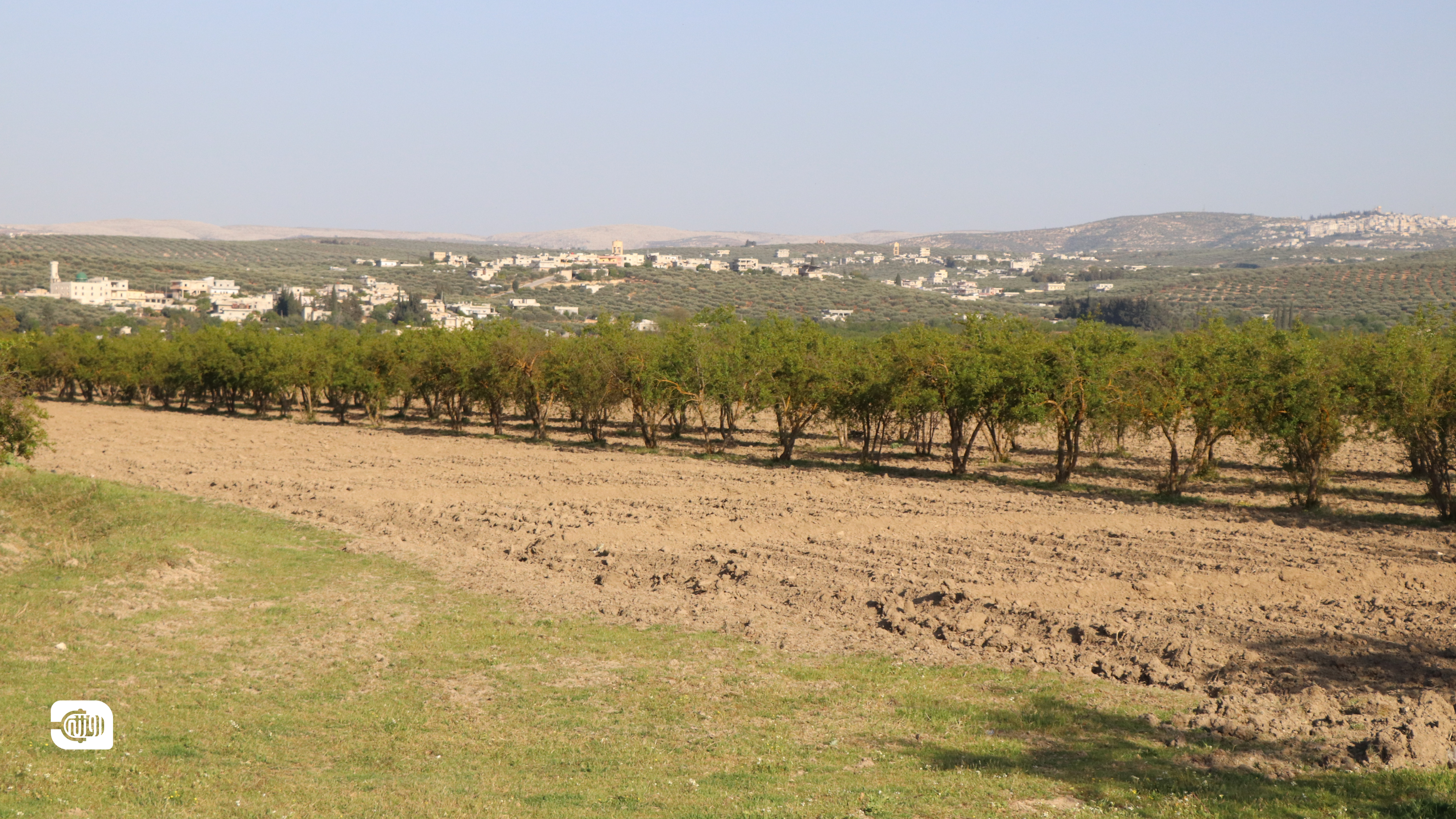
Many of the farmers interviewed by NoonPost confirmed that agriculture has lost its former standing as a primary profession. Families that own land have begun dividing their members between working in the fields and turning to other occupations, after the land’s returns became incapable of supporting the entire family.
Trade has become a suitable option for a segment of farmers who decided to lease out or sell their land. Mohammad Abu Abdo, from the Idlib countryside, said he sold his land two years ago and moved to the Sarmada area in the north of the province to work in trade, stressing that he did not regret the decision. Other farmers, meanwhile, turned to crops that do not require daily attention, such as barley, and then moved to work in other provinces, including Damascus and Aleppo, benefiting from the reopening of roads between provinces.
Agriculture-related professions have also emerged as an option for those who preferred to remain within the sector through supporting work, such as driving tractors, spraying pesticides, brokering grain trade and operating crop-screening facilities, in addition to raising livestock and poultry. As for the sons of farming families, some are turning to migration or joining the security forces and the army.
Hajj Abdul Majeed Abu Jamil said the most notable shift in farmers’ plans lies in their inability to establish a crop cycle in which crops follow one another in a set sequence. Repeated losses in recent years have led to the breakdown of traditional crop cycles, while the difficulty of predicting seasons has pushed farmers to limit their plans to a single year after they once extended for years.
Farmers today exercise greater caution in determining sowing and irrigation dates, leading to changes in the agricultural timings and norms prevailing in the province, and shortening the duration of some seasons.
Engineer Mustafa Sammaq concluded by saying that “the most prominent strategic shift lies in summer crops dropping out of the production cycle, unless the farmer is able to access a groundwater source.”