






هذا التقرير متاح أيضًا بـ العربية
On the eve of Iraqi Prime Minister Ali al-Zaidi’s visit to Washington, expectations are rising and leaks are mounting about US-led efforts to strengthen trade connectivity between Iraq and Syria, particularly with regard to resuming oil exports through pipelines and reviving trade between the two countries.
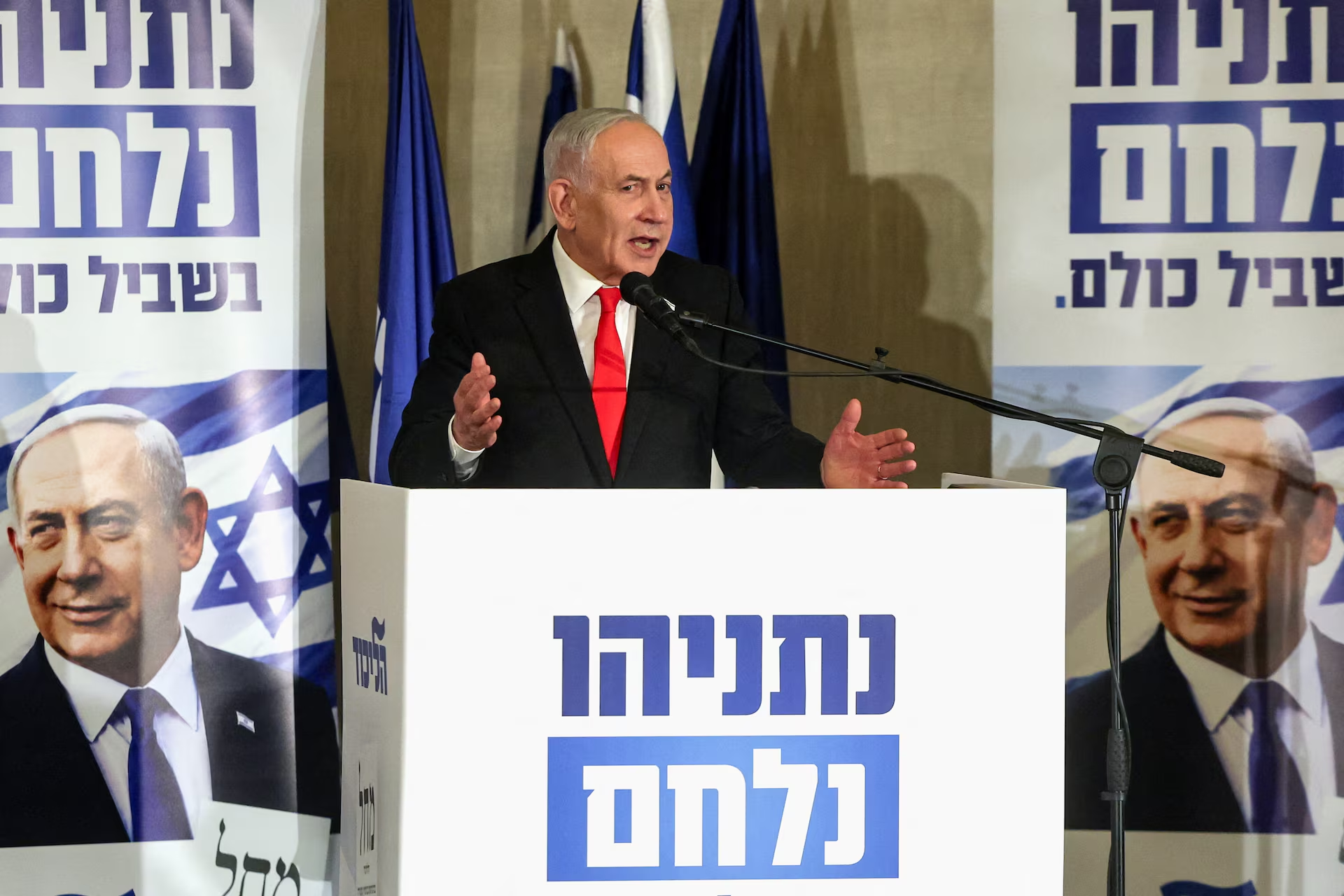
The Iraqi government spokesperson said, Haider al-Aboudi at a press conference that al-Zaidi will head to the United States today, Monday, explaining that the visit falls within the framework of developing bilateral relations based on the shared interests of the two countries.
Al-Aboudi added that the memorandums of understanding expected to be signed between Baghdad and Washington will cover the oil and gas sectors, along with the entry of specialized US companies that would help raise production capacity and create alternative export outlets to reduce the impact of any closure of the Strait of Hormuz.
He explained that al-Zaidi will hold important meetings with US President Donald Trump and senior American officials, while the Iraqi delegation will meet representatives of economic and financial institutions and companies, with the aim of expanding the horizons of cooperation and dialogue in line with Iraq’s interests.
Al-Zaidi had previously confirmed, in an article published by the US newspaper The Washington Post under the headline “Why I Will Visit Washington,” that he would travel to the US capital this week, where he would present Trump with “practical ways” to elevate bilateral relations from crisis management to opportunity creation, particularly in the economic, technological, and security spheres.
Observers say al-Zaidi’s visit to Washington will focus on several issues, chief among them disarming factions and militias in Iraq and concluding strategic economic agreements with Syria, most notably reviving the Kirkuk-Baniyas oil export pipeline, which would provide Iraq with an outlet to export oil from the Kirkuk fields to Syria’s Mediterranean port of Baniyas.
Energy file
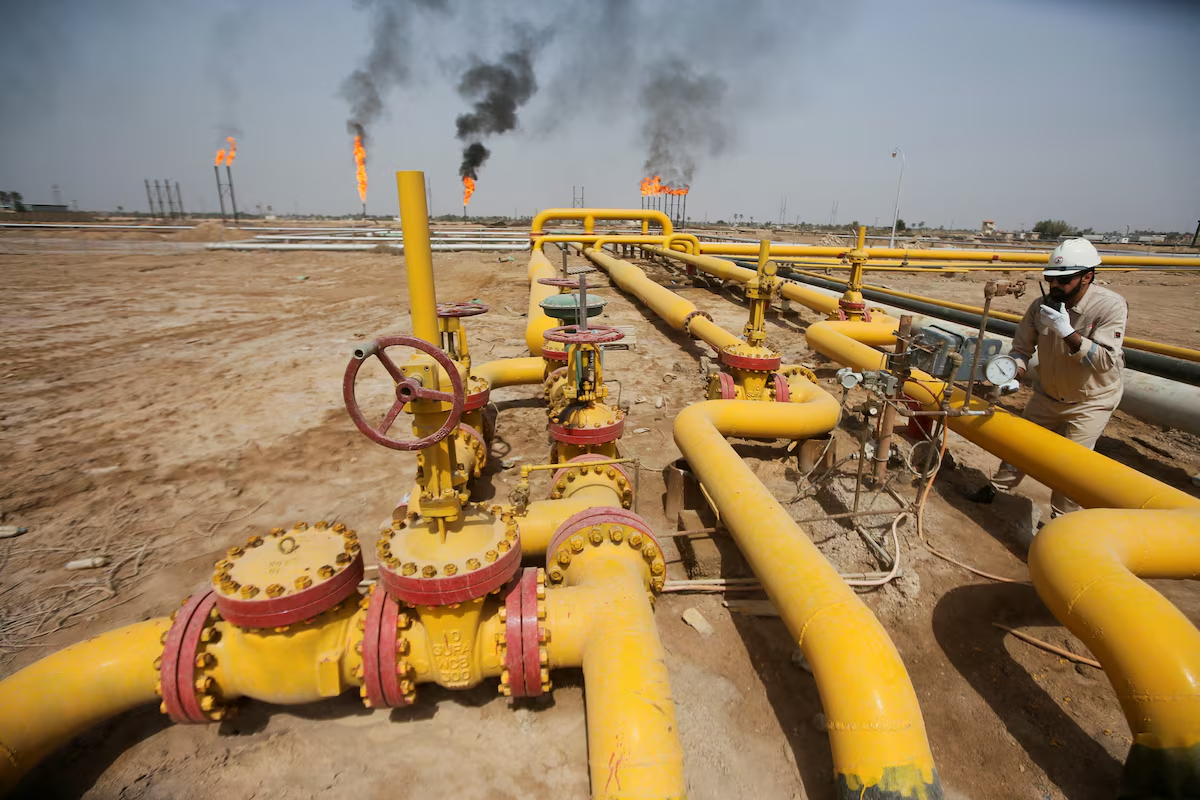
Iraq is among the countries most affected by the war between Iran and the United States, after Iran’s closure of the Strait of Hormuz brought most of its oil exports to a halt. Iraq had been exporting about 4 million barrels of oil per day before the war broke out, before its exports fell to around 150,000 barrels per day from the fields of Kirkuk province and the Kurdistan Region through Turkey’s port of Ceyhan.
Al-Zaidi’s government is seeking to strengthen Iraq’s ability to find alternative outlets for oil exports in order to limit the repercussions of any closure of the Strait of Hormuz or disruption to navigation through it. That objective aligns with the US approach, as Washington seeks to link the Iraqi economy to the Syrian economy in a way that supports the government in Damascus and enhances the Iraqi economy’s ability to expand its trade exchanges.
The Kirkuk-Baniyas pipeline was built in 1952. It stretches about 800 kilometers and has an export capacity of up to 300,000 barrels per day. Over the past decades, the line has been subjected to repeated sabotage in Iraq and Syria, in addition to aging and the need for comprehensive rehabilitation or the construction of a new line.
For his part, oil expert Ahmed Askar believes the economic feasibility of rehabilitating the line may be limited, given its need for a full overhaul in addition to its limited export capacity. He said: “In light of Kirkuk’s current production, which does not exceed 300,000 barrels per day, questions arise about whether this output can operate the line at full capacity and justify the costs of transport and rehabilitation.”
Askar added that if there are plans to increase production in Kirkuk, restarting this oil artery could represent a strategic option for Iraq, as it would provide a direct and rapid outlet to European markets via the Mediterranean.
View this post on Instagram
US pressure
For his part, oil researcher Saeed Ahmed told NoonPost that Iraq is facing US pressure to revive the Kirkuk-Baniyas line, noting that the US envoy to Iraq, Tom Barrack, is playing a central role in arranging the agreement whose draft is expected to be signed during al-Zaidi’s visit to Washington.
Ahmed reviewed a number of motives behind the US pressure on Baghdad to restart the line, including Washington’s removal of Syria from the list of state sponsors of terrorism during the recent NATO summit, in addition to its effort to strengthen oil market supplies by expanding Iraqi crude export outlets and reducing its dependence on the Strait of Hormuz.
He added that the war between Iran and the United States is still ongoing, amid expectations of a renewed full-scale confrontation and the consequences that could follow in the global energy market.
The British website Middle East Eye quoted senior Iraqi and regional officials as saying that Iraq, Syria, and the United States are planning to announce the revival of the old Kirkuk-Baniyas pipeline as part of efforts to curb Iran’s control over shipping through the Strait of Hormuz.
According to the website, the agreement is expected to be unveiled during al-Zaidi’s visit to Washington, while leaks indicate that Syrian Foreign Minister Asaad al-Shaibani may travel to the United States to take part in signing the agreement at the White House.
The report noted that US envoy Tom Barrack worked on preparing the details of the agreement ahead of al-Zaidi’s visit, as US companies stand ready to begin rehabilitating the line or building a new parallel one.
View this post on Instagram
The Iraqi foreign minister visited Damascus on June 30 and met Syrian President Ahmed al-Sharaa and Foreign Minister Asaad al-Shaibani, in what was the most significant visit by an Iraqi official to Syria since the fall of Bashar Assad’s regime.
The joint statement said Syria and Iraq agreed to form a specialized joint committee in the fields of energy, transport, agriculture, border crossings, and water, in addition to discussing mechanisms for transporting and transiting energy supplies and the project to rehabilitate oil transport pipelines from Iraq to Syria.
Regarding the energy file, oil researcher Saeed Ahmed believes al-Zaidi’s visit to Washington will include the signing of several agreements, among them the entry of US companies specializing in energy and infrastructure into Iraq to develop oil and gas fields and invest in associated gas, in addition to US companies taking on the rehabilitation of the Kirkuk-Baniyas line or building a new line with export capacity that could reach 1 million barrels per day.
Ahmed believes the project could pave the way for another pipeline, which may be unveiled in the coming months, extending from the Basra fields to the city of Haditha in Anbar province and from there to Jordan’s port of Aqaba on the Red Sea. The line could also extend through Syrian territory to the port of Baniyas on the Mediterranean, with an export capacity that may reach about 2.5 million barrels per day, he said.
Trade exchange
For years, Washington has sought to loosen the Iraqi economy’s ties to its Iranian counterpart, which is subject to severe economic sanctions. In this context, the US envoy to Iraq, Tom Barrack, is working to reactivate trade between Iraq and Syria in a way that ensures the flow of goods across the border, especially as Syria’s industrial sector begins to recover and a number of factories that had shut down or moved to Turkey during the years of the Syrian revolution between 2011 and 2024 resume operations.
In this context, economic expert Anmar al-Obaidi told NoonPost that the reopening months ago of the Iraqi Rabia crossing and the Syrian al-Yarubiyah crossing reinforces this assumption, after Syrian forces regained control over large parts of the border strip.
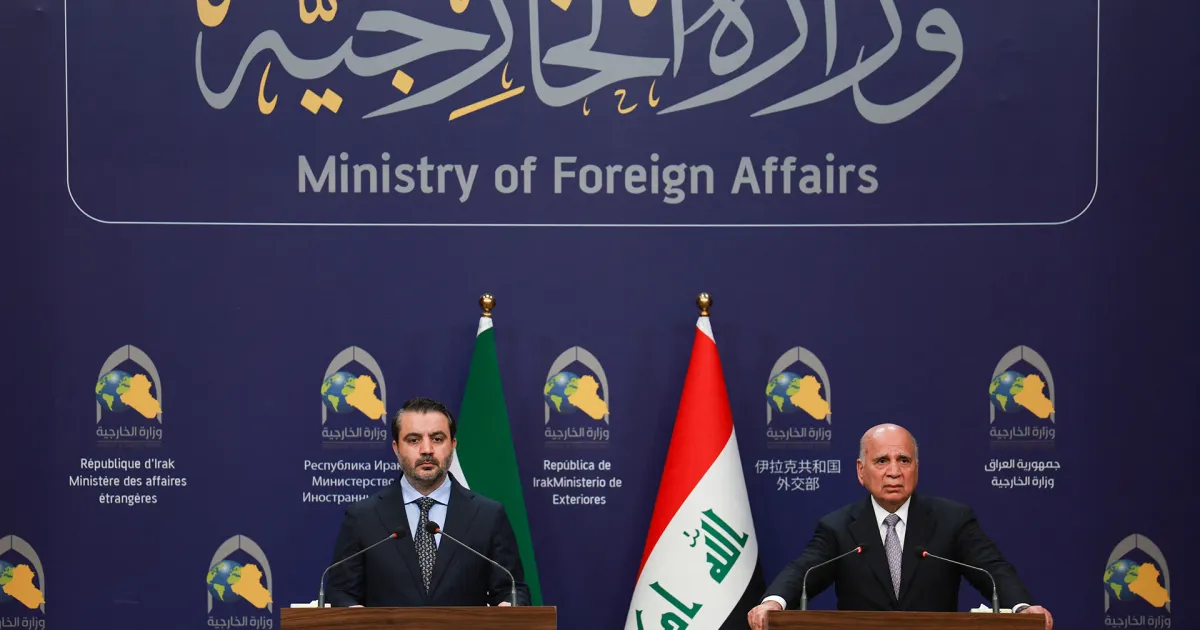
Al-Obaidi added that this step could pave the way for reactivating trade, which came to a complete halt during the years of the Syrian revolution. He explained that trade between the two countries reached about $2 billion in 2011, while Syrian imports accounted for about 80% of Iraq’s imports of goods, before falling to about 5% of that level as a result of the war in Syria and then ISIS’ control over large swaths of Iraq between 2014 and 2017.
He noted that reactivating trade between Iraq and Syria would benefit both countries, explaining that the decline in Syrian exports to Iraq opened the door to Turkish and Iranian goods. He added that in light of the war in Iran, the decline in its production, sanctions that hinder financial transfers between Baghdad and Tehran, rising production costs in Turkey, and the fact that the prices of its exports have more than doubled over the past decade, Syrian goods emerge as a suitable economic option for Iraq.
In return, Syria stands to benefit from expanding its exports and boosting the productive capacity of its factories as it opens up to the Iraqi market, he said.
Iraq and Syria are linked by three main land crossings: al-Qaim-al-Bukamal, Rabia-al-Yarubiyah, and al-Waleed-al-Tanf, which was the main artery of trade between the two countries before 2011.
Tourism sector
Energy, trade, and tourism stand out as among the main future tracks of Iraqi-Syrian relations. Before 2011, the tourism sector contributed about 14% of Syria’s revenues, while the number of tourists who visited the country in 2010 reached about 8.5 million, with Iraqis among the most prominent, driven by geographic proximity, low prices, social and cultural ties, and a shared language.
In this context, political analyst Riyad al-Ali says that strengthening political rapprochement and trade between Iraq and Syria could in the future help revive tourism movement between the two countries, especially in light of US pressure on al-Zaidi’s government to loosen the Iraqi economy’s ties to Iran’s, which benefits annually from the spending of millions of Iraqis in the tourism sector.
Al-Ali added in remarks to NoonPost that the Iraqi government finds itself facing growing US political, economic, and security demands at a time when President Donald Trump’s administration, in parallel with the war on Iran and the Strait of Hormuz crisis, is seeking to narrow the sources of funding for the Iranian economy and dry up the flow of dollars to it.
Al-Ali believes the coming weeks may witness a rapid escalation in pressure on Tehran, especially after the NATO summit held in Ankara last week and the alliance countries’ expression of support for the US campaign aimed at reopening the Strait of Hormuz, which Iran continues to keep closed by force.
Iraqi Prime Minister Ali al-Zaidi will discuss multiple files in Washington that could shape the future of Baghdad’s relations with the United States and the countries of the region, foremost among them Syria, through anticipated agreements in the fields of energy, economy, and security.