




هذا التقرير متاح أيضًا بـ العربية
Türkiye has formed the cornerstone of the southeastern flank of the Western security architecture since its accession to NATO in 1952. During the Cold War, it played a central role in the West’s deterrence strategy by hosting military bases and early warning and surveillance systems, while also enjoying a close partnership with the United States that included arms supplies, training and intelligence cooperation.
Even so, that trajectory was not without early aspirations for distinction. In the 1950s, new political visions emerged, such as the orientation of the Democrat Party led by Adnan Menderes, which called for breaking away from exclusive dependence on the West and opening up to both Asia and the Middle East.
This vision took shape to some extent in the 1980s under Turgut Ozal, who sought to reduce his country’s reliance on Western markets, though he still operated within NATO’s broader framework.
Over the past two decades, Turkish foreign policy has entered a new phase, one in which it began reassessing its position in response to profound geopolitical shifts, most notably the U.S. invasion of Iraq in 2003, followed by the Arab Spring in 2011 and its aftermath.
Those events exposed a gap between Ankara’s security aspirations and the positions of its allies, prompting Türkiye to adopt a new strategic vision articulated by Ibrahim Kalin in 2011. This vision holds that Türkiye’s geostrategic location is a source of strength rather than a burden, and Kalin’s thinking calls for an approach that combines political realism with historical considerations and civilizational identity.
Today, Türkiye occupies a geopolitical positionand a strategic weight that cannot be ignored in a number of contemporary regional and global issues, having succeeded over the past two decades in building an integrated system of power tools from localizing its defense industries, expanding its diplomatic network, and strengthening its economic ties and soft power, to making the most of its unique geographic location.
How has Türkiye changed over the past two decades?
The European path falters and the shift begins
When the Justice and Development Party came to power in 2002, it inherited a legacy of economic crises and political polarization, along with a foreign policy that for decades had been marked by a traditional alignment with the West.
The new government adopted a dual strategy focused on achieving rapid economic growth and making integration into the European Union a priority. It did, in fact, implement constitutional and economic reforms in response to the Copenhagen criteria, culminating in the formal launch of accession negotiations in 2005.
Researcher Murphy Serin notes in his study “Asian-Turkish Cooperation in a Diverse Strategic Environment” that from its earliest days, the Justice and Development Party government adopted a vision that went beyond the traditional frameworks of foreign policy in previous years, and sought to entrench Türkiye’s position as a central state with regional and international weight.
This was accompanied by the emergence of new concepts in official political discourse, such as multidimensional foreign policy, a win-win strategy, and historical legacy.
But the path toward European integration gradually began to lose momentum as a result of disputes over the Cyprus issue and rising political and cultural objections within the European Union. This slowdown coincided with major regional shifts, beginning with the U.S. invasion of Iraq in 2003, and the Turkish Parliament’s refusal to allow American forces to use its territory marked the first practical sign of Ankara’s desire for a foreign policy more independent of NATO.
With the outbreak of the Arab Spring uprisings in 2011, Türkiye faced a complex security environment no longer limited to traditional threats, but extending to instability in Syria and Iraq, and the growing influence of armed Kurdish organizations, It notes a number of researchers argue that Türkiye and its Western allies no longer share security threats to the same degree.
The failed coup attempt in July 2016 then marked a profound turning point and a crisis of trust with the West, and began Türkiye to adopt the concept of “strategic autonomy” in 2016, which is based on diversifying external partnerships and not relying entirely on Western allies to meet its security needs.
Murphy Serin notes in his study, “Turkish-Asian Cooperation in a Diverse Strategic Environment,” that this orientation was not aimed at breaking away from NATO, but at transforming Türkiye from a consumer of NATO security services into a provider of security within the alliance by building a national industrial and military base that gives it greater freedom in decision-making.
In this context, disagreements with Washington intensified because of the latter’s support for the Kurdish People’s Protection Units in Syria and the issue of extraditing Fethullah Gulen, culminating in the crisis over the purchase of the Russian S-400 air defense system, which led to Türkiye’s exclusion from the F-35 fighter jet program. Tensions also extended to the eastern Mediterranean and competition with Greece and Cyprus over energy resources and maritime border demarcation.
Despite those disagreements, Türkiye maintained its NATO membership while also expanding cooperation with Russia in nuclear energy, tourism and trade, and coordinating with it on some regional issues, while continuing to support Ukraine and refusing to recognize the annexation of the Crimean Peninsula, and its implementation of the Montreux Convention.
From protecting borders to building influence, this is how Türkiye is asserting its military and geographic weight within NATO as a strategic ally and an indispensable player in shaping the contours of the new global security order.
Read the full details here:https://t.co/WiRUACkxRv pic.twitter.com/0c28SbRuSN
— NoonPost (@NoonPost) July 6, 2026
The rise of defense industries as a pillar of strategic autonomy
With the rise of the Justice and Development Party, the state adopted a defense strategy built on three main pillars: localizing defense industries, strengthening self-sufficiency, and developing national military technology. Thanks to the economic boom the country experienced, the state was able to provide the resources needed to invest in research and development and to encourage integrative partnerships among military institutions, the private sector, and universities.
This policy produced a radical transformation in the structure of military industries. After imports from the United States and Europe had been the cornerstone, Türkiye succeeded in designing and producing integrated systems locally, including armored vehicles, drones, warships, radar systems, electronic warfare systems, smart munitions, and tactical missiles, in addition to command-and-control systems. Reflecting this success, the share of the armed forces’ needs met through domestic production rose from about 20 percent at the start of the millennium to nearly 80 percent by 2023.
From protecting borders to building influence, this is how Türkiye is asserting its military and geographic weight within NATO as a strategic ally and an indispensable player in shaping the contours of the new global security order.
Read the full details here:https://t.co/WiRUACkxRv pic.twitter.com/0c28SbRuSN
— NoonPost (@NoonPost) July 6, 2026
Türkiye has also become an active partner in the international defense industry through exporting military equipment. In Central Asia, Türkiye and Kazakhstan established Aselsan Kazakhstan, which began operations in 2013 to develop command-and-control systems and modernize helicopters and armored vehicles for the Kazakh armed forces, alongside implementing joint defense production projects.
As expandedTurkish defense industry exports to Southeast Asian countries, particularly Pakistan, Malaysia, Indonesia and the Philippines, including attack helicopters and frigates, as well as submarine and warship modernization programs.
As a number of researchers argue, providedthis development a broader strategic margin for Turkish decision-makers, as its military moves were no longer contingent on allies’ approvals or supplies, enabling Türkiye to protect its sovereign interests. The defense industry became the guarantee through which Türkiye’s strategic vision was translated into realities on the ground, independent of fluctuations in its relations with its Western partners.
A multi-vector foreign policy
Since the Justice and Development Party came to power in 2002, Turkish foreign policy has undergone a fundamental transformation, shifting from an exclusive focus on the Western sphere to diversifying its partnerships and opening up to new geographic arenas, such as Central Asia, Southeast Asia, Africa, the Balkans and Latin America.
As explainsresearcher Murphy Serin in his study “Turkish-Asian Cooperation,” this shift was based on four strategic considerations: the limits of traditional partners, the divergence between Türkiye’s security threats and NATO’s priorities, the rise of Asia as the center of gravity of the global economy, and the effort to consolidate Türkiye’s position as a “central state” combining geopolitical location with historical legacy.
This vision was reflected in practice in the launch of initiative “Asia Anew” in 2019, which aimed to restructure Türkiye’s relations with the Asian continent by expanding cooperation in the fields of security, defense, investment, technology, culture, education, free trade and energy, while seeking to strike a balance with major powers such as China and Russia.
Türkiye’s military presence also expanded through the establishment of military bases and the strengthening of defense cooperation agreements in areas stretching from the Horn of Africa to the Caucasus and the Mediterranean. Some researchers considered this policy an extension of the “central state” vision adopted by the Justice and Development Party, while others saw it as reflecting a drive to rebuild a network of regional influence rooted in Türkiye’s geopolitical position and historical legacy.
In his study “Turkish-Asian Cooperation in a Diverse Strategic Environment,” Murphy Serin argues that the expansion of Turkish military bases and the strengthening of defense cooperation with countries such as Qatar and Somalia, alongside the establishment of the Unified Turkish Alliance in 2013, reflected a trend toward expanding Türkiye’s security and military presence in its regional and Asian surroundings.
The South Caucasus also represents one of the most prominent applications of this policy, as Türkiye’s relationship with Azerbaijan moved from the level of traditional political support to a comprehensive strategic partnership in the fields of defense, energy, military manufacturing and infrastructure.
Deploying soft power
Alongside the development of hard-power tools, Türkiye has increasingly invested over the past two decades in instruments of soft power, and Turkish diplomacy has seen an unprecedented expansion in the number of embassies, consulates and diplomatic missions, particularly in Africa, Asia and Latin America.
It has also used its various institutions such as the Turkish Cooperation and Coordination Agency, cultural institutes, scholarship programs, television dramas and humanitarian diplomacy to strengthen its political and cultural presence.
In addition, Turkish foreign policy has given increasing attention to a number of issues with Islamic and humanitarian dimensions, such as the Palestinian cause, the Uyghurs in China, Kashmir, the Rohingya crisis and the Moro Muslims in the Philippines. This has reinforced Türkiye’s image as an actor in issues concerning the Islamic world and helped improve its popular image in a number of Asian and Muslim countries.
Energy diplomacy
Türkiye has sought since the start of the third millennium to leverage its geopolitical position to transform itself from an energy-importing country into a regional hub for the transit of oil and gas between production areas in Russia, the Caucasus, Central Asia and the Middle East and European markets.
To achieve this goal, Ankara adopted a policy based on three pillars: diversifying supply sources, strengthening its role as a secure energy corridor, and investing in domestic production and renewable energy. Its geographic location has enabled it to connect production areas in Russia, the Caucasus, Central Asia and the Middle East to European markets through an extensive network of pipelines.
Between the Black Sea and the Eastern Mediterranean, Türkiye is moving within NATO as a country standing on two wings at once. Does that give it greater influence, or does it open the door to strategic attrition? pic.twitter.com/jGCsI35ztf
— NoonPost (@NoonPost) July 4, 2026
Between the 2004 Istanbul Summit and the 2026 Ankara Summit
The 2026 Ankara Summit carries special symbolism, as it is the second NATO summit hosted by Türkiye after the 2004 Istanbul Summit, and it comes at a time when the country’s geographic position has become more prominent because of the war in Ukraine and tensions in the Middle East.
This time gap between the 2004 Istanbul Summit and the 2026 Ankara Summit reveals a profound shift in NATO’s security doctrine and strategic priorities. When the 2004 Istanbul Summit was held, the alliance was still operating within the framework of military operations in Afghanistan against al-Qaida in the aftermath of the Sept. 11 attacks.
The alliance’s priorities were also focused on completing the eastward expansion wave with the accession of seven Eastern European and Baltic states, at a time when Russia was still regarded as a partner with which cooperation was possible, while China had not yet emerged as a strategic challenge on the alliance’s agenda.
Between the Black Sea and the eastern Mediterranean, Türkiye moves within NATO as a country standing on two wings at once … Does that give it greater influence, or open the door to strategic attrition? pic.twitter.com/jGCsI35ztf
— نون بوست (@NoonPost) July 4, 2026
But over the following two decades, the international security environment underwent rapid transformations that reshaped NATO’s strategic doctrine, from Russia’s annexation of Crimea in 2014 and the Russia-Ukraine war since 2022.
At the same time, China’s rise and rapid advances in artificial intelligence, cybersecurity, space, and supply chain security pushed NATO to expanding the concept of collective security, so that it is no longer limited to military deterrence, but now also includes economic and technological dimensions.
The world’s attention is turning to the Turkish capital, Ankara, which is hosting a major NATO summit. Here are the أبرز الحاضرين. pic.twitter.com/oyMZPcyyGK
— NoonPost (@NoonPost) July 6, 2026
In this context, the 2026 Ankara summit reflected this shift, as it focused in particular on increasing arms production, raising member states’ military spending budgets, and securing the alliance’s eastern flank amid escalating Russian threats.
A comparison between the 2004 Istanbul summit and the 2026 Ankara summit shows that the shift was not limited to NATO’s priorities, but also extended to Türkiye’s concept of security. At the 2004 Istanbul summit, Ankara was still operating from a security outlook largely centered on integration into the Western system, and its priorities largely overlapped with those of the alliance.
By the 2026 Ankara summit, however, the concept of security in Turkish policy had become increasingly centered on achieving strategic autonomy, diversifying external partnerships, and building a defense industrial base.
A new AI-powered procurement platform … what do you know about NATO’s front door for industry, which will be presented during the defense industry forum on the sidelines of the anticipated NATO summit in Ankara on July 7? pic.twitter.com/2YZ248YjD5
— NoonPost (@NoonPost) July 4, 2026
And with As trans-Atlantic relations deteriorated, Europe began to recognize the extent of the value Türkiye could offer. Ankara has become a major source of military equipment as Europe seeks to rearm in response to Russia’s war in Ukraine and pressure from Trump. Türkiye believes it can fill this gap, alongside its efforts to strike more regional security agreements. Erdogan recently cited Türkiye’s export, for the first time in its history, of a warship to Romania, a NATO and EU member bordering Ukraine.
Albert Coskun, a senior fellow in the Europe Program at the Carnegie Endowment for International Peace in Washington, believes the shifts in the relationship between the United States and its NATO allies are creating both challenges and opportunities for Türkiye.
NATO Secretary-General Mark Rutte said Türkiye has one of the strongest armies in the alliance thanks to its high efficiency and advanced equipment, praising the resilience of its massive defense industrial base, which includes more than 3,000 companies. pic.twitter.com/O6X2LQCyYr
— نون بوست (@NoonPost) July 1, 2026
It also sees Unluhisarcikli as saying these capabilities, together with the development of Türkiye’s defense industries, are making Türkiye an increasingly indispensable partner for a pressured NATO. He said: “Türkiye is no longer merely providing military capabilities; it now also possesses a defense ecosystem that has proven its ability to produce and deliver military equipment quickly and at scale.”
Outcomes of the 2026 Ankara Summit
The outcomes of the 2026 Ankara Summit reflected NATO’s shift from a phase of crisis management to one of rebuilding military capabilities and preparing for a long-term competition. In this context, the alliance affirmed that it would move ahead with implementing the outcomes of the 2025 Hague Summit by gradually raising defense spending to 5 percent of GDP by 2030, with that increase directed toward closing operational gaps in air defense, munitions, naval capabilities, and unmanned systems.
Defense industries occupied a central place in the summit’s proceedings, as initiatives were launched to strengthen joint military production, accelerate procurement programs, and reinforce defense supply chains in ways that reduce dependence on suppliers from outside the alliance. In this context, it was affirmed NATO Secretary-General Mark Rutte said the alliance had moved from the stage of pledges to the stage of implementation, with defense deals and initiatives worth billions of dollars announced during the industry forum held alongside the summit.
“If necessary, Türkiye, which has the largest land army in Europe, will place it at the service of the alliance” .. from Turkish President Recep Tayyip Erdogan’s speech at the NATO summit held in Ankara after he reviewed Türkiye’s defense capabilities. pic.twitter.com/zrhgGTDPfM
— NoonPost (@NoonPost) July 8, 2026
The summit also gave growing attention to military technology by expanding investment in artificial intelligence, strengthening reconnaissance, intelligence and early warning capabilities, developing means to counter drones, protecting critical infrastructure, and bolstering cybersecurity.
As for the Russia-Ukraine war, the alliance renewed in its final statement its commitment to providing long-term military support to Ukraine, pledging $80 billion in military aid during 2026 while maintaining similar levels of support in 2027. The final statement also stressed the need to prevent Iran from acquiring a nuclear weapon and called on it to respect freedom of navigation in the Strait of Hormuz.
From a country searching for gateways of passage to a partner shaping defense strategies and threats .. what does the anticipated NATO summit in Ankara reflect, and what messages is the Turkish state sending?
📍More details in a report by @ZaidEsleem 👇https://t.co/7EZPT721Z0 pic.twitter.com/YMUL1ZY9yk
— NoonPost (@NoonPost) June 30, 2026
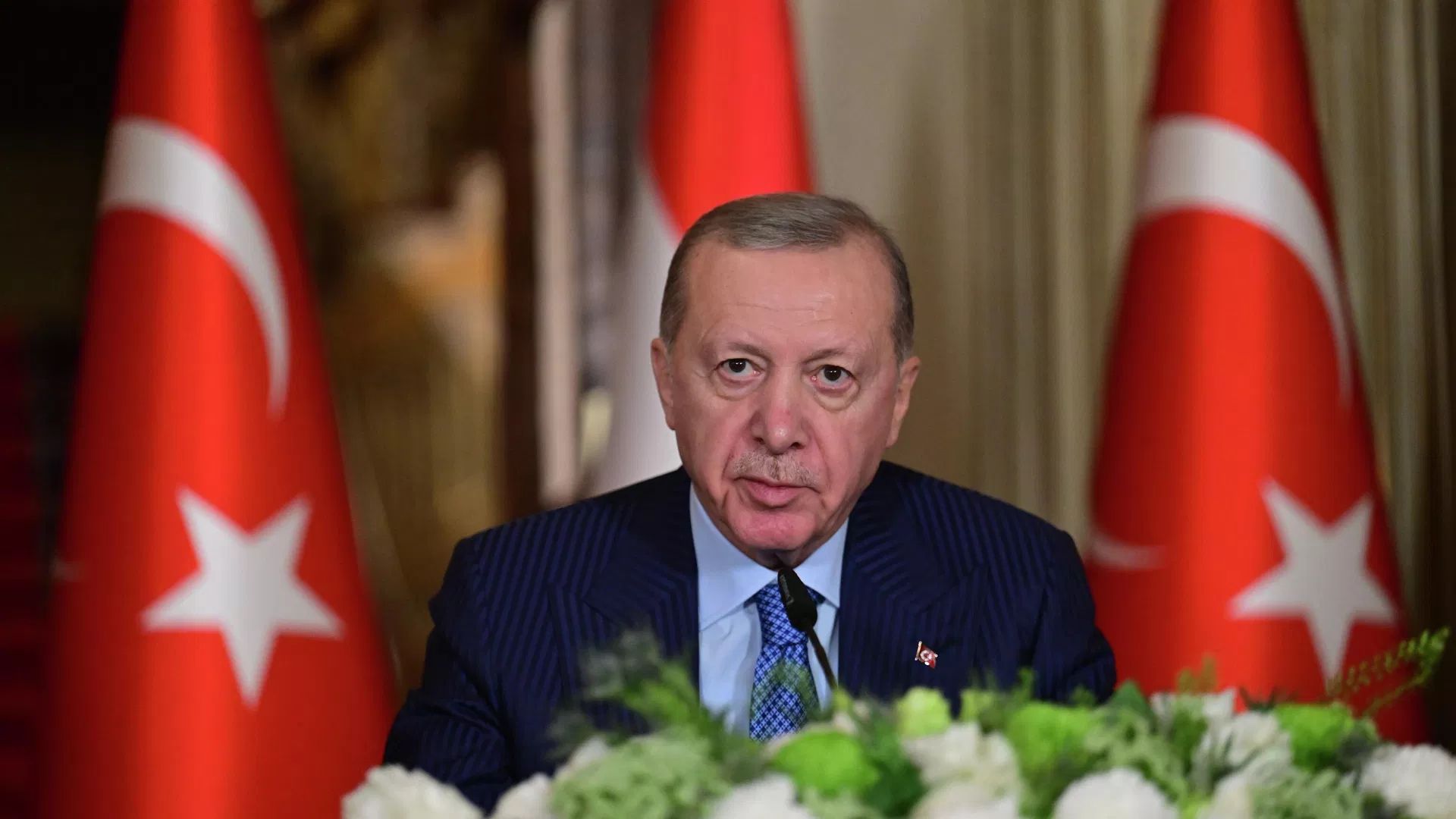
On the Turkish front, the summit reflected Ankara’s effort to consolidate its position as an active partner in producing collective security within NATO, and Türkiye used its hosting of the summit to call for the removal of restrictions imposed on defense cooperation among allies and to expand the participation of its defense industries in joint manufacturing programs.
It also announcedPresident Erdogan affirmed his country’s commitment to raising defense spending to 5 percent of GDP by 2035, allocating $24 billion to the “Steel Dome” air defense project.
– With more than 480,000 troops, Türkiye has the second-largest army in NATO and the alliance’s largest military force on the European continent.
– Turkish forces lead strategic alliance missions, including maritime security and anti-piracy operations, while fully meeting the required 2 percent defense spending benchmark. pic.twitter.com/E7sYgiG04k
— NoonPost (@NoonPost) July 6, 2026
On the sidelines of the summit, Türkiye also strengthened its position within the Western system by expanding its defense partnership with a number of allies, as Ankara moved with the United Kingdom to sign a comprehensive security and defense partnership aimed at deepening cooperation in military industries, cybersecurity, counterterrorism, and hybrid threats.
This came in parallel with the emergence of signs of a French-Turkish rapprochement driven by the shifts imposed by the Russia-Ukraine war and growing European interest in expanding cooperation with Türkiye’s defense industries.
The summit also brought early signs of improving Turkish-American relations, after President Donald Trump announced his willingness to reconsider the sanctions imposed on Türkiye and the issue of F-35 fighter jets.