



هذا التقرير متاح أيضًا بـ العربية
Less than two years after emerging from international isolation and Western sanctions imposed over violations by the now-defunct Assad regime, Syria found itself, for the first time in its history, present at the table of a North Atlantic Treaty Organization (NATO) summit, in a shift that reflects the accelerating pace of its opening to major international forums.
Syria’s participation in the summit coincided with Damascus receiving, for the first time, an invitation to take part in the Group of Seven summit, scheduled to be held a week later in the French city of Evian-les-Bains, reinforcing its transition from isolation to a path of gradual normalization with the international community.
Damascus’ participation was not merely diplomatic in nature; it also brought with it files it hopes to resolve, including reconstruction, security, the return of refugees, the future of northeastern Syria, efforts to combat the Islamic State group (ISIS), and relations with “Israel”.
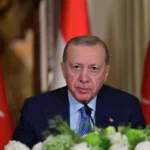
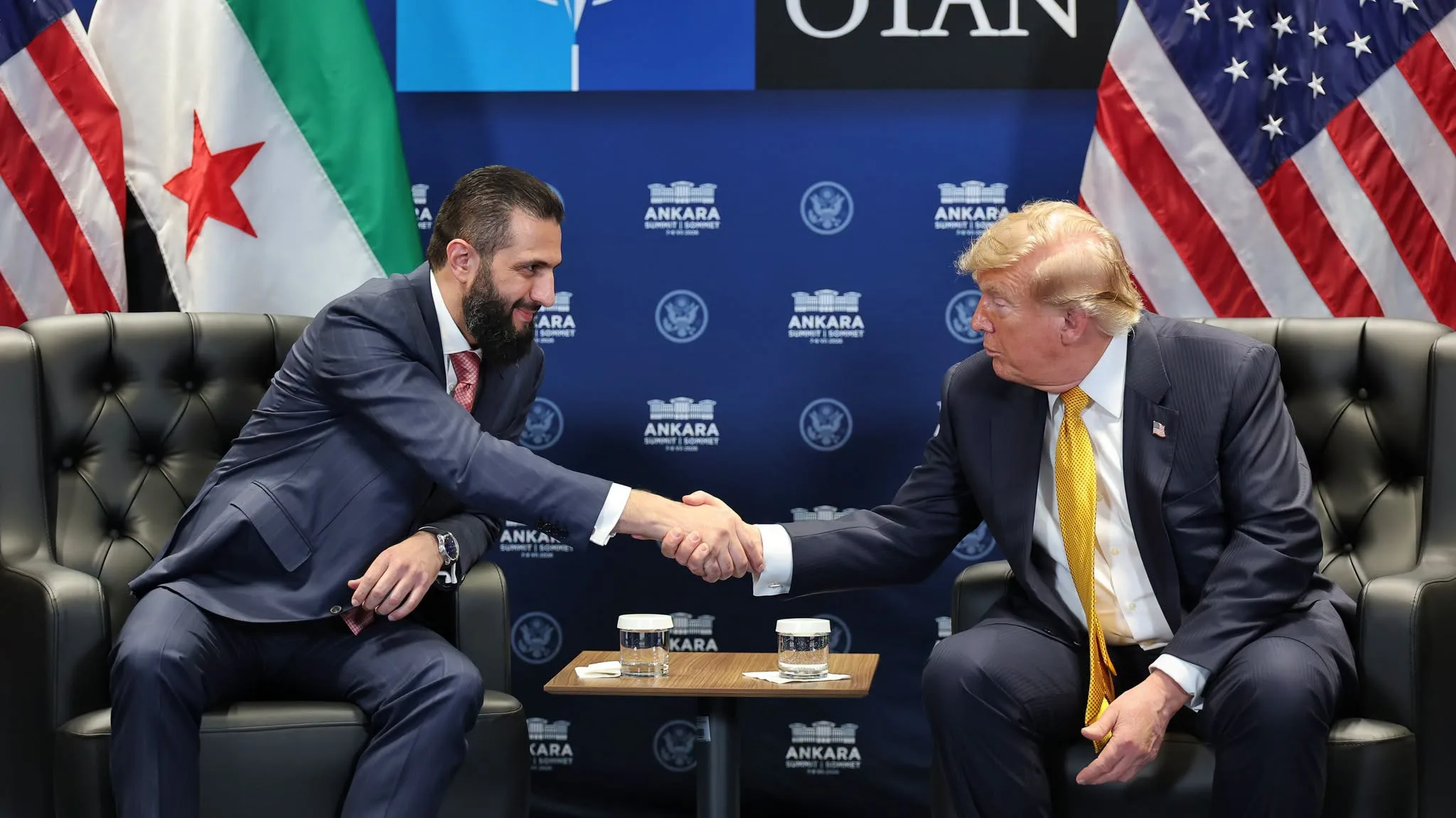
The summit served as a platform for a series of high-level meetings held by President Ahmad al-Sharaa with his US counterpart Donald Trump, Turkish President Recep Tayyip Erdogan, and a number of members of the US Congress.
Its outcomes were not limited to diplomacy alone. Just hours after al-Sharaa’s meeting with the US president, Washington announced the start of procedures to remove Syria from the list of state sponsors of terrorism.
That came after Trump informed Congress of his intention to take this step, opening a 45-day legal review period before the decision takes effect, in a development that marks one of the most significant shifts in the course of Syrian-American relations in decades and constitutes the first direct political gain Damascus has reaped from its participation in the NATO summit.
Damascus welcomed the move, describing it as an important development in the course of Syrian-American relations. It is being viewed as one of the most prominent political gains accompanying Syria’s participation in the NATO summit, given the prospects it could open for economic openness and reconstruction.
But to what extent does this participation reflect a real shift in Syria’s position on the international stage? And what can Damascus achieve from this opening on contentious issues?
From isolation to international platforms
Writer and political analyst Firas Allawi believes Syria’s participation in the NATO summit represents an extension of its return to the international community politically and economically. It also reflects the interest of regional and international powers foremost among them Türkiye as the host country, the United States as the most prominent participant, and France following President Emmanuel Macron’s visit to Damascus in reintegrating Syria into its regional and international surroundings.
Allawi told Noon Post that this interest reflects growing recognition of Syria’s importance in the Middle East and of the need to restore its natural place as a country with geopolitical weight, especially in light of the transformations the region has witnessed after the US-Iran confrontation, which reinforced the need for Syria’s stability as part of regional stability.
He added that inviting Damascus to participate in conferences at this level confirms that regional and Western powers, especially the United States, are moving to support stability in the region, considering Syria one of the key pillars for achieving that goal, and that involving it in such forums is consistent with the US strategy aimed at entrenching stability in the Middle East.
In the same context, Allawi believes the US president’s statements come within the framework of gradually returning Syria to the international fold by lifting sanctions and allowing it to reclaim its role as a sovereign state exercising its authority over all its territory, while also enabling other countries to deal with it and lifting restrictions on investment and economic cooperation.
He pointed out that Syria’s economic, political and security recovery would enhance regional stability, while also opening the door to foreign investment and giving momentum to reconstruction by removing obstacles for companies and countries wishing to invest in Syria whether European countries with major firms, Gulf states capable of financing reconstruction projects, or neighboring countries, foremost among them Türkiye, with its expertise, technologies and investment projects.
Allawi said that all the files the Syrian government is bringing to these meetings are important, but in his view the priority remains security, stability and the return of refugees, followed by reconstruction. He stressed that reconstruction cannot be achieved without stability, and stability cannot exist without social and economic security; therefore, the road to reconstruction begins with achieving security, as he put it.
On the refugee file, he believes it represents a negotiating card in the hands of the Syrian government, whether in its relations with European countries or with other refugee-hosting states, noting that this issue also constitutes a pressure point in those countries’ domestic politics, making an understanding with Damascus on it a gain for their governments.
He stressed that after sanctions are lifted, relations with Syria will move from the stage of humanitarian aid to that of comprehensive reconstruction, as companies will be able to enter the Syrian market without the restrictions previously imposed by the US administration, which will help revive the Syrian economy and strengthen stability.
Allawi emphasized that security stability rests on several elements, foremost among them the unity of Syrian territory and the central government’s control over all of it, noting that the absence of such unity will keep the security imbalance in place.
He explained that ISIS is not the only party posing a threat, as there are still other forces outside the framework of the state that wield influence over parts of Syrian geography. Restoring the unity of Syrian territory, he said, is the primary goal for achieving stability, which in turn is the main gateway to reconstruction.
The analyst concluded by saying that the Syrian government’s participation in these meetings, its holding of direct talks with other governments, and the signing of agreements — especially in the security and economic fields — alongside its integration into regional and international frameworks, all contribute to strengthening political and economic support for Damascus and enable it to present the challenges it faces and the causes of instability, helping break the deadlock in relations with various countries and secure the support needed for reconstruction efforts and the consolidation of stability in Syria.
Türkiye’s role: Damascus’ gateway to NATO
For his part, Turkish researcher and foreign policy and security analyst Omer Ozkizilcik believes Syria’s participation in international meetings is a success for the new Syrian administration, but this success should not be seen as having been achieved by its efforts alone.
Ozkizilcik told Noon Post that since the fall of the Assad regime, the new Syrian administration has worked to send the right messages to the international community, as its steps and policies showed that the world did not harbor hostility toward Syria itself; rather, Syria had been excluded from the international order because of the Assad regime.
The researcher said that Türkiye, since the fall of the Assad regime, has been using its full diplomatic weight to integrate Syria into the international order, noting that Ankara played an important role from the earliest days in persuading Saudi Arabia on the Syrian file, before that developed into Turkish-Saudi cooperation aimed at strengthening Syria’s acceptance by the United States and European countries.
He added that lifting sanctions was one of Damascus’ main demands, noting that the US president announced in Saudi Arabia the lifting of the first batch of sanctions, then announced in Türkiye the lifting of the remainder.
He believes that Türkiye, thanks to its position within NATO, is playing a facilitating role on Syria’s behalf, considering the German chancellor’s praise for Ankara’s efforts to support Syria’s success as reflecting the strength of the alliance and solidarity that has formed between Turks and Syrians since 2011.
The researcher noted that intelligence cooperation, combating ISIS, and the return of refugees will remain present in NATO countries’ relations with Syria, but he believes there are two files of greater importance at the current stage.
The first, according to Ozkizilcik, is the Israeli file. He said the meetings President Ahmad al-Sharaa held on the sidelines of the NATO summit, the joint news conference with US President Donald Trump, and French President Emmanuel Macron’s visit to Damascus all carried a clear message to Israel.
The second file is modernizing the Syrian army and raising its level of professionalism. The researcher does not expect the rest of NATO countries, aside from Türkiye, to provide major support in this area, but Ankara will help bring the Syrian army closer to NATO doctrine, which could in the future allow for more efficient training with the armed forces of alliance member states.
Ozkizilcik considered the most tangible gains for Damascus to be the announcement of lifting the last sanctions imposed on Syria, in addition to the message directed at Israel. With the last sanctions lifted, the final legal obstacle to Syria’s reconstruction process will be removed.
As for Israel, the researcher said recent weeks have seen an escalation in its threats against Syria, as well as in its attacks on the ground. Türkiye’s invitation to Syria to participate in the NATO summit, he said, served as a reminder to the Israeli administration that Syria is not Iran, and that the Syrian administration has become a legitimate actor occupying its place on the international stage, as was reaffirmed once again.
What about the file of northeastern Syria?
The presence of members from both the Republican and Democratic parties in the US Congress at NATO carries special importance for the Syrian file, according to political analyst Darwish Khalifa, because it provides an opportunity to meet representatives from both parties and present a picture of the new Syria and its political trajectory.
Khalifa told Noon Post that the new Syrian leadership has succeeded in achieving a degree of understanding and unifying forces that had been fragmented before the fall of Bashar Assad’s regime, including the Syrian Democratic Forces (SDF), factions of the Syrian National Army, and other forces and regions, within a single central leadership framework.
By contrast, the file of northeastern Syria still faces challenges. He believes the SDF’s slow pace in completing integration with Syrian state institutions, or its placing obstacles in the way of that path, constitutes one of the most prominent issues currently on the table.
From Khalifa’s perspective, this issue falls within the responsibilities of US envoy to Syria Tom Barrack, who can brief members of the US Senate on the nature of the understandings underway between the Syrian authorities and the SDF.
Such a briefing would help decision-makers in the United States form a more accurate picture of the course of these understandings and how they could affect the future and stability of Syria’s eastern region.
Security as the gateway to stability
As for the file of the Islamic State group (ISIS), the analyst added that this issue had already received broad attention within the framework of Syria’s engagement in the international coalition’s counterterrorism efforts.
That included strengthening cooperation with Syrian forces and counterterrorism agencies, alongside intelligence and logistical coordination aimed at containing the group’s activity after the fall of Bashar Assad’s regime.
He noted that this cooperation is focused on pursuing the group’s remnants and monitoring the movements of its members, whether they are operating individually or within organized cells and groups, in a way that limits their ability to rebuild their networks or restore their activity in areas where they had previously been present.
He explained that the file of northeastern Syria has now become an internal Syrian matter managed with support and recommendations from regional states concerned with Syria’s stability, alongside the role played by US special envoy to Syria Tom Barrack.
Barrack is likely to possess tools of pressure that can be used to push the SDF toward full engagement in the political process and integration into Syrian state institutions.
Nevertheless, Khalifa believes this path still faces a number of obstacles, most notably the state of delay and attempts by the SDF to buy time, in hopes that a change in international positions may grant it broader negotiating room.
By contrast, the indicators, in his assessment, suggest that international positions — especially those of the United States and Europe — are moving toward supporting Syria’s stability and strengthening its institutions, based on a set of shared interests, including creating conditions for the return of refugees, encouraging investment inside Syria, and restoring stability to the region.
Syria’s geographic location also gives it a strategic advantage as a pivotal state and transit corridor, potentially allowing its territory in the future to be used in transport and energy projects, including the transfer of energy resources from the Middle East to Europe and other markets, if the appropriate political and security conditions are in place.