
هذا التقرير متاح أيضًا بـ العربية
More than 3,000 kilometers from Istanbul, Afghan student Nawidullah Amin Oghlu wrote a letter from his school in the city of Mazar-i-Sharif to the heroes of July 15. The events of that night did not take place in his country, nor were they part of his family’s memory or his city’s history. Yet his letter reached Istanbul and, in 2023, won the jury prize in a competition that drew 1,374 students from Türkiye and abroad.
The school from which Nawidullah wrote carried another story. Just four years earlier, it had been one of the schools Ankara attributed to the Gulen movement’s network in Afghanistan, before its administration was transferred in January 2019 to the Turkish Maarif Foundation.
The journey of the student and his school encapsulates a broad dimension of the transformation the memory of July 15, 2016 has undergone over the past decade, as the Turkish state carried its narrative of that night to distant countries and gradually tied it to the tools of public diplomacy, strategic communication, and foreign policy.
The continued presence of the Gulen movement’s networks abroad, after the coup attempt was thwarted and its ability to operate inside Türkiye declined, pushed Ankara to shift a large part of the confrontation to the international arena. The movement continued its activities through schools, associations, and media and financial institutions in many countries, drawing on relationships it had built over years within political, academic, and social circles.
Türkiye, meanwhile, struggled to persuade a number of governments — particularly in the United States and Europe — to adopt its designation of the movement as a terrorist organization or respond to requests for extradition and the closure of institutions linked to it.
The anniversary of July 15 acquired a political function that went beyond its symbolic dimension. Year after year, the Turkish state used it to explain the nature of the infiltration its institutions had been subjected to, clarify the basis on which its subsequent policies rested, and rally support for its legal and diplomatic moves against the movement. Through it, Türkiye also sought to counter external narratives that focused on the post-coup measures and pushed to the margins any discussion of the party that planned and carried out the attempt.
Building the official narrative
The Turkish state began crafting its narrative of July 15 in the very first hours and days of the coup attempt, identifying the party responsible, the nature of the attack, and the forces that thwarted it. And in MemorandumIn a statement published by the Foreign Ministry on July 25, 2016, what happened was described as a move carried out by the Gulen movement against the elected government and the constitutional order, and its failure was attributed to the joint confrontation mounted by citizens, security forces, and state institutions against the putschists.
This early formulation laid out the elements that official discourse would continue to repeat later: the infiltration of state institutions, the targeting of political legitimacy, and society’s intervention to protect the existing order.
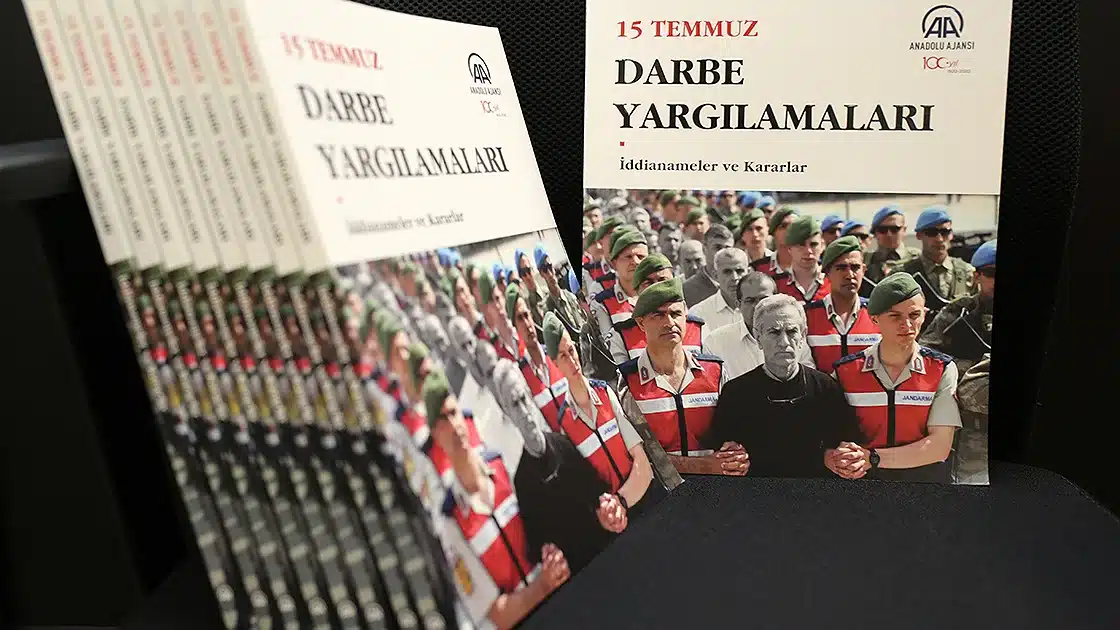
Ankara reinforced its accusation against the group by citing investigations, sessions of the parliamentary inquiry commission, and court files that examined the organization of the military move, the chain of orders, and the ties linking a number of officers to the group’s leadership. As the trials progressed, the official narrative gained clearer judicial backing.
The state placed popular resistance at the heart of its narrative, from President Recep Tayyip Erdogan’s call through the media for citizens to head to the streets, airports, and public squares and their broad response to the appeals and prayers that rang out from mosques, helping widen the mobilization. Images circulated of civilians standing before tanks, along with stories of those killed and wounded, reinforced the idea that society itself confronted the coup and brought it down.
Later, the event’s significance broadened and became tied to the national will, popular sovereignty, and the protection of elected institutions. The bombing of Parliament came to occupy a central place in this narrative construction, because it made it possible to portray the attack as a direct assault on popular representation and the constitutional order.
The agreement among the parties represented in Parliament to reject the attempt provided a foundation for a discourse of national unity, before sharp political disagreements resurfaced over the post-coup measures. The phrase “victory of democracy” became the most marketable entry point outside Türkiye, shifting the debate from the government’s conflict with its opponents to citizens defending an elected authority against a military move.
State institutions enshrined these meanings in law, public spaces, and public events. July 15 was declared an official holiday under the name “Democracy and National Unity Day,” and the name “Martyrs of July 15” was given to the Bosphorus Bridge and a number of squares and facilities.
Monuments, museums, and memorial sites were established to display victims’ belongings, images of the confrontations, and the weapons used by the coup plotters. In this way, the bombed parliament, the presidential complex, the bridge, and the squares became fixed points on the map of memory, revisited each year through speeches, films, exhibitions, and official events.
Engineering Memory
Since 2016, the Foreign Ministry has moved to turn the narrative into material that could circulate beyond Türkiye, and identified its reportThat year’s annual plan laid out three tracks for confronting the Gulen movement abroad, foremost among them explaining the group’s structure and its role in the attempted coup to foreign officials and international public opinion. Diplomats engaged governments, media outlets and research centers, and put the issue on the agenda in bilateral meetings.
Since the first anniversary, Turkish embassies and consulates have made the occasion a fixed date on their public programs. In 2017, missions organized conferences and photo exhibitions in a number of cities around the world, and in the following years the activities expanded to include film screenings, seminars, press briefings and commemorative programs.
The Directorate of Communications, established in July 2018, brought a greater degree of centralization to this effort, taking charge of coordinating July 15 programs inside and outside Türkiye, and established systematicallydigitally to track projects. It also developed a visual identity, annual logos, and standardized materials, and produced books in multiple languages, short films, advertisements, digital content, and exhibitions.
Anadolu Agency and TRT also helped expand the reach of the narrative from diplomatic halls to the international public. Anadolu Agency provided the archival photographs used in exhibitions abroad, It presentedTRT World produced reports, interviews, dramas, and documentaries that retold the event through civilians’ experiences and images of the confrontation.
The Directorate of Communications also addressed foreign journalists directly, as It organized In 2021, it held a meeting for international media outlets during which it presented the state’s narrative of July 15 and the structure of the group.
Cultural, educational, and religious institutions also opened additional space for that narrative. The Yunus Emre Institute used its centers to organize exhibitions, seminars, and public activities, while the Presidency for Turks Abroad and Related Communities engaged international students and graduates of Turkish universities in programs and materials tells their experiences during the coup attempt.
The Maarif Foundation organized events at its schools and representative offices, while religious attachés and mosques added a commemorative dimension by reciting the Quran, holding prayer programs, and honoring the names of the victims.
A permanent fixture in foreign policy
Ankara placed the issue of the Gulen movement at the heart of its foreign relations, and cooperation against it became a recurring demand in bilateral meetings and international forums. The Foreign Ministry’s 2016 report noted that combating the movement’s overseas network had become a priority in official contacts, while a 2019 report showed that embassies and consulates held more than 15,000 meetings with foreign counterparts on the issue.
The Turkish government called for the closure of institutions linked to the group or the transfer of their management, restrictions on the activities of its members, a ban on their movement and the transfer of their funds between countries, and the handover of wanted individuals to the Turkish judiciary.
The Foreign Ministry monitored changes in the group’s structure, the names of its institutions, and the relationships among its leaders, while judicial and security authorities coordinated prosecution files. In its correspondence, Ankara maintained a unified security designation, while host countries dealt with institutions and individuals according to their own laws and local classifications.
In the judicial track, Ankara relied on arrest warrants, evidence files, extradition requests, and direct communication between justice ministries. But this path faced many obstacles, with the United States standing out as the most prominent case because Fethullah Gulen resides there. The US Department of Justice says Türkiye submitted multiple requests for his extradition, but the proceedings did not end with his deportation.
And revealed the British Westminster Magistrates’ Court’s rejection in 2018 of a request to extradite four other individuals the gap between the submission of Turkish case files and courts in the countries concerned being convinced that the conditions for extradition had been met.
Türkiye also pursued avenues other than judicial extradition. The Foreign Ministry spoke of the deportation of some group members to Türkiye or to third countries, while Turkish intelligence announced that it had transferred 114 people from 28 countries to the judiciary since 2016 through administrative deportation, direct intergovernmental cooperation, and security operations, the legal details of which Ankara did not disclose in every case.
Ankara also took the issue to international institutions in an effort to cement the designation of the group as a terrorist organization, and the Organization of Islamic Cooperation adopted at a meeting of foreign ministers in Tashkent in 2016 a resolution condemning the coup attempt that it attributed to the group. This gave Türkiye political support within the organization, but it did not impose a uniform legal designation on every state or oblige their courts to carry out Turkish extradition requests.
Schools … the heart of the confrontation outside Türkiye
Schools topped Türkiye’s campaign because they represented the most durable pillar in the Gulen movement’s network abroad. They enabled the group to maintain daily contact with students and their families, reach the children of influential figures, and build relationships that later extended into administration, politics, and business. And provided these institutions with the cadres, financial resources, and social presence of the group, leading Türkiye to believe that shutting them down would dismantle a structure capable of reproducing its influence across successive generations.
On June 17, 2016, the Turkish Parliament approved the establishment of the Maarif Foundation, about a month before the coup attempt. The foundation was created to oversee, on Türkiye’s behalf, educational activities abroad, including opening schools, universities, and educational centers, providing scholarships, managing student housing, and developing programs and curricula.
When Ankara expanded its confrontation with the Gulen movement’s network abroad, it thus had a ready-made legal and educational arm to take over schools with the consent of host countries or establish alternative institutions where transfer proved impossible.
The Maarif Foundation adopted different mechanisms depending on each country’s laws and the ownership structure of its schools. In AfghanistanIn 2018, the education ministers of the two countries signed an agreement to transfer 12 schools and four preparatory centers, while in Ivory Coast, four schools were handed over under a protocol signed in August 2018. In Ethiopia, meanwhile, the authorities transferred the administration of the schools through court rulings issued in stages that ultimately placed all the institutions concerned under the management of the Maarif Foundation.
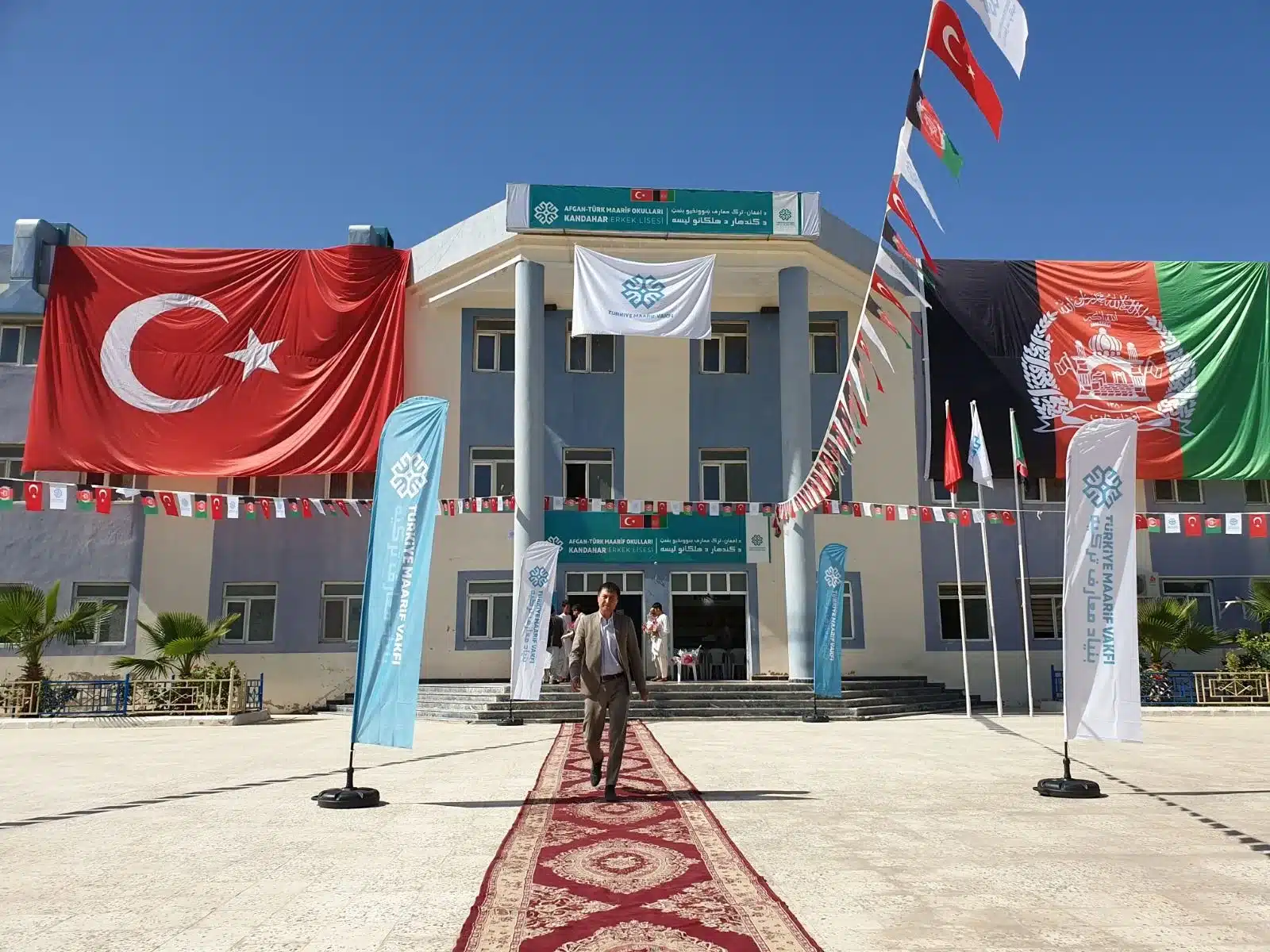
Ankara faced clear setbacks in the school file in the United States and Europe. In 2018, said then-Foreign Minister Mevlut Cavusoglu that Türkiye had asked Washington to investigate allegations of tax evasion, visa violations, and money laundering within the movement’s network and affiliated institutions in the United States. It submitted documents and sent an expert from the Financial Crimes Investigation Board to the Turkish Embassy.
He added that US officials had informed Ankara of investigations in about 20 states, stressing that Türkiye asks countries to close the movement’s schools because of the role it attributes to them in building its networks.
President Recep Tayyip Erdogan stepped up the pressure on Feb. 7, 2019, when he said that Ankara had repeatedly informed US officials about the activities of charter schools linked to the movement. These are free public schools funded by the state and run by independent associations or institutions under licenses issued by state authorities, but without any tangible progress.
On July 17, 2019, announced Maarif Foundation Chairman Birol Akgun that the United States and Europe were home to 465 educational institutions that Türkiye attributes to the movement, and that the foundation had continued working to transfer the remainder after taking over 218 schools in other regions. Akgun then acknowledged before parliament’s education committee on Feb. 21, 2020, that none of the roughly 200 educational institutions in the United States had been transferred to Maarif, with a similar situation in Western countries.
Ankara moved along three parallel tracks: transferring schools to the Maarif Foundation through agreements or local rulings, encouraging host countries to close the institutions or revoke their licenses, and opening new schools to compete with the existing network when transfer proved impossible. The foundation’s report for 2024 shows that this policy resulted in the takeover of 246 schools that the foundation describes as linked to the movement in 22 countries.
Maarif also opened 226 new schools to meet educational needs in different countries. The clearest progress was concentrated in Africa and Asia, and in countries whose governments showed a willingness to make direct decisions regarding ownership and licensing.
The foundation currently presents on its website a network comprising 524 schools, two universities, 16 educational centers, 57 student dormitories, and 12 Turkish studies centers. In this way, the confrontation with the movement’s educational network produced a permanent Turkish educational arm, which then became an independent arena for cultural diplomacy and for building ties with local communities and elites.
When the narrative collided with the limits of the law
The outcome of the past 10 years shows that the central knot emerged when the July 15 file moved from the political sphere into the legal one. Ankara was able to place responsibility for the coup attempt on the Gulen movement on the agenda of its foreign relations, but asking states to take judicial action required translating the Turkish narrative into case files that met each country’s laws and definitions of crime and terrorism. As a result, the power of diplomatic pressure receded whenever decision-making shifted from governments to courts, prosecutors, and rights-protection bodies.
This gap appeared clearly in the United States, where an extradition request passes through successive judicial and executive stages before the final decision returns to the secretary of state. In July 2024, Turkish Justice Minister Yilmaz Tunc said Ankara had submitted seven requests for the extradition of Fethullah Gulen, related to 27 crimes. That process ended with Gulen’s death in Pennsylvania on Oct. 20, 2024, without his extradition, closing Ankara’s most symbolic demand without a result.

The European track revealed a divergence in how the evidence was assessed. In September 2023, the European Court of Human Rights ruled that the Turkish judiciary’s reliance on the “ByLock” app to prove membership in the group violated the principles of a fair trial and the legality of crimes and punishments. The court deemed the problem systemic, noting that about 8,500 applications similar cases were pending before it at the time, showing that the evidence relied on inside Türkiye did not carry the same legal weight within the European system.
The absence of a shared legal designation deepened this gap. To this day, the European Union does not list the Gulen movement on its roster of terrorist organizations, even as Türkiye continues to demand extraditions and action against its members and institutions. This reflects a difference in perspective: while Ankara treats the movement as a single organizational structure in which membership itself constitutes grounds for prosecution, Western systems tend to individualize responsibility and require proof linking each person to specific criminal acts.
For that reason, recognizing the gravity of the coup attempt was not enough to unify the definition of its perpetrators or to validate Turkish evidence and judicial rulings beyond its borders.
A decade later, Türkiye has worked to transform the memory of July 15 from an exceptional national event into a state narrative advanced through a broad network of tools and institutions. Diplomacy carried the narrative to governments and international organizations, embassies conveyed it to local communities, media outlets and digital platforms expanded its reach, and cultural, educational and religious institutions brought it into the spaces of students, diaspora communities and elites.
The anniversary has become an organized part of Türkiye’s communication with the world.