











هذا التقرير متاح أيضًا بـ العربية
Since the start of the genocidal war waged by “Israel” on the Gaza Strip, the medical sector has been at the heart of attacks by occupation forces, their airstrikes, and assaults. Al-Shifa Medical Complex, the largest medical institution in the besieged enclave, has borne the brunt of those attacks from strikes around its perimeter and at its gates, and the direct shelling of some of its buildings, to its storming and occupation, its conversion into a military barracks, the sabotage of its equipment, and, finally, its siege and the detention of its staff.
Over the course of nearly three years of genocide, most of the hospital’s systems, vital devices, and equipment were destroyed either by direct Israeli bombardment and sabotage, or because they deteriorated with age or from the lack of maintenance, or broke down because spare parts were unavailable under the enclave’s ongoing blockade.
Almost nothing escaped total damage except the equipment in a few departments, including the blood bank, which survived by a miracle.
Faced with this void, the Ministry of Health began collecting old, worn-out devices from primary care centers and hospitals across Gaza and transferring them to Al-Shifa. Today, an unequal battle is underway between damaged machines and overwhelming workloads, as maintenance teams race against time to salvage usable parts from old or broken equipment and install them in other machines in an effort to keep as many devices as possible operating within the hospital’s systems.
In this report, we shed light on the battle to maintain medical devices and essential health system equipment using spare parts stripped from damaged or old machines. Some of this maintenance, as we will see, takes place in the midst of high-risk surgeries.
Diagnostic blindness
Dr. Hossam Rashid, director of the laboratory and blood bank department at Al-Shifa Hospital illustrates the scale of the gap. He told NoonPost: “In June 2026, our laboratories recorded about 85,000 lab tests, a huge number for old machines whose daily production capacity has fallen to around 200 tests an hour, compared with the pre-2023 machines that could process 400 tests an hour and cover nearly 150,000 tests a month through four integrated automated chemistry units, of which only two worn-out machines remain available today.”
The technical burden is compounded by severe fluctuations in the electricity supply, which depends entirely on generators. The absence of uninterruptible power supply units, or UPS systems, causes constant damage to sensitive machine parts and their optical lamps, while the local market is completely devoid of spare parts.
In the face of this shortfall, the technical team is forced to operate the machines through improvised methods, dismantling broken devices and substituting their parts to run other machines.
The PT coagulation test stands out as a testament to this technical breakdown. A broken machine was transferred from Al-Aqsa Martyrs Hospital, and another worn-out device was brought from the ministry’s warehouses. Technicians combined the motors of the two machines to produce a single working unit, which soon stopped again because of a persistent technical fault in the operating system.
That malfunction forced doctors to go back decades, conducting coagulation tests using slow, less accurate manual methods that consume patients’ critical time.
The harshness of this manual struggle is evident even in a simple glucose test. While an automated machine can complete it in a matter of seconds, the manual test requires a full 10-minute laboratory incubation period for each sample, delaying the rescue of critical cases in the emergency department, which receives more than 500 chemistry samples daily around the clock.
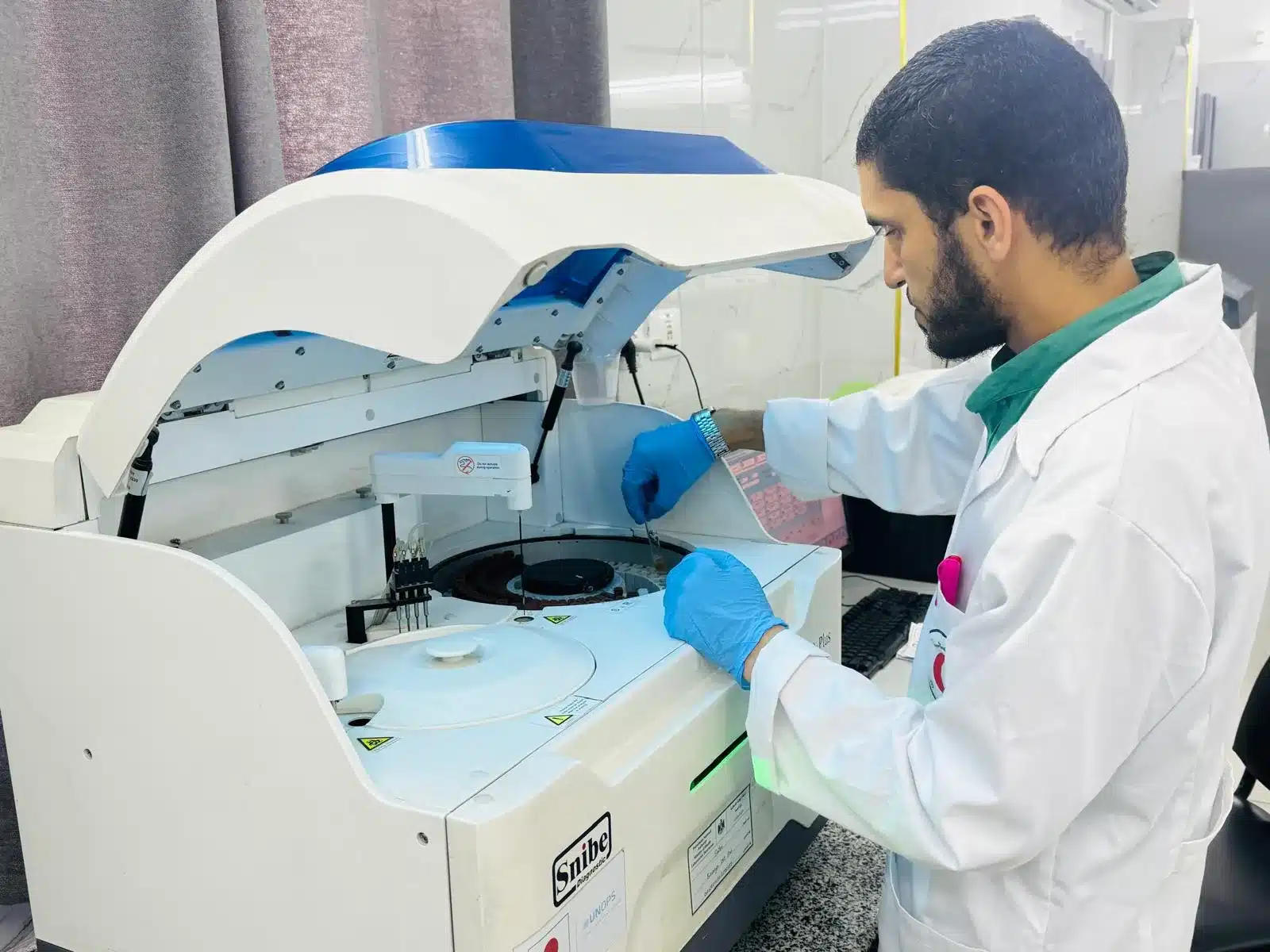
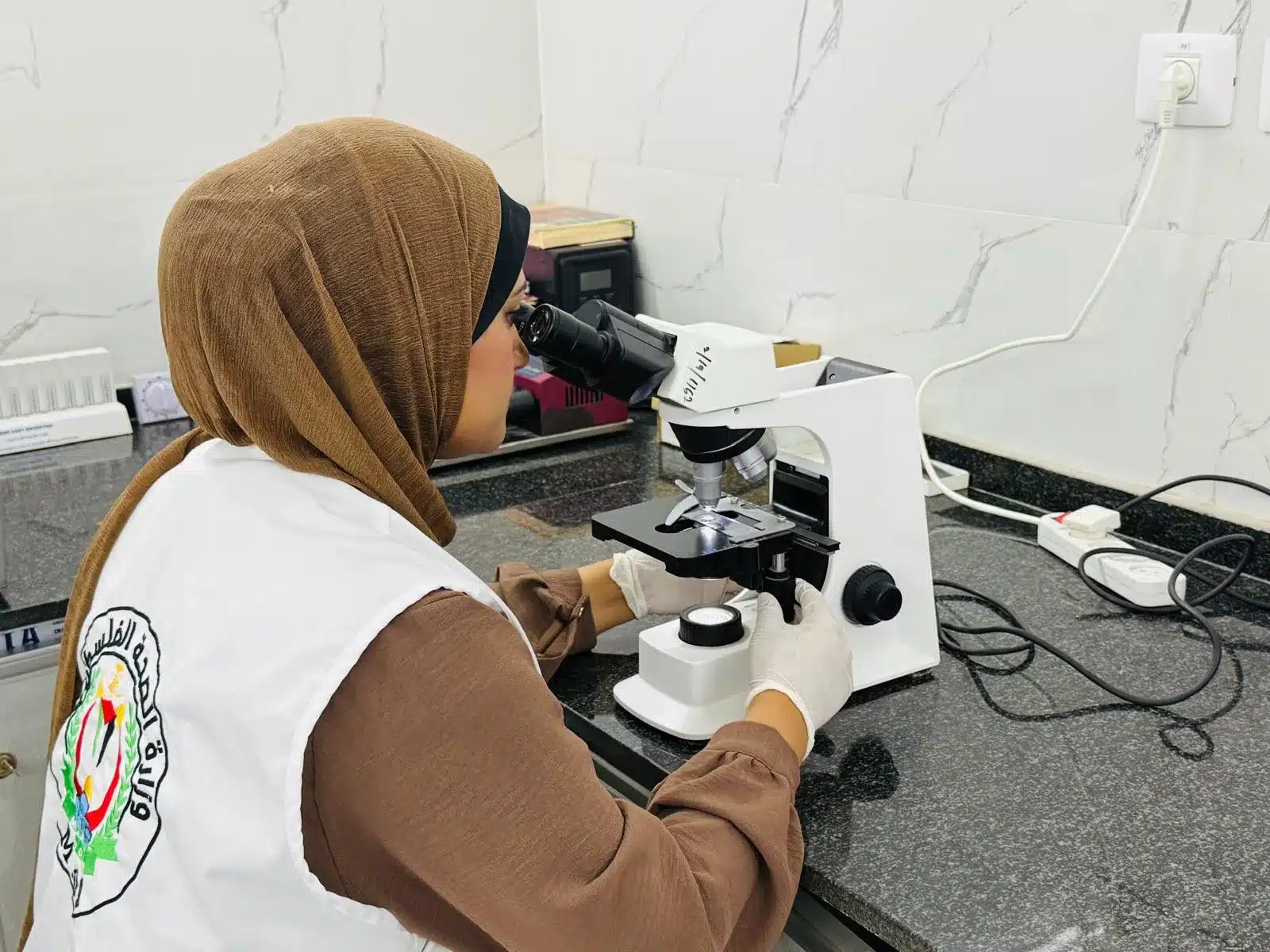
The diagnostic crisis extends beyond machine breakdowns to the current shortage of reagents and medical supplies. The absence of materials for complete blood count, or CBC, testing has reduced the comprehensive 16-indicator test to just two manual tests measuring hemoglobin and white blood cells, with a complete lack of platelet testing materials because it cannot be performed manually.
This is compounded by a severe shortage of kidney electrolyte testing materials needed for patients with kidney failure and cancer, as well as the total absence of arterial blood gas, or ABG, tests, which are critically important for intensive care and cardiac patients in determining blood pH. That leaves doctors facing a state of “diagnostic blindness” that directly endangers patients’ lives.
Medical technology supplies have stopped
Burned electronic boards and severed wires are piled on a small wooden table in a corner of Al-Wafa Hospital for Medical Rehabilitation and Specialized Surgery in Gaza. Biomedical engineer Alaa al-Din Abu Hasira holds a soldering iron and peers closely at the paths of delicate electrical circuits. Every movement here unfolds at the mercy of an invisible hourglass, directly tied to the breathing of patients in the adjacent rooms.
After three years of the occupation’s complete closure of the crossing, spare parts have disappeared and medical technology supplies have stopped, leaving hospitals to face a technological embargo that threatens the vital system with total collapse.
These realities show that the Israeli occupation, by destroying hospitals, closing crossings, and preventing the entry of devices, spare parts, and medical reagents, is forcing the health system to operate from its own remnants and turning technical malfunctions into a direct threat to patients’ lives. In the face of this ongoing strangulation, medical and engineering teams are rebuilding their capacity to provide treatment from worn-out machines, parts salvaged from scrap, and idle equipment, in a daily struggle to preserve what remains of people’s right to testing, surgery, and treatment.
And the World Health Organization documented more than 930 attacks on health care since October 2023, while 34 of Gaza’s 36 hospitals — about 94% — have been damaged, and only half remain partially operational, according to the latest available data. Israeli restrictions on the entry of devices, spare parts, generators, and oil have also led to continuous breakdowns, forcing hospitals to run worn-out equipment and dismantle idle machines to save others, while patients bear the consequences of this attrition in testing, surgery, and treatment.
Abu Hasira, a biomedical engineer, confronts this daily reality through constant attempts to extend the life of the available machines, relying on the option of “donor devices.” He inspects equipment destroyed by the war and beyond repair, extracting intact components and compatible resistors, then transplanting them into the bodies of other broken machines in need of revival.
Standing at the center of this technical battle, Abu Hasira explained to NoonPost the reality of the missing vital parts: “The danger is concentrated in the absence of oxygen sensors and the sensors for ventilators and anesthesia machines, in addition to electronic control boards and emergency batteries that power defibrillators, or DC shock devices, responsible for reviving the heart muscle when it suddenly stops.”
He added: “We are facing severe paralysis in the medical system, especially with the depletion of the solutions used in medical laboratories and required for diagnostic testing.”
The sight of destroyed medical devices has shifted from a source of professional anguish to a driver of responsibility. The engineer turns to the option of deep maintenance, dismantling damaged components and replacing them with equivalent parts available locally. The team works according to a method of “reverse engineering at the fault level,” a technical process that depends on tracing precise electronic signals and understanding the function of damaged electrical circuits in order to repair them, while conducting strict safety tests to ensure patient safety and the continuity of treatment with the highest possible reliability.
At times, those efforts hit a dead end when the malfunction involves spare parts that cannot be replaced or manufactured within the confines of the besieged enclave. The machine then stops completely, and technical incapacity declares its harsh limits in the face of human need hanging from repaired wires.
The device stops during surgery
Jordanian doctor Mohammed al-Buwaitl recounts that during his work in the Gaza Strip, medical tools intended for single use in Jordanian hospitals were returned to operating rooms in Gaza dozens of times after sterilization because of the scarcity of equipment and spare parts.
He cites the surgical cautery device as one of the clearest examples. It is used to cauterize internal tissue and control bleeding during surgery.
Al-Buwaitl said the device would sometimes come out of sterilization saturated with water, forcing the staff to spend time drying it before use, turning a procedure that should take about half an hour into a full hour.
The device may also break down during surgery, forcing doctors to continue the operation using less efficient means or complete it without it, under pressure tied to bleeding, the patient’s condition, and the time available to the team.
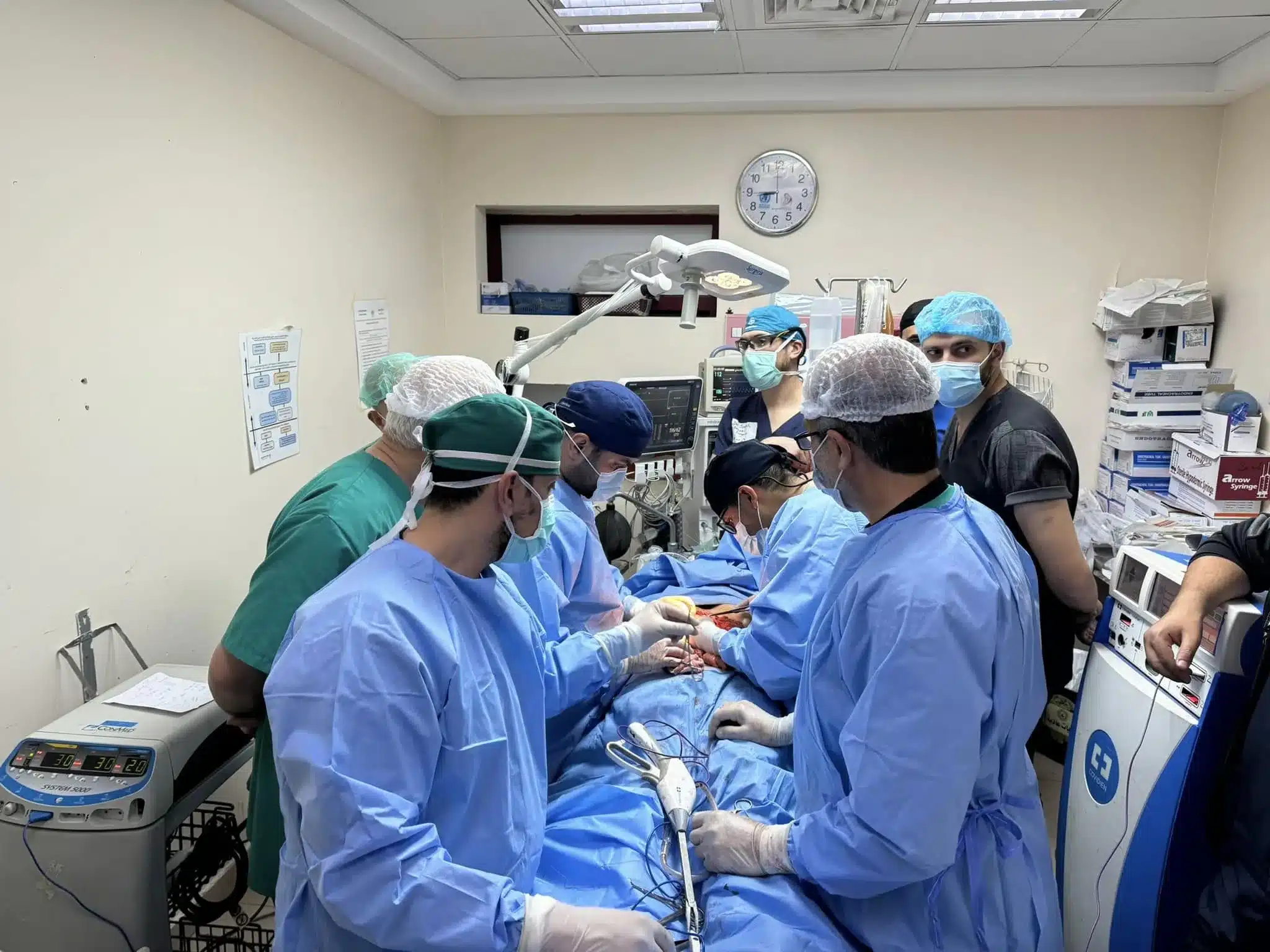
Al-Buwaitl recalls an incident that occurred while treating a patient. The surgeon pressed the device’s button in the middle of the operation while the patient’s internal tissues were exposed, and the device suddenly stopped after sterilization water leaked into its internal parts. Blood surged, and the medical team began a race against time.
The device was repaired during the operation and its parts dried with sterile gauze, while the anesthesiologist monitored the patient’s vital signs, waiting for the device to resume working.
The strain, according to Al-Buwaitl, extends beyond the operating room. Some patients would spend 24 hours on a single meal delivered in the morning.
He explained that this shortage weakens the body, delays wound healing, and increases the likelihood of infection, complications, and death. In his view, a patient who loses his life in Gaza because of a broken tool or poor nutrition would have had a greater chance of survival in another country, where devices, spare parts, meals, and basic care are available.
These realities show that Gaza’s health system is rebuilding its capacity to function from within what remains of it, by repairing worn-out devices, dismantling idle equipment and making use of their parts, and restarting laboratories with limited tools and alternative methods. Every maintenance attempt becomes part of a daily medical struggle aimed at keeping tests, surgeries, and treatments available to patients at a time when resources are shrinking and need is growing.
Even so, medical and engineering teams continue to protect what remains of health services and give patients another chance at treatment and at life.