




هذا التقرير متاح أيضًا بـ العربية
“I hate August, and even though I’m an Al-Azhar student, I decided not to enroll at Al-Azhar University in Cairo.”
These were the opening words of “Mohamed M.S.”, the son of a man killed in the Rabaa al-Adawiya massacre, as he spoke to Noon Post about the impact of losing his father when he was just one year old.
Mohamed, now 14, says:
My father was never involved in any political current, nor was he a member of the Muslim Brotherhood. Like most of the family, he was a devout Salafi Muslim, but he was never engaged in politics. In fact, he often opposed the group. But like many who lived under Mubarak’s rule, he joined the revolution’s protests, and when the political assault on the Brotherhood began, he felt he had no choice but to stand with legitimacy.
Mohamed describes the dispersal of the Rabaa sit-in as the event that changed his life completely. He did not witness it because he was an infant, yet it has stayed with him ever since. Several private schools refused to admit him once administrators learnt that his father had died in Rabaa. This prompted his grandfather to enrol him in an Al-Azhar institute, although he had wanted to keep Mohamed out of religious education altogether to avoid attracting the authorities’ attention, particularly as the entire family has been under surveillance since his father was killed and several of his father’s cousins were arrested for taking part in Rabaa. Had his grandfather not been elderly, and had his father had brothers, the family’s situation would have been even worse.
Mohamed recalls his grandfather being summoned to the police station after the sixth anniversary of his father’s death, as calls for protests against the regime grew louder in September 2019. He was summoned to be warned against taking part. Told to arrive at 9am, his 65-year-old grandfather did not return home until 12 hours later. He was left wandering the station’s corridors, unsure whether he would make it home.
Mohamed says:
I knew nothing about Rabaa until I turned 10, when I saw footage and images of the sit-in’s dispersal online. I did not grasp the horror of what happened until I saw those scenes, despite seeing the event’s impact on my family — starting with my father’s sisters, who faced many incidents of security and social stigma at work. One of them had her engagement broken off after her fiancé, who had not attended Rabaa, was summoned simply because he was engaged to the sister of one of Rabaa’s victims. Another aunt lost a chance at a university appointment for the same reason.

When the second season of the television series Al-Ikhtiyar aired, one of Mohamed’s aunts came home in tears. She told her father that colleagues had spoken in front of her about those killed in Rabaa, describing them as terrorists who deserved to be killed, along with their families, because they were traitors and murderers. One said: “Dogs, and good riddance.”
Mohamed’s grandfather takes care to ensure that Mohamed does not speak openly about his father or discuss politics online. When the “Gen Z” case began, his grandfather called him in and asked his aunt to check his Facebook account and all his other social media accounts for anything that could lead to his arrest. Mohamed is the son of a Rabaa victim, and every move he makes online is counted against him. He is all that remains of his father, who was killed in the prime of his life. Since his father’s death, Mohamed has remained a child in the eyes of the security services.
Mohamed does not want to live in Egypt. How can he live in a country that stigmatises his entire family? How can he live somewhere he is afraid to say how his father was killed for fear of that stigma? He is therefore concentrating on learning languages so he can leave after university and settle in any country away from Egypt. He has not yet told his grandfather about this wish because his grandfather sees him as the man of the family in his father’s place.
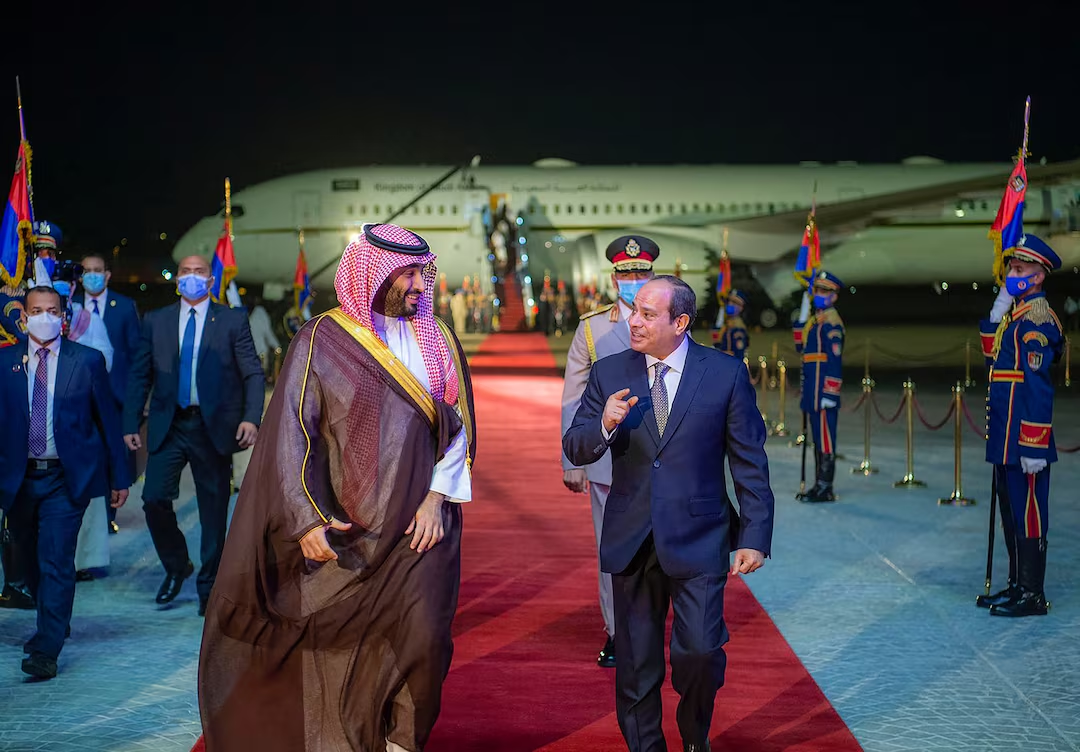
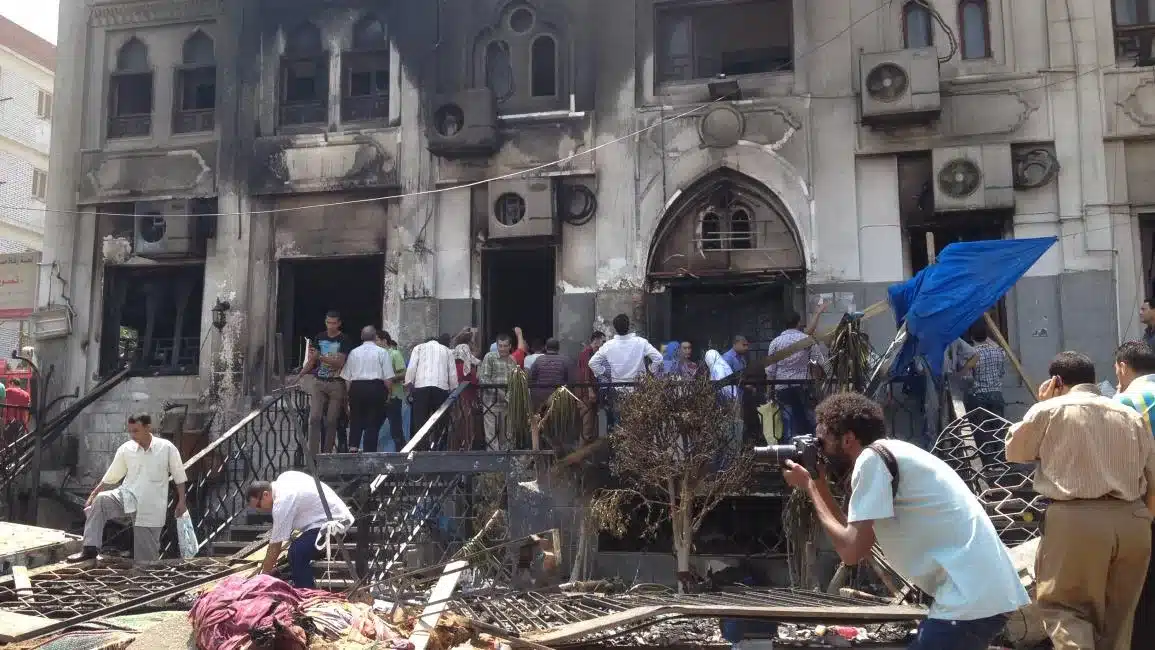
Thirteen years ago, Egypt woke to news of the dispersal of the Rabaa sit-in, which began at dawn on 14 August 2013. The sit-in had started on 21 June, alongside calls by opponents of the late President Mohamed Morsi in Tahrir Square. It continued and became a gathering place for all Morsi supporters after the army announced the coup against him on 3 July. That announcement was delivered personally by Egypt’s current president, Abdel Fattah el-Sisi.
Sara Ibrahim, the daughter of Mohamed Ibrahim, one of the Muslim Brotherhood’s leaders, recounted the events of 3 July in an article titled “Why didn’t God make me a duck?” Her father’s body appeared on a street near Zeinhom morgue after the sit-in was dispersed. In the article, she describes living in Egypt as being held hostage: the media calls on her to speak about the group as someone who broke away from it and took part in the events of 30 June, yet refuses to employ her at any outlet, restricts her work and holds her accountable for being the daughter of a man killed in Rabaa. Her brother, meanwhile, is in his 12th year in prison. He was arrested by mistake but sentenced for no reason other than being the son of a Brotherhood leader killed in Rabaa al-Adawiya. This situation caused her to develop post-traumatic stress disorder, which led to temporary memory loss lasting several years.
Sara’s situation is no different from that of Soaad Abdullah, a pseudonym. She too is the daughter of a man killed in Rabaa. Although she did not take part in the sit-in, she lives with its trauma every day. Her brother was arrested in two separate cases, and she bears the stigma of being one of Rabaa’s children despite never having participated.

Soaad, from Monufia governorate, was 13 when her father was killed. She has never forgotten the following school year, when many of her classmates’ parents warned them not to mix with her for fear that they too would be stigmatised. It was the worst school year of her life. When she expected her friends to comfort her after her life had been turned upside down, she instead found everyone distancing themselves from her out of fear of the security services.
For 10 years after the sit-in, Soaad and her family endured intrusions into their lives. Security officers visited their home regularly before her brother was accused of involvement in a bombing that took place several years after her father’s death and arrested. He had not taken part: it was a case of mistaken identity, as he shared a name with another detainee. Several of those arrested in the case were from the same district, and her brother was an engineering student. Several months later, her second brother was arrested. This prompted her third brother, who feared arrest himself, to contact an overseas recruitment company and leave university. He went to work as a labourer in a Gulf state to escape the fate that awaited him as the son of a Rabaa massacre victim, support Soaad, her sister and their mother, and cover the cost of prison visits, which she describes as “backbreaking.”
Soaad finished university years ago but has been unable to find a job in her field because of security harassment, forcing her to work remotely from Egypt as a freelancer for overseas clients. Her mother laments her fate every day because Soaad is still not engaged. She says the only men who will propose to her daughters are the sons of detainees, who themselves risk arrest at any moment, trapping Soaad in the same cycle she is living through now.
“I live in constant fear.” This is how Soaad describes her situation, adding: “My experience during school, the repeated home raids, and the security stigma attached to me have made me prefer isolation. I do not grow attached to friends or meet new people. Even on my social media accounts, I do not post anything, and I do not write anything about my father or my brothers. I do not want my mother to pay the price of three prison visits instead of two. I am active only in work groups as a social media specialist and graphic designer, and even most of my clients are outside Egypt.”
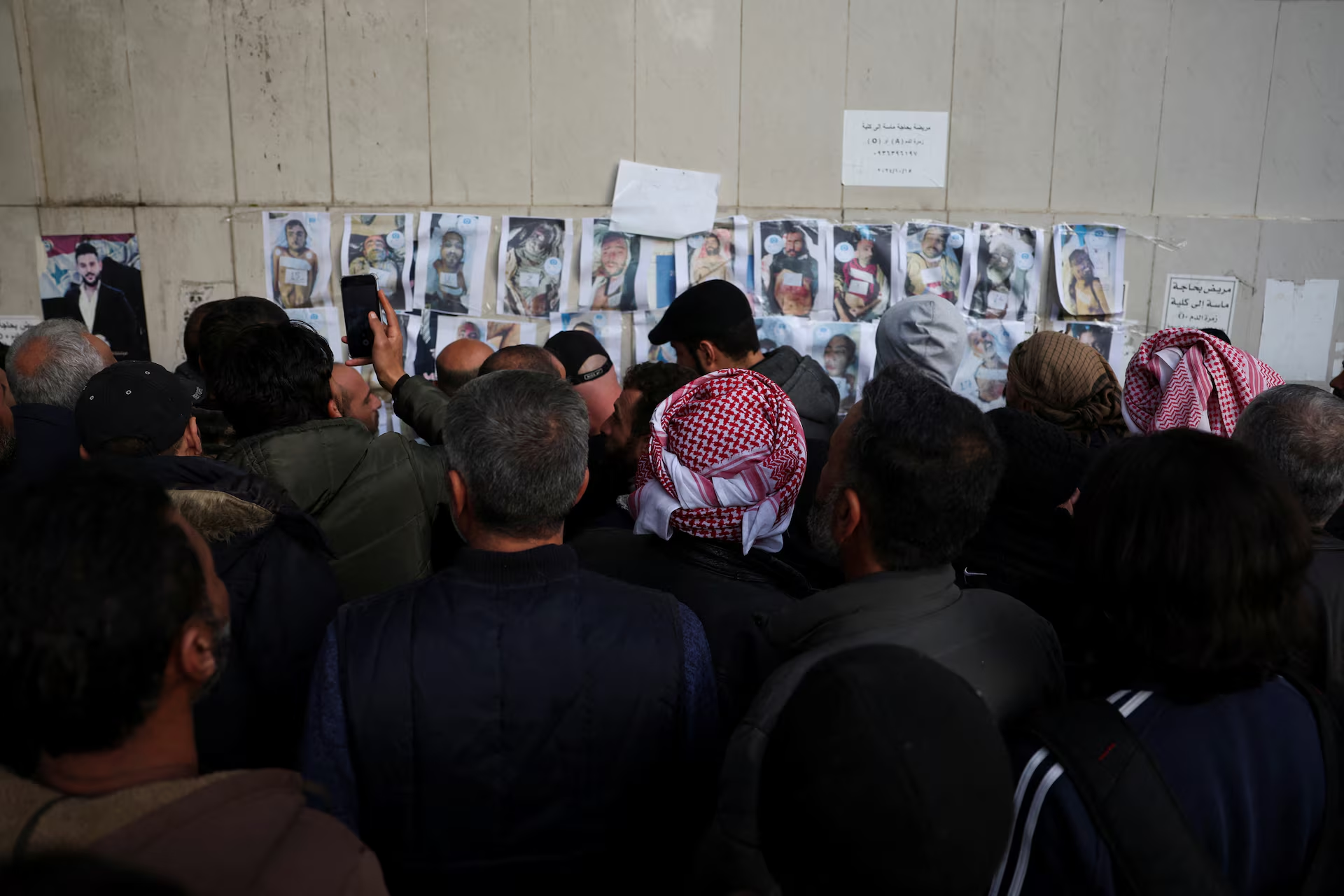
Psychologist Atef Nawar advises relatives of Rabaa massacre victims not to watch archive footage of the ordeal, as it can trigger post-traumatic stress even years later. Those scenes remain in their memories and can resurface as nightmares, headaches or constant exhaustion.
On the impact of security-related stigma and the loss of friends it can cause, Nawar says its effects can take two forms. The first is instinctive fear: children feel constantly afraid and targeted, making them more likely to isolate themselves, withdraw or develop depression. The second is anger towards society and a tendency towards violence.
Nawar explains that these effects vary from case to case. Their impact is assessed according to how children received the news and the consequences they subsequently witnessed in their own lives.
There is still no agreed death toll for the dispersal of the Nahda and Rabaa al-Adawiya sit-ins, which lasted about 14 hours. In a November 2013 statement, Egypt’s Forensic Medicine Authority put the total at 377, including 31 unidentified bodies. The National Council for Human Rights reported that 632 people had been killed at the Rabaa al-Adawiya sit-in, including eight police personnel. The Wiki Thawra website documented 904 victims, in addition to seven police personnel.
In a statement issued on 16 August 2013, Amnesty International said that “the number of victims exceeded 600 after security forces used unjustified lethal force and broke their promise to allow the wounded to leave the sit-in safely,” while Muslim Brotherhood sources estimated that about 2,600 people had been killed.
