

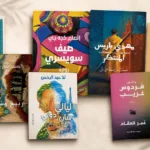







The circumstances and reasons for the estrangement of the writers examined in our series “Roots In Exile” varied. Language, events within their societies and the reasons for leaving, whether by choice or under compulsion, all shaped their experiences. Even their understanding of exile differed: some writers explored their societies’ problems and sought a broader measure of freedom to do so, while remaining within those societies.
Despite these differences, language was central to all their work. Abdulrahman Munif spent long periods in France but continued to write about the desert and its urban transformation. Mourid Barghouti was repeatedly uprooted, as though exile and departure would never end, yet his heart remained tied to the house in Ramallah.
The other writers shared this commitment to writing in Arabic, or in the language of their own societies. These were languages through which they could reach the heart of a crisis and give depth to their fictional worlds, as Orhan Pamuk, Nazim Hikmet and Orhan Kemal did in Turkish literature.
For the Arabic-language writers, this commitment did not mean that Arabic was their only option or the only language they needed. This generation was known for the breadth of knowledge it had accumulated: proficiency in a second language, most often English, was almost taken for granted, and many had mastered several languages.
They saw Arabic, or their society’s own language, as necessary because they understood the social and political demands of their time and engaged closely with the complexities of cities and societies. What other language could express these conditions? Arabic was a necessity despite their linguistic and cultural resources, rather than a fallback for writers who lacked them.
Contemporary literature of exile and estrangement differs in many ways from its earlier forms. Even the terminology has changed: the current generation’s writing abroad is often described as “new diaspora literature”. The term refers to the same broad tradition of exile literature, produced by Arab men and women whose circumstances forced them to leave their countries.
Looking back at the emergence of “diaspora literature”, we encounter groups such as the Apollo School, the Andalusian League and the Pen League as markers of its beginnings. Gibran Khalil Gibran, Mikhail Naimy and Elia Abu Madi remain familiar names even to those who have not read them. Alongside other writers, they laid the foundations of a flourishing literary tradition in both poetry and prose.
Ironically, Gibran wrote his best-known work, “The Prophet,” in English. It has been translated into Arabic several times, with Mikhail Naimy’s translation the most accurate and accomplished. Even so, the book’s strongest readership remains among Arab audiences.
This history began with groups of migrants who settled in different parts of the world and wrote in more than one language, while their work retained an Arab presence alongside its global one. Exile and migration then became more prominent in Arabic literature in the second half of the 20th century, a period marked by political upheavals and repressive regimes. Writers of this period worked in Arabic in countries where the language was unfamiliar. Their writing endured in the memory of Arab readers and, through translation, retains a place in world literature today.
The situation now appears somewhat different. Globalisation has intensified, while migration and estrangement in Arab societies have become more complex, particularly over the past 20 years of large-scale forced and voluntary migration. These developments have coincided with the rise of English as a shared global language with a large readership. At the same time, Arabic has declined across the board, above all in institutions and research, but also in creative work.
Migration and language today
Thousands of Arab men and women working in the arts have migrated to new countries in Europe, North America and Australia in recent years. Their movement raises the question of whether a contemporary diaspora literature is taking shape. This new form develops under conditions shaped by economics, advances in contemporary communication technology and greater access to the wider world and its media.
The central concerns that originally shaped exile literature have not disappeared. Questions of humanisation, the pull of nostalgia and the desire to build a bridge through writing to a society now far away all remain present, though their prominence in today’s diaspora literature varies.
A figure from Germany in 2015 put the number of Arab creative professionals in the country at nearly 1,000, including artists, journalists and writers. Similarly large communities exist elsewhere in Europe and around the world.
This substantial shift owes something to the growth of publishing, international organisations that support writers and the proliferation of media outlets and digital platforms that help writers exercise their right to reach readers across a wider geographical area.
As these communities have formed, reading clubs, literary associations and Arab libraries have emerged abroad. Technology may have made this easier, but a crucial basis for such a community remains fractured: a shared language.
Arab writers have long addressed the social concerns of their home countries in languages other than Arabic. Albert Cossery wrote all his novels and stories about Egyptian society in French. Amin Maalouf, who left Lebanon for France during the civil war, also wrote all his works in French. Egyptian writer Ahdaf Soueif wrote her best-known work, “The Map of Love,” in English; its Arabic translation was widely read.
Although writing in another language has now become a legitimate necessity for writers, we cannot ignore the comparison with an earlier body of work grounded in Arabic, which now occupies a broad space in the memory of literary resistance in Arab society.
Work in languages other than Arabic now accounts for a large share of diaspora literature produced by Arab men and women living abroad. As individualism grows, even the category of diaspora literature remains fragmented in most of its forms. On a broader level, this writing is understandable and can be beneficial. It offers opportunities to reach a wider readership, as well as the personal enrichment that comes from writing about a society in a language other than its own, and the deeper insights that experience may yield.
Yet it also has drawbacks that further weaken our ability to engage with the crises of Arab society. It compounds the fragmentation of our sense of identity, already in crisis, and distances it further from Arab society. When Arabic is absent from literary production, the self loses much of its ability to represent and question itself.
Identity can serve as a defence against “the other” and its desire to crush it. Here, that means resisting a form of globalisation that destroys local cultures and seeks to impose a single identity, reducing the world to one model rather than accepting plurality.
Identity is inseparable from social change, in which literature plays a part. Language is fundamental to development and creative achievement, as well as being a subject of learning, research and reflection. It shapes the social imagination, turns literary reflection into behaviour and brings everyday experience into the realm of thought, contemplation and engagement.
Contemporary examples
Political developments in the Arab world and beyond have produced a diverse community of Arab writers abroad. This has enriched both the range and volume of diaspora literature, reflecting the varied circumstances of exile and the work it produces. These writers depict the stillness of the present and its transformation into profound tragedy, explore forms of estrangement and individual preoccupations with existence, and engage with collective concerns and the crises of Arab society through a global framing shaped by language.
Rafik Schami, who writes in German, has established a strong reputation through his distinctive style and versatile use of the language. He holds an important place among Germany’s leading novelists, having found enough freedom in his host society to write without fear or apprehension.
At an earlier edition of the Frankfurt Book Fair, Schami said that Arab countries made support for writers conditional and usually provided too little for them to earn a living, whereas living abroad could make this possible. Spending on Arab culture, he said, amounted to 1 per cent of expenditure on things that offered Arabs no benefit.
Alongside his extensive literary work on Arab culture, Schami argues for presenting that culture in more effective languages. He translates the writings of a group of migrants and refugees into German to showcase the Arab culture that expatriates and migrants, rather than states, can create.