



For the first time in history, the United Arab Emirates stood as the primary defendant before the International Court of Justice (ICJ) in The Hague, following a case filed by the Sudanese government. Sudan accuses Abu Dhabi of arming the Rapid Support Forces (RSF) and participating in acts of genocide amid the ongoing war in Sudan.
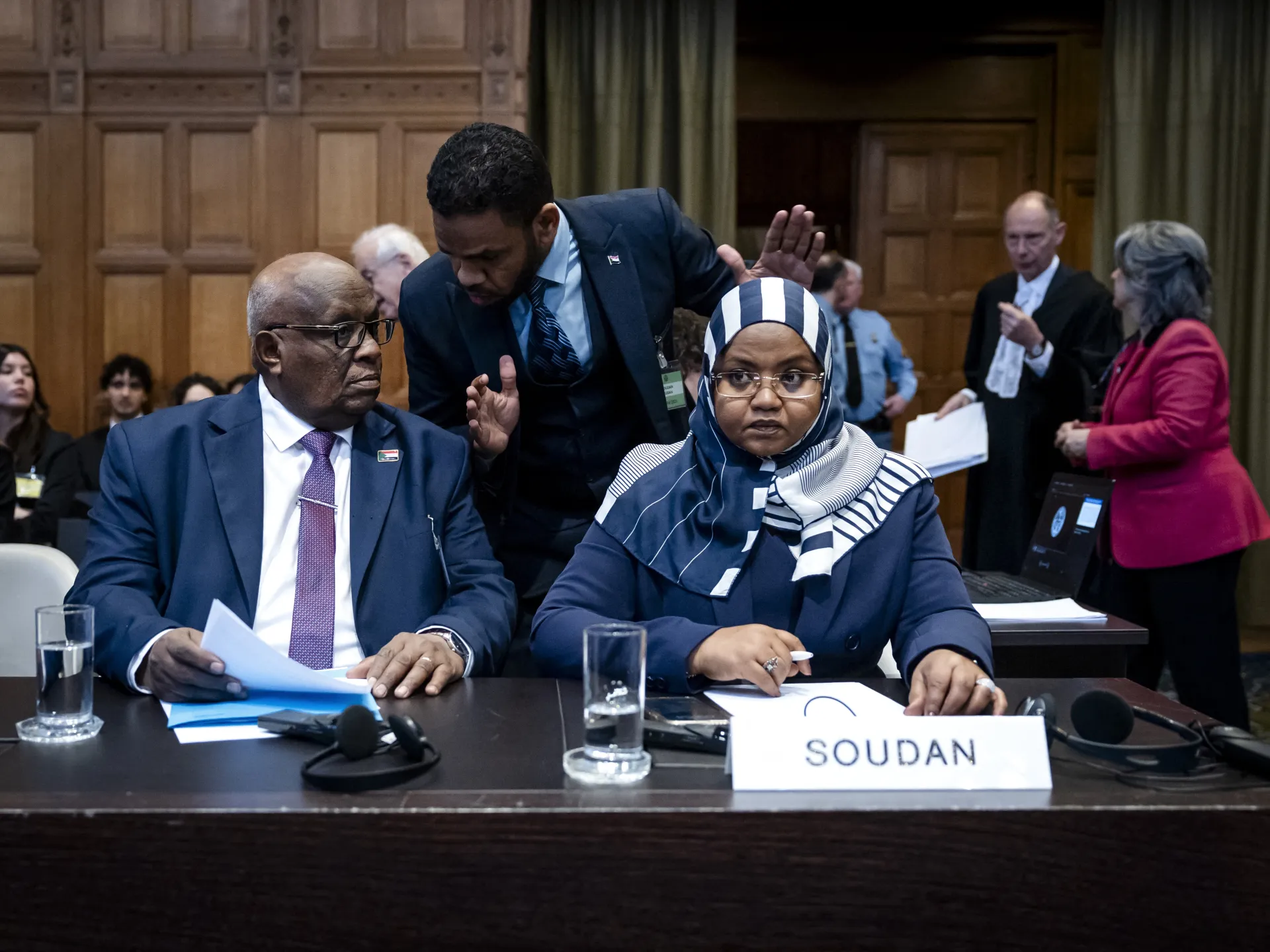
Presiding Judge Yuji Iwasawa of Japan opened the proceedings by hearing Sudan’s submission. Acting Justice Minister Maawia Mohamed Othman delivered a lengthy account of alleged violations, asserting that “the genocide against the Masalit tribes would not have occurred without the UAE’s support for the RSF.” He cited the killing of thousands, sexual violence, forced displacement, and the looting of public and private property.
The Sudanese minister emphasized that the UAE provided extensive logistical support, including the supply of heavy weaponry to Mohamed Hamdan Dagalo (Hemeti)’s forces by air and land, in clear violation of international law. He called on the Court to intervene urgently to halt the abuses and hold those responsible accountable.
Urgent Measures Requested
Sudan asked the Court to impose urgent provisional measures against the UAE in accordance with its obligations under the Genocide Convention, particularly concerning the Masalit community.
The first requested measure was to obligate the UAE to prevent all acts falling under Article 2 of the Convention, including killing, inflicting serious bodily or mental harm, deliberately inflicting conditions of life intended to destroy the group in whole or in part, and measures to prevent births within the group.
The second measure stressed that Abu Dhabi must, in line with its obligations, refrain from any conduct that facilitates or is complicit in the commission of such acts by non-state armed groups under its control, direction, or influence.
The third measure requested that the UAE be compelled to submit a report to the Court within one month on the steps taken to implement these orders, and every six months thereafter until a final ruling is issued.
Sufficient Preliminary Grounds
The presiding judge assured Sudan’s legal team that the Court would promptly consider the urgent measures due to their priority. The Court registrar delivered an official copy of Sudan’s requests to the UAE and notified the UN Secretary-General.
The Court found Sudan’s arguments contained sufficient grounds to proceed with examining the case, describing the UAE’s preliminary objections as “general reservations” lacking specificity.
In its first argument, Sudan’s legal team accused the UAE of involvement in the war through the supply of arms and military equipment to the RSF, enabling them to commit genocide in West Darfur and other war crimes.
Sudanese intelligence allegedly tracked weapons shipments from the UAE to airports in Chad, which were then transported by land to the RSF in Darfur, under the guise of humanitarian aid.
Sudan’s legal team also alleged that the UAE built a field hospital in Amjarass, Chad, to serve RSF interests. The militia, they claimed, has been extracting and transporting gold to the UAE in exchange for weapons. They also cited evidence of captured Colombian and other foreign mercenaries tied to the UAE during combat operations in Sudan.
Items linked to the UAE were reportedly found at RSF-held sites in Khartoum, Jabal Moya in Sennar State, and other areas.
UAE: “The Court Lacks Jurisdiction”
In the second session, UAE representative Reem Al Ketait, Deputy Assistant Minister for Political Affairs, argued that the ICJ lacks jurisdiction over Sudan’s case, which accuses the UAE of fueling genocide by supporting the RSF.
Al Ketait described Sudan’s accusations as baseless and lacking legal or factual grounding. She reiterated the UAE’s reservation on Article 9 of the Genocide Convention, calling it a legitimate exercise of state sovereignty. She said Sudan’s suit was an attempt to circumvent the principle of state consent, a cornerstone of international legal order.
Despite contesting jurisdiction, Al Ketait stated that the UAE participated in the sessions out of respect for the Court and international law, affirming the UAE’s commitment to the Genocide Convention.
She said the UAE had not provided any weapons or related materials to any warring parties since April 2023. Instead, the UAE had worked to alleviate suffering, contributing over $600 million in aid through the UN and other partners, and establishing field hospitals in Chad and South Sudan to help refugees, including Masalit civilians.
She denied any UAE role in “fueling this disgraceful conflict” and called Sudan’s allegations “misleading” and “baseless fabrications,” accusing Sudan of attempting to deflect from its own responsibilities.
Repeated Accusations
Since the war in Sudan erupted in April 2023, Khartoum has repeatedly accused Abu Dhabi of supporting the RSF, which is allegedly responsible for genocide, according to the U.S. State Department.
In November 2023, General Yasser Al-Atta, a member of Sudan’s Sovereign Council, accused the UAE of supplying weapons to the RSF via airports in Chad, the Central African Republic, and Uganda. He labeled the UAE a “terrorist state” destabilizing Sudan.
Al-Atta has reiterated his accusations several times, recently describing UAE President Mohammed bin Zayed as the “Devil of the Arabs” and holding him responsible for igniting the war and all the atrocities committed by Hemeti’s militias.
In March 2024, Sudan’s permanent mission to the UN filed a complaint to the Security Council, accusing the UAE of orchestrating the RSF’s offensive, posing a threat to regional and international peace. The complaint also implicated Chad for allowing arms and mercenaries to pass through its territory.
In April 2024, Sudan reiterated its accusations at the UN, with its envoy demanding the Security Council condemn the UAE for supplying the RSF with weapons, armored vehicles, jamming devices, missiles, and funding.
Last month, Sudanese Ambassador Al-Harith Idriss directly rebuked UAE envoy Mohamed Abushahab for his country’s role in backing the RSF during a Security Council session on Sudan.
Addressing the Council, Idriss said: “The UAE is the only foreign actor intervening in this war, and your Council must name it explicitly.”
He continued, “How can the UAE claim to support Sudan’s humanitarian needs one day after announcing a $200 million donation (in February) to the RSF?”
The UAE Denies Involvement The UAE continues to deny supplying arms to the RSF, despite mounting reports of its involvement, including UN findings and actions by U.S. lawmakers to halt arms exports to the UAE until it stops arming the RSF.
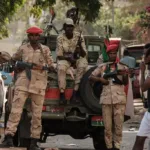
The war between Sudan’s military and the RSF, which began in April 2023, has killed and injured thousands, displaced millions internally and across borders, and devastated infrastructure in cities like Khartoum and Omdurman.
Legal Hurdles
Legal experts caution that Sudan’s case could falter over jurisdictional issues. International law scholar Michael Becker from Trinity College Dublin recently wrote on X and Opinio Juris that Sudan’s accusations raise important legal questions.
He noted that the UAE’s 2005 reservation on Article 9 of the Genocide Convention could lead the ICJ to declare itself incompetent to hear the case.
Sudan’s legal team countered that this reservation undermines the Convention’s goals of collective responsibility in preventing crimes against humanity.
Team member Moatasem Al-Sanousi revealed that the UAE presented no new legal arguments, merely reaffirming its objection to Article 9. He said the UAE’s delegation tried to politicize the proceedings.
Al-Sanousi told the press that the Court surprised both parties with two questions: Why did the UAE join the Convention while objecting to Article 9? And which of the two contradictory documents the UAE submitted should the Court rely on?
The Court has not issued a ruling yet, awaiting the UAE’s answers to these questions, after which Sudan will respond. A decision may take about a month. The Court could either assert jurisdiction and proceed to substantive hearings, or decline jurisdiction. Al-Sanousi expressed confidence in Sudan’s position, noting that many Arab, regional, and international actors acknowledge the UAE’s culpability.
He said Sudan submitted more than 150 documents to the Court, detailing types of weapons, manufacturing dates, and evidence of UAE supply. These included Emirati military passports found in combat zones and documents of Colombian and Ethiopian fighters who entered Sudan with visas from a UAE-based security company. Al-Sanousi said the UAE failed to refute these documents, focusing solely on its jurisdictional objection.
A Precedent for the UAE Sudan
is preparing for the possibility that the ICJ may rule it lacks jurisdiction, but the case has already served to draw international attention to Sudan’s plight.
The lawsuit has also further tarnished the UAE’s image—this is the first time the Gulf state stands accused in such terms before an international tribunal. The move may prompt other nations and institutions to sue the UAE for its aggressive interventions and support of militias and separatist groups abroad.
Before the ICJ case, the U.S. had already sanctioned seven UAE-based companies linked to the RSF. The UAE announced it was investigating these firms, claiming they were unlicensed and did not conduct economic activity within its borders. However, the U.S. Treasury published detailed records showing otherwise, including licenses issued by Emirati authorities.
Meanwhile, Abu Dhabi has mobilized its media outlets and political allies to counter Sudan’s claims, including former minister and diplomatic adviser Anwar Gargash. In a public statement, Gargash admitted he would not have joined the defense campaign were it not for what he called “the misleading and false campaigns by Sudan’s armed forces and their Muslim Brotherhood allies against the UAE.”
This suggests an implicit acknowledgment of the seriousness of Sudan’s case before the ICJ.
The UAE, once proud of its status as Africa’s top investor and builder of a far-reaching influence network in East Africa—as detailed in a previous Noon Post report—now finds itself on the defensive. Sudan’s lawsuit could pave the way for similar legal actions against the UAE over its controversial involvement in countries like Libya, Yemen, Syria, Somalia, and Eritrea.