





هذا التقرير متاح أيضًا بـ العربية
Perhaps the last question on the mind of any US administration that goes to war is the question of cost and reconstruction. But in the current round of war between the United States-Israel and Iran, a clever solution has emerged: Reports reveal a US intention to cover the cost of the war and reconstruction through Iranian funds frozen by the United States.
Iran is demanding the return of $24 billion, and that demand has been a “taboo” for US President Donald Trump, dating back to the 2016 presidential debates. Therefore, a US official confirms, speaking anonymously to the American magazine Fortune, that this issue is the reason the current round of negotiations has stalled.
At the same time, the US treasury secretary has ordered the formation of a team to assess the damage Iran has caused to US allies in the region — specifically the Gulf states — and how to repair that damage using that Iranian wealth.
For Iran, which sees its frozen funds not as a fund for paying Washington’s allies, the response was escalatory. Iran’s deputy foreign minister demanded that the countries that allowed their territory to be used for US-Israeli strikes compensate Iran for damages estimated at more than $270 billion.
It is a tangled, surreal scene in a conflict that has been fraught since 1979 between the United States and Iran, one in which it has become customary for one country to extend a hand with a settlement proposal only to find a clenched fist in return. But the most important thing about this scene is that it opens a political, historical and legal debate, if one wishes to ask: Is it legally permissible to divert the assets of a sovereign state to compensate its adversaries? Would that lead to a solution or to further escalation? And what exactly are these Iranian funds to begin with? That is where we begin.
Jimmy Carter’s last day
The Iranian assets under Washington’s control, used as a means of political blackmail, generally fall into several forms: frozen funds, accumulated oil revenues due to sanctions, and arms deals dating back to Pahlavi Iran. That makes estimates in this case broad, ranging from $6 billion to more than $100 billion. But the one certainty in this story is the moment of its birth under President Carter.
A US president does not usually spend his last day in the White House doing much more than packing his bags. But things did not go that way for President Jimmy Carter (1977-1980), who spent his final day overcoming an obstacle he himself had created.
We are speaking here about Iranian money and assets, and the crisis that arose and became known as the “Carter freeze” when the US president resorted to what is known as the International Emergency Economic Powers Act IEEPA, which the US government uses to strangle and isolate “rogue” states or those deemed a threat to US national security. It is the final form of the Trading With the Enemy Act, which President Wilson began using in 1917 to prosecute Americans trading with Germany during World War I, and which successive US administrations later used against Cuba, China, North Korea and Vietnam.
Eleven days after the embassy was stormed, Treasury Secretary Bill Miller called President Carter to inform him that Iran had ordered the withdrawal of all its assets in the United States, estimated at about $6 billion. Carter had to decide whether to instruct US banks to refuse the transfer — and that is what happened. With the stroke of a pen, Carter paralyzed the movement of Iranian assets, adding a new grievance to the Iranians’ indictment against the “Great Satan.”
The hostage-takers were demanding the extradition of the shah and his wealth, also estimated to be worth $20 billion in the United States. When chronic lymphocytic leukemia struck down the shah in his Egyptian exile after a brief illness, the core of the hostage crisis by mid-1980 had become absurd. Nothing remained but the corpse, if that was of any use, for the US government had no intention of returning Iranian funds.
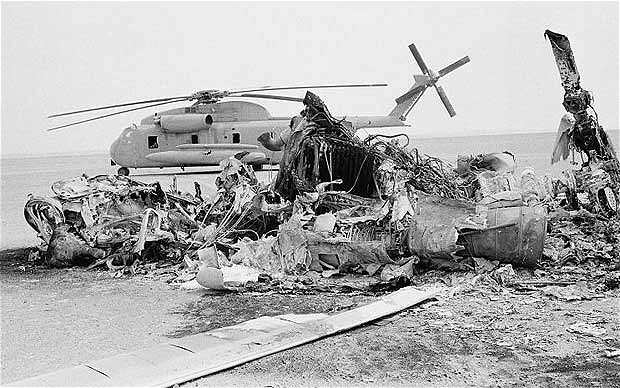
There had to be a way out — that is how the Carter administration saw it after several solutions had failed, beginning with the military operation Eagle Claw , which ended in disaster and scandal, recalling the Mayaguez incident of 1975, when the United States once again failed to rescue its hostages — this time before Iran, after having failed before the Khmer Rouge in Cambodia. And under public pressure on the Carter administration, there was nothing the Americans could offer except legitimacy and money.
The Iranians wanted the return of their country’s frozen assets, as well as the financial assets of the shah’s family located in the United States. They also wanted the arms supplies that Iran had already paid for under the shah’s regime — an urgent need as Iran was fighting a bitter war with neighboring Iraq. They also wanted firm guarantees that the United States would not attempt, in any way, to undermine Iran’s revolutionary regime, as writer David Farber notes in his book “Taken Hostage in Tehran 1979: The Iran Hostage Crisis and America’s First Encounter With Radical Islam.”
US banks, meanwhile, wanted the new Iranian government to pay the debts incurred by the shah’s regime. Because US banks held a vast amount of Iranian financial assets at their disposal, they enjoyed considerable bargaining power. The US side therefore explained that it could not hand over the shah’s estate to anyone, including the new government. Dealing with the shah’s property and other financial issues became a legal matter to be decided by the courts — since 1981, more than 600 rulings have been issued and more than 4,700 claims have been settled in the financial cases between the two countries — in The Hague.
After much delay and nonstop phone calls to President Carter on his last day between bank presidents and his negotiating delegation, the Iranians agreed not to receive the shah’s property. The US government, in turn, agreed to release a portion of Iran’s frozen funds, with accrued interest, amounting to $8 billion, on the condition that Iran immediately repay $3.6 billion of its debts to US and European banks. The United States also pledged not to seek the overthrow of Iran’s revolutionary government and not to interfere in Iran’s internal affairs. The principles of the Algiers Accords continued to govern relations between the two countries until Trump’s second term, and unresolved financial issues also remained, shaping the relationship between the two countries over half a century.
Goodwill … and the 2016 election
The issue of Iranian money was never settled once and for all, just as the hostage-taking issue was never settled either. It remained an Iranian method of operation and reached its peak amid the Lebanese civil war (1975-1990) through Iran’s proxies such as Hezbollah. Hostility between the two countries did not end, nor did initiatives for rapprochement cease, though their defining feature was a lack of serious intent.
But President George H.W. Bush (1989-1992) had an offer summed up in the phrase “goodwill begets goodwill,” as writer David Crist notes in his book “The Twilight War: The Secret History of America’s Thirty-Year Conflict With Iran.” He affirmed his readiness to treat Iran favorably if Iranian President Rafsanjani could secure the release of the American hostages abducted in Lebanon — a crisis from which the Iranians always liked to distance themselves by denying any connection to Hezbollah.
At the time, Rafsanjani wanted deeds, not words, from Bush. So in November 1989, Bush took further steps to prove his credibility, disposing of the frozen account at the Bank of England that had existed since the 1981 Algiers Accords to settle claims arising from the hostage crisis. That helped Iran recover $567 million of its money. The Iranians did not consider that gesture significant, and any possible initiative for rapprochement came to an end.
Nothing worth mentioning happened until President Obama (2009-2016) arrived. From his famous early messages to the Iranian government seeking dialogue, Iran consistently responded by demanding something serious. The late supreme leader Ali Khamenei even directly demanded the money.
In 2015, the UN Security Council approved the nuclear agreement signed between the United States and Iran, which meant lifting sanctions related to the nuclear file. The deal was done — or so it seemed, at least. As usual, there were unresolved issues, including the fact that the United States had not returned the money the shah paid in 1979 for warplanes that were never delivered.
The Obama administration learned, as writer Reese Erlich notes in his book “The Iran Agenda Today: The Real Story Inside Iran and What’s Wrong With U.S. Policy,” that it would lose that pending case before arbitrators at the International Court of Justice in The Hague. It therefore negotiated the return of $1.7 billion, including interest accrued since 1979. The deal made international headlines because $400 million of it was transported in cash on a cargo plane. The United States paid the amount in cash — many inside the United States considered it a ransom — because the US banking sanctions in force at the time made a financial transfer impossible. In return, Iran released Washington Post reporter Jason Rezaian and his wife, despite accusing them of espionage.
That money drama had repercussions in the 2016 US presidential race, as Donald Trump and a number of conservatives argued that the nuclear deal would give Iran $150 billion even if the United States did not sign the agreement, and claimed Iran would use that for terrorist activities. Trump was, of course, lying. But the symbolism here is what matters most: Since his first term, Trump has refused from the outset to discuss anything related to Iranian money and assets, which brings us back to the present historical moment.
Who owns Iran’s money?
If the United States wants to use Iranian funds for reconstruction and compensation for damages, that does not appear legally sound, given that the funds belong to a sovereign state and that its many cases, under their various designations, are being considered by the International Court of Justice. Nor can the United States invoke the principle of countermeasures set out in the International Law Commission’s articles on state responsibility for wrongful acts. That principle allows an injured state to take exceptional measures, but only on the condition that they be temporary and proportionate, aimed at securing compliance rather than punishment. From that standpoint, Iran is in fact the aggrieved party, and the legality of punishing it falls away.
There are other restraints as well. Recent historical memory confirms that states can freeze without owning. We return here to the precedent of Russia’s invasion of Ukraine in early 2022, when the G7 countries froze more than $300 billion in Russian assets, but were unable to transfer them to third parties in the absence of an international court ruling or use them for compensation to Ukraine or reconstruction plans, despite such intentions having existed for two years without being put into effect.
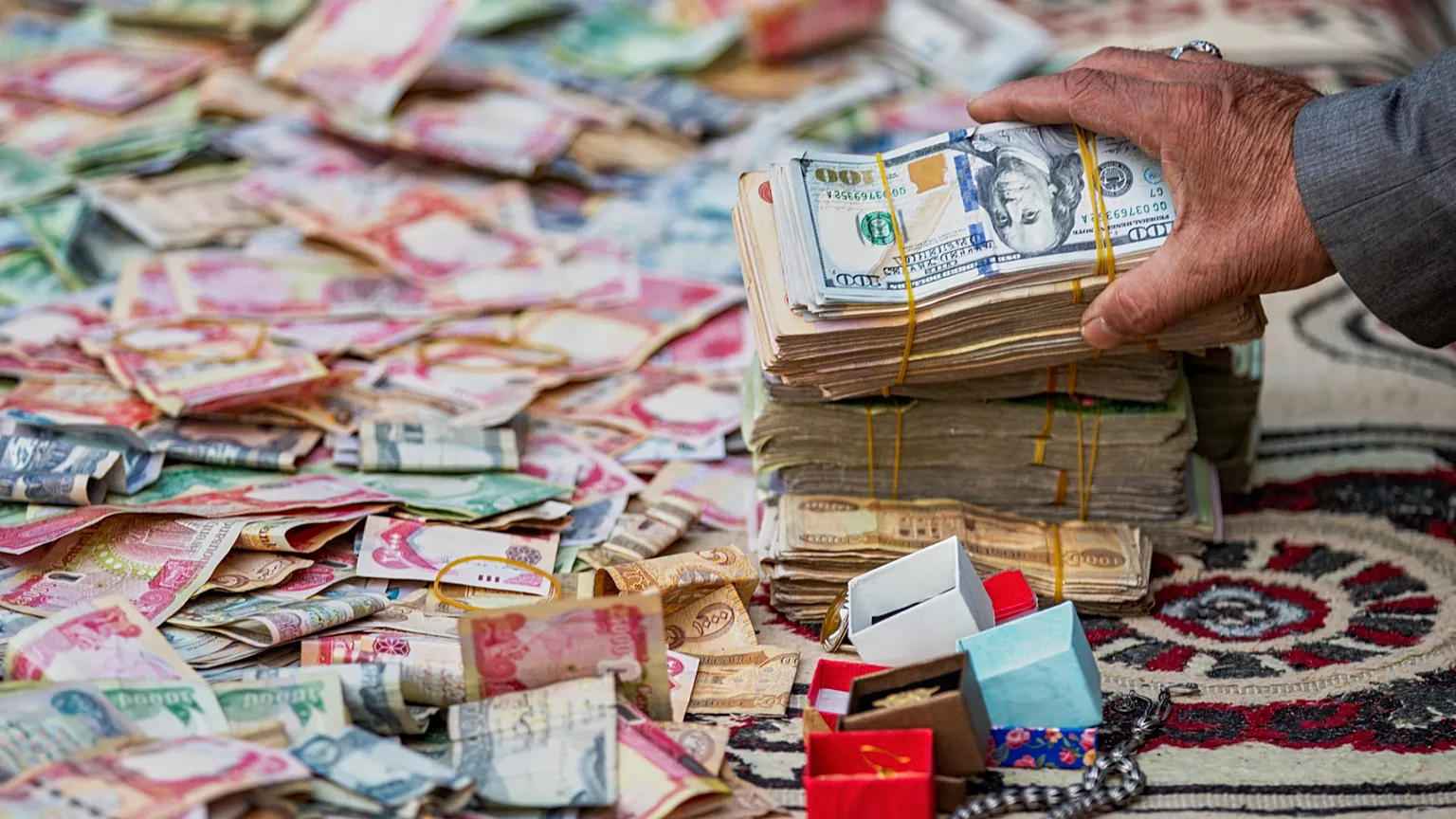
There are other considerations unrelated to international law that may be weighed even more heavily than international law in such a case. First, controlling those funds in the Russian and Iranian cases undermines their value as a tool of political blackmail and negotiation. Second — and more importantly — it pushes the dispossessed state toward zero-sum and more radical options.
In the cases of Iran and Russia, both states appear capable of raising the cost of war to levels far beyond whatever is hoped to be invested in addressing the current cost. While Russia could drag the West back into wartime conditions and undermine all economic gains through a comprehensive European-global war, Iran too — and it has proved its ability to do so — can choke the global economy by disrupting shipping through the Strait of Hormuz indefinitely. Experience has also shown that all the capitals in its geopolitical surroundings lie within range of its ballistic missiles and drones, making it capable of driving up the cost of war for neighboring states — the United States’ main allies — to the highest degree. That is why the views of those states are highly important in this matter: They may see another path, different from Washington’s, for settling the damages of war between them and Iran.
As the machinery of war turns in a new round these days, the issue of Iranian assets and compensation takes on doubled importance. There is no doubt that resolving this issue, left hanging since 1979, will have a direct impact on the future shape of relations between the United States and Iran. If US intentions are serious about acting unilaterally with regard to these funds — which would set a precedent in the history of this issue — by using them for postwar compensation, we will remain driven to ask: Can this war actually end?