






هذا التقرير متاح أيضًا بـ العربية
President Ahmed al-Sharaa’s visit to Arwad Island on June 7 reopened the file of the only inhabited island on the Syrian coast, after long years of marginalization and weak investment, amid promises to turn it into a platform for revitalizing the coastal economy and reintegrating it into the development and tourism map.
During the visit, al-Sharaa said Arwad has assets that can be better utilized, pointing to projects now underway that could create new jobs and stimulate economic activity in the area, according to statements to Syria’s Al-Ikhbariya channel.
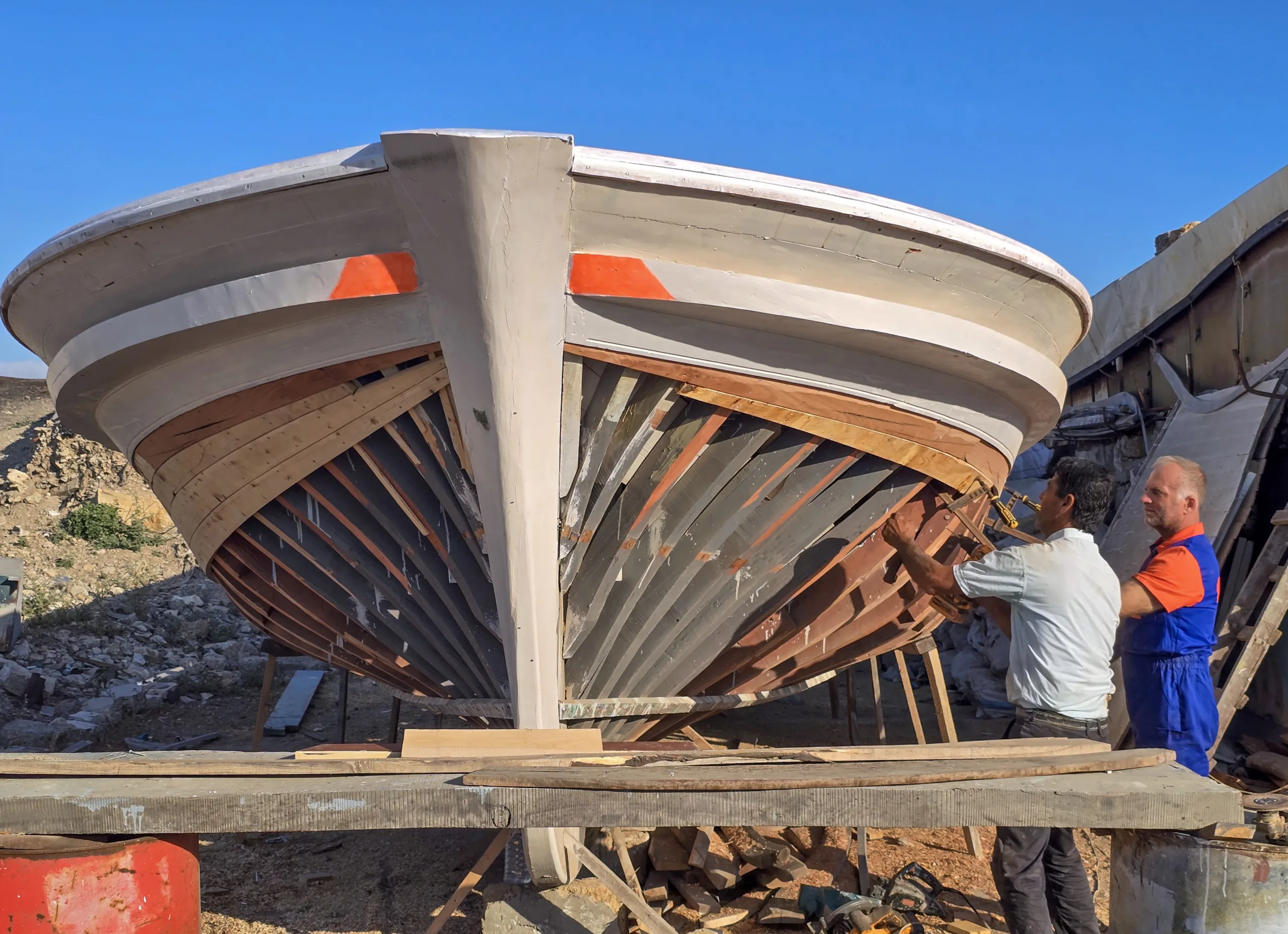
The island lies about 3 kilometers off the coast of Tartus and is the only inhabited island on the Syrian coast. Its population is estimated at around 10,000, a large share of whom depend on fishing and wooden boatbuilding, while seasonal tourism provides an additional source of income for the island.
Despite Arwad’s historical importance and distinctive geographic location, it has for decades suffered from limited investment and weak infrastructure and services. Its nature as a small island of no more than about 20 hectares also creates challenges linked to high transport costs and limited resources and local markets, even as it offers development opportunities in tourism, heritage and the maritime economy.
Against the backdrop of declared ambitions to develop Arwad, questions arise over its ability to shift from a local economy reliant on limited traditional activities into an economic development platform capable of creating jobs and attracting investment.
Years of marginalization
Despite the existence of an earlier planning study by the Tourism Ministry under the former regime that addressed developing the island, improving its service infrastructure and designating new zoning areas to secure investment space for decades to come, those plans remained theoretical and were never translated into actual projects on the ground, reflecting the scale of neglect Arwad endured.
With data lacking transparency during the former regime’s rule, the island was treated within the broader context of Tartus province without separate data, and for years remained outside the scope of economic studies and development projects, despite the existence of archaeological and environmental studies.
Despite Arwad Island’s historical and tourism significance, it suffered for a long time from marginalization and lack of attention, not only during the former regime’s rule but also during the French occupation, which turned it into a prison. The island was not treated as a tourism or economic resource from early on, and there was no clear vision for investing in it or making optimal use of it, according to economist Firas Shaabo.
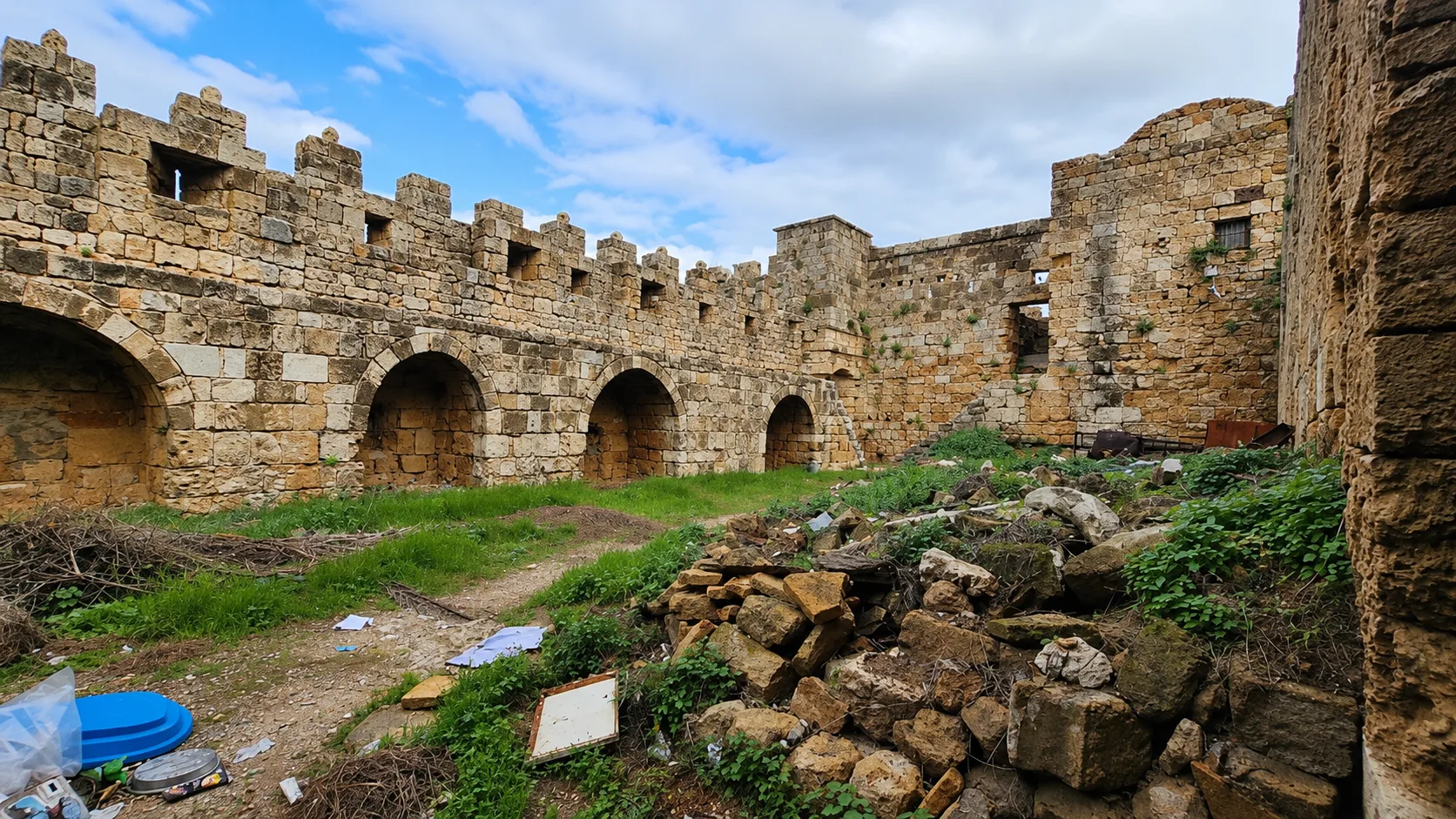
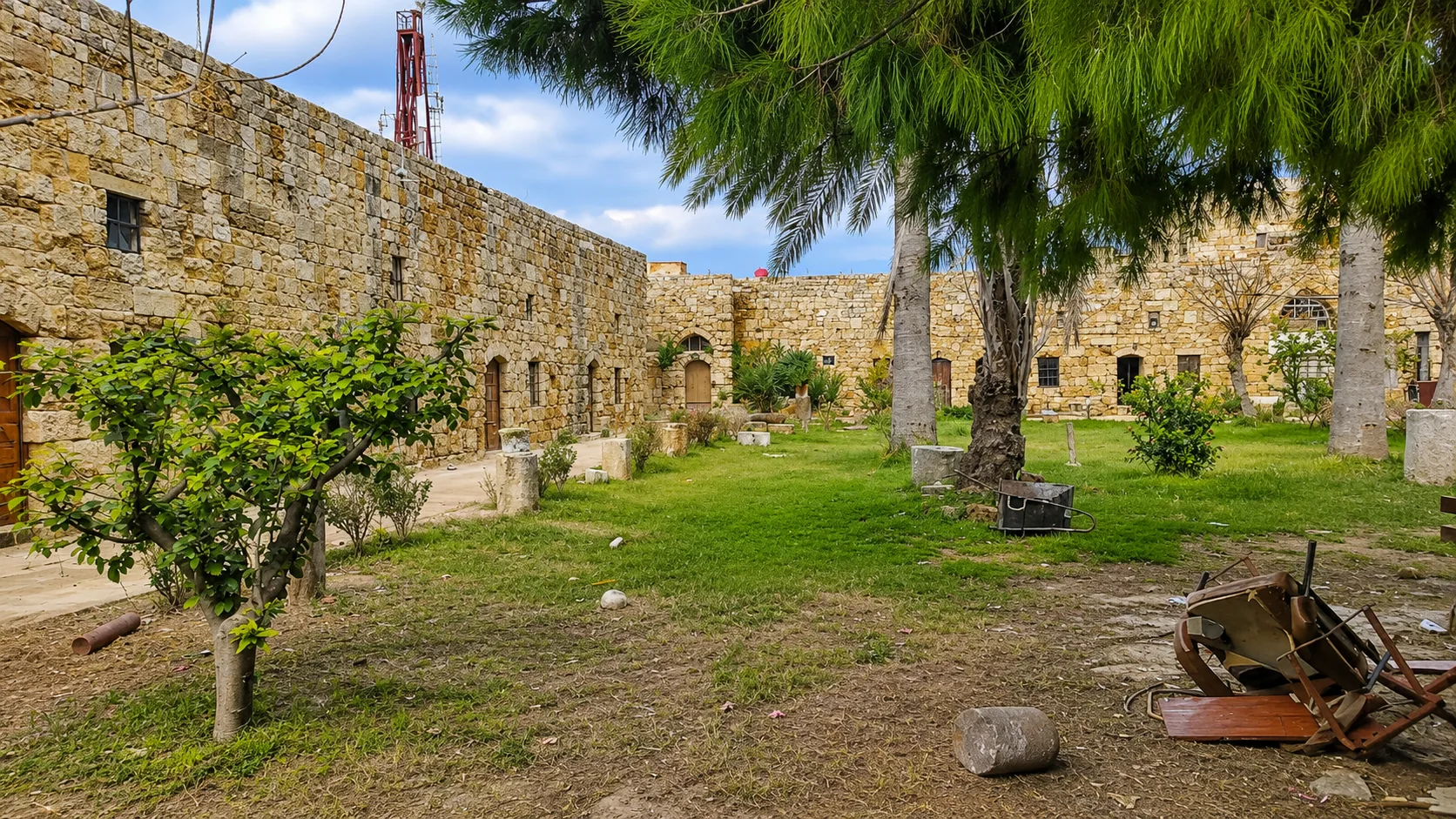
Shaabo told Noonpost that this neglect is reflected in the island’s current reality, where infrastructure is clearly weak and public services are poor, while hotel and entertainment investments are almost nonexistent. Some landmarks, including the castle, have also deteriorated due to the absence of maintenance and care.
Shaabo added that residents depend economically mainly on fishing and some marine transport activities as their principal source of income, amid weak tourism activity that has remained largely confined to limited domestic tourism, without any effective inbound tourism movement.
Even at the local level, there were no clear programs to sufficiently stimulate tourism on the island, keeping it outside the circle of real economic benefit despite possessing important economic and tourism assets that could have made it an integrated development project contributing to support the local economy.
That does not mean exaggerating its image as a global tourist destination like the Maldives, Shaabo said, but at the same time it has the assets to make it an important national tourist destination, as part of Syria’s diverse tourism appeal alongside Damascus, Aleppo, the coast and the mountainous regions.
He noted that, in reality, there are islands smaller than Arwad in other countries that generate major tourism and economic returns, confirming that the issue is not size but how it is managed and invested in.
Main projects: tourism and heritage
Shaabo continued that Arwad Island is distinguished by an ancient history stretching back thousands of years. It is not a newly created or artificial island, but an inhabited island with an established social and economic life, and a strategic maritime location that could be heavily invested in if effective management and integrated infrastructure were available.
As for the types of possible projects, he explained that the tourism and heritage sector is among the most promising fields, alongside developing fishing activities and marine services. Investment is also possible in sea excursions, yachts, diving and water sports, sectors that constitute important sources of income in many coastal countries.
Small tourism projects with a heritage and natural character could also be developed, such as guesthouses or small hotels that preserve the local environment, in addition to supporting handicrafts practiced by some women on the island and developing them within tourism routes dedicated to selling souvenirs, as is done on many tourist islands around the world.
As for the expected economic return from developing the island, it cannot be determined precisely without specialized feasibility studies, according to the economist. But the direct impact would be increased income for residents and higher commercial activity, while the indirect impact would be the stimulation of transport, restaurants, hotels and crafts, in addition to a revival in local tourism and the trade associated with it.
Shaabo noted that if Arwad is successfully transformed into an effective tourist destination, it could become a magnet for coastal tourism investment in Syria, especially since its real value lies not in its size but in its rarity and strategic location. Accordingly, the island has the assets to move from an economy based on fishing to an integrated heritage and maritime tourism destination if it is properly invested in and managed.
Challenges and opportunities
These ambitions, however, raise a set of challenges linked to the island’s current reality. A study issued by the Organization for Economic Cooperation and Development in February 2026 indicates that the area’s status as an island imposes economic challenges related to high costs and limited competitiveness.
At the same time, however, it also offers opportunities for sustainable development if local resources such as human capacities, cultural heritage and natural resources are invested within an integrated development vision.
On the economic side, the study explained, the main challenges are the small size of the market, limited economic diversification, high transport and energy costs, weak integration with national networks, limited capacity for innovation, seasonality, and shortages in skills and expertise.
Environmentally, the challenges lie in vulnerability to climate change and natural disasters, scarcity of resources such as water, waste management and land, environmental degradation, biodiversity loss, and pressures resulting from unregulated tourism or tourism not managed sustainably.
As for social and institutional challenges, they include aging, population decline, high costs of services and infrastructure, limited institutional capacities and geographic isolation.
By contrast, the main economic opportunities lie in sustainable and diversified tourism, high-quality local food and fish products, innovation and digital transformation, the blue economy, renewable energy, and cultural and creative industries.
Environmentally, the potential of the green and blue economy stands out, along with the presence of unique natural resources and ecosystems, in addition to opportunities to develop renewable energy and strengthen environmental innovation.
On the social and institutional level, opportunities include enhancing quality of life and social cohesion, consolidating cultural and heritage identity, as well as expanding community participation and strengthening local cooperation.
As for the proposed policy priorities, they include economic diversification and support for small and medium-sized enterprises, sustainable and high-quality tourism, smart specialization and innovation, improving transport, energy and digital connectivity, skills development and labor market integration, adaptation to climate change, and strengthening resilience plans.
They also include green growth and the circular economy, sustainable management of resources and land use, integrated environmental governance, strengthening digital and transport connectivity, education and skills development, social innovation and service delivery, and strengthening local governance and financial frameworks.
Between the island’s distinctive geographic location and historical legacy, and the structural and economic challenges imposed by reality, the announced plans and projects for its development remain under close watch, amid questions over whether it can move from the level of vision to the stage of actual implementation.