








هذا التقرير متاح أيضًا بـ العربية
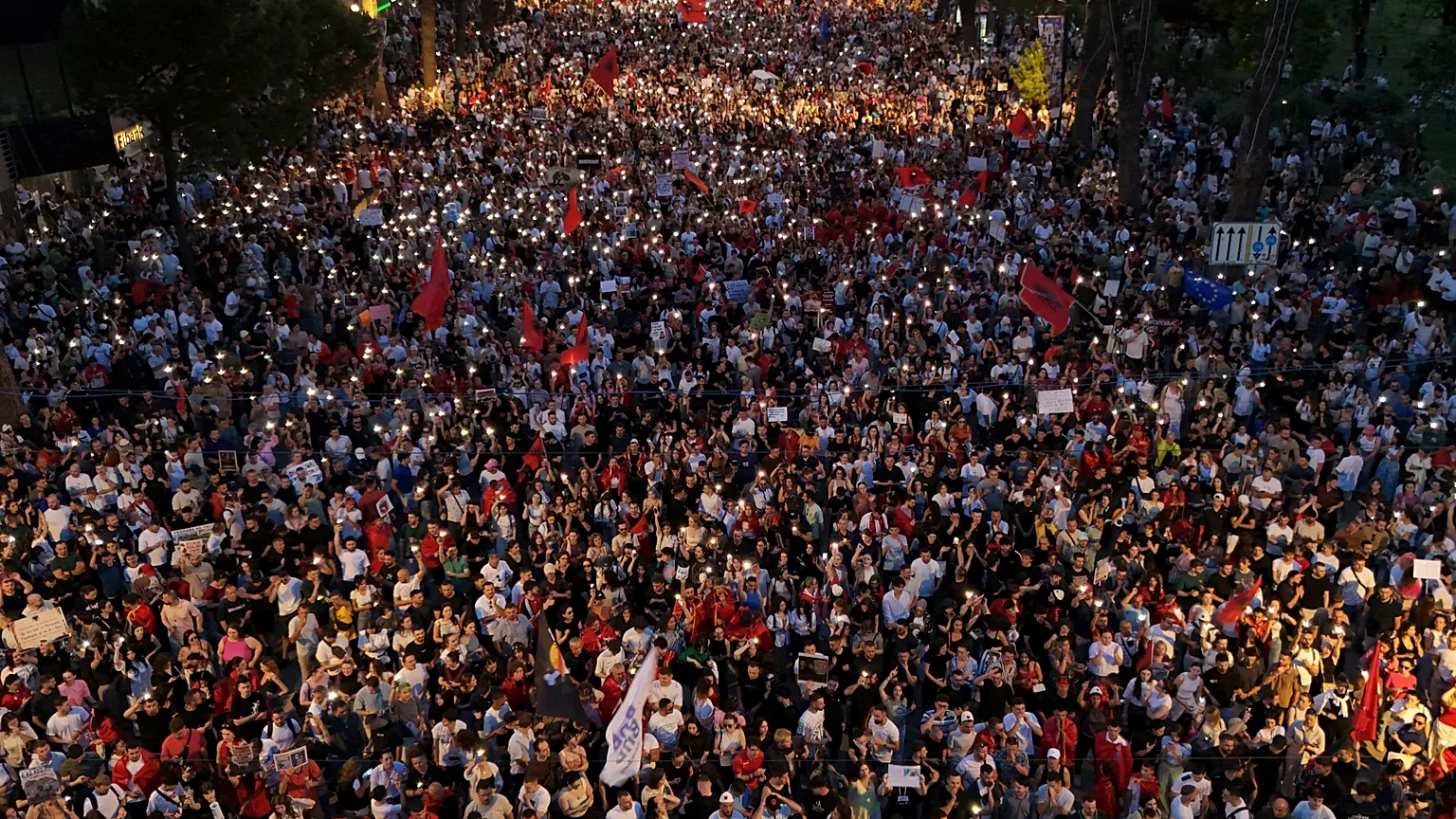
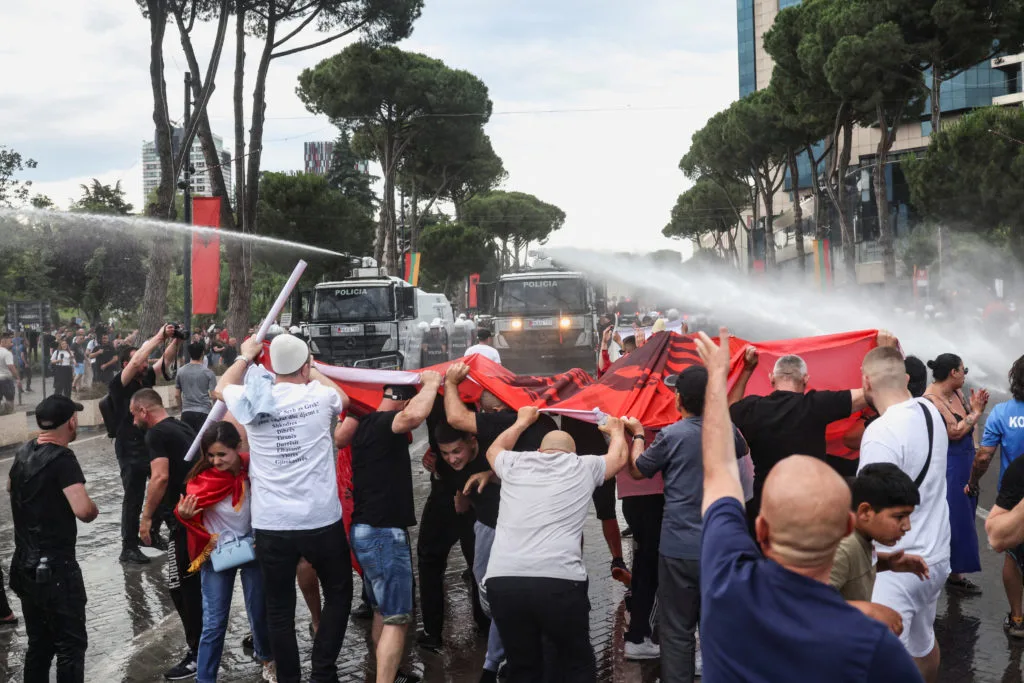
The sweeping protests engulfing the Albanian capital, Tirana, and the Vlora region have evolved from a conventional environmental movement into an existential outcry against a massive tourism project led by Jared Kushner, the son-in-law of the former US president, through Atlantic Incubation Partners LLC.
Albanians today fear their country’s islands and protected areas could be turned into fortified, isolated enclaves for the global elite on sovereign land prompting activists to rally under the slogan “Albania is not for sale” in their ongoing sit-in outside the prime minister’s office.
What further inflamed feelings of national humiliation was the condescending tone with which the American developers spoke about state land. In a recent podcast, Ivanka Trump described the strategic island of Sazan as a “rare find” they came across by chance during a yacht trip with Nat Rothschild the British billionaire whose name has been linked to scandals involving Jeffrey Epstein’s notorious network claiming that she and her husband were the first to “discover” the spot and walked barefoot to its summit.
That logic shocked Albanians, who see their country’s islands as a sovereign national inheritance, not private property to be divided up during a luxury outing tied to elites shadowed by international suspicion.
This incursion, however, did not proceed without local cover. To circumvent strict laws, the government in Tirana granted the American investor the status of “strategic investor” (Strategic Investor), opening the door to bypassing constitutional and environmental safeguards and crushing fragile ecosystems home to rare species such as the Mediterranean monk seal, the Dalmatian pelican and the pink flamingo, backed by the Affinity investment fund, which is pouring in vast capital assembled through direct understandings with influential international political circles.
The Balkans’ Strait of Hormuz: Military dimensions behind the mask of investment
In this context, Albanian geostrategic affairs expert Marlind Lasi told NoonPost: “Questions of sovereignty and territorial ownership are now provoking the broadest debate in Albania since the fall of communism. The fierce disputes surrounding Sazan Island and the Zvernec area are merely the outward expression of a deeper national anxiety. Albania’s sovereignty and territory are currently at risk of being turned into a testing ground for Western political and economic elites.”
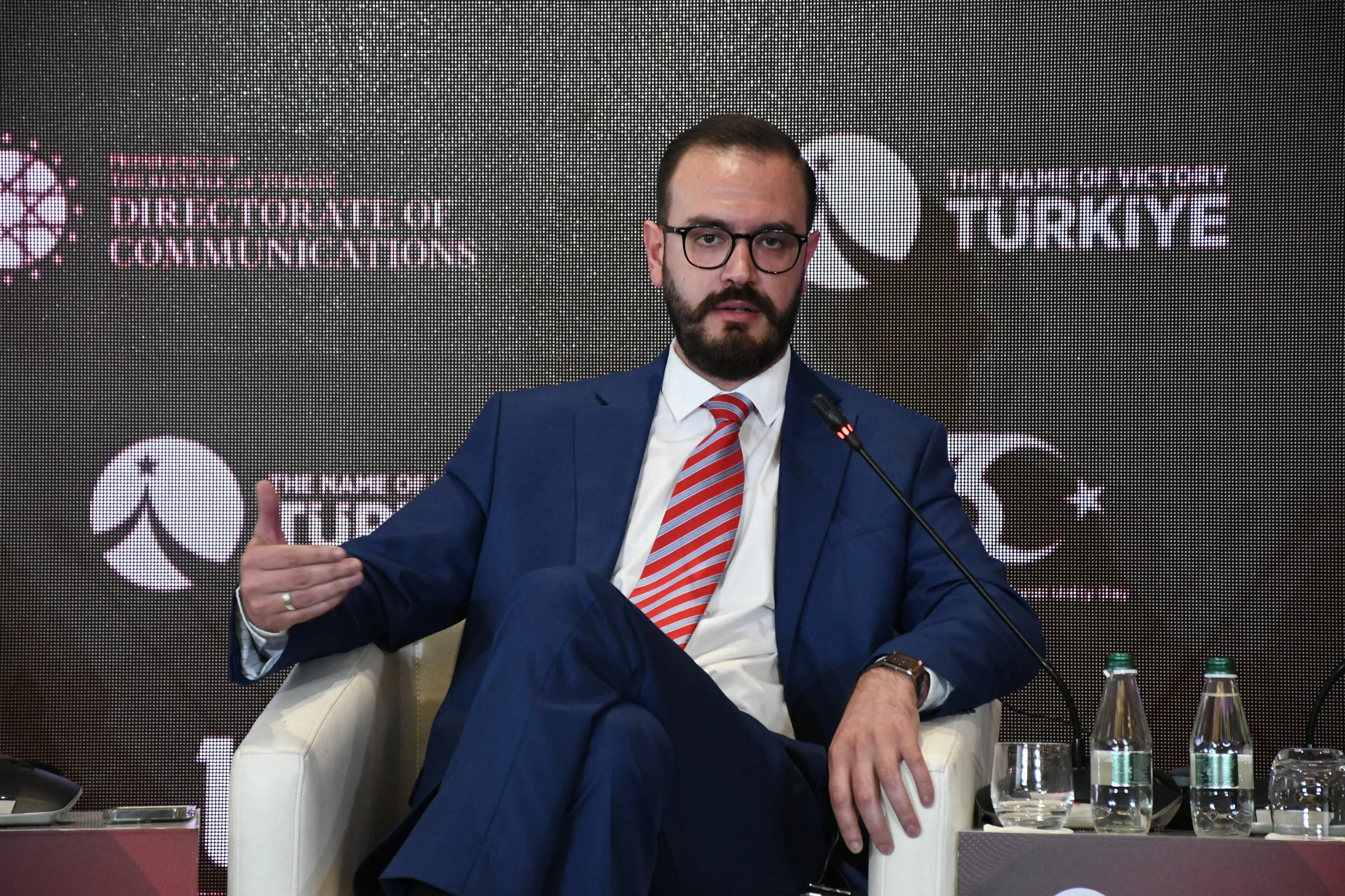
Lasi continued his analysis, saying: “From a strategic perspective, Sazan Island lies at the entrance to the Bay of Vlora, between the Adriatic and Ionian seas. Accordingly, whoever controls this area possesses a prime observation point overlooking one of the region’s most important maritime corridors, as well as a pivotal location linking the Mediterranean to the Ionian Sea. The island’s exceptional strategic importance can, relatively speaking, be compared to that of the Strait of Hormuz.”
Lasi pointed to other dimensions as well: “Sazan’s nature as a former military base containing a complex tunnel network and massive underground infrastructure fuels suspicions among both Albanians and Europeans alike, amid categorical rejection of seeing mysterious closed resorts spring up on Europe’s doorstep.
Even so, Albanian Prime Minister Edi Rama remains determined to push both projects through, while simultaneously promoting ideas of territorial fragmentation that deepen public mistrust, in what amounts to an attempt to flee forward from major corruption cases dogging his government and valued in the billions of euros.”
The Albanian expert argued that “the plan to turn Albania into ‘a land without a people’ and then populate it with ‘a people without a land’ by emptying the country through systematic emigration is a real and growing danger one I personally warned about in an article published in 2020 titled ‘The Migration of the Future.’ In it, I warned of a scenario resembling the Palestinian Nakba of 1948, in which propaganda networks promote the slogan ‘a land without a people,’ only for Albania later to become an arena exploited by peoples with vast capital and international backing to dissolve society and marginalize it permanently.”
Lasi believes that “the current protests are gaining momentum as an ‘uprising against colonialism.’ Future investments in Zvernec and Sazan threaten to turn these areas into ‘kibbutzim’ and settlements that would ultimately reduce Albanians to servants on their own historic land. Driven by the public’s conviction that this homeland belongs to its own people alone, the protesters’ main slogan now echoes everywhere: ‘Albania for Albanians, death to traitors.’”
Lasi concluded his reading of the geopolitical scene by saying: “Given the strategic maritime agreements of the Turkish Republic in cooperation with Libya, it is clear that Tel Aviv is seeking to break this maritime encirclement that threatens its regional supremacy. On that basis, and in order to confront the strategic interests tied to Turkey’s ‘Blue Homeland’ (Mavi Vatan) maritime doctrine, Greek Cyprus, Greece and Albania are being employed as proxy states. But the ropes of these policies will ultimately snap, and the people’s voice will remain the loudest: ‘Albania for Albanians.’”
Constitutional amendments: Legislative engineering tailored to the investor
For his part, Albanian journalist and human rights activist Egon Luli explained the legal dimensions of the issue in an interview with NoonPost, saying: “Legally speaking, what is happening in Sazan and Zvernec cannot be treated as just another tourism investment. We are dealing with blatant encroachments on a legally protected coastal strip, property claimed by local residents, and an island whose military significance touches on Albania’s sovereignty and security.
The fundamental question here is this: Is the state protecting the public interest, or is it redesigning laws and bending institutions to push through a private commercial deal?”
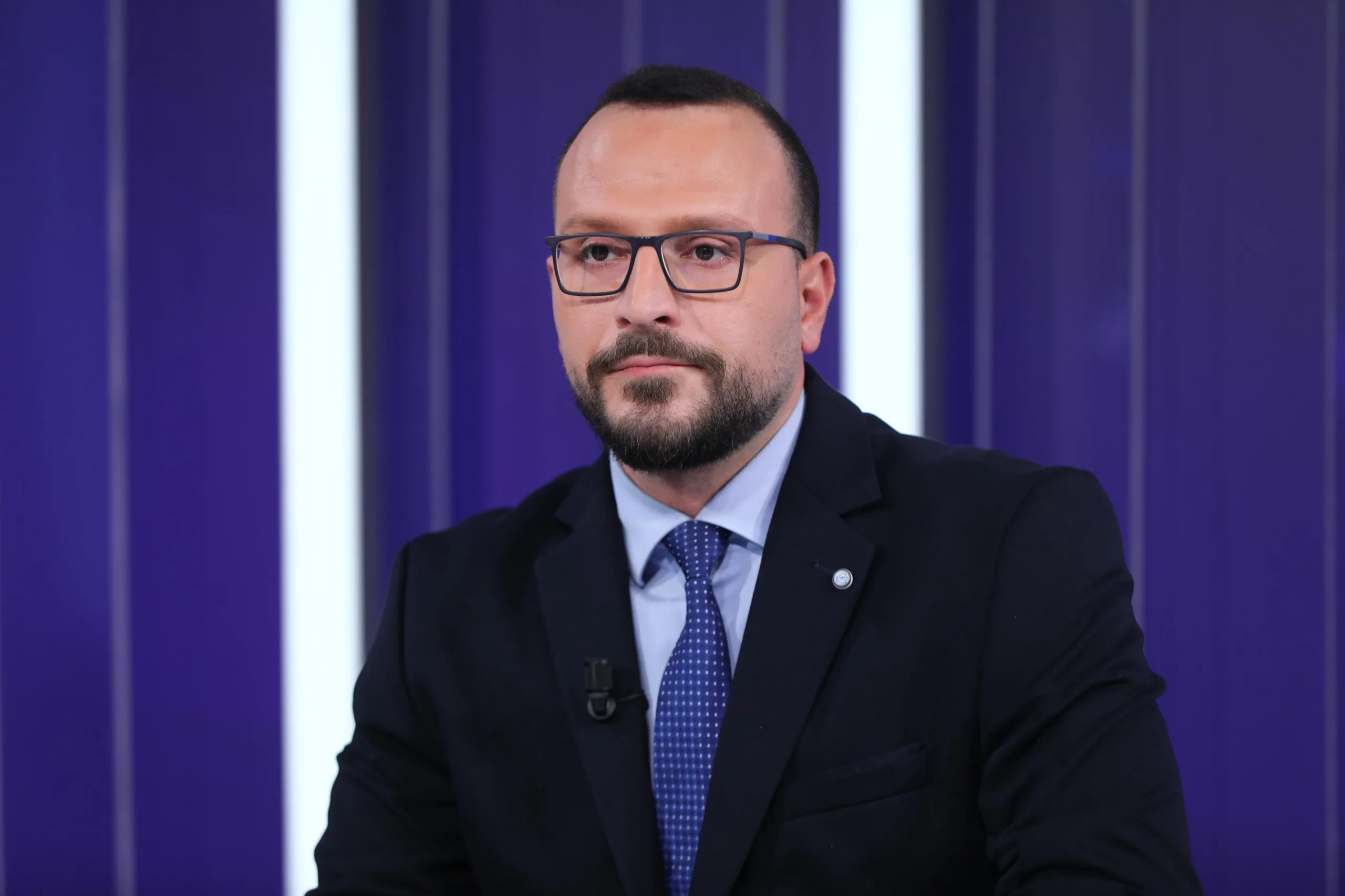
Luli went on to say: “What is suspicious and shocking is that none of the investors or managers of the companies involved has appeared publicly to face the people. Even the designers and environmental engineers whom the prime minister described as ‘the best in the world’ have disappeared entirely. Accordingly, the current public rejection is not aimed at the idea of foreign investment in itself, but at a dubious model in which laws are forced to adapt to the investor’s specifications and wishes, instead of requiring the investor to comply strictly with the law.”
Luli continued his warning: “This conflict is not a war between ‘development’ and ‘opponents of development,’ as the guided media claims. It is an existential struggle between two models of development: one that believes massive investments can crush the most sensitive areas so long as they bring in capital, and another that insists development must be transparent, accountable and bound by the public interest.
The greatest danger lies in the ‘dangerous legal precedent’: If a protected area is opened today for a powerful investor, the same formula and legislative conspiracy will be used tomorrow to plunder any other part of the Albanian coast.”
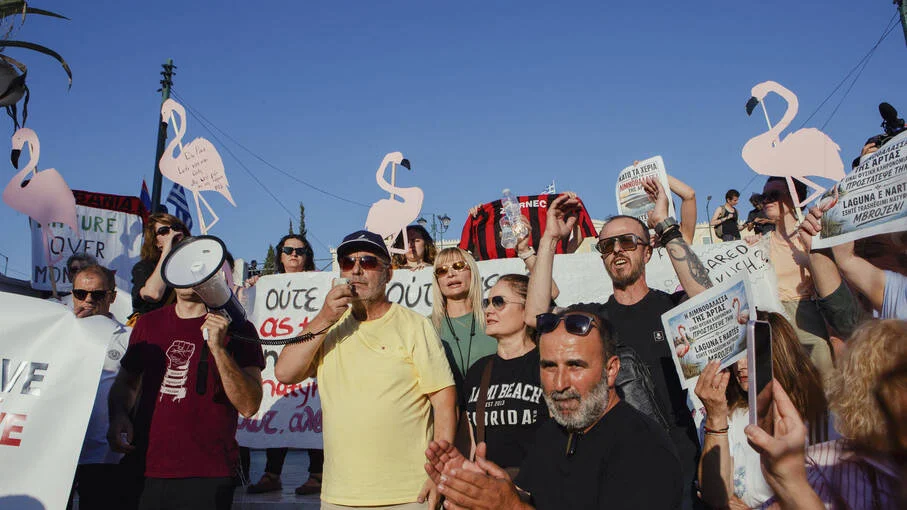
IMAGO / Middle East Images
Luli detailed the legislative flaw, saying: “The main problem lies in the recent amendments introduced to the ‘Law on Protected Areas.’ The government created a mechanism under which protection remains ink on paper, while in practice it is hollowed out by allowing construction and resort development inside these areas, turning legal protection into a ‘decorative façade’ without substance. From a constitutional perspective, the Albanian Constitution explicitly recognizes the citizen’s right to a healthy environment and imposes an obligation to protect natural assets.
Changing the laws without genuine public consultation, and at a moment when concrete projects were preparing to benefit from those changes, raises criminal suspicion that the procedures were not neutral. Was the law changed because Albania needed a better environmental policy, or because certain major investments needed a loose and fragile legal framework?”
“For the residents of Zvernec, this is a matter of ownership, dignity and the right to access land they have inherited for generations,” Luli said, adding: “When the local community sees barbed wire and private guards, the dispute turns into a deeper confrontation over who this land really belongs to.
The most legally precise terms to describe what is happening here are: ‘restriction of public access,’ ‘land seizure and confiscation,’ and ‘de jure and de facto privatization of public space.’ That is why the legal battles now raging are tied to property rights and administrative decisions that favored the investment without sufficient guarantees for the public.”
On Sazan Island, Luli asked: “Sazan has a vast military history and a unique strategic location that touches on the country’s security and sovereignty, and any decision to grant it for long-term use must be subject to far greater scrutiny than any ordinary project. The questions are urgent and specific: Was Sazan removed from military regulations through publicly declared legal procedures?
Was the project evaluated by the highest national security institutions? Was parliament notified? And were the contracts and obligations related to the public’s right of access published? Without clear answers to these questions, Sazan remains a matter of sovereignty, national security and absent democratic oversight.”
As for what society can do in response, Luli said, “There are clear avenues for legal challenge based on documents, maps and evidence of the absence of public consultation. Nationally, these avenues include the administrative and constitutional courts, in addition to filing direct complaints with the Special Anti-Corruption and Organized Crime Structure (SPAK). Internationally, mechanisms linked to the Aarhus Convention (the right of access to environmental information) and the Bern Convention (for the protection of biodiversity) can be activated, along with pressure through EU institutions in the accession negotiations file. At its core, this battle aims to break and crush a dangerous precedent in which the law is harnessed for private interests.”
SPAK’s millions and the “Tel Aviv” narrative
In a simultaneous dramatic development that reinforces these thorny rights-related concerns, Albania’s Special Anti-Corruption and Organized Crime Structure (SPAK) confirmed that it has opened a broad investigation into the legislative mechanisms used to pass the project in favor of Atlantic Incubation Partners, triggering a sharp political crisis within the corridors of power. Despite the pressure of the investigations and the boiling anger in the streets.
Albanian Prime Minister Edi Rama renewed his firm commitment to the project, announcing the enormous financial value of the overall scheme in a defiant tone: “Albania should not fear a giant project that attracts exceptional partners to inject investments worth 4 billion euros ($4.7 billion),” stressing that the investment earmarked for Sazan Island alone amounts to $1.6 billion, and concluding: “As long as I am in this position, there is no possibility of stopping these investments.”

At a time when the street is in uproar over land issues and the protection of water resources, reports are emerging from the ground that Israeli security technology companies are operating on site to install advanced surveillance systems around the Zvernec area to secure excavation work, in parallel with Tirana’s signing of a memorandum of understanding with “Israel” in the fields of food and agricultural security.
This accelerated timing reflects a clear overlap linking the real estate control granted to “strategic investors” with dominance over vital sectors, underscoring the accuracy of the geostrategic warnings issued by experts about an attempt to turn Albania’s pristine beaches and sensitive military sites into closed settlements for the global elite in a way that directly intersects with the battle over regional sovereignty in the Mediterranean basin and the “Blue Homeland” doctrine.