

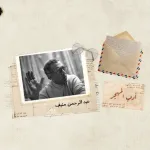






Simon Levy, also known as Shimon Levy, occupies a singular place in the history of Moroccan Jewry. Born in the city of Fez to a Jewish family, he was a leftist political activist who fought against French and Spanish colonialism in Morocco.
From within this struggle, he became involved in movements that would come to define Morocco’s political memory. At the same time, he emerged as a staunch defender of his Moroccan Jewish identity, a chronicler of his community’s heritage in a country celebrated for its cultural diversity. Loyal to Jewish collective memory and firmly opposed to Zionism, Levy rejected the ideology that linked the fate of many Moroccan Jews to emigration to Israel after 1948.
He remained a Jew by culture and religion, a Moroccan by nationality and patriotism, a communist by ideology, and a champion of just causes foremost among them, the Palestinian cause.
Life and Trajectory
Born in Fez in 1934, Simon Levy was raised in a traditional Moroccan Jewish environment shaped by complex ties with both the Arab-Islamic world and the French colonial presence. He was educated in French schools while also receiving traditional religious instruction. His academic interests gravitated toward languages and linguistics, culminating in a degree in Spanish and Portuguese literature in 1956.
From a young age, Levy was committed to Moroccan national causes. He joined the nationalist movement against colonial rule in 1954 and later became active in labor unions, student movements, and the Moroccan Communist Party which later evolved into the Party of Progress and Socialism. His political activism placed him at odds with colonial forces and led to repeated confrontations.
He was arrested on March 23, 1965, along with several other leftist activists, and endured brutal torture in detention. Yet, this ordeal only strengthened his resolve to stand with the Moroccan people in their national and social struggles.
Levy’s refusal to accept French citizenship which had been extended to Jews in the Maghreb—left him stateless for over 24 years, until the enactment of Morocco’s nationality law in late 1958.
He served as editor-in-chief of the weekly newspapers Al-Oumma and Al-Jamahir between 1958 and 1959, contributed for years to the daily Al-Bayan, and taught in the Department of Languages at Mohammed V University.
His academic work focused on the study of Moroccan Jewish language and culture, particularly their relationship to Amazigh and Arab contexts and their integration into broader Moroccan society.
His doctoral dissertation, The Arabic Dialects of Moroccan Jews, supervised by the eminent scholar Haïm Zafrani, became a cornerstone of his scholarly legacy. He dedicated many years to this research, successfully documenting a vast portion of the cultural and religious heritage of Moroccan Jews.
Guardian of Jewish Memory in Morocco
Beyond writing and academic inquiry, Levy played a pivotal role in preserving Morocco’s Jewish memory. In 1996, he founded the Jewish Museum in Casablanca, aiming to collect documents, testimonies, and artifacts that chronicle Jewish history in Morocco, preserve its literary and musical heritage, and safeguard its synagogues ensuring that this memory remained vibrant within the national cultural landscape.
He also served as Secretary General of the Foundation for Moroccan Jewish Cultural Heritage, which he helped establish and lead. Through the foundation, he worked tirelessly to restore synagogues, cemeteries, and Jewish archives across the country.
Levy institutionalized his advocacy, elevating the preservation of Jewish memory to a national cultural priority an effort later encouraged and supported by King Mohammed VI after his ascension to the throne.
This institutional role enabled Levy to safeguard the material and intellectual traces of Jewish life in Morocco its rituals, languages, and patterns of coexistence. In doing so, he crafted a narrative that bridged past and present while challenging the erasure or reduction of Jewish Moroccan history.
This endeavor was a natural extension of his anti-Zionist stance: for him, preserving Jewish memory within Morocco refuted the notion that it needed to be relocated elsewhere.
A Voice Against Zionism
Simon Levy remained deeply committed to his Moroccan national identity. This was evident in his public rejection of attempts to subordinate Jewish identity to foreign political agendas. His background helps explain his transformation into a vocal critic of Zionist policies that encouraged Moroccan Jews to emigrate to Israel after 1948 an exodus that he viewed as a cultural and demographic rupture.
He believed this migration was a historical mistake that harmed Morocco’s social fabric. He argued that the creation of a Jewish nation-state in Palestine, and the subsequent identification of Arab Jews with it, was a detachment from their authentic, localized histories rather than an affirmation of their diverse identities.
He maintained that the State of Israel was not a true expression of Judaism but a political entity that endangered Jewish historical experiences. For Levy, Jewish life in the diaspora including in Morocco represented a deeper, more enduring understanding of Jewish identity that transcended modern nationalism.
In an interview, he explained that the essence of Judaism had been shaped by the diasporic experience, developed over millennia in culturally and religiously diverse societies where Jews lived as minorities. This fostered a unique consciousness and cultural distinctiveness.
He stressed that the contemporary concentration of Jews in a single state—as in Israel—does not necessarily reflect the traditional meaning of Judaism as it evolved in exile. Many of Israel’s citizens, he noted, come from backgrounds outside traditional Jewish heritage, creating new social and political dynamics.
Levy saw the characteristics of diaspora Jews as fundamentally different from those of Israeli Jews, whose identity was shaped within a dominant political majority and institutional power. This, he argued, marked a departure from the historical nature of Jewish belonging and consciousness.
Although Levy’s anti-Zionist positions were in line with the Moroccan left and the Communist Party both vocal supporters of the Palestinian cause and critics of Israeli policy his voice held particular resonance as that of a Moroccan Jew who firmly rejected the conflation of Judaism, as a religion and culture, with Zionism, as a modern political ideology.
He consistently emphasized that anti-Zionism was not anti-Semitism, but rather a legitimate critique of occupation and colonial settlement policies.
Levy’s stance was especially pronounced in 2009, during Israel’s assault on Gaza, which he described as “horrific.” He declared that this violence contradicted his understanding of Judaism and placed humanitarian values above political or nationalistic allegiances.
He expressed unambiguous solidarity with the Palestinian people, asserting that their suffering violated the ethical and spiritual core of Judaism and called on the international community to intervene.
His rhetoric served as a reminder that opposition to Israeli policies is not limited to Arabs or Muslims it is also a principled stance shared by many Jews around the world. Leaders of the Party of Progress and Socialism confirmed that Levy frequently raised the issue of the Palestinian people and their right to justice, condemning Zionism’s colonial roots, which he considered part of imperialist designs dating back to World War I.
Simon Levy passed away on December 2, 2011, at the age of 77 after a long illness. His funeral was attended by prominent Moroccan political figures, including then-Prime Minister Abdelilah Benkirane and royal advisors André Azoulay and Omar Azziman.
King Mohammed VI sent a condolence letter to Levy’s family, praising his early contributions to the national movement, his cultural and intellectual achievements, and describing him as “a distinguished intellectual and progressive activist who dedicated his life to highlighting the place of Moroccan Jewish heritage within the country’s inclusive national identity.”


