








In his climate speech before the UN General Assembly on 22 September, shortly before the ninth anniversary of the launch of “Zero Waste”, Erdogan highlighted the initiative championed and launched by his wife, Emine. He said the movement Emine Erdogan began in 2017 under the slogan “The world is our common home” had become a global campaign, describing it as “the strongest bridge” connecting efforts to tackle the climate crisis.
Emine Erdogan had spoken at the opening of Climate Week in New York, presenting “Zero Waste” in its broader environmental context, beyond sorting bins and recycling. She discussed overconsumption and short-lived products, and the responsibility of governments and companies to provide alternatives that can be repaired and reused. Two days later, she addressed an International Energy Agency dialogue on the energy transition, linking rising energy demand to a culture of consumption and disposal. She asked: Why do we need to produce more energy in the first place?
Emine’s appearances in New York last week, addressing climate, energy and the protection of children from technology companies, recall her path into public life. She emerged from Turkey’s conservative society and influenced both her husband’s political life and public life in the country. She did so in an exceptionally complex environment, where women wearing headscarves faced restrictions and exclusion from public life, before becoming one of the figures who represent the Turkish state’s identity today.
Two summits: From exclusion to shaping the state’s image
Twenty-two years separate two contrasting images of Emine Erdogan at NATO summits. In Istanbul in 2004, President Ahmet Necdet Sezer excluded her from the guest list for meetings of NATO leaders and gatherings of their spouses because of her headscarf. Her husband, Recep Tayyip Erdogan, attended as prime minister of the host country.
At the Ankara summit in 2026, by contrast, Emine Erdogan’s headscarf was prominent in the presidency’s presentation to NATO guests. The contrast illustrated a profound shift in the state’s public image and in how its representatives were defined.
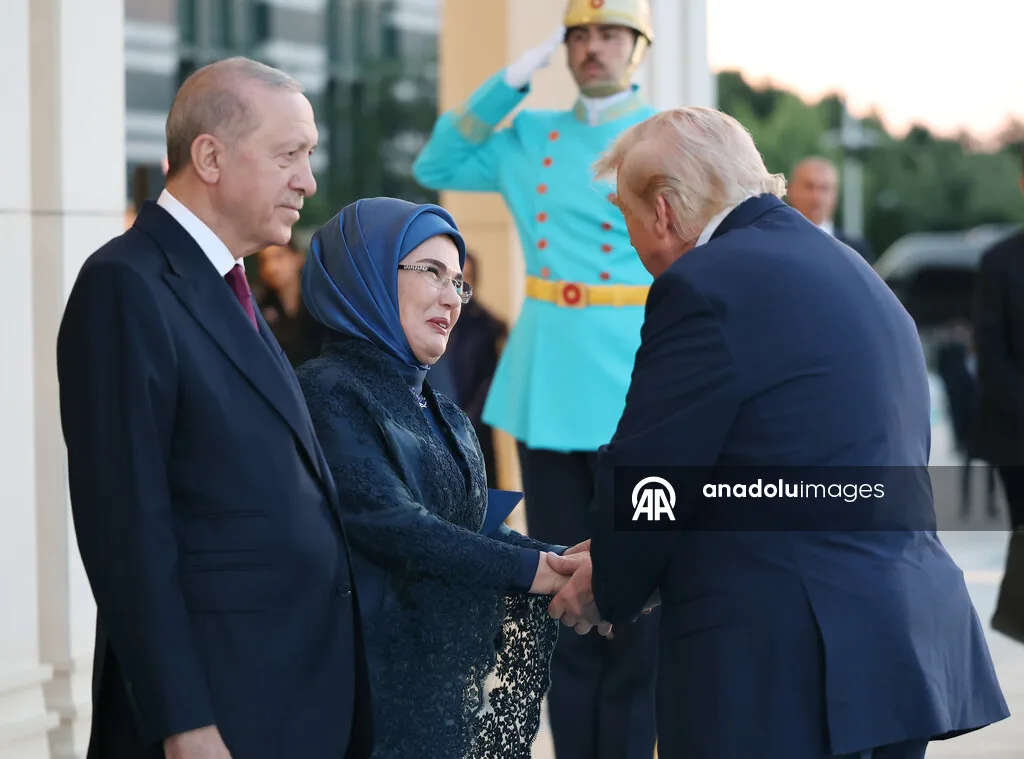
The Justice and Development Party had come to power in 2002 and controlled the government with a parliamentary majority. But this did not remove the influence of the presidency, the military, and parts of the judiciary and bureaucracy, or the rules barring headscarves across much of the state sector. Emine’s exclusion from official NATO summit events in 2004 showed that winning elections was not enough to change official protocol or how the republic’s institutions presented themselves.
She faced a similar exclusion in 2007, when she sought to visit actor Nejat Uygur at the Armed Forces rehabilitation centre in Ankara, where he was receiving treatment after becoming paralysed. According to the actor’s wife, who later recounted the incident, Emine was unable to make the visit because of her headscarf and instead met the actor’s wife outside the centre.
At the time, sweeping restrictions on headscarves applied in universities, public-sector employment and a number of state institutions. Enforcement intensified after the military intervened against Necmettin Erbakan’s government in 1997. Parts of the Kemalist elite saw the headscarf as a sign of political Islam’s growing presence within the republic’s institutions. Conservative women, meanwhile, saw the issue as one of their right to study, work and participate in public life without abandoning their religious identity. The dispute directly affected women who wore headscarves: many were barred from studying or working, and Erdogan’s daughters were forced to pursue their university education abroad.
Between the 2004 and 2026 summits, the balance of power within the state changed, and restrictions excluding women wearing headscarves from universities and state institutions receded. The headscarf, once the reason the prime minister’s wife was omitted from an official invitation, became an accepted part of the presidency’s image and protocol. The social and political movement to which Emine Erdogan belongs had moved to the centre of state institutions. The roots of this transformation lay in the religious and social environment that shaped her outlook during her early years in Istanbul.
Growing up in Uskudar and entering civic life
Emine Gulbaran grew up in Uskudar, on Istanbul’s Asian side, in a neighbourhood where squares, mosques and religious endowments kept its Ottoman heritage present in daily life. The mosques of Mihrimah Sultan, Semsi Pasha and Yeni Valide stood around the port, while mosques, lodges and historic cemeteries dotted the hills. They preserved the area’s religious and social character amid the city’s markets and daily comings and goings.
Istanbul was then undergoing rapid urban expansion and demographic change. New roads were being built, neighbourhoods were expanding, and people were arriving from Anatolia. Amid these changes, Emine grew up in a conservative family that maintained its customs and religious values.
Born in 1955, Emine was the fifth child of Cemal and Hayriye Gulbaran, and their only daughter, with four brothers. The family’s roots were in Siirt, but her grandfather moved to Istanbul at the beginning of the 20th century. The family later settled in the Haci Cafer neighbourhood near Karacaahmet.
Women in the neighbourhood knew her mother as “Hayriye the Arab”, a reference to the family’s Arab origins. According to local residents’ accounts, the family lived in a wooden house with a garden and maintained ties with neighbours without participating widely in social life.
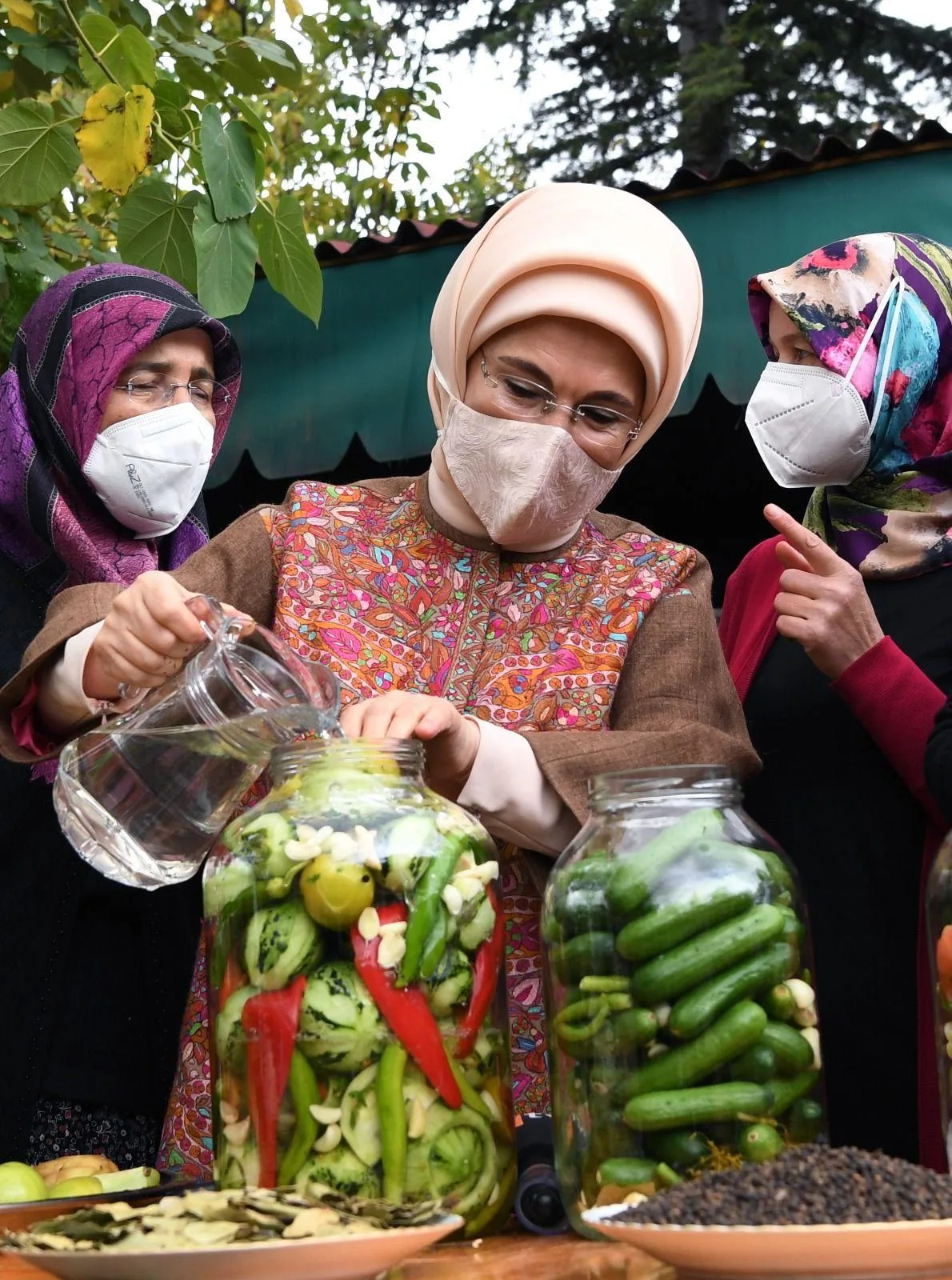
Her interest in cooking also began in that house. She says she watched her mother and grandmother prepare food and tried to learn the secrets of their recipes. She still follows an unusual household tradition: collecting April rainwater and using it to make yoghurt, believing it brings blessings and good health, then sending some to relatives.
Emine attended Zeynep Kamil Primary School, then enrolled at the Mithat Pasha evening arts school, although available sources do not conclusively establish whether she graduated. She later gained experience through associations, seminars and charitable work, helping organise activities and visits, visiting homes and neighbourhoods, and building a wider network of contacts. She also developed an interest in sewing and designing her own clothes, drawing on that knowledge later when choosing her outfits and how to wear her headscarf (Hijab).
Emine was 15 when her older brother Hussein asked her to wear hijab. She later recalled strongly resisting his request because she knew of no girl wearing a headscarf who could continue her education and lead an active, modern life in Istanbul. Then she met writer and journalist Sule Yuksal Senler: an educated, elegant woman who wore a headscarf, participated in public life and defended her ideas. The meeting changed Emine’s view of the headscarf, and she decided to wear it while continuing her social activities.
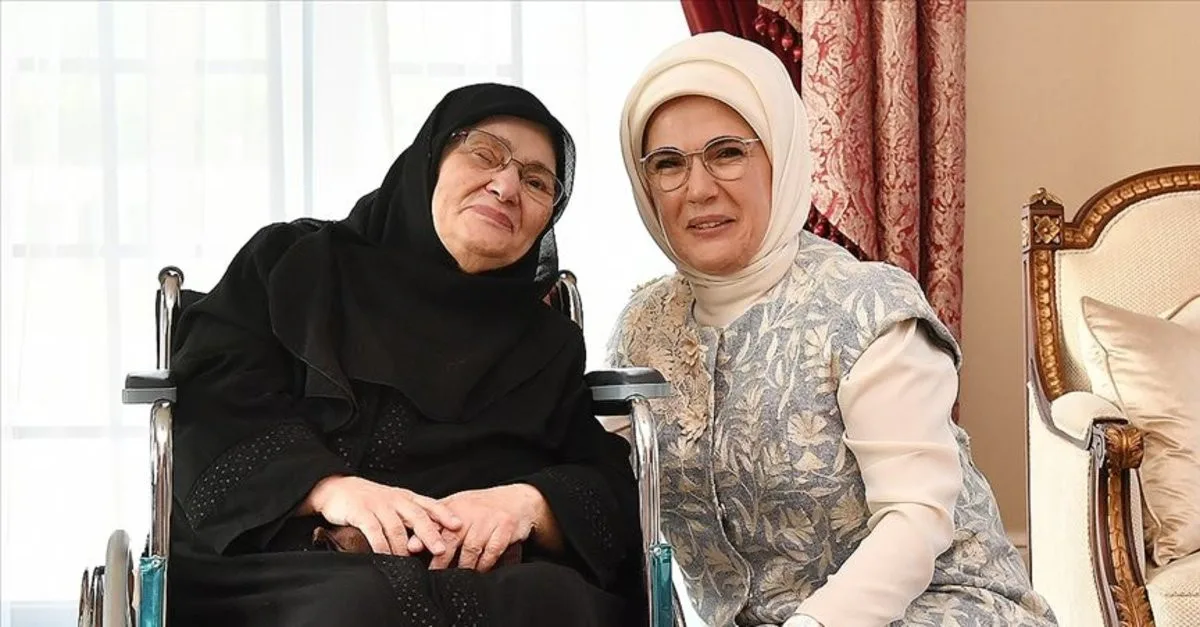
Senler offered a generation of conservative women a new model of urban life. She wrote for the press, travelled between cities giving lectures, and designed a head covering and long coat that became known as the “Sule style”. She showed that women could wear a headscarf, pursue an education and participate in public life. Her writing and activism also brought prosecution and imprisonment, and repeated clashes with the republic’s institutions.
Emine’s relationship with Senler went beyond the influence of her appearance. Their bond deepened, and Emine joined the Idealist Ladies Association, which Senler had founded, eventually becoming its vice president. She also followed the activities of the National Turkish Student Union and the Ladies Association for Science and Culture.
These associations gave conservative women opportunities to work outside the home in an environment consistent with their family and religious values. Through meetings, seminars and charitable activities, they gained experience in public speaking, organisation and managing relationships. These circles were Emine Gulbaran’s introduction to civic work, from which she later moved into wider public roles.
Politics at people’s doorsteps
On the evening of 14 August this year, Recep Tayyip Erdogan arrived at the Justice and Development Party’s 25th anniversary celebration holding his wife Emine’s hand. They walked onto the stage together and greeted the crowds. She had been by his side since before the AKP was founded, through his years in the Welfare Party. A conservative woman of Arab origin, she had become involved in public affairs before meeting the man who would become president, and played a skilful role as her husband and the movement he represents rose politically.
Ahead of the anniversary, Emine Erdogan posted a tweet describing the quarter-century as a journey that had grown through the public’s trust and found meaning in projects and services that affected people’s lives. She expressed the hope that the party’s “path of cause and service” would remain in people’s hearts for years to come.
Emine Gulbaran entered politics through her community work, before becoming known in Turkey as the wife of a mayor or prime minister. When Recep Tayyip Erdogan became head of the Welfare Party’s Istanbul branch, she joined the founding executive board of its provincial women’s branch. She took part in the women’s movement that later contributed to the party’s electoral success.
The Welfare Party relied on its women activists to visit homes and speak to women who did not usually attend political meetings and gatherings. They visited families, spoke with housewives, and recorded neighbourhood problems and residents’ needs. These visits established daily contact between the party and residents of working-class areas. They also gave women activists a close understanding of families’ circumstances, which they relayed to party officials.
As the organisation expanded, door-to-door visits became an essential part of the Welfare Party’s work in Istanbul. A study of women’s participation in conservative parties indicates that about 18,000 women were mobilising votes for the party in the city. This grassroots organisation was one factor behind the Welfare Party’s rise in major cities. Its impact was clearly visible in the 1994 elections, when Recep Tayyip Erdogan won the Istanbul mayoralty.
Marriage and family during the rise to power
Emine Gulbaran first saw Recep Tayyip Erdogan delivering a speech at a conference in 1977. He then headed the National Salvation Party’s youth branch in Istanbul and was known for his oratory, participation in Islamic gatherings and recitation of poetry from the podium. Emine, an activist in the Idealist Ladies Association, sat in the front rows. They noticed each other, and Sule Yuksal Senler, who knew them both, subsequently acted as an intermediary.
Erdogan’s mother, Tenzile Hanim, objected to the marriage. She preferred a bride from the Black Sea region who wore a traditional hijab. Senler intervened again, arguing that Erdogan was an active young man with a political future and that the woman by his side should be able to move about and appear in public with him. After a disagreement with his mother, Erdogan chose to marry a woman who wore a headscarf and was active in associations rather than follow the traditional model his mother favoured. He married Emine on 4 July 1978.
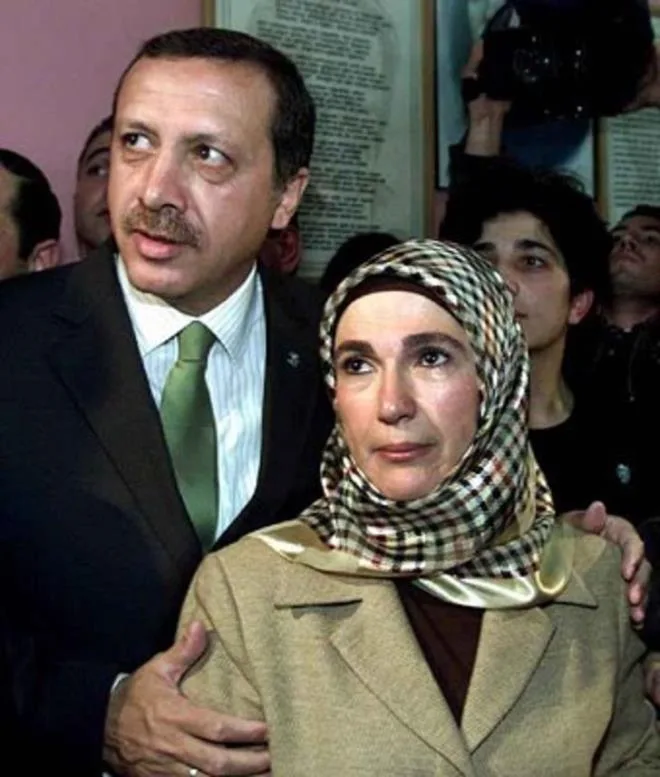
The couple had four children: Ahmet Burak, Necmeddin Bilal, Esra and Sumeyye. As the children grew up, Erdogan’s political activity expanded. Emine accompanied him through each stage, from party work to the Istanbul mayoralty in 1994, then the premiership and, finally, the presidency in 2014.
In a lengthy discussion of his childhood and family, Bilal Erdogan says political work occupied much of both parents’ time. Emine had been active in the Welfare Party’s women’s branches since the 1980s. The children understood this work as serving freedom of religious practice and education, serving the country, and building a stronger state more confident in its identity. Bilal says they were raised to associate religious commitment with work that benefited people and society.
He adds that his mother wanted her children to be self-reliant, bold and willing to take the initiative, and to learn about the world beyond their immediate surroundings. She encouraged him to travel during the summer at an early age to learn a language, then urged him to attend university in the US, although he had not previously considered it.
Bilal links this approach to his maternal grandmother, who would reproach her grandchildren when they hesitated or lacked courage. He says his mother encouraged her children to discover the world while preserving their religious identity, and associated personal success with service to people and the country. He also connects this upbringing to several family members’ later work in education, youth services, culture and civil society institutions.
The municipal years and expanding social initiatives
After Recep Tayyip Erdogan became mayor of Istanbul in 1994, Emine Erdogan became more involved in the city’s social activities. She had already spent years working with the Welfare Party’s women’s branches and among families and neighbourhoods. Now she was the wife of the mayor of Turkey’s largest city. The party faced its first test in governing Istanbul, drawing on the relationships its activists had built with neighbourhood residents over years of grassroots work.
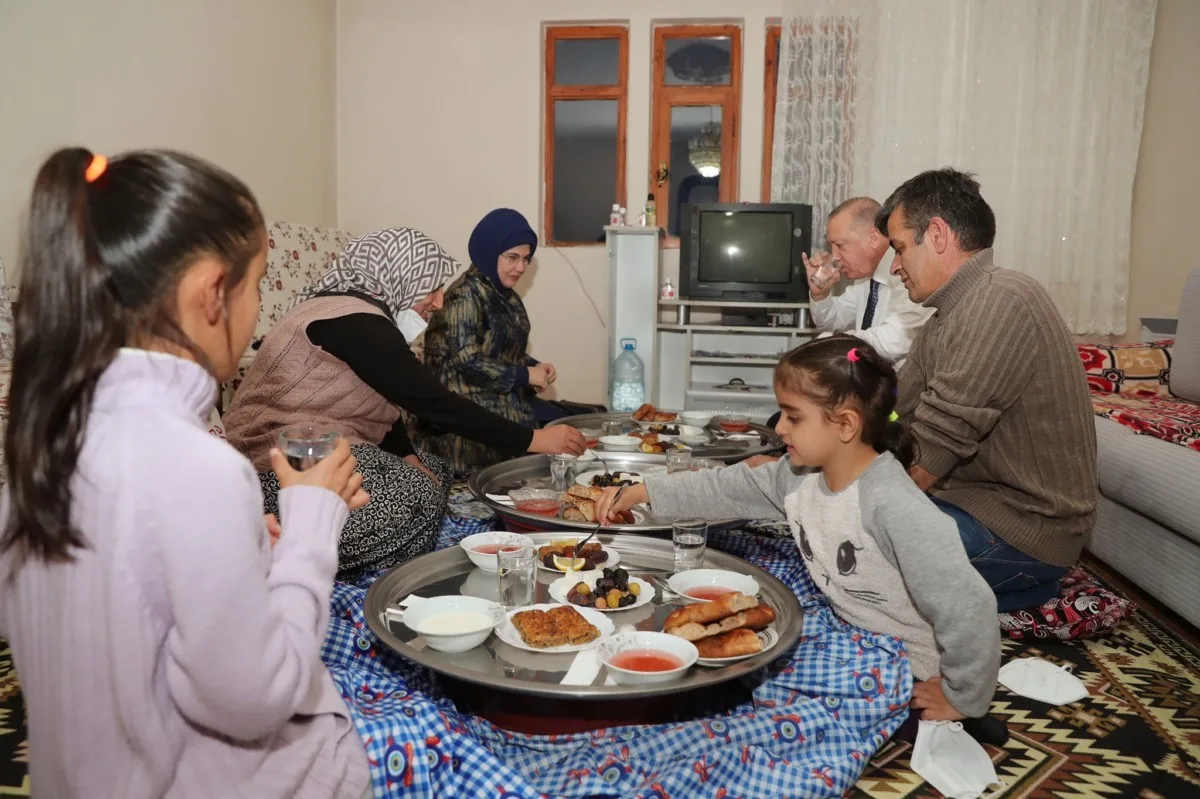
Among the initiatives associated with Emine during this period were iftar meals bringing poor and well-off families together. Families from different social backgrounds were invited to break the Ramadan fast at the same table, a tradition that AKP municipalities later continued. Alongside their religious and social significance, these meals kept party and municipal officials in direct contact with families and neighbourhood residents.
Erdogan’s tenure as mayor ended in 1998. After the Justice and Development Party came to power in 2002, Emine continued her work, expanding beyond Istanbul into campaigns on education, family affairs and assistance for people in need. In organising these activities, she drew on her experience in neighbourhoods and her extensive network of women who had worked in party branches and community organisations.
Education and family campaigns
With the Justice and Development Party’s rise to power, Emine Erdogan’s work shifted towards national campaigns on girls’ education, literacy, child protection and support for low-income families. Alongside accompanying her husband in his political activities, these social initiatives became her most prominent public role.
The TOGEM Community Development Centre was among the earliest projects. Founded in Uskudar in 2005 under her patronage, it began by providing families with grants, clothing and furniture. In 2012, it became the TOGEMDER Community Development Education and Social Solidarity Association.
Emine serves as the association’s honorary president. It expanded into vocational training and the establishment of schools and educational centres. Its project “No School Without a Preschool Classroom” operated 12 mobile kindergartens and helped establish 749 preschool units. “We Are the Future” trained 10,000 people in protecting children from sexual abuse, while another school programme reached 400 children and their families.
At the national level, Emine became associated with “Come on Girls, Let’s Go to School”, a campaign launched by the Ministry of Education and UNICEF in 2003. It sought to reach girls denied an education because of poverty and family and social circumstances. Emine became its patron and promoted its work. Recep Tayyip Erdogan later said she led the campaign, which government figures credit with bringing 350,000 girls into education.
In 2008, she turned to women’s literacy through “Mother and Daughter at School”, a campaign she named and became patron of. By September 2012, the Ministry of Education had opened 174,472 literacy courses under the campaign. More than 2.5 million women participated, and about 1.5 million received literacy certificates. These figures gave the campaign a particular place among her projects because it reached women beyond school age who had never previously had the opportunity to attend school.
Emine returned to the issue in 2018 with the “Literacy Campaign”, which she announced with Recep Tayyip Erdogan. The Ministry of Education subsequently opened courses in schools, public education centres and villages. By September 2020, the campaign had reached more than 1 million people, of whom more than 800,000 learnt to read and write for the first time. Women accounted for 85 per cent of participants.
In 2021, she sponsored “Where Did We Leave Off?”, a campaign launched by the AKP women’s branch. It directed women who had dropped out of school towards open schools and public education centres to gain a certificate or learn a trade.
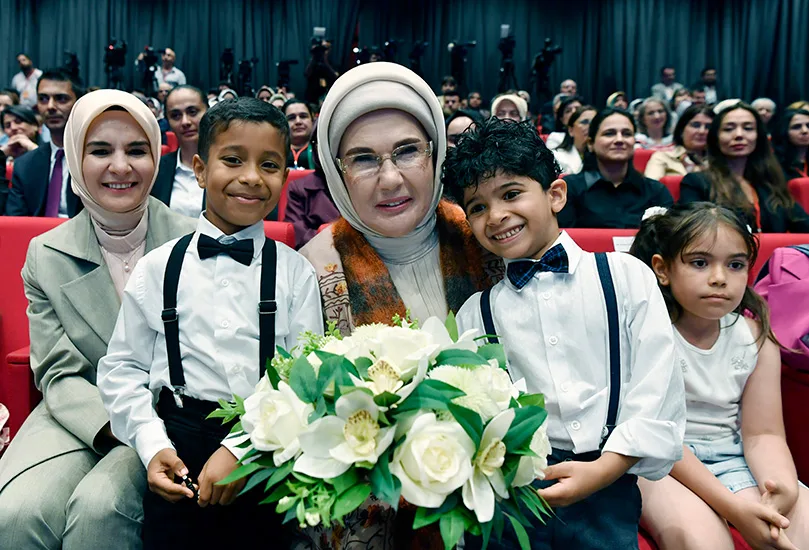
In 2012, the Ministry of Family launched “Hearts Ambassadors” under Emine’s patronage to expand the foster family system. She brought together the wives of governors from all 81 provinces to help introduce the project and encourage families to foster children in need of care. On 10 June 2026, the ministry announced that 9,277 foster families were caring for 11,022 children.
Emine also supported projects run by other organisations, including AÇEV’s “Seven Is Too Late” campaign to raise awareness of the importance of early education. She attended the presentation of Gaziantep Municipality’s “Don’t Make Them Brides, Send Them to School”, which returned 41 girls to education; sponsored “No School Without a Library”, which established 16,361 libraries in two months; and helped launch the “Coral Campaign” against violence against women.
“Zero Waste”: From the presidential complex to the UN
Emine Erdogan launched “Zero Waste” on 27 September 2017 in cooperation with the Ministry of Environment and Urbanization. It was first implemented at the presidential complex and the ministry building. The project aimed to reduce waste before it was produced, reuse materials and sort remaining waste at source. Emine became its patron and promoted it at local and international events, while the ministry managed its technical work and expanded implementation to institutions and municipalities.
In July 2019, the ministry issued the “Zero Waste Regulation”, requiring public institutions, universities, schools, hospitals, commercial and industrial facilities, and large residential complexes to establish waste sorting and collection systems and record waste quantities. It also introduced certification for organisations that met the requirements.
Emine took the project to the UN in September 2022, signing the “Global Zero Waste Goodwill Declaration” with Secretary-General Antonio Guterres. Turkey later submitted a draft resolution co-sponsored by 105 other countries. The General Assembly adopted it without a vote on 14 December 2022, declaring 30 March the International Day of Zero Waste.
In March 2023, Emine became chair of the Advisory Board of Eminent Persons on Zero Waste, a 12-member council established for a three-year term to promote successful local and national approaches.
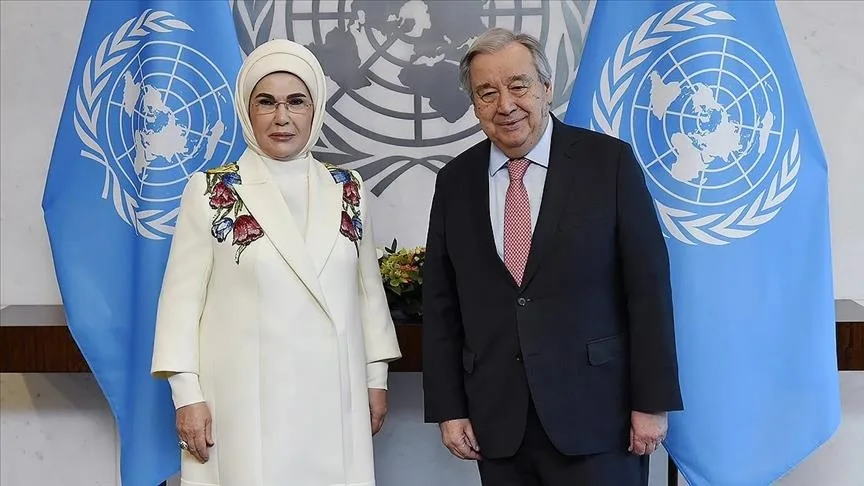
According to Ministry of Environment data published in March 2026, Turkey recovered 90 million tonnes of waste between the project’s launch and the end of 2025. The recovery rate rose from 13 per cent in 2017 to 37.53 per cent in 2025. The system covered 217,000 buildings and complexes, while 28 million people received training in waste sorting and reduction. The ministry estimates the economic value of the recovered materials at about 365 billion Turkish liras.
On 10 June 2019, Emine launched the “Zero Waste Blue” movement to tackle marine waste. The ministry developed action plans for the country’s 28 coastal provinces. During the first five-year plan, 245,000 tonnes of waste were collected from beaches, the sea surface and the seabed. A second plan covering 2025 to 2029 was subsequently launched.
In May 2020, she supported “Protect Your Food, Protect Your Table”, a campaign against food loss and waste. It focused on planning food shopping, cooking appropriate quantities, storing food and using leftovers. It reached more than 21 million people and secured 790,000 individual pledges not to waste food.
Emine Erdogan’s interest in cooking also acquired a cultural and diplomatic role. She says the idea for a modern book on Turkish cuisine arose when she wanted to give one to leaders’ wives during her foreign visits, only to discover that no reference work introduced the diversity of Turkish food. She prepared for these meetings by reading about the cuisines of the countries she was visiting, then asking her hosts about seeds, production methods, ingredients and food-serving customs.
In 2021, she pushed for the production of “Turkish Cuisine With Timeless Recipes”. The book brought together 218 recipes, with contributions from chefs and food historians. She added two recipes of her own, each linked to an experience in her life: a roasted chickpea flour dessert recreating a flavour she remembered from near the school gates in her childhood, and a ginger drink whose recipe she obtained from Mali’s first lady after it was served to her at an official banquet.
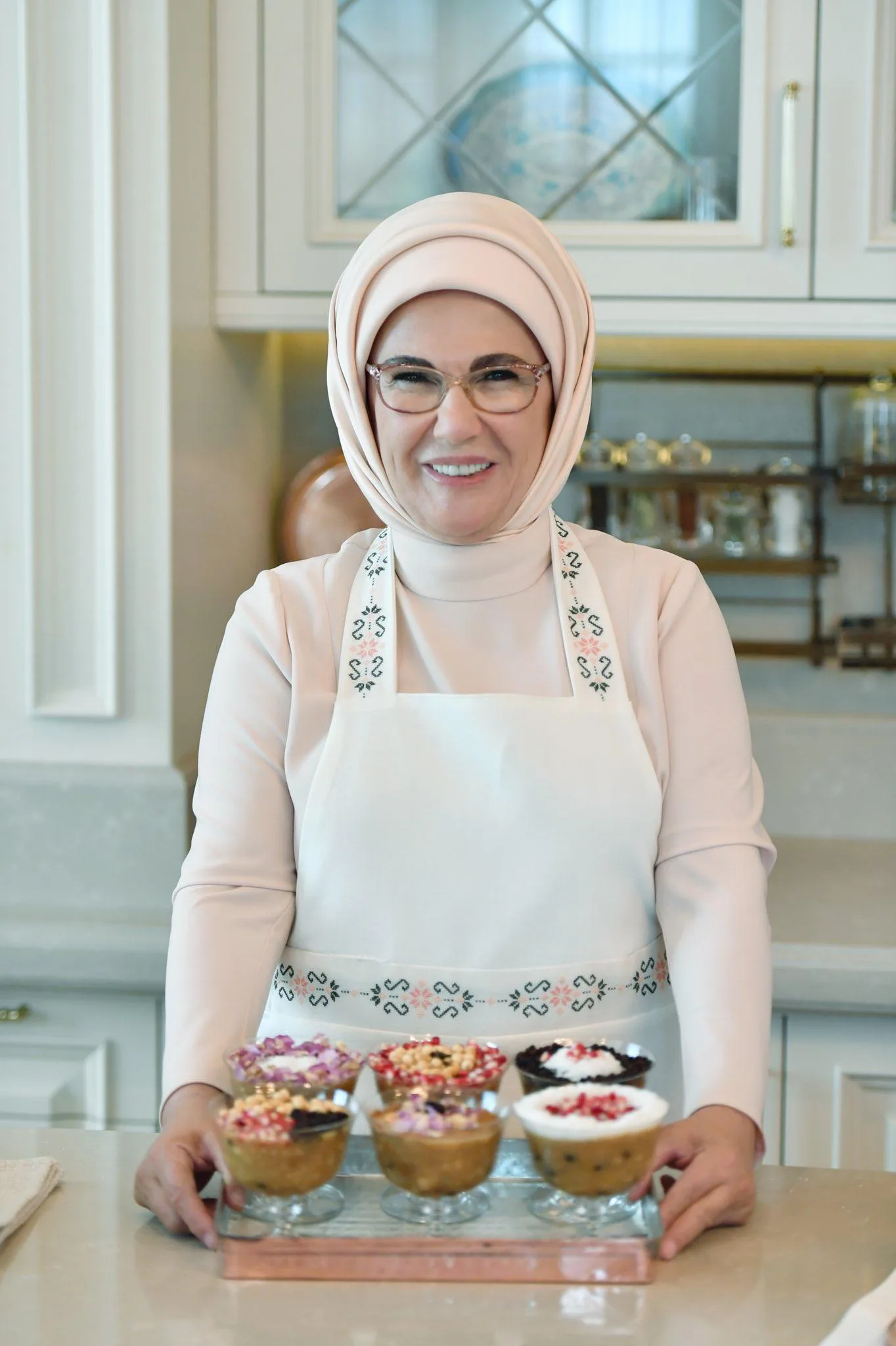
In 2017, she launched “Our Heritage of Local Seeds”. The Ministry of Agriculture formed teams to collect seeds from villages, examine and propagate them, and preserve them in the Turkish seed bank. The project collected 1,537 samples between 2020 and 2022. By November 2025, the number of registered local varieties had risen to 49, and seeds from 11 were available in Agricultural Credit stores.
On 31 January 2023, Emine Erdogan sponsored the “National Water Efficiency Campaign” in coordination with the Ministry of Agriculture and Forestry. Covering households, cities, factories and agriculture, it encouraged the modernisation of irrigation methods, reductions in water losses and the use of rainwater. The ministry followed it with a strategic action document.
Humanitarian diplomacy and projects abroad
Emine Erdogan accompanied her husband on many foreign trips. Alongside meetings with leaders’ wives and representatives of local associations, her itinerary included orphanages, hospitals, women’s training centres and projects run by the Turkish Cooperation and Coordination Agency (TIKA). These visits became the most prominent part of her activities abroad.
On 19 August 2011, Emine arrived in Mogadishu with the government delegation visiting Somalia at the height of the famine. At a camp established by the Turkish Red Crescent, she spoke with women and children and helped distribute food parcels. It was among her first appearances in a crisis zone, away from reception halls and conventional official itineraries.
A year later, she travelled with Foreign Minister Ahmet Davutoglu and her daughter Sumeyye to Myanmar’s Arakan region. On 10 August 2012, she visited the Banduba camp, which housed thousands of Rohingya, learnt about their conditions and helped distribute Red Crescent aid.
When violence in 2017 drove hundreds of thousands of Rohingya into Bangladesh, Emine travelled in September to the Kutupalong camp near Cox’s Bazar. She was accompanied by the foreign and family ministers and officials from TIKA, the Red Crescent and AFAD. She met refugees and distributed aid as part of a Turkish food shipment totalling 55 tonnes in its first phase.
Over time, Emine’s activities in Africa extended beyond emergency relief visits into longer-term work. While accompanying the president on visits to the continent, she met women working in local crafts and visited orphanages and health and educational centres.
One visit led to the project that most clearly reflected her personal initiative abroad. In Ethiopia in 2015, she learnt that some intermediaries bought women’s handicrafts for very little and sold them at high prices in shops outside Africa. In her book, she recounts discussing with the foreign minister on the return journey the idea of creating a fair market connecting African products with buyers in Turkey.
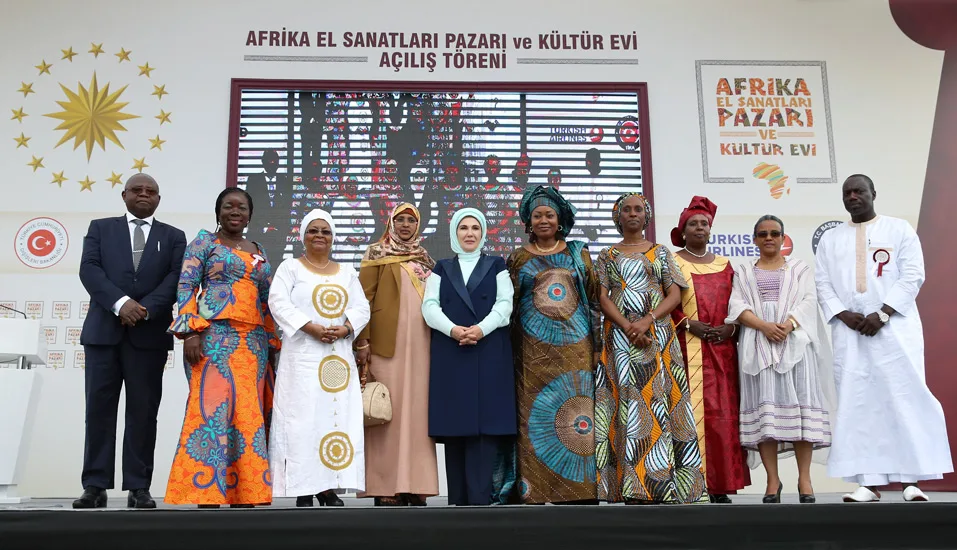
In 2016, Emine founded the “African Handicrafts Market and Cultural House” in Ankara’s historic Hamamonu district, in coordination with the Foreign Ministry and Turkish embassies across Africa. The house brings in products made by women in African countries, sells them on a non-profit basis and returns the proceeds to their makers.
It initially stocked products from 18 countries, including textiles, baskets, jewellery, sculptures and household items. Its activities later expanded to exhibitions, seminars and craft workshops, as well as introducing visitors to African music, food and traditions. It became a meeting place for ambassadors, students and African delegations visiting Turkey.
Emine documented some of these experiences in her 2021 book “My Travels to Africa”, bringing together observations of the societies she visited and images of women, children and Turkish development projects. She dedicated the proceeds to supporting women and children in education, health and culture through the African House. She also sponsored the publication of a book on African cuisine and another on African proverbs.
Emine used her relationships with leaders’ wives to build joint positions on issues Turkey championed, foremost among them Palestine. This first became evident during Israel’s 2009 war on Gaza. In January that year, she called for a “Women for Peace in Palestine” meeting in Istanbul under the slogan “Reach out your hand, humanity.”
She brought together leaders’ wives and female officials from Jordan, Qatar, Lebanon, Syria, Pakistan, Libya and Azerbaijan. They issued a call for an end to Israeli attacks, the withdrawal of forces from Gaza and the lifting of the blockade.
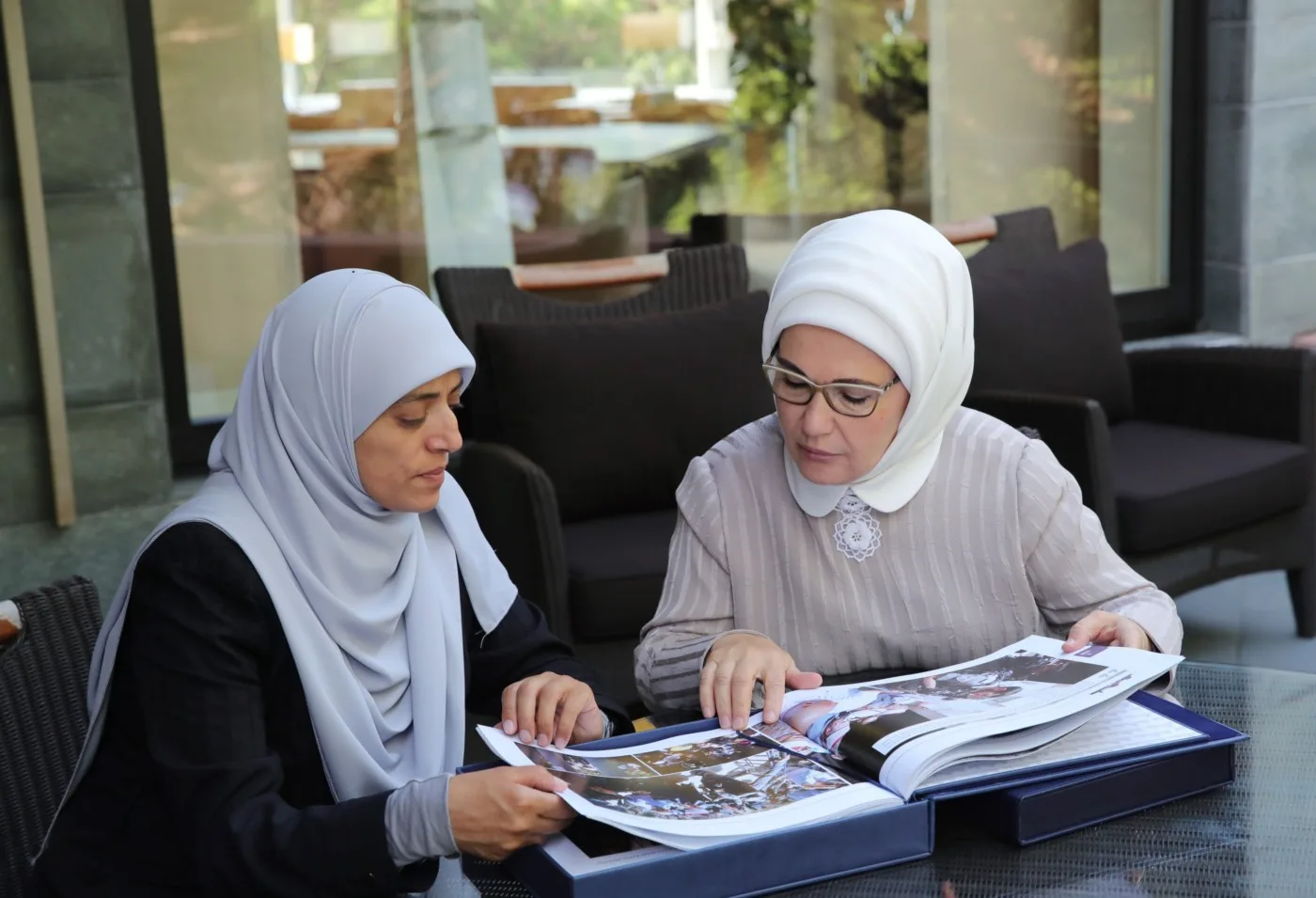
After the outbreak of the war on Gaza in 2023, she hosted the “One Heart for Palestine” summit on 15 November at the presidential office in Dolmabahce Palace. Leaders’ wives and representatives from 15 countries attended in person.
Emine read the joint statement calling for an immediate ceasefire, protection for hospitals, schools, refugee camps and UN facilities, and guaranteed access for humanitarian aid. In her speech, she also called for those responsible for war crimes to be held accountable before the International Criminal Court. She subsequently discussed steps to follow up on the initiative with Sheikha Moza bint Nasser in Doha.
Emine Erdogan’s life story appears to be part of the transformation experienced by conservative women in Turkey over recent decades. The Welfare Party, followed by the Justice and Development Party, created extensive opportunities for them to work within their organisations. The AKP’s policies after taking power helped remove restrictions that had excluded women wearing headscarves from education, work and politics.
Women helped bring about this transformation and brought party discourse closer to groups that had remained distant from politics. Their concern for families led them to engage with education, children, poverty and solidarity, taking their experience beyond the home and into public life.
In her remarks on women, Emine objects to treating employment and professional titles as the sole measures of success, or motherhood and housework as less valuable. She also rejects the use of religion and customs to exclude women from education, work and politics.
She believes women can participate in society while preserving their family life and identity. These ideas have accompanied her since her days in women’s associations and on the doorsteps of homes in Istanbul, and remain part of her outlook in her current position at the heart of the state.
