








The fallout from the December 14, 2025, attack on a Jewish gathering at Bondi Beach in Sydney continues to reverberate powerfully across both political and media spheres. Its impact has transcended the Australian context, spilling into broader international debates particularly those surrounding the Palestinian cause.
While the incident understandably drew intense scrutiny from a security and criminal justice perspective, it also sparked widespread political discourse and media framing. Australian authorities primarily treated it as a criminal act demanding investigation and accountability.
In contrast, Israel rushed to embed the attack within a larger narrative linking it to antisemitism and recent international efforts to recognize Palestinian statehood. This approach triggered varied interpretations regarding the motives and implications of such linkage.
Observers note that Israel’s response followed a familiar pattern: expanding the political meaning of acts of violence outside its borders by connecting them to a global discourse on rising antisemitism.
Yet this strategy met an unusual disruption when an unexpected figure emerged in the unfolding story a Muslim man whose decisive intervention helped prevent further bloodshed. His role threatens to undermine attempts by Israeli Prime Minister Benjamin Netanyahu and the far-right to politicize the incident for strategic gain.
Politicization from the First Moment
The attack involved gunmen opening fire on a crowd of over 1,000 people. Police intervened swiftly, defusing suspected explosive devices, and confirmed multiple casualties. While the event could have remained within the realm of legal and security procedures, Israel’s immediate reactions pushed it into the political spotlight.
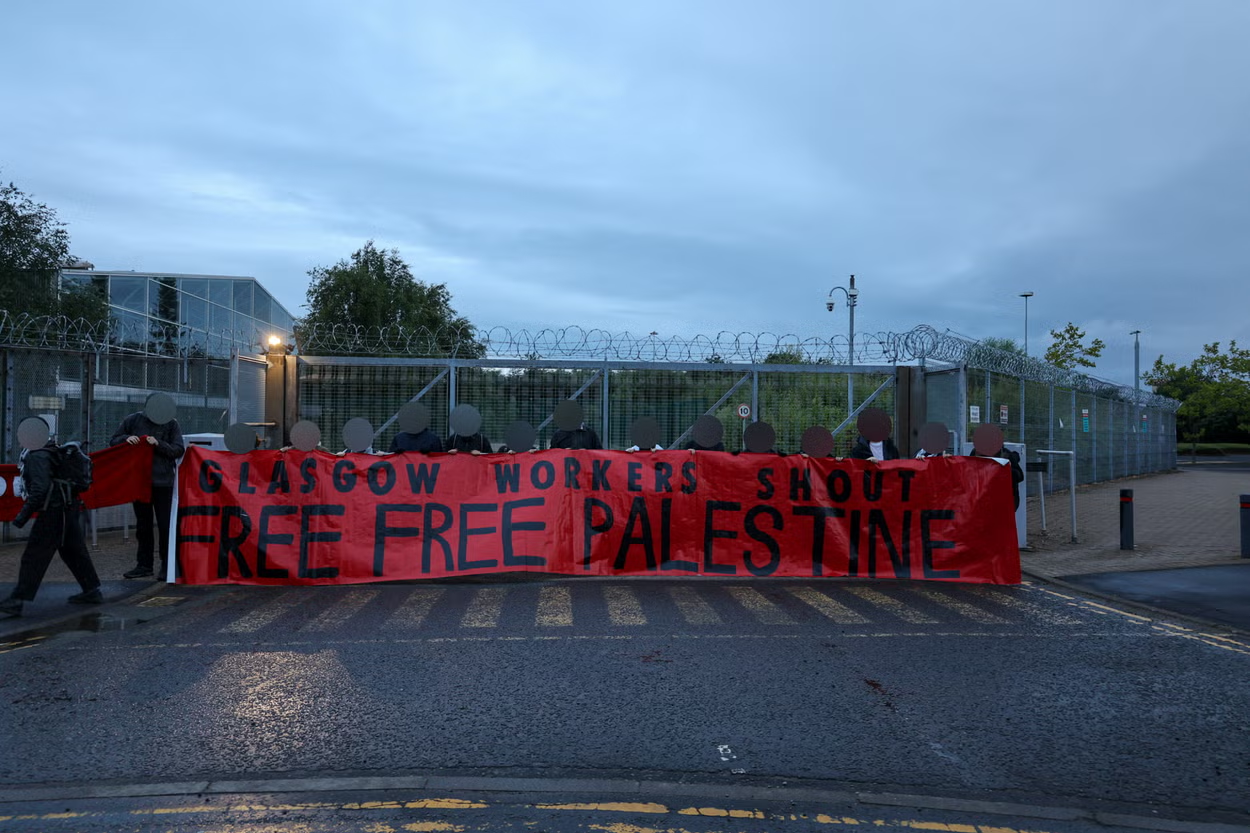
From the earliest hours, Prime Minister Netanyahu sought to politicize the event, directly linking it to anti-war protests in Western countries opposing Israel’s offensive on Gaza. This framing sought to portray these demonstrations not as political or humanitarian expressions, but as direct threats to Jewish communities.
Commentators suggest that Netanyahu saw in the attack an opportunity to pressure Australia a country whose stance since the Gaza war began has often diverged from Israeli policy. Canberra’s recognition of Palestine and its tolerance of mass pro-Gaza demonstrations placed it, and by extension Sydney, squarely in Israel’s crosshairs.
In this context, Israel’s far right capitalized on the incident to escalate its rhetoric, lashing out at Australia over its political decisions. The Israeli government expanded the concept of “antisemitism” so broadly that it came to encompass virtually any critique of Israeli policies or objection to the war in Gaza.
Yet such overuse has eroded the term’s impact in Western public discourse. Over the past two years, its excessive application has diminished its deterrent power no longer as effective in silencing criticism or provoking political caution as it once was.
Ahmad Upends the Narrative
The Israeli right’s efforts to exploit the attack were soon thrown into disarray. As details emerged, they revealed a twist that transformed the narrative and upended political calculations.
Investigations showed that the man who bravely tackled one of the attackers and disarmed him at a critical moment was a Muslim of Syrian origin. This powerful act of humanity earned widespread praise across Australian and Western communities.
Far from being a minor detail, this revelation dealt a serious blow to the narrative Israel typically falls back on after such incidents. The reality on the ground challenged efforts to present the attack as further proof of “religious hatred” and highlighted the dangers of political generalizations that replace complex truths with misleading binaries.
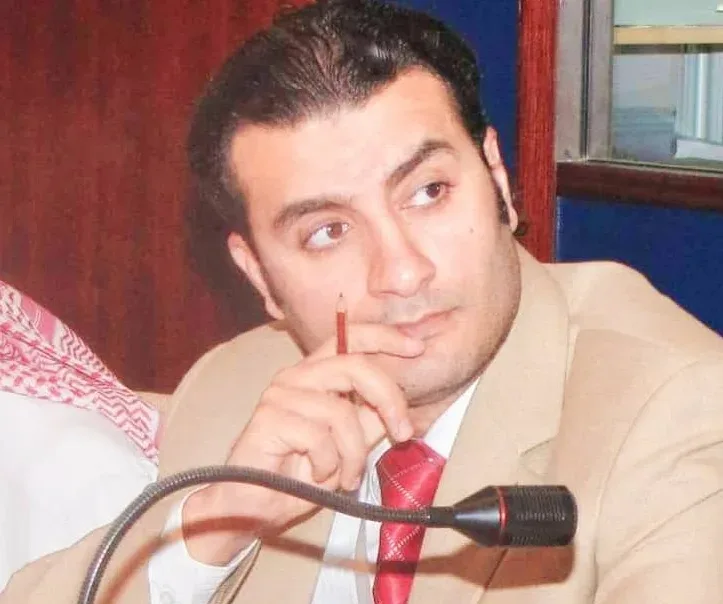
Video footage captured the dramatic moment: a bystander leapt onto the back of a gunman, wrestled him to the ground, and disarmed him with his bare hands. That man was later identified as Ahmad Al-Ahmad, a 43-year-old Arab fruit vendor in Sydney. Shot twice in the hand and shoulder while trying to protect civilians, he survived and is in stable condition, awaiting surgery.
Ahmad, originally from the village of Al-Nayrab in Syria’s Idlib province, avoided any heroics in describing his actions. “It was a human reaction,” he said simply, adding that he didn’t think about the danger: “Any decent person who sees people being killed in front of them wouldn’t hesitate to try and stop it.” Despite having no previous experience handling weapons, he successfully disarmed one attacker, disrupting the assault and directly contributing to saving lives.
Ahmad’s heroism quickly gained international attention. Former US President Donald Trump called him “a very, very brave man” who “saved many lives.” Australian officials hailed him as a “true hero” who faced danger with nothing but courage.
Australian Prime Minister Anthony Albanese captured the public mood when asked about the viral video: “It’s the most astonishing scene I’ve ever witnessed,” he said. “A man confronts an armed assailant, disarms him alone, putting his life at risk to save countless others… That’s a real hero. I have no doubt many people are alive today because of his bravery.”
Syrian community leaders in Australia expressed immense pride in Ahmad’s actions, viewing them as a reflection of the Syrian people’s enduring resistance to injustice even in exile.
At the same time, a spokesperson for the Muslim community voiced concern about being collectively blamed for such attacks, stressing that Islam is a religion of peace and that Ahmad’s heroism proves Muslims are protectors of society, not threats to it.
In one unforgettable moment, prepackaged narratives collapsed. A fruit vendor stood up to death not in the name of his religion or identity, but in the name of shared humanity.
A More Aware European Public
Israel’s apparent objective was to stoke racialized fear under the banner of “antisemitism,” attempting to shift European public sentiment away from sympathy for Palestinians. The Sydney attack was thus reframed to serve a larger geopolitical aim: diverting global attention from the core tragedy unfolding in Gaza.
Yet early signs suggest this strategy fell short. Large segments of European public opinion have become more discerning able to distinguish between Judaism as a religion and Zionism as a political ideology.
This growing awareness has made attempts to equate pro-Palestinian solidarity with antisemitism increasingly ineffective, weakening their moral and political impact.
This shift in public sentiment did not emerge in a vacuum. It has been driven by the harrowing scenes from Gaza images of immense destruction and the disproportionate loss of civilian life, particularly among children prompting urgent ethical questions that cannot be dismissed.
Social media has played a crucial role in undermining Israel’s traditional narrative monopoly. Graphic, unfiltered images from the ground have reached global audiences directly, curbing the Israeli government’s ability to shape or manipulate public discourse as in previous conflicts.
As a result, many analysts believe the inflammatory rhetoric around the Sydney incident will fail to generate the political leverage Netanyahu sought. The Australian government has shown little appetite for yielding to Israeli pressure, consistently defending freedom of expression and distinguishing between peaceful protest and violence stances aligned with a pluralistic society now more sensitive to the politicization of human tragedies.
An All-Too-Familiar Israeli Playbook
The Sydney attack is not an isolated case but part of a broader pattern human tragedies repeatedly lifted from their immediate contexts and repackaged for political utility. This is neither new nor likely to end soon. The global Zionist movement and far-right actors have long found such incidents fertile ground for reinforcing fear-driven agendas.
Europe provides a grim catalog of such moments. After the 2015 Paris attacks that killed 130 people, grief was swiftly redirected toward attacking immigration policies and bolstering Marine Le Pen’s anti-Muslim, anti-immigrant platform.
In Barcelona (2017), where 16 were killed in a vehicle-ramming attack, blame was rapidly pinned on Moroccan migrants and government leniency, fueling anti-immigrant sentiment.
The 2016 Nice attack, which claimed 86 lives during Bastille Day celebrations, was leveraged to justify sweeping security measures and escalate far-right narratives about “political Islam.” Even individual liberties, such as the right to wear the hijab, came under threat in the resulting political climate.
These political responses don’t just distort reality they carry a steep human cost. They legitimize Islamophobia, bolster exclusionary immigration policies, and deepen societal fractures.
In the UK, such narratives were instrumental during the Brexit campaign, where Muslim immigration was cynically tied to terror threats, reshaping public opinion and pushing it toward isolationism.
Ultimately, these strategies turn tragedy into political currency. They obscure truth, polarize communities, and fuel electoral gains for the far-right. In this way, victims are buried twice first by violence, and again by the cynical manipulation of their suffering.
The Sydney attack has once again laid bare Israel’s well-worn tactic of weaponizing tragedy for political ends. Yet this time, a single act of human decency broke the cycle and unraveled the script. The courage of a Syrian Muslim man didn’t just help prevent a massacre—it dismantled the narrative Netanyahu’s government was eager to sell to Western audiences.
In the end, truth proved more powerful than propaganda. Humanity triumphed over ideology. And the attempt to demonize solidarity with Palestine collapsed in the face of a brave man’s selfless act reminding the world that at its heart, this conflict remains a moral one: the struggle of a people fighting for their right to live, in a world increasingly aware and less willing to be misled by fear and bloodshed.


