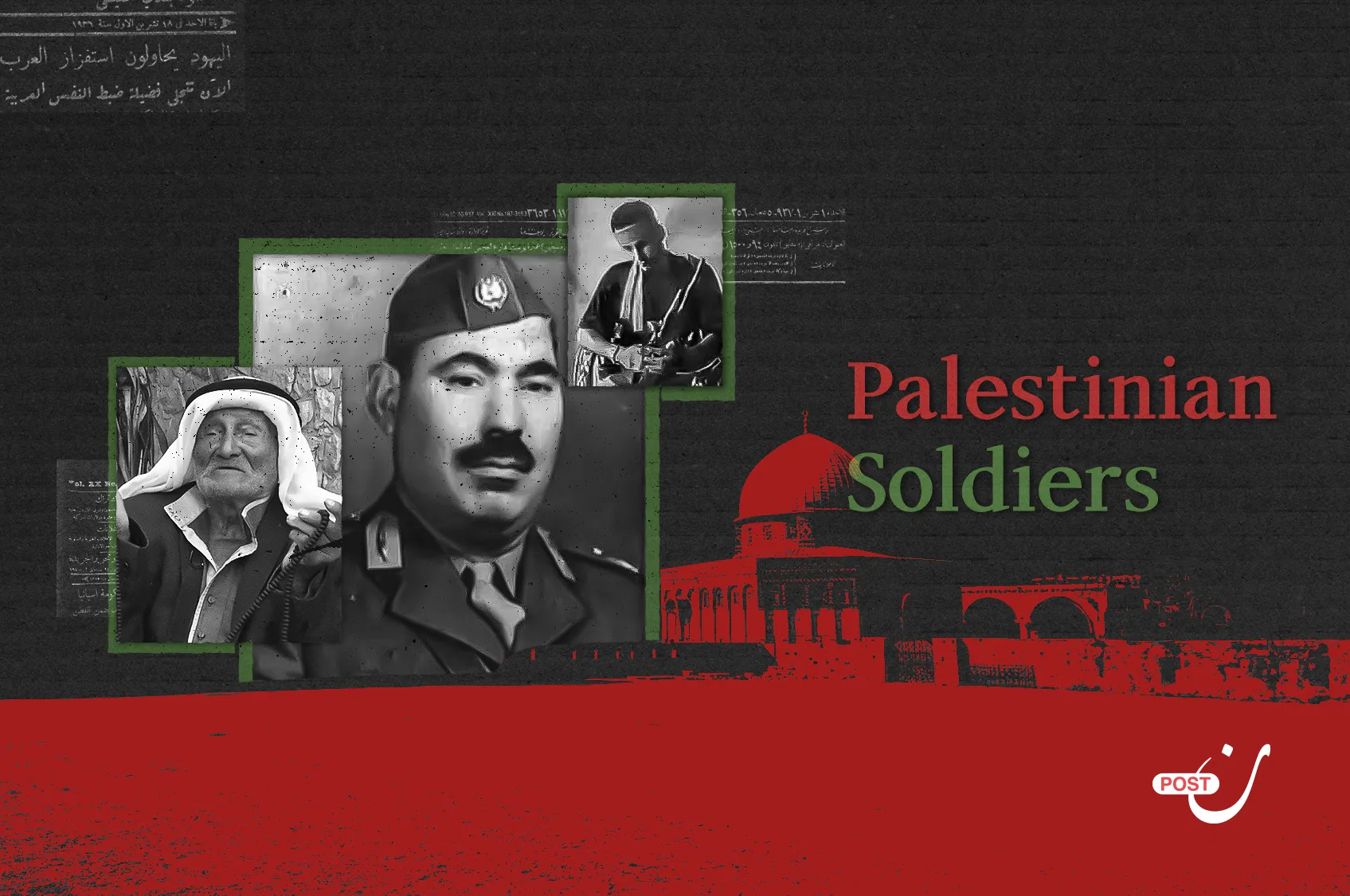










Mohamed Saleh Omar’s martyrdom marked a pivotal moment in both the Palestinian and Sudanese struggles for liberation from tyranny and imperialism. Palestinian cleric and fighter Abdullah Azzam mourned him in his book Islamic Da’wah: A Religious Duty and Human Necessity, writing:
“This mujahid, Mohamed Saleh Omar the Sudanese minister trampled the world beneath his feet to live in tents as a fighter on the land of Palestine, continuing his jihad until he met his Lord as a martyr in Aba Island.”
A Sudanese Islamic scholar and activist, Omar joined the frontlines early on, fighting alongside Palestinians against Israeli occupation. However, political developments back home specifically, General Jaafar Nimeiri’s military coup that ousted Prime Minister Ismail al-Azhari in May 1969 compelled him to return quickly to confront the newborn dictatorship.
Roots of a Revolutionary
Mohamed Saleh Omar was born in 1930 on Badin Island, north of Dongola, during the Anglo-Egyptian rule in Sudan, which lasted until December 19, 1955, when the Sudanese parliament declared independence under the leadership of Ismail al-Azhari.
Omar was raised in mosques and within the teachings of Islamic da’wah. He followed the Prophet Muhammad’s example from an early age, guided by devout parents who instilled in him the principles of faith and practice. His primary and secondary education took him across several cities, due to the scarcity of schools at the time.
He later studied Islamic law at the Faculty of Law, University of Khartoum (1959), and continued at the School of Oriental and African Studies (SOAS), University of London (1961).
His interest in Islamic activism emerged during high school in Omdurman’s Wadi Sayyidna School. He was drawn to the Islamic movement that began in the 1940s in Sudan—a philosophical extension of Egypt’s Muslim Brotherhood, founded by Hassan al-Banna. Omar quickly rose as a committed and articulate figure in both school and university circles.
Rise in the Islamic Movement
Omar formally joined the Islamic movement in 1954 and gradually ascended its ranks. In 1961, he was appointed to the collective interim leadership of the Islamic Charter Front, led by Hassan al-Turabi, who assigned Omar the role of internal organizational leader. This front represented a coalition of Sufi orders and Islamic groups.
As head of internal affairs, Omar focused on ideological, educational, and social development, favoring structured spiritual formation over mass political mobilization. He held this position until October 1964, when a popular uprising overthrew the military regime of President Ibrahim Abboud the first mass revolution of its kind in Africa and the Arab world.
Due to his significant role in mobilizing and organizing the revolution, the Islamic movement nominated him for the cabinet of Prime Minister Sirr Al-Khatim Al-Khalifa. He briefly served as Minister of Animal Resources before stepping aside for colleague Al-Rashid Al-Taher in the second iteration of the cabinet, reflecting his disinterest in political gain. He was later elected to the Constituent Assembly in 1965.
Whether in school, government, or the Islamic movement, Omar was known for his humility, integrity, and political acumen, traits that attracted thousands of youth from diverse ideological backgrounds.
The Road to Palestine
Deeply influenced by Hassan al-Banna’s belief that the Islamic world was a single nation and that all Muslims shared collective responsibility for Palestine, Omar embraced the notion that Palestine was a sacred Muslim land, home to prophets and the blessed Al-Aqsa Mosque. Al-Banna taught that defending Palestine was a duty for all Muslims.
Inspired by these teachings, Omar traveled to Jordan in 1969 and joined a Palestinian training camp in Al-Sukhna, Zarqa, established by Fatah. His enlistment came two years after the 1967 Naksa, during which 15,000 to 25,000 Arabs were killed, tens of thousands wounded, and Israel occupied the West Bank, Gaza Strip, Sinai Peninsula, and Golan Heights.
In the Zarqa camp, Omar, now known as Abu Muadh, trained and fought alongside revolutionaries from around the world. He joined Palestinians in their battles, believing that steadfast resistance in Palestine was key to freeing all Arab lands.
Omar is credited with launching the Islamic movement’s first jihad initiative in Sudan from the soil of Palestine. His example attracted numerous Sudanese youths who joined the Palestinian resistance in their fight against Israeli occupation.
During his time in occupied Palestine and Jordan, Omar sought martyrdom, aspiring only to please God and support the oppressed. Yet, it was not in Palestine that he would find his final reward.
Martyrdom in Sudan
While Omar was in Palestine, General Nimeiri seized power in Sudan through a coup that ended the country’s second democratic era and ushered in a 16-year-long authoritarian rule. Nimeiri’s alliance with the Sudanese Communist Party sparked an aggressive crackdown on Islamists, including mass arrests and detentions.
In June 1969, supporters of Imam al-Hadi al-Mahdi staged a sit-in on Aba Island on the eastern bank of the White Nile, demanding an end to the regime’s assault on Islamic identity. Leftists within the regime urged a violent crackdown, prompting a brutal military campaign against the peaceful demonstrators.
Hearing of the crisis, Omar returned to Sudan to join his comrades despite a personal rift with Hassan al-Turabi. Leveraging his combat training in Palestine, he helped organize the island’s defenses against the regime’s forces.
On March 27, 1970, Nimeiri’s regime launched an all-out assault using warplanes, heavy artillery, tanks, and Egyptian air support. The massacre killed hundreds of civilians and many Islamist leaders, including Mohamed Saleh Omar. He was only 37 years old.
Omar had long wished to meet God as a martyr in battle, believing it the highest honor. Though martyrdom eluded him in Palestine, it found him in Sudan on Aba Island fighting a military dictatorship allied with communists bent on erasing Islamic identity in a land that had birthed countless scholars and Qur’an memorizers.