








In November 1947, the UN General Assembly passed a resolution to partition Palestine into two states Arab and Jewish alongside an international regime for Jerusalem. Shortly after, the Arab League formed the Arab Liberation Army under the command of Syrian officer Fawzi al-Qawuqji to assist Palestinians in resisting Zionist armed militias.
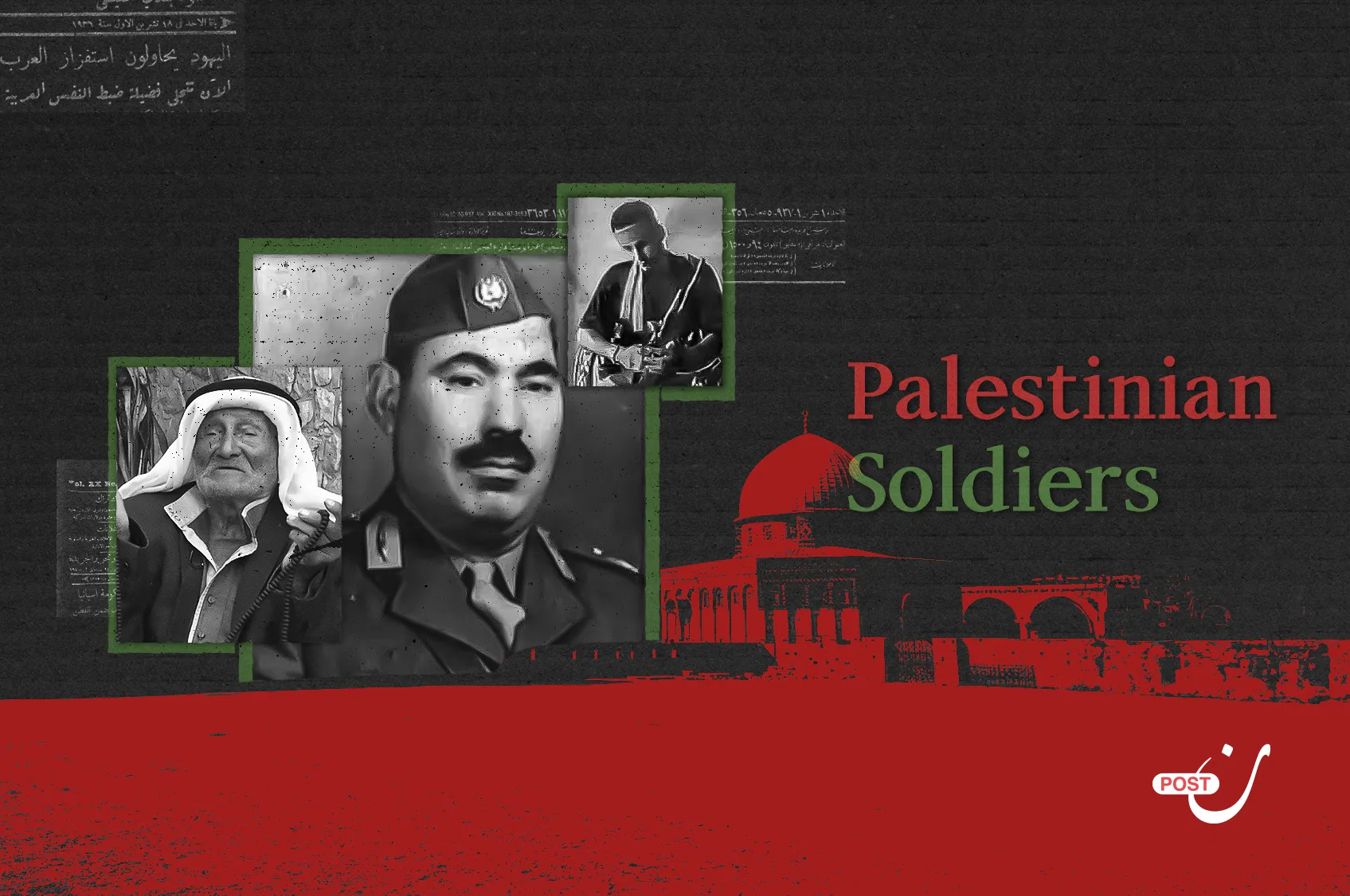
Although the army ultimately failed due to betrayals, misjudgments, and foreign conspiracies, some Arab fighters left behind honorable legacies none more so than Colonel Omar Ali Al-Birkdar. He is the focus of this report in the “Soldiers of Palestine” series, which highlights Arab fighters who stood alongside Palestinians in their resistance to Israeli occupation.
Omar Ali Al-Birkdar: A Military Upbringing
Born in 1910 to the prominent Turkmen Al-Birkdar tribe in Iraq, Omar Ali was raised in a family known alongside other well-known Turkmen clans such as the Biyats, Wandawiya, and Darkazliya.
After completing high school in 1928, he enrolled in the Royal Military College in Baghdad (East Karrada). At the time, military education was the only real avenue for social mobility in Iraq, even though the army faced suspicion from certain social segments that viewed it as sectarian and aligned with foreign interests.
Al-Birkdar graduated as a second lieutenant in September 1931, just a decade after the Iraqi army’s formation in 1921. He joined the military education corps, then the staff college, steadily climbing the ranks to become a colonel in 1946 and later a division commander.
In 1941, he participated in the Anglo-Iraqi War also known as the May Revolution which marked a critical juncture in modern Iraqi history, leading to the reoccupation of Iraq by British forces until the Hashemite monarchy was overthrown in July 1958.
Two years later, in 1943, Al-Birkdar led Iraqi military units to suppress Mustafa Barzani’s uprising in northern Iraq Barzani’s second rebellion demanding Kurdish autonomy. It was one of a series of Kurdish uprisings, including the earlier Barzan Revolt (1931–1932) and Sheikh Mahmoud Barzanji’s revolts in Sulaymaniyah (1919–1931).
Meanwhile, in Palestine, Zionist militias including the Haganah, Irgun, Betar, Stern Gang, and Palmach were terrorizing Palestinians, committing massacres that claimed the lives of thousands of unarmed civilians.
The Liberation of Jenin
Following the UN Partition Plan in 1947, mass demonstrations and student strikes erupted across Iraq, with protestors demanding that the government send troops to Palestine to resist the Zionist takeover.
The Iraqi army, just 27 years old at the time, consisted of about 35,000 soldiers in three divisions—primarily Arab Sunnis and some Kurds and was equipped with British-made conventional arms and 100 aircraft. Nevertheless, Iraq committed to the war in Palestine, deploying hundreds of soldiers and officers, accompanied by Arab volunteers.
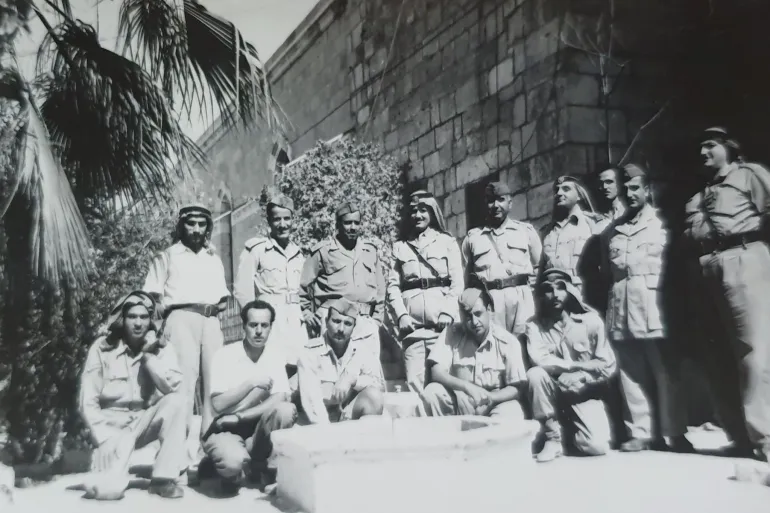
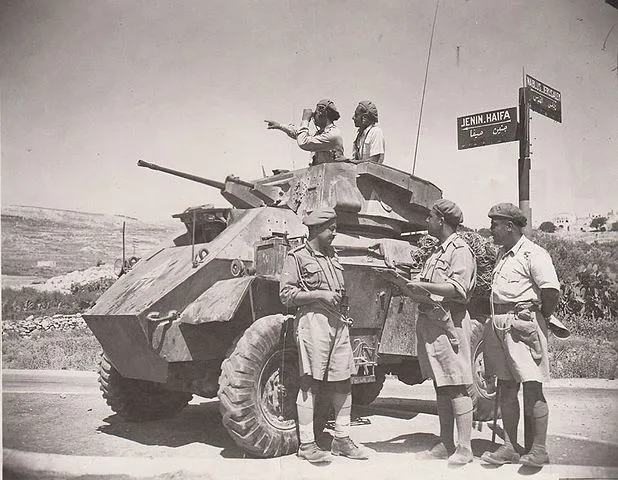
Under the command of General Noor al-Din Mahmoud, the Iraqi army fought fierce battles to defend Palestinian towns and prevent the displacement of its people. Among its ranks, Colonel Omar Ali Al-Birkdar stood out. He led the Second Battalion of the Fifth Brigade.
When Zionist forces attacked Jenin and surrounding villages, Al-Birkdar was initially preparing to head west toward Tulkarm. But upon hearing of the situation in Jenin one of Palestine’s most strategic cities he swiftly altered course and moved north to liberate it.
Al-Birkdar’s force, numbering fewer than 800 men (a mix of Iraqi soldiers and Arab volunteers), pushed into Jenin and established a base in the Qabatiya plain near Bir Janzur. From there, the effort to recapture the city began.
Employing tactical maneuvers, Al-Birkdar approached Jenin from the surrounding hills. On June 3, 1948, he launched a surprise attack on Zionist militias, striking from behind before they had time to regroup. He succeeded in liberating Jenin and driving out Zionist forces including the Haganah from the city’s southern hills, killing and wounding hundreds.
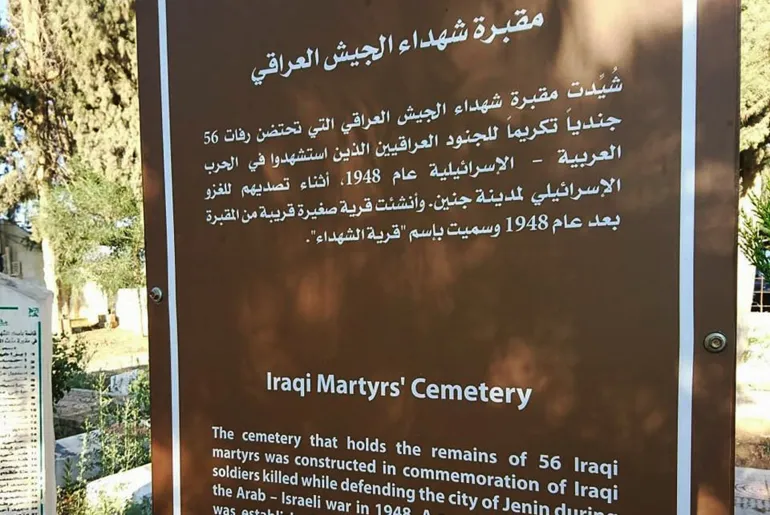
Reports indicate that Al-Birkdar’s forces seized 10 mortars, 20 machine guns, four radio sets, and 300 rifles of various models from retreating Zionist militias. This captured weaponry was later used in subsequent Iraqi army battles.
Not content with reclaiming Jenin, Al-Birkdar continued to fight alongside Iraqi soldiers and Arab volunteers in other areas, achieving notable victories in Tulkarm, Umm al-Fahm, and the Triangle region. The forces were close to liberating Haifa before being ordered back to Iraq in May 1949 as part of an agreement with Jordan, which assumed control of the area.
Thanks to Al-Birkdar’s leadership and the bravery of the regular army and volunteers, tens of thousands of Palestinians were spared displacement. Jenin and its surrounding villages remained intact, and residents were able to stay on their land, unlike many others who were forced to flee.
Al-Birkdar’s Fate in the New Republic
Omar Ali Al-Birkdar’s name became widely known among Iraqis and Palestinians alike for his heroism in defending Palestinian land. Upon his return to Iraq, he was appointed commander of the Fifth Brigade and commander of Mosul, later promoted to head of the Military College and elevated to the rank of Brigadier one of the highest military titles at the time.
He also served as acting governor of Sulaymaniyah until 1954 and was eventually promoted to Major General, commanding the First Division based in Diwaniyah (Qadisiyah), established in 1942.
On July 14, 1958, the Free Officers Movement, led by Abd al-Karim Qasim, overthrew the Hashemite monarchy and declared the Republic of Iraq. Al-Birkdar, unaware of the coup, first heard the news on Baghdad Radio. He immediately ordered units of the First Division stationed in Baghdad to intervene and protect the monarchy.
Qasim offered to meet with Al-Birkdar at the Ministry of Defense to explain the revolution. But as soon as he arrived, he was arrested on direct orders from Colonel Abdel Salam Mohamed Arif, charged with “conspiring against the revolution,” sentenced to death, and stripped of his rank.
However, in March 1960, Qasim commuted his sentence to seven years in prison, later reduced to five. Al-Birkdar was released in 1964 and returned to his hometown of Kirkuk, away from military life. A decade later, he died in a car accident near Rutba in Anbar Province.
Omar Ali Al-Birkdar’s name remains etched in the collective memory of every Arab who believes in the justice of the Palestinian cause. In 2019, the Palestinian Authority posthumously honored his family with the “Palestine Military Medal” in recognition of his bravery.