


NoonPost NoonPost

NoonPost

  • Politics
  • Economy
  • Society
  • Culture
  • In Depth
  • Focus
  • Explainers
  • Stories
AR
Notification Show More
وجود قيادتين في حزب الشعب الجمهوري خلق مشهدًا معقدًا
After the court ruling, who is running Türkiye’s Republican People’s Party?
نون بوست
“The heavy price Syrians paid will unite them”: An interview with Dr. Radwan Ziadeh
ميناء اللاذقية يستطيع استقبال الحاويات فقط أما نقلها إلى الداخل فيحتاج إلى شبكة أخرى
The route for goods from Latakia: Can Syria reconnect its sea to its inland?
نون بوست
After the Hasakah and Kobani elections, how far has the formation of Syria’s parliament progressed?
شاشة حاسوب تعرض سجلاً لجثة مجهولة الهوية في قاعدة بيانات الأشخاص المفقودين في مستشفى الناو في أم درمان، 18 أبريل 2026 (AP)
Graves without names: How many people are missing in Sudan’s war?
نون بوست
Asian partnerships and alternative corridors: Abu Dhabi’s strategy to escape the Gulf umbrella
نون بوست
How Is Turkish Military Technology Redrawing the Balance of Power in North Africa?
"أراد" هي وحدة "تدخل" مستحدثة في سلاح الجو التابع لجيش الاحتلال
“Arad”.. Why Did the Occupation Create an All-Female Force to Protect Its Air Bases?
عاد قطار الخليج إلى الواجهة بعد الإعلان عن إنجاز 50 ٪ من المشروع
A Revolution on Iron Rails: The Gulf Railway from the 2009 Dream to the 2030 Race
يقدّم عناصر من الحرس الثوري والباسيج دورات قصيرة للمدنيين على التعامل مع الكلاشينكوف
Kalashnikovs in the Squares.. How Is Iran Mobilizing Civilians for War?
نون بوست
From Public Service to Crisis Commerce: Commercial Electricity Deepens Taiz’s Suffering
سفن في مضيق هرمز، مسندم، عُمان، 27 أبريل/نيسان 2026 (رويترز)
A Digital Artery in a Minefield.. What Do We Know About Gulf Cables Beneath Hormuz?
NoonPost NoonPost
AR
Notification Show More
وجود قيادتين في حزب الشعب الجمهوري خلق مشهدًا معقدًا
After the court ruling, who is running Türkiye’s Republican People’s Party?
نون بوست
“The heavy price Syrians paid will unite them”: An interview with Dr. Radwan Ziadeh
ميناء اللاذقية يستطيع استقبال الحاويات فقط أما نقلها إلى الداخل فيحتاج إلى شبكة أخرى
The route for goods from Latakia: Can Syria reconnect its sea to its inland?
نون بوست
After the Hasakah and Kobani elections, how far has the formation of Syria’s parliament progressed?
شاشة حاسوب تعرض سجلاً لجثة مجهولة الهوية في قاعدة بيانات الأشخاص المفقودين في مستشفى الناو في أم درمان، 18 أبريل 2026 (AP)
Graves without names: How many people are missing in Sudan’s war?
نون بوست
Asian partnerships and alternative corridors: Abu Dhabi’s strategy to escape the Gulf umbrella
نون بوست
How Is Turkish Military Technology Redrawing the Balance of Power in North Africa?
"أراد" هي وحدة "تدخل" مستحدثة في سلاح الجو التابع لجيش الاحتلال
“Arad”.. Why Did the Occupation Create an All-Female Force to Protect Its Air Bases?
عاد قطار الخليج إلى الواجهة بعد الإعلان عن إنجاز 50 ٪ من المشروع
A Revolution on Iron Rails: The Gulf Railway from the 2009 Dream to the 2030 Race
يقدّم عناصر من الحرس الثوري والباسيج دورات قصيرة للمدنيين على التعامل مع الكلاشينكوف
Kalashnikovs in the Squares.. How Is Iran Mobilizing Civilians for War?
نون بوست
From Public Service to Crisis Commerce: Commercial Electricity Deepens Taiz’s Suffering
سفن في مضيق هرمز، مسندم، عُمان، 27 أبريل/نيسان 2026 (رويترز)
A Digital Artery in a Minefield.. What Do We Know About Gulf Cables Beneath Hormuz?
  • Politics
  • Economy
  • Society
  • Culture
  • In Depth
  • Focus
  • Explainers
  • Stories
Follow US

When Will Rafah’s Residents Return Home?

سماح شاهين
Samah shaheen Published 27 October ,2025
Share
نون بوست

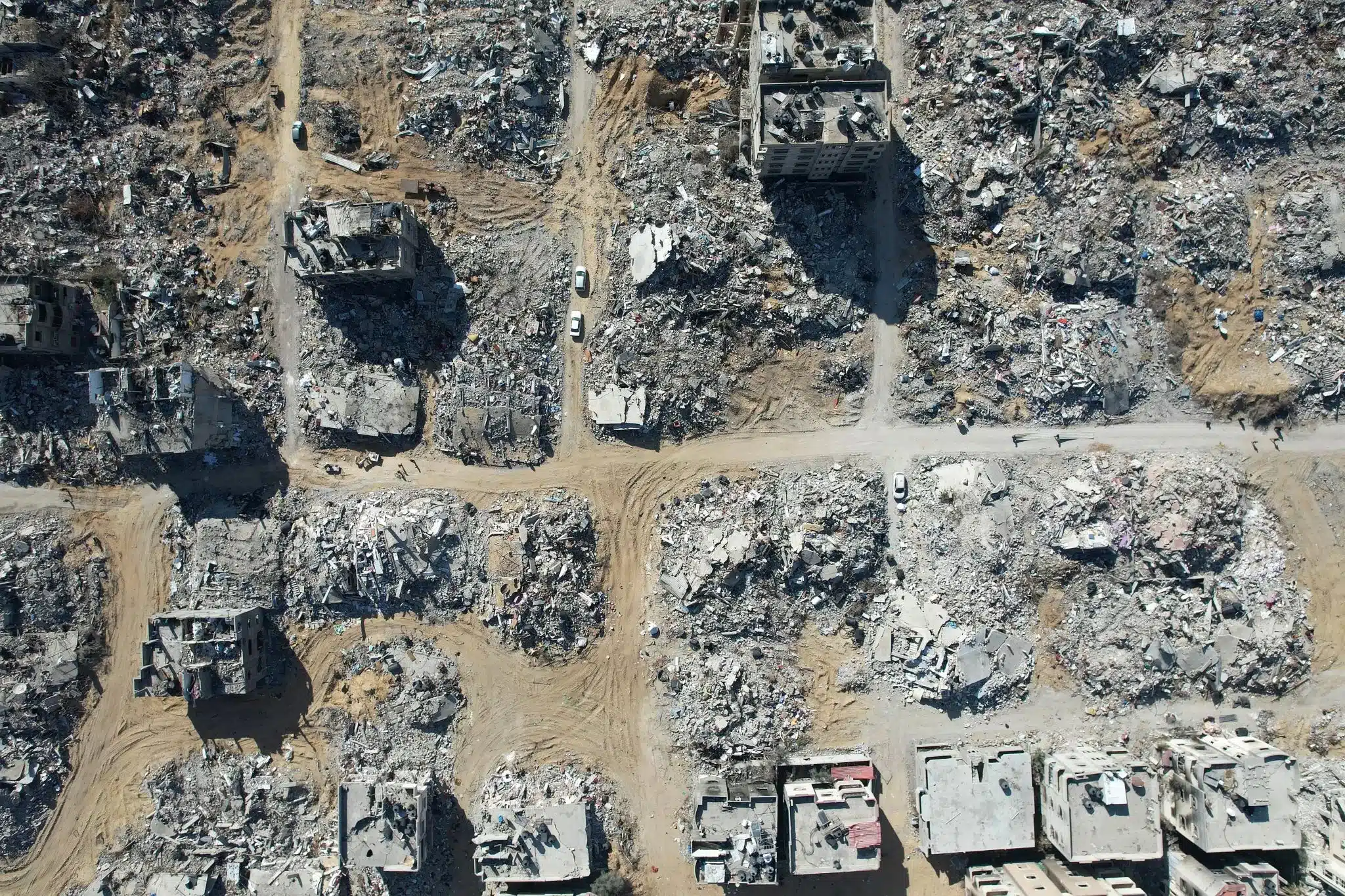
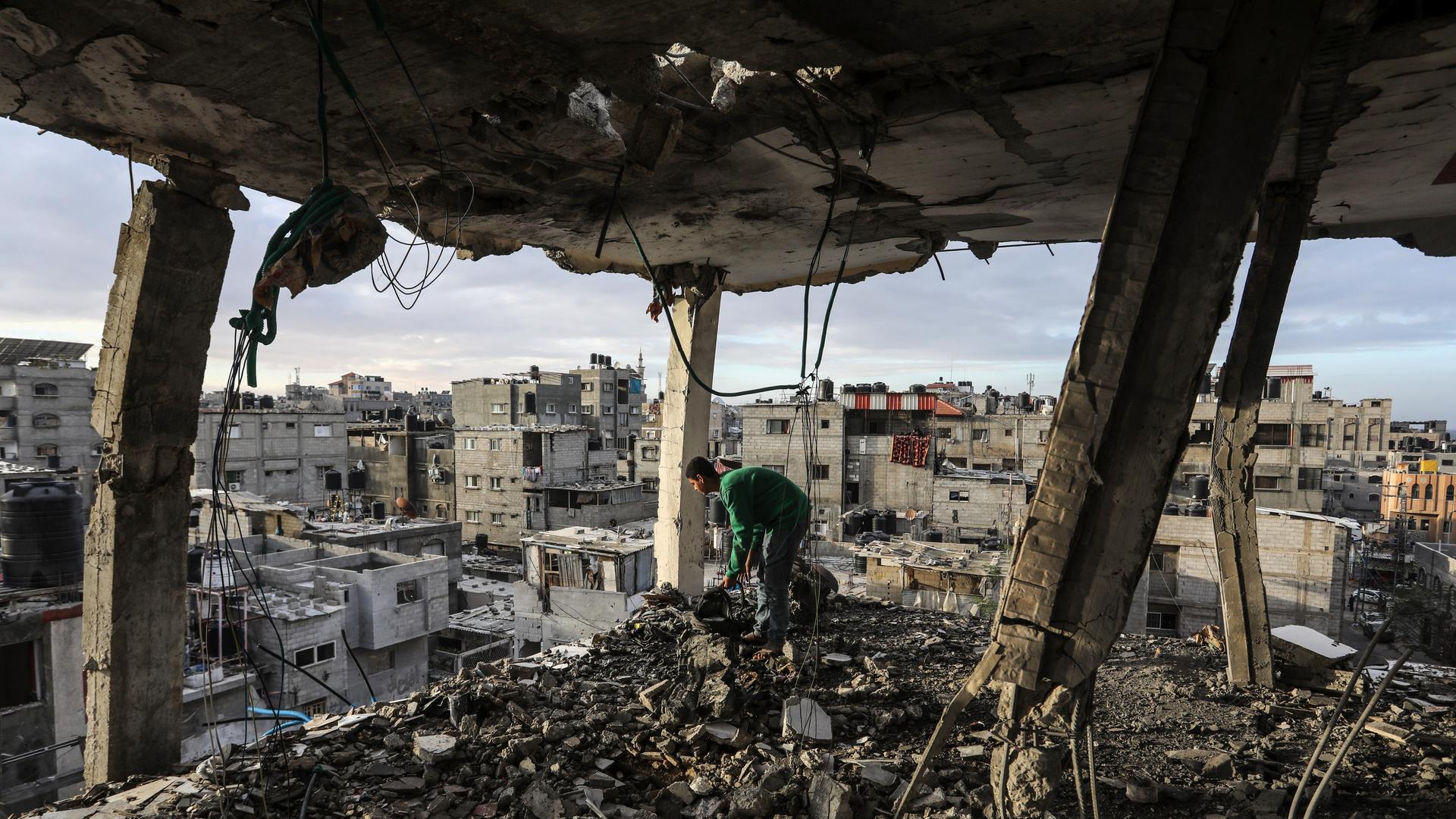
Since the war on Gaza began, Rafah at the far southern edge of the Strip has borne witness to some of the conflict’s most harrowing chapters. Today, however, it stands among the most devastated and most neglected cities, suffering in silence.

Once a refuge that opened its doors to those fleeing from the north and center of the Strip, Rafah now finds itself homeless, voiceless, left to face its fate alone first under bombardment, and now under suffocating political and media isolation.

Between Sahar, who sees Rafah as part of her very identity; Ahmad, who slept on the rubble of his home seeking a semblance of safety; and Raed, forced to flee the city a second time the stories of Rafah pulse with the pain that thousands of families continue to endure.

A City of Undying Memory

“On May 6, 2024, I was forced to leave the Al-Salam neighborhood in Rafah after the Israeli army issued an evacuation order ahead of a new military operation. It was one of the largest waves of displacement since the war began a moment heavy with shock, fear, and longing,” recalls Sahar Al-Nahhal. For her, displacement wasn’t merely leaving a house it was a brutal uprooting.

Rafah, in all its detail, remains vivid in her mind: Al-Najma roundabout, the bustling open-air market, the crossing, Al-Awda Mosque, and the refugee camps each one telling stories of endurance and resilience.
نون بوست
The image shows the massive destruction in Rafah – Palestinian Center for Human Rights

Speaking to NoonPost, Sahar says she still carries in her memory the pulse of its crowded streets, the voices of people, and the laughter of children sounds that once filled the air before they were replaced by silence and sorrow.

Rafah, she says, was always a warm embrace, a city that welcomed the displaced from both north and south, opening its homes and hearts to all. Today, the city is draped in rubble but its spirit, she says, lives on.

Despite the destruction, despite the bulldozed streets and the erasure of landmarks, “We are waiting to return because Rafah, even with all it has lost, is still our home.”

Rafah Still Calls Out

Ahmad Jarbo’, a young man from the Al-Shaboura neighborhood of Rafah specifically from the Bir Salem junction near the Buraq stadium describes his experience with displacement, return, and then forced displacement once again, caught in an unending cycle since the war began.

“I was first displaced to Al-Mawasi, Khan Younis. After the ceasefire was announced on January 19, I returned home, just like many others,” Ahmad tells Noon Post. “The house was partially destroyed, but it was still our home. Our longing for it outweighed everything else.”

The return wasn’t easy it was a moment charged with conflicting emotions. “That first day back in Rafah, I felt a deep sadness at the scale of destruction. But at the same time, there was indescribable joy at being home again. Sleeping there that first night, despite all the destruction around me, brought a comfort I can’t explain.”
نون بوست
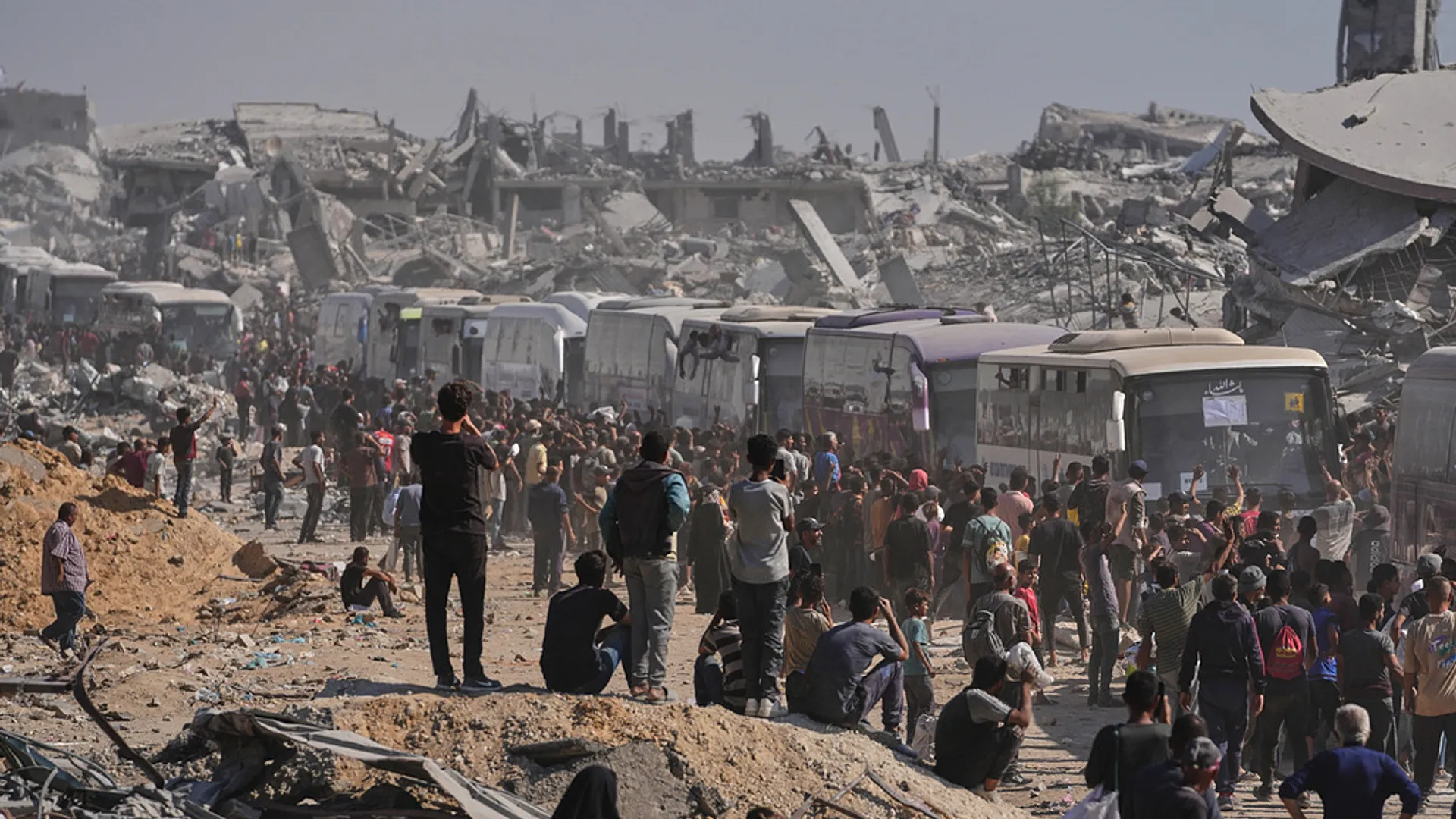
Juhud Al-Ashrafi / © 2025 Associated Press

During the war, Ahmad and his family opened their home to more than four displaced families from Gaza City and Khan Younis. “We shared everything our space, our food. That’s how Rafah was. We were all family.”

Yet despite this generosity, Ahmad feels Rafah has been forgotten, excluded from negotiation tables. “Rafah is absent from the talks as if no one knows a whole city is suffering. We wake and sleep to the sounds of bombs and bullets. The last shell hit our home directly. I had to flee again to Al-Mawasi.”

Like so many others in Rafah, Ahmad now follows the news of a ceasefire with heavy anticipation. “The ceasefire came but we still haven’t returned. Life is still hard for the people of Rafah. Every day, we call on the world and the press to hear our voices. Rafah is not okay. It deserves to live again.”

He ends his testimony with a voice full of longing and hope: “Rafah is beautiful. It brings a peace of mind that can’t be described. We used to return to sleep on the rubble of our homes just to be back. Now, all we want is to live with dignity, to return to our city, to Rafah.”

Uprooted from Rafah

Raed Abu Ubaid, a resident of Al-Salam neighborhood in Rafah, recounts his own experience with displacement and return only to be uprooted once again. His story echoes the pain of an entire city forced from its homes under fire.

“I was first displaced from Al-Salam,” he tells Noon Post. “After the ceasefire, I returned home, despite the risks. Gunfire never really stopped in the area, but I stayed. My house was partially destroyed, but it was the only way to feel alive in my city.”

But the truce was short-lived, he continues. “When the war resumed, we were ordered to evacuate Rafah entirely. We left under immense pressure and fear. Now we’re certain our homes are gone. The occupation leaves nothing behind. Destruction isn’t the exception it’s the rule.”
نون بوست

He remembers with deep emotion how Rafah, at the start of the war, had embraced those displaced from northern Gaza: “We lived as one. We opened our homes, shared our bread and memories. There was no ‘us’ and ‘them’ we were one body.”

But now, he expresses a deep bitterness: “No one talks about Rafah anymore. The city has been forgotten—erased from the headlines and the negotiations. Even the emotions of its people have vanished from view.”

He concludes with a voice filled with yearning and determination: “Rafah is not just a city it’s a heartbeat. Nothing can replace it. It will not be forgotten, because we are still dreaming of it, still waiting to return, no matter how long it takes.”

Download this article as PDF
Share this Article
Facebook Twitter Whatsapp Whatsapp Telegram Email Copy Link
سماح شاهين
By Samah shaheen صحفية من غزة
Follow:
Previous Article نون بوست Foreign Fighters in Syria: Who Are “Al-Ghuraba” and What Has Changed?
Next Article نون بوست The Sudan Tragedy: Why Is the World Silent?

Read More

  • After the court ruling, who is running Türkiye’s Republican People’s Party? After the court ruling, who is running Türkiye’s Republican People’s Party?
  • "The heavy price Syrians paid will unite them": An interview with Dr. Radwan Ziadeh
  • After the Hasakah and Kobani elections, how far has the formation of Syria’s parliament progressed?
  • Graves without names: How many people are missing in Sudan’s war?
  • Asian partnerships and alternative corridors: Abu Dhabi’s strategy to escape the Gulf umbrella
part of the design
NoonPost Weekly Newsletter

You May Also Like

After the court ruling, who is running Türkiye’s Republican People’s Party?

After the court ruling, who is running Türkiye’s Republican People’s Party?

نون إنسايت Noon Insight 25 May ,2026
“The heavy price Syrians paid will unite them”: An interview with Dr. Radwan Ziadeh

“The heavy price Syrians paid will unite them”: An interview with Dr. Radwan Ziadeh

علي مكسور Ali Maksour 25 May ,2026
After the Hasakah and Kobani elections, how far has the formation of Syria’s parliament progressed?

After the Hasakah and Kobani elections, how far has the formation of Syria’s parliament progressed?

حسن إبراهيم Hasan Ebrahim 25 May ,2026
NoonPost

An independent media platform founded in 2013, rooted in slow journalism, producing in-depth reports, analysis, and multimedia content to offer deeper perspectives on the news, led by a diverse young team from several Arab countries.

  • Politics
  • Society
  • Economy
  • Culture
  • Interviews
  • In Depth
  • Explainers
  • Stories
  • Profiles
  • Focus
  • Latest Reports
  • Long Reads
  • Interviews
  • Interactive
  • About Us
  • Our Writers
  • Write for Us
  • Editorial Policy
  • Advanced Search
Some rights reserved under a Creative Commons license

Removed from favorites

Undo
Go to mobile version