



The parallel, or informal, economy in the countries of the Maghreb is a deeply rooted economic and social phenomenon, stemming from long-standing structural and policy-related causes. It also has a dual nature: offering adaptive social benefits on one hand, while undermining state revenues and hindering the development of formal economies on the other.
The informal economy spans a wide range of activities from street vendors and small-scale artisans operating without legal registration, to businesses evading taxes or falsifying declarations, and sometimes even smuggling and covert operations.
This reality raises many questions about the factors behind the spread of the parallel economy in the Maghreb, its social benefits, and the risks it poses to the state and the formal economy.
Structural Causes Behind the Spread of the Parallel Economy
Across Maghrebi cities, it is common to see vendors selling their goods on sidewalks, or individuals using their vehicles to transport passengers near markets and transport hubs. Small carpentry or metalwork shops are ubiquitous, as are artisans offering their services without fixed premises.
Hidden tailoring workshops often operate out of residential homes. Even teachers participate in the informal economy by offering private lessons in unlicensed spaces or in their homes. Many other activities also take place outside the formal framework.
What all these activities share is the absence of commercial registration, tax contributions, and compliance with legal standards for professional practice placing them firmly within the realm of the informal economy.
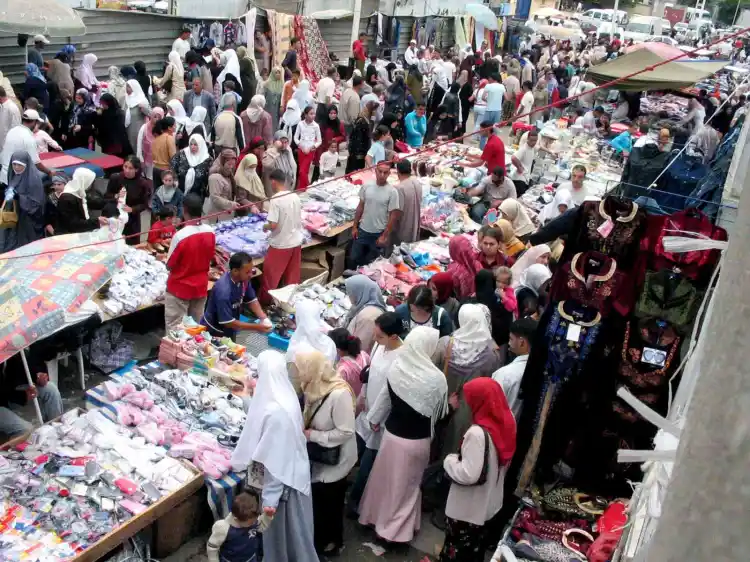
According to a report by Morocco’s High Commission for Planning, a significant share of informal production units are born out of economic necessity. Women, in particular, are disproportionately represented in this sector due to social and economic factors.
Despite a slight decline over the past decade, the informal economy remains widespread in Morocco. The percentage of households owning informal production units fell from 15.5% in 2014 to 14.3% in 2023. The phenomenon remains especially prevalent among larger families: one in four households with eight or more members engages in informal economic activity.
In Tunisia, Abdelrazak Hawas, spokesperson for the National Association of Small and Medium Enterprises, stated that the parallel economy accounts for roughly 65% of the country’s total economic activity—underscoring the depth of Tunisia’s structural economic crisis.
In Algeria, an analytical study covering 2000 to 2022 estimated that the informal economy represents around 31.72% of the country’s GDP. The study also found that a 1% increase in the size of the informal economy corresponds with a 1.02% decrease in formal economic growth over the long term.
This points to how the informal sector undermines the capacity of the formal economy to grow, erodes public revenues, and negatively affects state economic policies.
Meanwhile, in Mauritania, the informal sector constitutes approximately 40% of the country’s GDP.
Several factors contribute to the widespread nature of the informal economy in the Maghreb:
-
Limited formal job opportunities are a major driver, particularly for young people and women. With high unemployment—especially in rural or peripheral areas—the informal sector becomes a default refuge.
-
Developmental disparities between urban and rural areas contribute to gaps in infrastructure, services, and market access. Rural areas often lack the regulatory and legal conditions that support formal enterprises, pushing many to operate informally.
-
Administrative complexity poses a serious obstacle for small and medium-sized enterprises. Lengthy procedures for obtaining licenses and dealing with bureaucratic disputes discourage legal compliance. Many workers perceive tax and social contribution regulations as excessive and disproportionate to their potential profits, leading them to remain informal.
-
Lack of incentives to formalize deepens the problem. When actors do not see tangible benefits—such as social protection, tax relief, access to credit, or health coverage—they are unlikely to regularize their status.
This is compounded by weak oversight in some areas, which implicitly tolerates or even enables informal activities.
Social Benefits of the Informal Economy
Despite its challenges, the informal economy provides undeniable social value. It offers a source of livelihood for thousands of families in the face of limited formal employment opportunities.
During economic crises such as droughts in rural regions or rising living costs in cities the informal sector becomes a safety net for those excluded from the formal market. Rather than having no income at all, people turn to small-scale trade, artisanal work, or unregistered service provision.
Moreover, the informal economy often fosters strong social and solidarity networks. Families, neighbors, and friends share resources and support one another, creating informal safety nets in times of need.
These dynamics help alleviate the impact of poverty and temporary unemployment, especially when state institutions cannot provide comprehensive social welfare an issue common across the Maghreb.
Additionally, the informal economy enables marginalized groups including women and young internal migrants from rural areas to engage in flexible income-generating activities. Freed from the high costs of registration and full legal compliance, they gain space for self-initiative and adaptation to local conditions.
Risks to the Economy and the State
Alongside its benefits, the informal economy carries significant risks if left unchecked. Chief among them is the loss of tax revenue. States are deprived of vital resources needed to fund public services such as healthcare, education, and infrastructure. Former Moroccan Finance Minister Mohamed Benchaaboun estimated that the informal sector costs the state around 34 billion dirhams in lost annual taxes.
The informal economy may also encourage corruption, as some actors resort to illegal or quasi-legal practices such as tax evasion or avoiding social security contributions. This erodes public trust in government and diminishes institutional legitimacy.
It also undermines the formal economy by creating unfair competition. Informal businesses, unburdened by taxes and regulations, can offer lower prices—putting pressure on legal enterprises and distorting market dynamics.
Furthermore, the informal economy exacerbates structural imbalances, particularly underinvestment in infrastructure, education, vocational training, and social protection. When a large portion of the workforce is not formally registered, it becomes difficult for states to implement sustainable economic policies that prioritize human development. These effects ripple through the economy over the medium and long term.
The parallel economy in the Maghreb is not a marginal issue that can be ignored in national development plans. It affects the lives of millions, shapes labor and market structures, and has far-reaching implications for social justice and economic growth.
Addressing this phenomenon requires comprehensive, multi-dimensional strategies including simplifying administrative procedures, reducing the tax burden on small businesses, incentivizing formalization through tangible benefits, and expanding access to health and retirement coverage.
Strengthening transparency, enhancing regulatory oversight, and ensuring a level playing field between formal and informal actors are also crucial pillars for building a fairer, more sustainable economy. If Maghrebi states can strike a balance between the immediate survival needs of vulnerable populations and long-term institutional reform, they may be able to harness the potential of the informal sector to strengthen their local economies.