












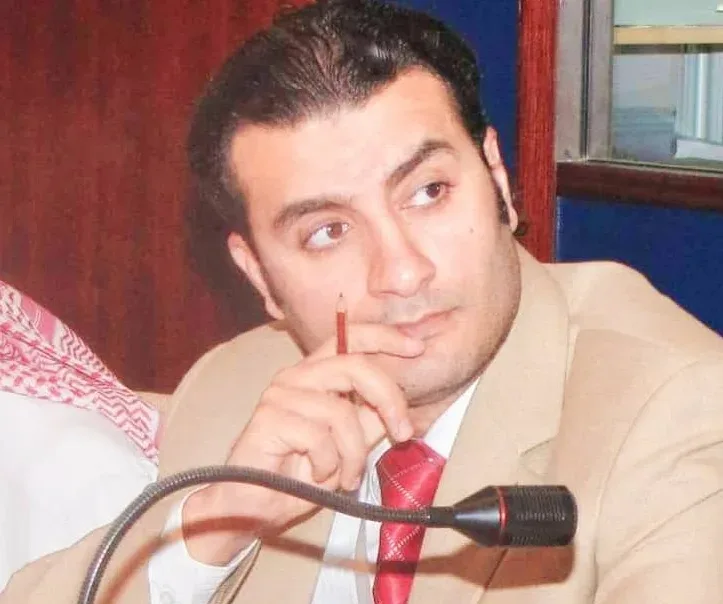

Jared Kushner, son-in-law and senior advisor to former U.S. President Donald Trump, has officially entered the billionaire club this year, with his net worth surpassing the $1 billion mark, compared to $900 million last year, according to Forbes. He now joins his brother Josh Kushner ($5.2 billion) and his father-in-law Trump ($7.3 billion).
An Orthodox Jewish businessman, Kushner first rose to prominence on the political stage, propelled by his family ties to Trump and his role as senior advisor during Trump’s first term (2017–2021). But politics soon became the springboard for his financial ambitions. At just 44, he has transformed his political connections into a financial empire that placed him among the world’s billionaires.
The driving force behind this dramatic leap in wealth is Gulf investment—an indispensable bridge that carried him from millionaire to billionaire status. After leaving the White House, many expected Kushner’s ties to Middle Eastern governments to fade.
Instead, his relationships, particularly with Gulf leaders, deepened into powerful and controversial business partnerships, strengthened further by his open support for what he calls the “resilience of the Israeli economy.”
Through his sharp instincts as the scion of a seasoned investment family, and his cultivated relationships with Gulf rulers, Kushner has built his private equity firm, Affinity Partners, into a $4.8 billion powerhouse, transforming it from an untested player just two years ago into a trusted partner, in his own words.
From Real Estate Heir to Billionaire
Kushner entered business as a Harvard student, making his first big profit by buying and selling residential units worth $9 million. His path shifted dramatically in 2005 when his father was imprisoned for tax evasion and witness tampering. At just 26, Jared took over the family business, Kushner Properties, expanding its scope and cementing his credentials. His success paved the way for his marriage to Ivanka Trump in 2009.
By 2017, Kushner was a rising force in U.S. real estate. But his father-in-law’s presidency drew him into the White House, where he served as a senior advisor and played a pivotal role in Middle East policy, particularly with Gulf leaders. These years laid the groundwork for a network of personal and political relationships that would later fuel his financial empire.
In 2021, after leaving government, Kushner launched Affinity Partners in Miami. Leveraging the trust and access he had built with global leaders, especially in the Gulf, he grew the firm’s assets under management from a modest $215 million base to $4.8 billion today.
Among his assets are a 20% stake in Kushner Companies worth $560 million, a $32 million Florida mansion purchased in 2020, and another property with Ivanka Trump now valued at around $105 million.
Within two years, Kushner deployed over $2 billion through Affinity across 25 investments in eight countries, spanning sports tech, car rentals, fintech, and AI. Recent deals include an 8% stake in the UK digital bank OakNorth, backing AI infrastructure firm Universal AI alongside Eric Schmidt and Elad Gil, and co-founding the San Francisco startup BrainCo with Gil, raising $30 million from prominent investors like Coinbase’s Brian Armstrong, LinkedIn’s Reid Hoffman, and Stripe’s Patrick Collison.
The Gulf Connection
None of Kushner’s meteoric rise would have been possible without Gulf capital. Saudi Arabia’s Public Investment Fund (PIF) injected $2 billion, while Qatari and Emirati funds provided another $1.5 billion, pushing Affinity’s assets from $1.3 billion to $4.8 billion. In 2023, Affinity reported a 60% surge in assets under management following fresh Gulf injections.
In a December 2023 podcast, Kushner revealed Affinity secured $1.5 billion in additional capital in 2024 from two existing backers: Abu Dhabi–based Lunate and the Qatar Investment Authority.
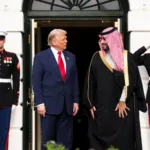
These investments build on Kushner’s deep political relationships with Saudi Crown Prince Mohammed bin Salman, UAE President Mohammed bin Zayed, and Qatari Emir Tamim bin Hamad. During Trump’s presidency, Kushner was central to arms deals with Saudi Arabia, efforts to end the Gulf crisis with Qatar, and the Abraham Accords that normalized relations between Israel, the UAE, and Bahrain.
After leaving the White House, his Gulf connections not only endured but expanded, making Kushner both a financial player and a political bridge for Gulf influence in Washington.
Investing in Israel
Kushner has never hidden his commitment to bolstering Israel’s economy. His first attempt came in 2014 with a bid to acquire 47% of an Israeli financial company, though regulatory hurdles killed the deal. In 2023, his firm acquired 15% of Shlomo Group for $110 million, and in 2024 he secured nearly 10% of Phoenix Holdings in a $250 million deal, calling it “a reflection of my belief in the resilience of Israel’s economy.”
According to Middle East Eye, Phoenix itself holds shares in 11 companies the UN lists as complicit in illegal settlement activity in the occupied West Bank, East Jerusalem, and the Golan Heights. This has fueled outrage among Palestinians and rights groups, who accuse Gulf sovereign wealth funds of indirectly financing Israel’s settlement enterprise through Kushner’s vehicles.
A Blurred Line Between Politics and Business
Jared Kushner’s story is a stark illustration of the entanglement between political power and financial gain. What began as White House diplomacy became a launching pad for his billionaire status, powered by Gulf capital and anchored in controversial Israeli investments.
While his financial success is undeniable, the moral and political questions surrounding his empire are likely to linger. In the end, Kushner embodies the clearest expression of the formula: money for politics, politics for money.