









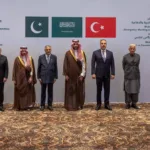



When tensions between India and Pakistan flared on April 22, escalating into mutual military strikes, the world watched with deep concern. The two nuclear-armed neighbors have a long history of conflict, and fears mounted that this latest round could spiral into a broader confrontation. Arab countries called on both sides to exercise restraint and avoid further military escalation.
In Yemen, however, social media became a battleground of its own — with some users rallying behind Pakistan, others siding with India, and a larger, more pragmatic majority arguing that Yemenis had no business taking sides in a distant conflict while their own country has been mired in war for over a decade.
This heated online discourse soon cast a shadow over Yemenis living in India and Pakistan. But how has it affected them, and what is life like now for these communities?
Hurdles in India
For Yemenis in India, daily life is already fraught with restrictions. They are denied basic rights such as freedom of movement, access to education, hospital treatment, the ability to receive funds or aid, and even the right to rent housing. A 2021 report by the Euro-Mediterranean Human Rights Monitor highlighted these challenges.
India nevertheless remains a preferred destination for many Yemeni patients seeking medical care. According to the Observer Research Foundation (ORF), some 100,000 Yemenis reside permanently in India, alongside hundreds of students and short-term visitors — most arriving for medical tourism. Yet even these visitors are not spared from discrimination and hardship.
Recently, India tightened visa and residency requirements for Yemenis. While authorities have not officially explained why, activists told Noon Post that Indian officials hinted at dissatisfaction with the behavior of certain Yemeni activists during the brief India–Pakistan conflict.
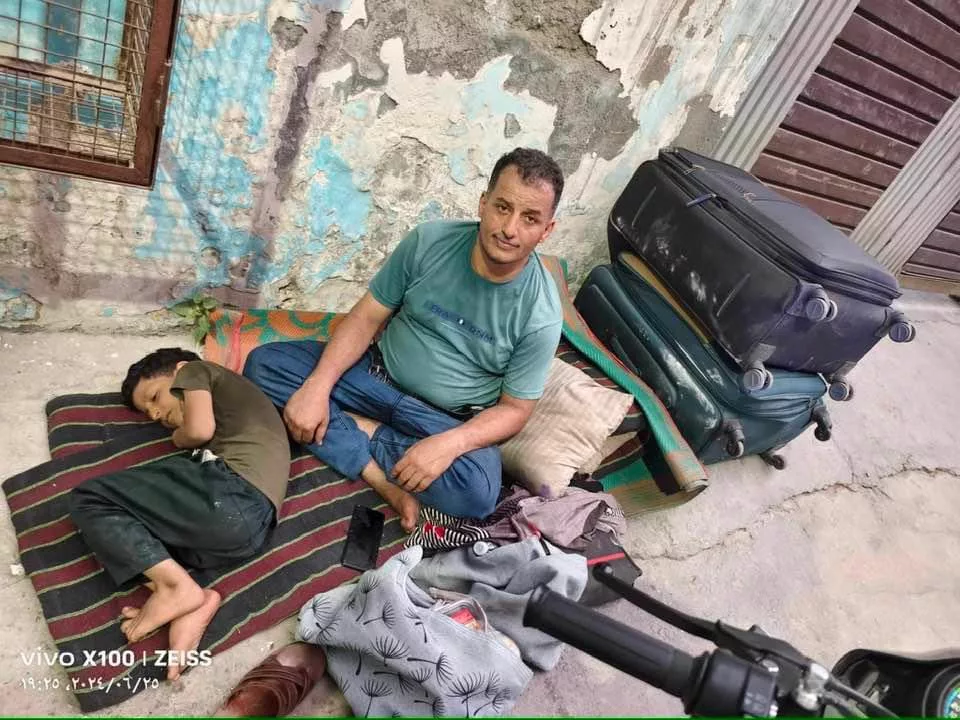
In March, Indian authorities arrested Yemeni national Khaled al-Khudmi and his wife Khadija al-Nashri, placing their children under strict house arrest.
Activist Mohammed al-Rubu’i rejected the idea that this treatment was linked solely to the latest India–Pakistan flare-up, insisting it had been a persistent problem.
Al-Khudmi’s troubles date back to 2015, when his family of seven entered India on medical visas while he came on a work visa that expired in 2016 — complicating his legal status, according to the US-based Center for Justice.
Mohammed Wa’alan, a 41-year-old Yemeni caring for his brother in India for the past three years, told Noon Post that Yemenis are struggling with soaring medical costs and being barred from working to support themselves. “Many Yemenis whose treatment requires years of stay have been forced to return home because they can’t pay rent or cover medical expenses,” he said.
Yahya Ghubar, consul at the Yemeni Embassy in India, advised Yemenis to avoid political discussion while in the country. He explained that all arrivals must register with the nearest police station within 14 days or risk being denied exit at the airport — losing the cost of their ticket in the process. He added that India has recently enacted even stricter regulations.
Arrests in Pakistan
Conditions for Yemenis in Pakistan are not much better. Students and activists face arrests by Islamabad’s security forces. On May 13, Khaled al-Shurabi, president of the Yemeni Students’ Union in Pakistan, vanished after leaving his residence. His whereabouts remain unknown.
Yemeni activists accused Pakistani intelligence of detaining him over his human rights work. In a statement, al-Shurabi’s family urged the Yemeni government to intervene and secure his release.
Abdul Fattah, speaking to Noon Post, criticized the Yemeni Embassy’s silence, saying the case could only mean one of two things: “Either he is in the custody of Pakistani security forces, or he is missing.
If the latter is true, the embassy should publicly announce it and help locate him.” He accused the embassy of turning a blind eye, implying that al-Shurabi’s disappearance served its interests.
More than 5,000 Yemenis live across Pakistan, mostly in Karachi, followed by Lahore and Islamabad. Over 100 students are enrolled in Pakistani universities, including 40 on government scholarships, according to embassy data.
Yemen and Pakistan established diplomatic relations in 1981. Ties remained cordial for decades but cooled after Pakistan’s parliament declared neutrality in 2015, declining Saudi Arabia’s request to send troops to Yemen for the Saudi-led “Decisive Storm” campaign against the Houthis. Islamabad justified its stance by saying it sought to avoid sectarian strife at home.
Hopes for Improvement
In both India and Pakistan, it is common to see Yemenis protesting — over delayed stipends for students, or wounded and ill citizens awaiting financial aid from their government. Many also report falling victim to scams, particularly in India.
Yemeni activists hope conditions for the diaspora will improve, but most believe this will only happen once Yemen itself stabilizes. The country remains divided between Houthi forces in the north and factions aligned with the internationally recognized government in the south, neither of which seem particularly concerned with the welfare of their citizens abroad.
Journalist Radwan al-Hamdani told Noon Post that Yemenis in India and Pakistan must avoid entanglement in domestic politics or conflicts, respect local laws, and steer clear of hostile campaigns. Journalist Saleh al-Salmi, however, disagrees, arguing that Yemenis have a religious duty to side with Pakistan — even at personal cost.