










On August 9, Turkish Ambassador to Sudan Fatih Yildiz announced that he had discussed with Sovereignty Council member Nawara Abu Mohammed his country’s contribution to Khartoum’s efforts to boost economic and social development.
He explained that Turkey is currently operating out of Port Sudan, focusing in particular on developing seaports and reconstruction projects, affirming Ankara’s commitment to deepening cooperation with Sudan by bringing in business leaders and capital to invest in industrial and development projects that serve Sudanese communities.
On March 25, Yildiz met with the head of the Sudanese Sea Ports Corporation, Jilani Mohammed Jilani, expressing his country’s interest in investment partnerships with Sudanese ports, and in forging a sister-port relationship between Turkey’s Mersin Port and Port Sudan, alongside sharing Turkish business expertise.
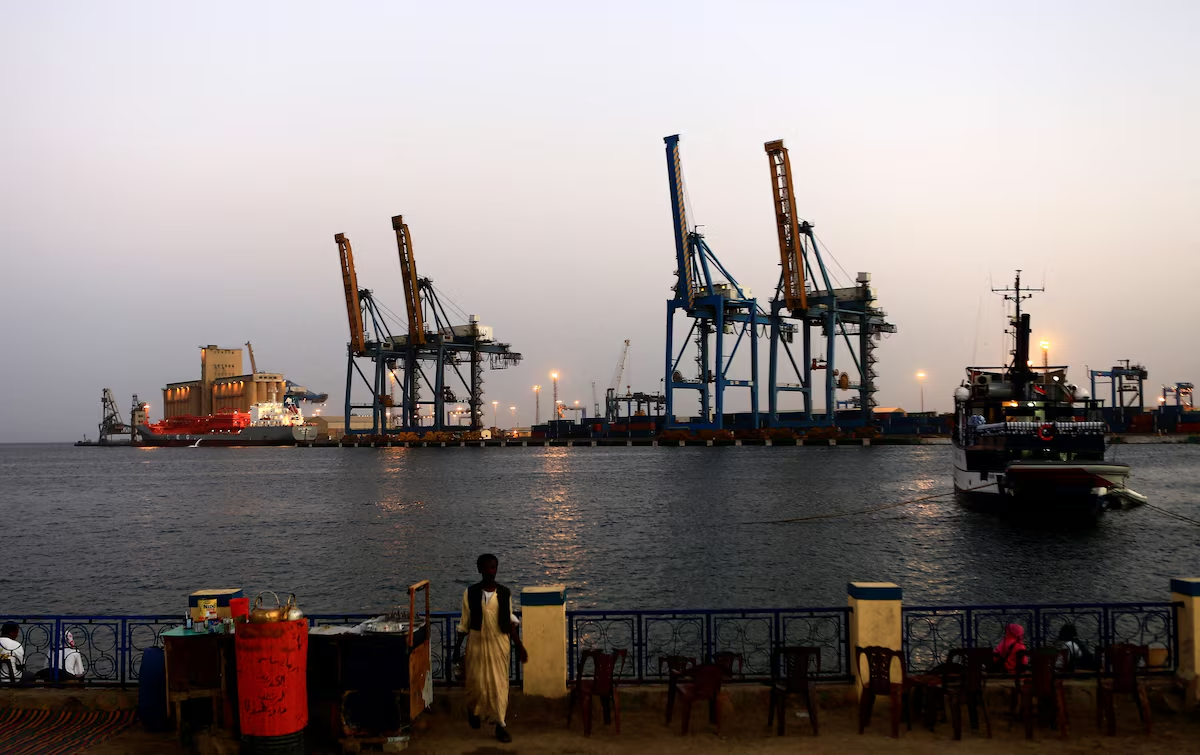
Port Sudan lies in a city of the same name, which the Sudanese government adopted as its temporary administrative center after the massive destruction of the capital, Khartoum, during the conflict in which the Rapid Support Forces (RSF) targeted vital infrastructure, including water and power stations and the oil refinery.
The port, which encompasses several facilities—including the southern container terminal, the northern terminal for imports, and the Bashayer terminal for South Sudan’s oil exports—requires comprehensive rehabilitation to accommodate large vessels and address workers’ concerns over modernization plans that could threaten jobs.
Curbing Abu Dhabi’s Ambitions
Turkey had previously shown no interest in investing in Port Sudan, focusing instead on Suakin Island, home to a port for passenger transport and livestock exports. Ankara signed an agreement to restore the historic city, which served as a hub for pilgrims during the Ottoman era.
The Turkish Cooperation and Coordination Agency (TİKA) began restoring many of Suakin’s buildings, including the customs house, where a recent public initiative hosted a ceremony to thank Ankara. The event was attended by Ambassador Yildiz and officials from Sudan’s foreign and information ministries.
Meanwhile, the UAE has sought a long-term foothold in Sudan’s Red Sea ports. Dubai Ports World submitted a bid to operate Port Sudan that the government rejected, and later, in 2017, presented another offer to manage the port for 50 years—also rejected.
After the ouster of President Omar al-Bashir in 2019, RSF leader Mohamed Hamdan Dagalo (“Hemedti”) expanded his influence, becoming deputy head of the Sovereignty Council and allegedly seeking, perhaps at Abu Dhabi’s urging, to establish a military base in the Red Sea state—a plan that failed.
In June 2022, facing financial distress, Sudan’s military authorities accepted a $6 billion UAE investment offer to build a new port 200 kilometers north of Port Sudan, complete with a free trade and industrial zone, a small international airport, and an agricultural project in northern Sudan.
However, after the UAE’s involvement in funding and arming the RSF, Sudan’s government scrapped plans for the new port and later cut ties with Abu Dhabi, despite mediation efforts by Turkish President Recep Tayyip Erdoğan.
Strengths in the Turkish Approach
Annual trade between Ankara and Khartoum stands at roughly $500 million, with Turkish investments in Sudan totaling about $650 million. More than 200 Turkish companies operate in construction, services, and real estate in the country.
Turkey enjoys a strong reputation in Sudan, largely due to its non-interference in the country’s internal affairs—unlike the UAE and other states that have taken sides in Sudan’s prolonged political crisis, which escalated into the current war on April 15, 2023.
Ankara also prefers formal relations with the Sudanese state, even coordinating with the Ministry of Health to continue supporting the Turkish hospital in Nyala, South Darfur—an area under RSF control.
Economic analyst Haitham Fathi told Noon Post that Turkey has extensive experience in modernizing ports worldwide, raising expectations that it could successfully rehabilitate Port Sudan.
He stressed that upgrading Sudan’s ports is a top priority for the reconstruction phase, especially for receiving construction imports, and that the government’s new pro–private sector policy could open the door to more Turkish investment.
Yet, Fathi warned of challenges, including Sudan’s political instability and difficulties in securing international funding. Economist Tayeb Abu Aqla added that port acquisitions cannot be separated from the broader regional struggle for influence, but expressed confidence in both countries’ ability to overcome such hurdles.
Abu Aqla noted that Turkey has long experience in port management—both through state enterprises and the private sector—and a strong track record in delivering infrastructure projects across Africa and Asia.
“Turkish-Sudanese cooperation in this field could transfer technology, train local staff, and improve operational efficiency, which would boost trade, reduce ship waiting times, and attract more international shipping lines,” he said.
What Comes Next?
With Khartoum’s infrastructure in ruins, Sudan urgently needs investment. It is unlikely to reject Turkey’s plans to modernize Port Sudan, strategically located roughly halfway between Asia and Eastern Europe, making it well-suited to serve as a hub for ship maintenance and repair.
All signs point toward a deeper strategic partnership between Sudan and Turkey to upgrade the port—renovating berths, expanding storage facilities, introducing automated systems, and building new infrastructure to accommodate massive vessels.
Ankara’s interest in Port Sudan appears less about regional power plays and more about securing a key position along one of the world’s most important maritime routes. If the deal includes management rights—similar to the Suakin agreement—Turkey could become a major player in Red Sea shipping.
However, Ankara will need to manage potential regional reactions, especially from Saudi Arabia, to its presence along Sudan’s 800-kilometer coastline (about 1,370 miles). Still, the upgrade would make Sudan the main beneficiary, given current conditions.
While obstacles remain, eastern Sudan has largely avoided the fighting, and recent drone attacks on Port Sudan were met with swift upgrades to air defenses, reducing the likelihood of repeat strikes.
In the end, Sudan is unlikely to allow the UAE to control any of its ports—viewing Abu Dhabi’s ambitions as political leverage rather than trade facilitation. After its continuous support for the RSF, the UAE appears shut out of Sudan’s Red Sea gateways.
With most of its pressure cards exhausted—including bans on Sudanese aircraft landing in UAE airports—Abu Dhabi may be forced to scale back or halt its RSF backing, particularly if U.S. efforts to designate the group as a terrorist organization succeed.