


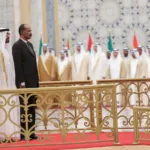



On Thursday, July 31, Moscow hosted Syria’s foreign and defense ministers at the State Guest House—a visit that marks a potential reset in the relationship between Damascus and Moscow.
Syrian Foreign Minister Asaad Al-Shibani met with his Russian counterpart Sergey Lavrov in wide-ranging talks that touched on the future of bilateral relations and raised critical questions about whether Russia, long a staunch backer of the former regime, is now repositioning itself in the Syrian file.
More than a routine diplomatic engagement, the visit carried striking symbolic weight. Lavrov extended an invitation to Syria’s new president, Ahmad Al-Sharaa, to attend the first-ever Russian-Arab summit, scheduled to take place in Moscow in mid-October.
While diplomatically polite, the invitation underscores Russia’s intent to maintain open channels with the new Syrian state—one it had, for years, sought to suppress at its inception.
In light of these developments, a legitimate question arises: Are we witnessing a Russian attempt to forge a new alliance of interests with Damascus, unburdened by a blood-soaked past? Or is this simply a tactical maneuver to minimize political losses?
What Was Discussed?
The meetings included Russia’s Foreign Minister Sergey Lavrov and Defense Minister Andrei Belousov, and focused on political and military cooperation, as well as reassessing previous agreements signed during the former regime’s era.
President Vladimir Putin later received Syria’s foreign minister in what the Syrian Foreign Ministry described as a “historic” meeting. It said the encounter lays the groundwork for a new phase of mutual understanding between the two countries, founded on respect for Syria’s sovereignty and territorial integrity.
During a joint press conference with Lavrov, Al-Shibani affirmed Damascus’s commitment to resetting its relationship with Moscow on a new basis that prioritizes the Syrian people’s interests. He also announced the formation of two committees tasked with reviewing all previous agreements with the Assad regime.
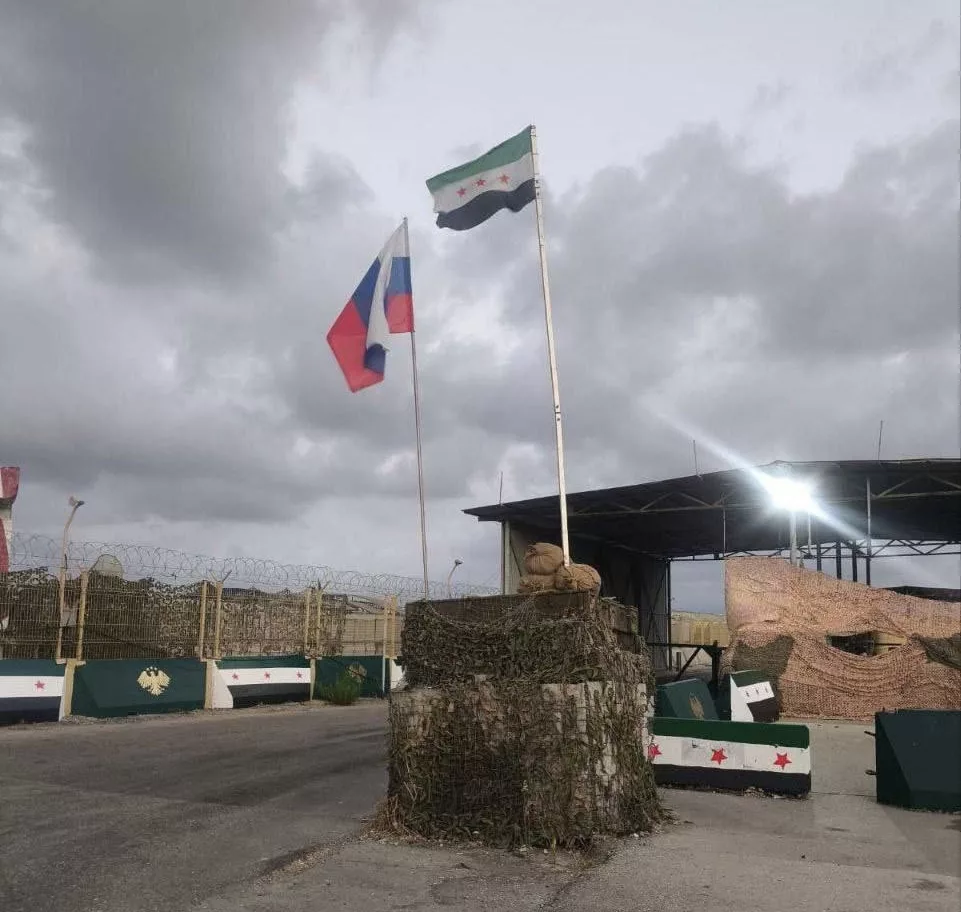
Lavrov officially invited President Ahmad Al-Sharaa to attend the upcoming Russian-Arab summit—an overture analysts interpret as an attempt by Moscow to reestablish ties with the new Damascus, but through a markedly different political tone than it once used with the previous regime.
At the same press conference, Al-Shibani stated that Syria holds “no hostile intentions toward Israel,” but emphasized its rejection of “any interference in internal affairs” or manipulation of the “minorities card.”
Commenting on the recent escalation in the Suwayda province, he attributed it to “systematic Israeli shelling over the past two weeks,” which forced Syrian troops to withdraw from certain areas—creating a vacuum that was then filled by foreign-linked armed groups.
Lavrov, in turn, reiterated Russia’s support for the International Committee of the Red Cross’s initiative to assist in Suwayda in coordination with the Syrian government. He stressed that the only viable solution lies in “state control,” and denounced Israeli attacks on Syrian territory as violations of international law that “must be stopped.”
It’s worth noting that the Syrian issue was also discussed in a recent phone call between President Putin and Israeli Prime Minister Benjamin Netanyahu. According to a Kremlin statement, the two leaders addressed the “tense situation in the Middle East,” with Putin emphasizing the need to preserve “Syria’s sovereignty and strengthen its internal political stability.”
What Was on the Table?
The talks covered several critical security and military files, most notably the future of Russian military bases in Syria, the Kurdish question, and the reorganization of Syria’s ties with regional and international powers. During the joint press conference, Lavrov thanked Syrian authorities for securing Russia’s bases in Tartus and Hmeimim.
He emphasized that Moscow seeks to expand cooperation with Damascus and supports Syria’s territorial unity, rejecting the notion of the country becoming a stage for geopolitical rivalries.
On the Kurdish issue, Lavrov expressed hope that the upcoming parliamentary elections—scheduled for September 15–20—would be inclusive of all communities and sects. He highlighted the importance of maintaining Kurdish integration within the Syrian state and ensuring their full rights.
This position points to a preliminary alignment between Moscow and Damascus on resolving tensions with the Syrian Democratic Forces (SDF) in the northeast, within the framework of a unified state.
The two sides also agreed to form a Syrian-Russian ministerial committee to review past political and economic agreements—signaling a shared desire to restructure their partnership on new terms. Al-Shibani remarked that bilateral ties are moving toward a “distinct strategic trajectory.”
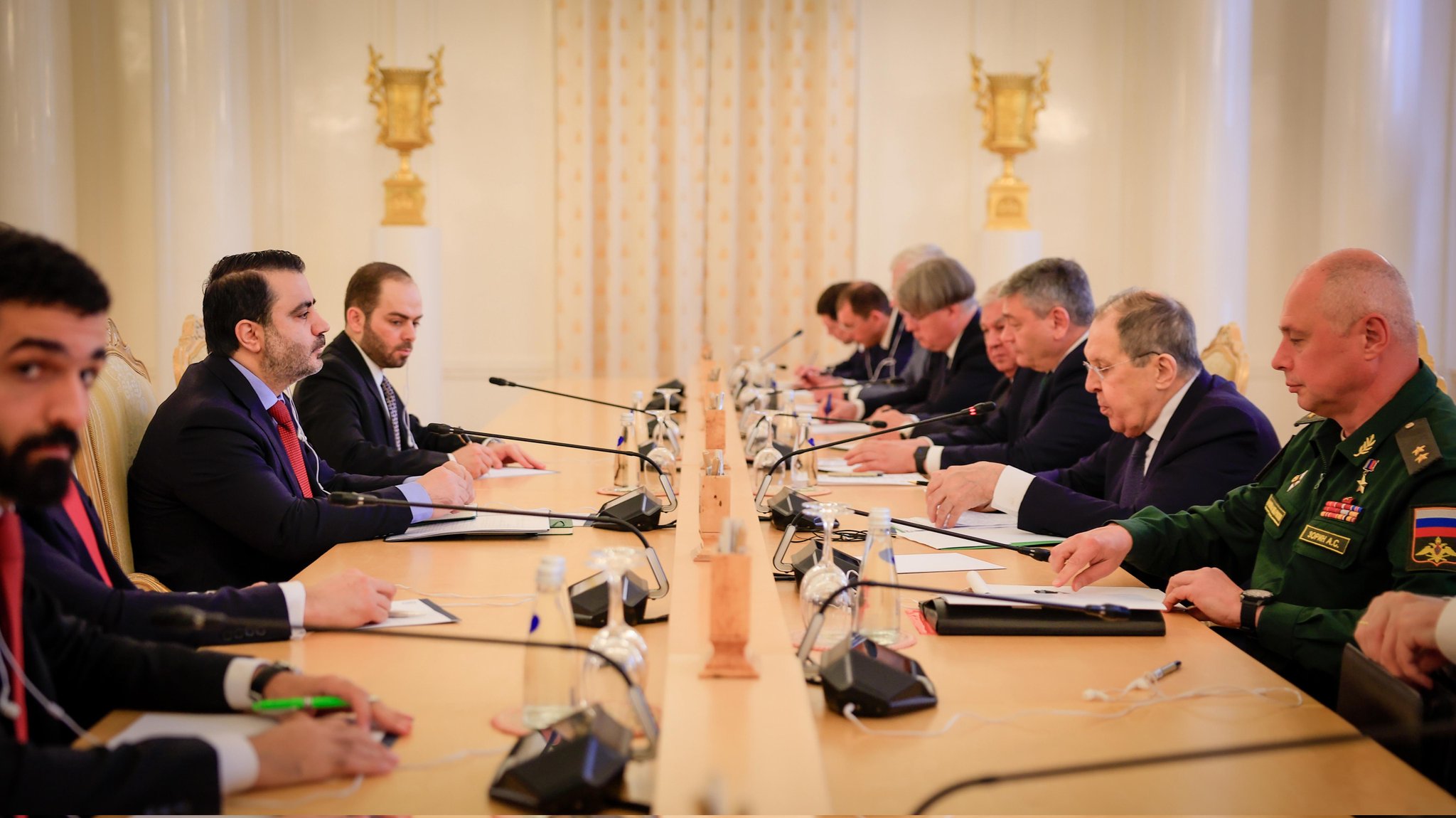
Russia’s Defense Ministry announced that Minister Andrei Belousov’s meeting with his Syrian counterpart, Marhaf Abu Qasra, addressed prospects for defense cooperation and developments in the Middle East.
Photographs of the discussions were released, showing the Syrian foreign minister present. It is likely that Syria’s continued reliance on Russian weaponry—dating back to the 1960s—was also part of the agenda.
How Did Syrians React to the Handshake?
The Damascus–Moscow meeting did not go unnoticed among Syrians. For many, Moscow remains a haunting symbol of death and destruction—a country that shielded Bashar al-Assad from accountability by wielding its UN Security Council veto 17 times.
Among victims’ families and the so-called “guardians of the blood,” the meeting was met with deep unease. Activists resurfaced old comments by Lavrov made during the height of Russia’s bombing campaign in Syrian cities, now circulating with biting sarcasm or open anger.
One widely shared phrase came from the late activist Adham Akrad: “Let Moscow fall, but not Daraa”—a rallying cry that encapsulates rejection of any unconditional rapprochement with a country seen by many as complicit in war crimes. Others described the visit as a “diplomatic disgrace,” no less outrageous than welcoming an Israeli official to occupied Golan.
Still, a more pragmatic camp has emerged. Some Syrians view talks with Moscow as an unavoidable necessity. As a permanent member of the UN Security Council, Russia holds veto power over any legal effort to lift international sanctions on Syria. Without its cooperation, foreign investment cannot enter Syrian markets, nor can companies legally pay taxes to the state—leaving major reconstruction projects effectively frozen.
This visit reveals a mutual effort to redefine the Syrian–Russian relationship in a post-Assad landscape. Yet the path remains fraught with complexity—from the weight of a militarized political legacy to a society deeply divided over what this renewed alliance actually means.
As the new Syrian leadership seeks to renegotiate agreements and open pragmatic channels with former adversaries like Washington and Tel Aviv, pressing questions remain: Can this “restructured” relationship endure such contradictions? Or will it eventually collapse under the burden of memory and clashing strategic calculations?


