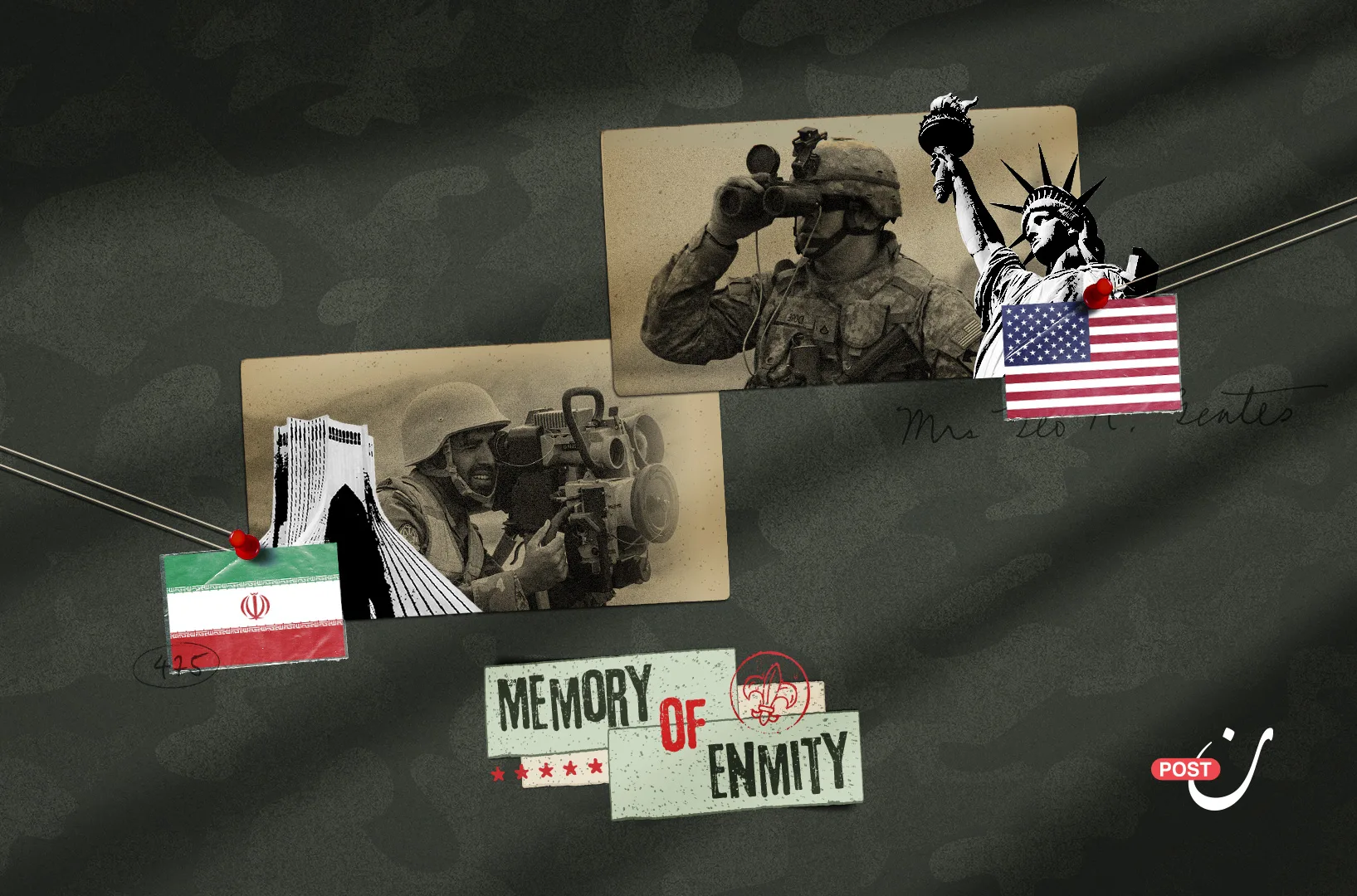







Since Tehran broke free from Western influence with the Islamic Revolution led by Khomeini in 1979—toppling the Shah, who was backed by the West—Washington has been measuring the depth of this new regime and determining the most effective ways to shape and curb its defiance.
The United States gradually built a massive sanctions apparatus, enacted through presidential executive orders and congressional legislation. These measures targeted Iran’s oil and industrial sectors, military apparatus, and its financial and banking networks. Washington sometimes acted alone and at other times leveraged multilateral alliances, justifying its actions by pointing to terrorism support, nuclear ambitions, and human rights abuses.
Over four and a half decades, Washington experimented with various approaches, adapting strategies depending on the occupant of the White House—from soft diplomacy to a “maximum pressure” campaign—and even covert operations via proxy wars, far from both Washington and Tehran.
Driven to seek alternatives and forge counter-alliances, Tehran entered each escalation with a legacy of regional balances and partnerships. This foundation dimmed fears of chaos when direct U.S.–Iranian confrontations occurred.
What have been the U.S. sanctions on Tehran? How were they used to isolate the regime and influence global alliances? Have Iranian domestic dissent and internal divisions played a role? What impact did sanctions have on the streets of Tehran? What alternatives did Iran pursue, and why does a power vacuum in Tehran now concern U.S. policy? This article in our “Memory of Hostility” series attempts to answer these and related questions.
A Long Saga of Sanctions
The U.S. began constraining the new Iranian regime soon after the 1979 hostage crisis, in which Iranian students held over 50 Americans hostage for more than 400 days, demanding the Shah’s extradition. By October 7, 2023, the U.S. had enacted approximately 1,615 individual sanction rounds against Iran.
President Carter responded by freezing around $8.1 billion in Iranian assets and imposing a full trade embargo via Executive Order 12170. These sanctions were lifted in 1981 with the Algiers Accords.
They marked the first use of the International Emergency Economic Powers Act (IEEPA), a legal tool enabling U.S. presidents to impose economic restrictions for national security, which became the foundation for future sanctions.
President Reagan broadened the scope, branding Iran a state sponsor of terrorism, banning arms sales, and tightening embargoes—especially during the first Gulf War.
But it wasn’t until the 1990s that comprehensive sanctions truly took shape—as Iran recovered from the Gulf War and revived its nuclear program. Under Clinton, Congress passed the Iran–Libya Sanctions Act (1996), later renamed the Iran Sanctions Act (2006), establishing the basis for targeting third-party entities under “secondary sanctions.”
These sanctions spread across all aspects of Iran’s economy, from energy and petrochemicals to finance, technology, military goods, and dual-use items. They also targeted private individuals and foreign entities involved with Iran’s oil export and financial dealings.
From Diplomacy to Maximum Pressure
Despite imposing new sanctions, Obama sought diplomacy through the JCPOA nuclear deal, temporarily freezing the nuclear program in exchange for lifting primary and secondary sanctions, including financial restrictions. The U.N. arms embargo ended in October 2020 after the U.S. failed to renew it.
Trump abandoned the JCPOA and enacted a sweeping “maximum pressure” campaign: labeling the IRGC a terrorist organization, reimposing nuclear-era sanctions, and enforcing 960 individual and entity sanctions. He also blacklisted 37 Iranian banks, including the National Oil Company. The financial watchdog FATF added Iran to its blacklist.
Biden, constrained by Trump-era legacies, eased some restrictions—releasing limited frozen assets and freeing U.S. detainees—but JCPOA negotiations stalled.
Trump’s return reintroduced even tighter measures: National Security Memorandum 2 (February 2025) reemphasized threats from Iran’s nuclear ambitions, women’s rights abuses, and terrorism. It reinstated Biden-era sanctions and barred trade links with China related to Iranian oil and defense, while engaging intermediaries in Oman for negotiations.
Effect on Tehran’s Streets
The sanctions deeply crippled Iran’s economy and society:
-
Oil sector collapse: Exports fell from ~2.5 million to ~400,000 barrels/day since 2017.
-
Financial isolation: Disconnection from SWIFT-system and banking freezes caused the rial to depreciate ~80%, driving inflation well over the government’s 42% figure.
-
Economic stagnation: Transaction barriers, credit scarcity, and limited trade routes deepened recession.
-
Humanitarian impact: Despite exemptions, sanctions on banks hindered imports of food and medicine. The U.N. human rights rapporteur called the effects “hurtful and unjust,” limiting U.N. food and health responses. Human Rights Watch reported critical shortages in essential drugs and medical equipment, weakening hospitals and hurting patients.
-
Social distress: Rising unemployment and brain drain fueled protests—most notably after Mahsa Amini’s death (2022) and the “Bloody November” fuel protests (2019).
Western Unity and Iran’s Counterweights
The U.S. successfully rallied Europe and the U.N. behind sanctions. The EU adopted ten sanction packages since 2011, targeting Tehran for nuclear activity, human rights abuses, and terrorism—reinforced by a human rights narrative defending Iranian women. Its current sanctions remain effective through April 13, 2026.
The U.N. Security Council imposed nuclear-related constraints from 2006, though never fully extended an oil embargo. The arms embargo lifted in October 2020 due to vetoes from Russia and China.
To evade sanctions, Iran developed a shadow economy using illicit networks:
-
Global smuggling: Reports reveal Iranian and Indonesian airlines (e.g., PT Asia Global Airlines) transported restricted items, including arms, via Oman and Indonesia.
-
Hubs in Dubai: Tehran used multi-national front companies to import banned goods.
-
China oil purchases: China remained the primary buyer, concealing Iranian oil imports via cover routes in UAE, Malaysia, and Oman—only openly declaring imports in 2022.
-
Financial workarounds: Iran turned to crypto and foreign exchange firms in the UAE to funnel petrochemical revenue; firms like PGPICC reportedly laundered billions through proxy networks.
U.S. sanctions extended to these Chinese, Emirati, and Hong Kong entities; the Treasury created a global compliance system targeting weapons, oil, and financial networks.
Sanctions Through Iran’s Internal Lens
Iranian domestic and diaspora opposition views diverge:
-
Some activists welcome sanctions, hoping they pressure the regime and empower internal dissent. Groups like the National Council of Resistance blame corruption and economic collapse on the ruling elite—sometimes attributing unrest (e.g., 2019, 2022 protests) to U.S. influence.
-
Others oppose sanctions, arguing they undermine reform efforts, restrict civil society, and shield hardliners. A piece in The American Conservative highlighted this viewpoint—calling for relief to support internal reformers.
Tehran, in turn, used the protests to justify security crackdowns, label activists as foreign agents, and strengthen its narrative of resisting Western aggression. It promoted a “resistance economy”—relying on domestic production, deepening ties with China and Russia, and blaming external meddling for economic woes.