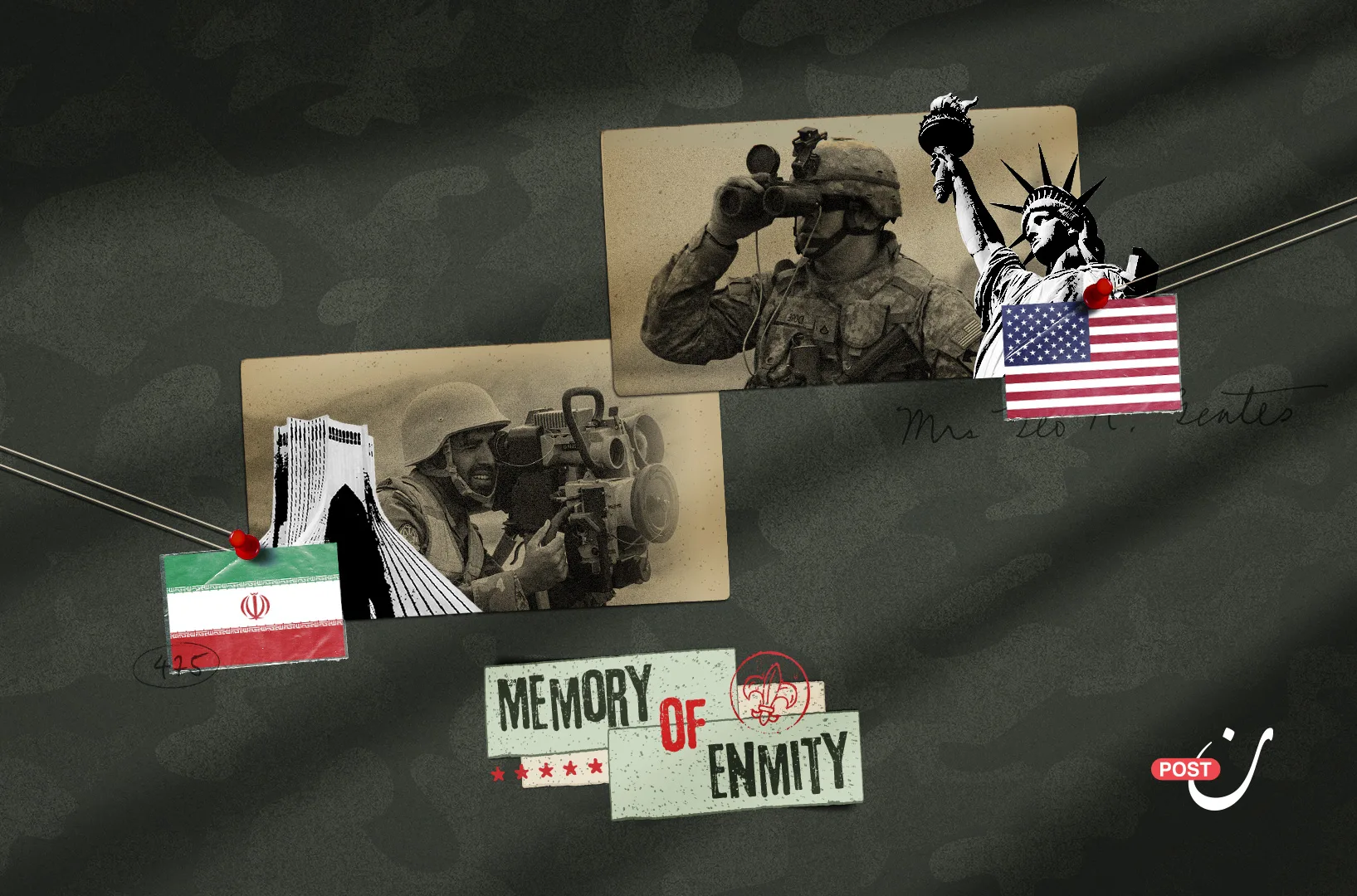










For decades, Tehran has been a pivotal axis in U.S. foreign policy, shaping much of its domestic political landscape as the perpetual external enemy that Washington must continue to confront in the name of “defending civilization.”
Like many contentious issues, the Iran file is a source of sharp dispute between America’s two dominant parties, converging at times but diverging in ways that can decisively influence elections and determine the assessment of administrations.
How has each party dealt with Tehran? Are there substantive differences between Democratic and Republican strategies? Have successive administrations pursued clear policies toward Iran? What do electoral constituencies think? And has much changed since the so-called “zero hour,” when Trump struck Iran’s nuclear facilities? This article attempts to answer these questions and more.
Much Noise, Little Substance
Republican policy toward Tehran reflects a general pattern in their rhetoric: a split between slogans and reality. Republicans tend to inflate their discourse when it comes to Washington’s adversaries, demanding firmness and decisive strikes, yet the reality reveals pragmatism and inconsistency signaling the limits of what American policy can and cannot achieve.
Since the first year of the Islamic Revolution, Tehran has dominated U.S. domestic politics and become a hot topic in electoral debates. Because Democratic president Jimmy Carter failed to resolve the hostage crisis with sufficient speed, he lost the election to Ronald Reagan. Reagan claimed the crisis revealed Carter’s weakness and hesitation, insisting that “no dictatorship would have dared commit such an act if I were president.”
It was a familiar Republican refrain boasting of strength that supposedly compels adversaries to submit while in fact responding to circumstances created by the international environment. Iranians, furious at Carter for hosting the Shah and imposing the first U.S. sanctions on the regime, delivered him a final humiliation by releasing the American hostages on Reagan’s very first day in office. History seemed to repeat itself.
Reagan, who styled himself as tough and heroic, secretly engaged with the Supreme Leader. His two presidential terms were marked more by deception and manipulation toward Tehran than by determination to curb threats.
His administration played a double game in the first Gulf War, arming both Saddam Hussein and Iran with American weapons in a bid to weaken both regimes a strategy that ended with the Iran-Contra scandal, when weapons were sold to Tehran in defiance of Congress.
George H.W. Bush, by contrast, showed little appetite for attacking Iran. On the contrary, he signaled willingness to extend a hand of cooperation if Tehran curbed its regional influence and released the American hostages held by Hezbollah in the late 1980s. That never happened.
George W. Bush’s administration again displayed the disconnect between rhetoric and reality. He branded Iran part of the “Axis of Evil” alongside Iraq and North Korea, hoping his “War on Terror” would accelerate toward toppling Tehran’s regime. His administration openly encouraged attacks on Iranian targets in response to militias striking U.S. troops in Iraq.
Yet Iran was never attacked. Reports later suggested that Bush even blocked an Israeli strike on Iranian nuclear sites, preferring instead to escalate economic and UN sanctions rather than risk a regional war that would engulf U.S. interests.
Trump’s first administration fit squarely into the Republican mold: a great deal of bluster, very little follow-through. Trump surrounded himself with hardliners like Secretary of State Mike Pompeo and National Security Adviser John Bolton, eager to strike Iranian soil. Yet his unprecedented threats produced only the assassination of Qassem Soleimani, limited strikes against Iran’s regional militias, and scrapped plans for bombing Iran itself.
Trump’s withdrawal from Obama’s nuclear deal and his “maximum pressure” sanctions campaign reflected the traditional Republican preference for silent warfare over direct confrontation.
True to form, Trump did not seek war so much as political points: pairing “maximum pressure” with an offer of a so-called “grand bargain” to end Iran’s nuclear and missile programs in exchange for lifting sanctions—an offer Tehran flatly rejected, awaiting instead the Democrats’ return to power.
Even Trump’s eventual strike on Iran’s nuclear facilities was no long-term strategy, but a reaction meant to project American resolve under pressure from pro-Israel lobbies. Many analysts described it as underwhelming, symbolic rather than decisive, more a signal to contain war than ignite it. Israeli voices complained the strike had barely dented Iran’s nuclear program, delaying it by only a few months and calling for a far more powerful and effective U.S. attack.
Interventionists vs. Isolationists
Republicans have waged a “shadow war” against Tehran: thunderous slogans, accusations that Democrats are weak, claims of toughness—yet on the ground, far less aggressive policies. GOP administrations have leaned heavily on economic sanctions, global isolation, and targeted strikes against Iranian interests and proxies, while carefully avoiding direct blows inside Iran that might provoke devastating retaliation.
But the party itself is divided. On one side stand the “interventionists,” such as Senators Ted Cruz, Lindsey Graham, and Kevin Cramer, who argue for direct military strikes on Iranian soil to eliminate its threat to Washington and Israel.
On the other side are the “isolationists,” represented by figures like Tucker Carlson, Steve Bannon, Rand Paul, and Marjorie Taylor Greene most aligned with Trump’s “America First” MAGA movement. They insist Washington should avoid foreign entanglements and focus on domestic security and economic reform.
Trump’s contemplation of strikes on Iran triggered open warfare between these factions. Before the strike, only 22% of Republicans supported military intervention; afterward, support among GOP voters jumped to 68%. The episode revealed once again that slogans do not match reality, and that isolationists ultimately avoid a real collision with the party’s foreign policy machinery.
Democrats: Snake Diplomacy
Bill Clinton largely followed George H.W. Bush’s path of containment and isolation, steering clear of direct confrontation. With Iran weighed down by sanctions, cut off from diplomatic ties, and mistrusted as a theocratic state, Clinton had little room for his signature style of outreach. Hezbollah’s role in undermining his prized “Middle East peace process” further limited any overtures.
In the early 1990s, Clinton announced a “dual containment” strategy aimed at curbing both Iraq and Iran as hostile powers. Iran, though, was treated as the graver threat, targeted through expanded sanctions blocking investment, diplomatic campaigns against its sponsorship of terrorism, and the establishment of U.S. bases in the Gulf to deter Tehran’s regional ambitions.
Clinton imposed additional sanctions not only on Iran itself but also on any government or actor assisting its weapons of mass destruction programs. In 1994, he signed Executive Order 12938 declaring a national emergency over Iran’s WMD efforts, authorizing sanctions and export bans on dual-use goods. Later amendments extended penalties to non-Iranian actors, including Russians.
In 2000, on the eve of leaving office, Clinton signed the Iran Nonproliferation Act, imposing sanctions on Russian entities for aiding Iran’s military program. At the same time, suspicions of Iranian involvement in the 1996 Khobar Towers bombing in Saudi Arabia, which killed U.S. airmen, cemented Iran’s image as a terrorist sponsor in U.S. foreign policy.
Clinton made modest gestures of reconciliation. Secretary of State Madeleine Albright apologized for the CIA’s role in the 1953 coup that toppled Prime Minister Mohammad Mossadegh and promised to ease sanctions on Iranian goods such as food, carpets, and aircraft parts. Tehran dismissed the effort as meaningless.
Barack Obama took a different path, extending a diplomatic hand. Despite initially expanding sanctions after Mahmoud Ahmadinejad’s disputed 2009 reelection and subsequent opposition protests, Obama eventually launched secret talks that led to the 2015 nuclear deal (JCPOA).
Under the agreement, Iran shipped out nearly all of its declared enriched uranium in exchange for sanctions relief and reintegration into global markets.
For Democrats, the deal was the crown jewel of diplomacy: avoiding war, constraining Iran’s nuclear ambitions, and securing U.S. and Israeli interests without open conflict. Republicans, however, decried it as madness—unfreezing billions for a hostile regime, endangering Israel, and betraying U.S. security.
Joe Biden, running in 2020, promised a clean break from Trump’s “maximum pressure” and pledged to revive the nuclear deal. The Democratic platform even called for ending America’s “endless war with Iran.” Yet once in office, Biden hesitated.
Legal obstacles, Israeli pressure, and congressional opposition limited his moves. He authorized partial sanctions relief and prisoner exchanges, but stopped short of fully rejoining the JCPOA. Tehran, in turn, resumed nuclear enrichment beyond agreed limits.
Biden’s tenure, critics argue, has lacked a coherent Iran policy: cautious gestures, limited sanctions relief, but no strategic breakthrough. Tehran, for its part, has grown increasingly dismissive of U.S. commitments.
Importantly, Democrats have never treated Iran as an equal counterpart. Even while shaking hands and smiling for cameras, they openly label Iran a terrorist state destabilizing the Middle East. Their true aim, critics say, is to strengthen Iranian opposition movements whenever possible, rather than normalize relations with the Islamic Republic.
A Partisan Battlefield
Republicans have consistently attacked Democratic “appeasement” of Tehran. Conservative author Kenneth Timmerman, in The Iranian House: Tales of Revolution, Oppression, War, and Conspiracy, accuses Democrats from Clinton to Obama to Biden of seeking to placate Tehran at the expense of U.S. security.
Outlets like the New York Post have claimed that Democrats are swayed by an “Iran lobby” in Washington, pointing to the Iranian-American Council (AIC), founded in the 1990s, which pushed for U.S. investment in Iranian oil and gas.
Republicans also accuse John Kerry, Obama’s secretary of state, of excessive zeal in pursuing ties with Tehran—citing his Iranian-American son-in-law, his push to bring Iran into the World Trade Organization, and his advocacy for loosening post-9/11 visa restrictions.
Even Vice President Kamala Harris has been accused by Republican media of being influenced by Iranian-American advocacy groups, with speculation that she might appoint Philip Gordon, a key architect of the Obama-era nuclear deal, as secretary of state if she wins in 2024.
rump’s Strike and Voter Reactions
A CBS poll after Trump’s strike on Iran’s nuclear facilities showed 44% of Americans supported it, while 56% opposed. Support was overwhelming among Republicans (85%), especially within the MAGA movement (94%). Democrats, by contrast, opposed it by nearly universal margins.
Only 44% of Americans expressed strong fear of a war with Iran, while 21% were indifferent. Democrats were far more fearful (94%) than Republicans (62%). Still, 89% of Republicans approved of Trump’s handling of the Iran file, compared to just 14% of Democrats.
Democrats demanded that Trump seek congressional approval for such strikes, with 91% supporting the requirement, compared to only 30% of Republicans.
For Trump, the strike rallied his populist base, portraying him as a leader who “means what he says.” Democrats, however, sought to delegitimize the move as reckless and unconstitutional. Yet many stopped short of outright opposition, mindful of Israel’s strong interest in curbing Iran’s nuclear program.
History, however, undermines both sides’ claims. Though Congress alone holds the constitutional power to declare war, presidents from both parties have bypassed it in practice from Clinton’s strikes in the Balkans, to Obama’s Libya intervention, to Biden’s attacks on Iranian proxies in Yemen and Syria.
Republican Speaker Mike Johnson even noted that since World War II, presidents had authorized 125 military actions without seeking congressional approval.
Ultimately, Republicans and Democrats agree on one thing: a nuclear-armed Iran would be an intolerable threat to U.S. national security. But on every other front whether diplomacy, sanctions, or military strikes they remain bitterly divided.
The result has been a four-decade pattern of inconsistency: Republicans roaring loudly but striking cautiously, Democrats smiling across negotiating tables while quietly tightening sanctions. From Reagan to Biden, U.S. policy toward Tehran has swung between “maximum pressure” and what one analyst dubbed “toxic diplomacy.”
As J Street’s Jay Solomon once described them, these are “America’s Iran wars” a blend of bravado, half-measures, and miscalculations that have shaped Washington’s approach to Tehran for generations.