





In the early hours of July 17, Syrian President Ahmad al-Shara announced a ceasefire agreement in Sweida Province, coordinated with the leadership of the Druze Unitarian Muslim community.
The goal: to end the armed clashes that have gripped the city in recent days and restore stability to southern Syria. In his statement, al-Shara emphasized that “building a new Syria requires all citizens to rally around the state, adhere to its principles, and prioritize national interests over personal considerations.”
The agreement follows a dramatic escalation in southern Syria, which in recent hours included Israeli airstrikes on the capital Damascus that killed a civilian woman and wounded others, alongside concurrent ground movements in Daraa and Quneitra provinces.
In Sweida alone, the Syrian Network for Human Rights documented over 369 casualties—killed and injured—since the outbreak of clashes on July 13, among them security personnel, local fighters, and civilians.
What’s in the Ceasefire Agreement?
The ceasefire, announced by President al-Shara and confirmed by the Ministry of Interior, outlines a series of clear provisions aimed at restoring stability in Sweida and reintegrating the province fully into the Syrian state’s institutional framework.
At its core, the agreement mandates an immediate and comprehensive halt to all military operations. Local actors are required to cease any form of escalation or attacks on security forces or checkpoints. In return, army units will reposition to their barracks.
To enforce the truce, a joint monitoring committee comprising representatives from the state and Druze religious leaders will oversee implementation and ensure compliance. Internal security forces and police—bolstered by recruits from Sweida—will be deployed across the city and surrounding areas to safeguard civilians and strengthen public security. Leadership roles in the security file will be prioritized for officers native to the province.
The agreement also emphasizes the sanctity of private homes and property, prohibiting any assaults or vandalism in or around the city. Authorities pledged to protect civilians from violations.
A central clause addresses the issue of arms: a mechanism will be established, in coordination with the Ministries of Interior and Defense and local notables, to regulate heavy weaponry outside the framework of the state—while recognizing Sweida’s unique character.
The agreement reaffirms Syria’s unity and sovereignty over the entire province, including the reactivation of all state institutions and the restoration of basic public services such as water, electricity, healthcare, and fuel.
Additional provisions include state-secured access to the Damascus–Sweida highway, safe travel guarantees, and commitments to release detainees and reveal the fate of those forcibly disappeared during the recent events.
A fact-finding committee will also be formed to investigate violations, hold perpetrators accountable, and compensate victims according to the law. A follow-up committee will be established to oversee the agreement’s full implementation.
How Did Druze Religious Leaders Respond?
Reactions among Druze religious leadership varied sharply—from pragmatic endorsement by some clerics to outright rejection by the highest spiritual authority. In a video statement, Sheikh Youssef Jerbou‘ expressed support for the agreement, calling it a positive step toward restoring peace and stability in Sweida. He stressed that returning to state institutions was the only viable path to protect the province from disintegration.
Conversely, Sheikh Hikmat al-Hijri, the spiritual leader of Syria’s Druze community, categorically rejected the deal, reiterating that there had been no “negotiations or authorization” granted to the Syrian government.
He warned of social retribution against anyone who engaged with the state individually—a continuation of his confrontational stance and institutional defiance, even as southern Syria faces blatant Israeli interventions that exploit the current disorder.
Meanwhile, Israeli media circulated footage of Sheikh Mowafaq Tarif, the Druze spiritual leader in Israel, in a closed meeting with Israeli military officers. In the video, Tarif urged aerial intervention to “protect the Druze in Syria,” claiming an imminent “genocidal threat.”
The footage sparked widespread Syrian outrage online, with many denouncing it as a clear act of treason—evidence of collusion between Hijri and Israeli Druze leaders, who are also accused of complicity in the ongoing war against Gaza.
On the other side of the Druze spectrum, Laith al-Balous, a leader of the “Men of Dignity” movement, reaffirmed his group’s staunch opposition to any Israeli meddling in Sweida. He reiterated the movement’s commitment to Syria’s territorial integrity and declared the province an inseparable part of the Syrian state.
Al-Balous dismissed the appeals issued by the Druze spiritual leadership as “an unacceptable political ploy” that seeks to impose a foreign agenda unrepresentative of the broader Druze community.
Regional and International Reactions
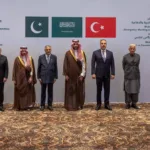
Washington launched an intensive diplomatic effort led by President Donald Trump and Secretary of State Marco Rubio, while both Turkey and Qatar stepped in to mediate amid a flurry of regional diplomatic exchanges.
In a press briefing, U.S. State Department spokesperson Tammy Bruce characterized the events between Israel and Syria as a “misunderstanding rooted in historical tensions among southern factions like the Druze and Bedouins.” She emphasized that Secretary Rubio fully endorsed this interpretation.
Syria, in turn, called for an emergency UN Security Council session on Thursday, July 17, blaming Israel for the escalation and affirming its right to defend national sovereignty.
UN Secretary-General António Guterres condemned the Israeli airstrikes as an unacceptable escalation, citing “confirmed reports” of Israeli troop redeployments within the occupied Golan Heights. He reiterated the need to uphold the 1974 Disengagement Agreement.
UN Special Envoy for Syria Geir Pedersen called for an immediate ceasefire across all fronts and urged a return to local and international dialogue mechanisms to avoid a broader explosion in southern Syria.
Former Progressive Socialist Party leader Walid Jumblatt also weighed in, calling for direct talks between the Syrian government and Sweida’s key actors. He warned that “Israel does not protect the Druze—it exploits certain factions to advance its own agenda.”
Several Arab nations—including the UAE, Qatar, Saudi Arabia, Kuwait, Egypt, Algeria, Lebanon, and Iraq—issued official statements through the Arab League, the Gulf Cooperation Council, the International Union of Muslim Scholars, Hamas, and Hezbollah, all condemning the Israeli attacks and calling for urgent international action.
Challenges Facing the Ceasefire
Despite the agreement, multiple political and security challenges lie ahead. Rather than marking a definitive end to the crisis, the deal represents a transitional pause. Politically, the most pressing concern is the continued attempt to bypass state sovereignty by granting informal legitimacy to Israeli involvement through Sheikh al-Hijri’s religious authority under the guise of “protecting the Druze.”
On the security front, the risk of renewed clashes remains. Armed groups from both sides—including tribal militias from rural Daraa and factions loyal to Hijri—may reignite hostilities in Sweida or its surroundings. Such a relapse would reset the conflict to square one, now further complicated by heightened international entanglements that could constrain Damascus’s ability to respond.
Alongside these hurdles are growing social repercussions. Sweida’s reputation within broader Syrian society is taking a hit, especially following the Israeli strike on Damascus, which shocked millions. Local campaigns have emerged urging an economic boycott of Sweida residents.
While still limited in scope, such sentiment could escalate into broader social exclusion, threatening the province’s integration. University students and government employees from Sweida may soon face hostility simply for leaving the province.
Syria today is confronting more than a local skirmish in the south—it faces a national reckoning. The true test lies in citizens’ ability to discern real threats from fleeting allegiances. President al-Shara’s speech laid out the roadmap: rallying behind the state and adopting institutional solutions over factional impulses. As for confronting Israel—long skilled in exploiting internal fractures—it begins with denying it the opportunity to turn the south into a bargaining chip.