










Taiz stands as one of the most embattled cities in Yemen since the war erupted in 2015. Located in the country’s southwest, the city’s strategic position makes it a vital junction between northern and southern Yemen, as well as a gateway to the Bab al-Mandab Strait—one of the world’s most critical maritime chokepoints.
Despite its political and military significance, Taiz has borne the brunt of the conflict, enduring relentless violence and a prolonged siege by the Houthi movement. The conflict in Taiz extends far beyond military clashes, seeping into the economic, social, and humanitarian fabric of the city.
Military and Geographical Fragmentation
Taiz is one of Yemen’s most populous provinces. According to the 2004 census, it accounts for 12.16% of the nation’s total population. By 2009, Taiz had an estimated 2.7 million residents, with a population density of 26 people per square kilometer.
Administratively, the province comprises 23 districts, including three urban ones: Al-Muzaffar, Al-Qahirah, and Salh. Government forces currently control 12 districts, including these three urban centers as well as Al-Shamayatayn, Sabir Al-Mawadim, Al-Misrakh, Mashra‘a Wa Hadnan, Al-Ma‘afir, Al-Mawasit, Jabal Habashy, and Al-Salu.
Meanwhile, the Houthis maintain control over seven districts: Al-Ta’iziyah, Khadir, Shar‘ab al-Salam, Shar‘ab al-Rawnah, Mawiyah, Hayfan, and Maqbanah. The “Joint Forces” control the western coastal districts of Dhubab, Mokha, Al-Wazi’iyah, and Mawza.
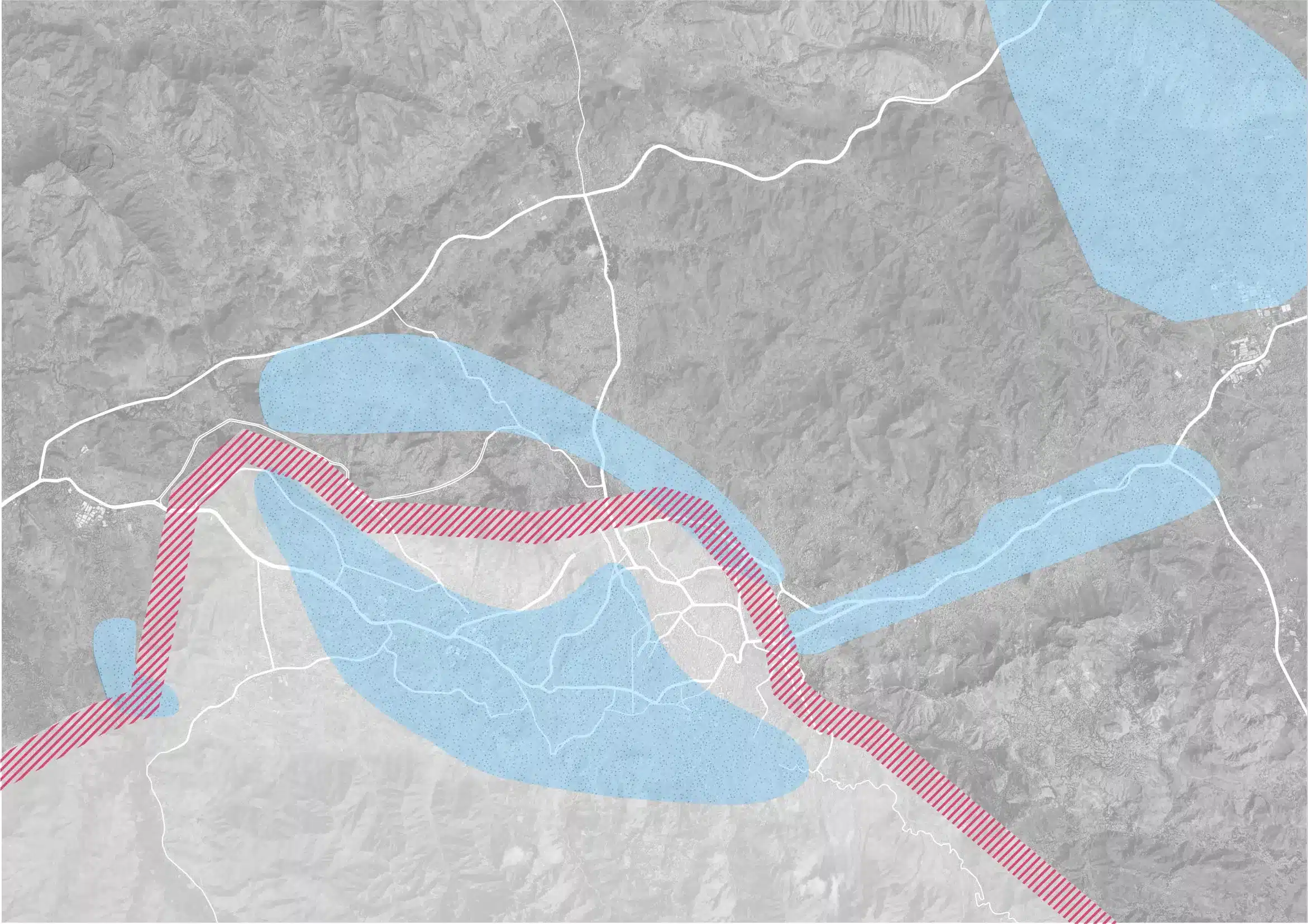
Situated in the southwest of Yemen, Taiz connects the northern and southern governorates. It borders Ibb and Al-Hudaydah to the north, parts of Lahij and Al-Dhale‘ to the east, the Red Sea to the west, and Lahij again to the south. The provincial capital lies approximately 256 kilometers from Sana’a.
This geography grants Taiz exceptional strategic weight, linking the Red Sea to the Arabian Gulf via Bab al-Mandab.
Journalist and political analyst Yaseen Al-Tamimi underscores Taiz’s geostrategic role, noting its vantage point over Bab al-Mandab and its pivotal position in both land and maritime transportation networks.
Al-Tamimi argues that Taiz’s location makes it a central player in the regional tug-of-war over Yemen’s future. “Taiz is more than geography,” he says. “It’s home to the country’s largest population bloc, making it a key pillar of national stability. Its residents have consistently supported a unified Yemeni state, reflecting deep-rooted patriotism and national unity.”
On the economic front, Al-Tamimi points to Taiz’s historical commercial importance, particularly the Mokha Port, which thrived during the height of Yemen’s coffee trade. “Today,” he notes, “Mokha’s commercial role is expected to grow, especially in serving the al-Janad region and neighboring provinces. Its export potential is tied to an emerging industrial base in the area.”
Taiz: Revolutionary Legacy and Wartime Tragedy
Taiz has long played a central role in shaping modern Yemeni history. It has been a cradle of revolutionary movements—from the 1962 uprising against the imamate to the 1963 revolt against British colonialism in the south.
The city remained a political catalyst throughout the decades. In recent history, Taiz was a launchpad for the February 11, 2011 uprising that led to the fall of President Ali Abdullah Saleh. Widely regarded as the “capital of the revolution,” the city became the heart of Yemen’s protest movement.
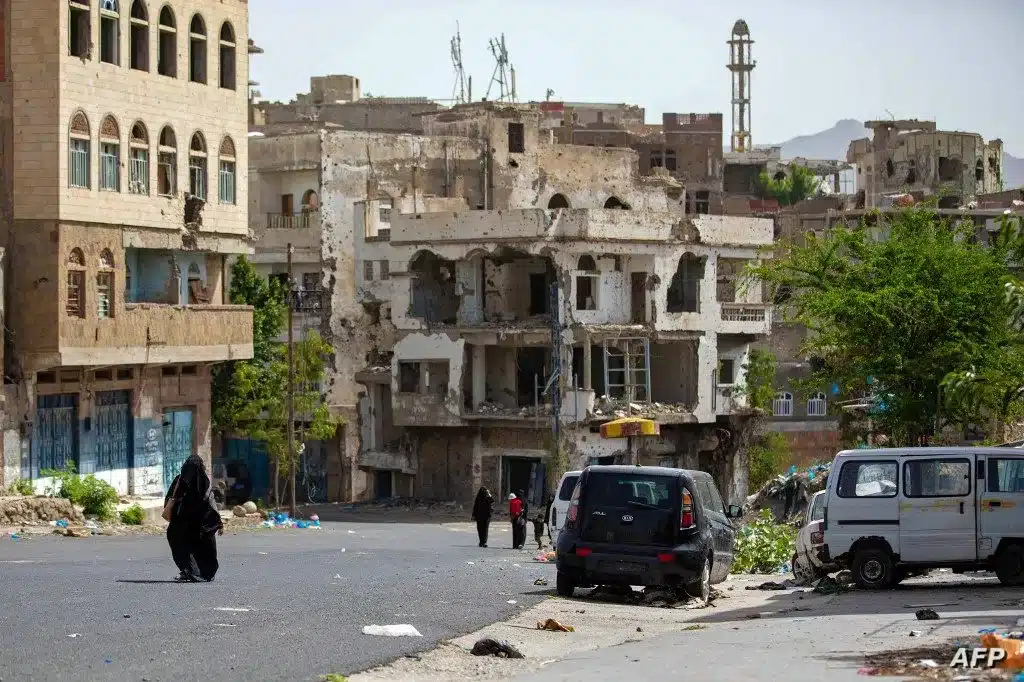
Beyond politics, Taiz is a renowned center of learning and culture. The ancient Mokha Port once served as a vital hub for exporting Yemeni coffee to global markets, cementing the city’s place in regional commerce for centuries.
The Siege and Its Humanitarian and Economic Fallout
Once a bustling center of life and trade, Taiz now epitomizes the human cost of Yemen’s war. Since the Houthis imposed a blockade on the city in 2015, Taiz has been encircled on all sides. Most major roads leading into the city remain closed, forcing residents to take long, hazardous routes. This has caused a dramatic deterioration in humanitarian conditions.
The blockade has severely limited access to food, medicine, and other essential goods. Prices for basic items have soared to record levels, worsening the daily struggle for residents.
Maher Al-Absi, Director of the Office for Siege Affairs, calls the ongoing blockade “a humanitarian catastrophe that threatens the lives of patients and constitutes a flagrant violation of human rights.”
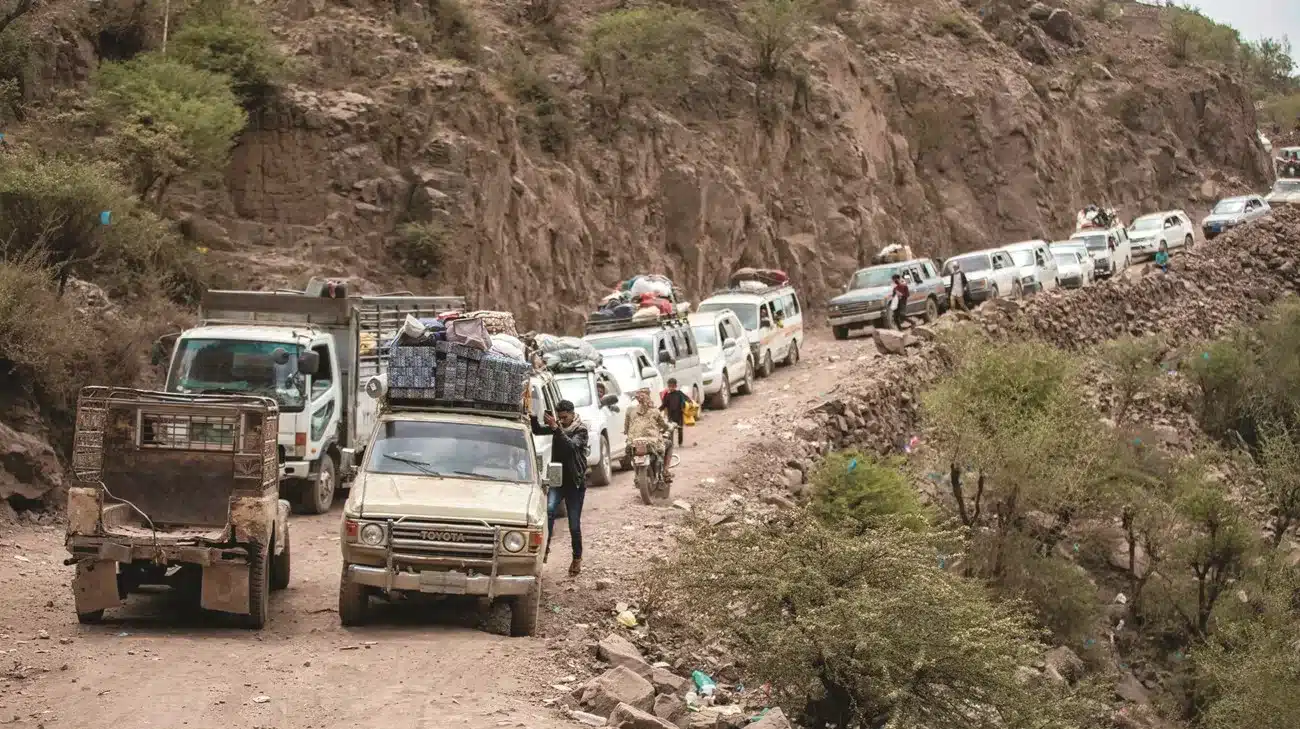
Speaking to NoonPost, Al-Absi noted that the blockade has triggered massive price hikes within Taiz, burdening residents and disrupting daily life. He added that commercial losses—due to truck accidents and treacherous routes—have further driven up transportation costs, which in turn inflate prices of food and goods.
Al-Absi emphasized the urgent need to reopen three main roads east and north of the city: Hawdh Al-Ashraf–Sana’a Junction, Kalabah–Sana’a Junction, and Asifra–Al-Hawjalah. He called on the international community to pressure the Houthis to lift the blockade, open all routes, and allow humanitarian aid—especially medical supplies—into the city.
He also highlighted a water crisis affecting 75% of the population, the destruction of 50% of the road network, and a 1000% increase in travel costs. Transporting goods has become so expensive that prices in Taiz are now 35% higher than in liberated areas.
The siege has prevented the construction of an oxygen plant capable of producing 300 cylinders daily and halted plans for two prosthetic limb centers.
The blockade has damaged 180 schools, forced 31 to close, and affected 32,000 students. An estimated 8,000 university students can no longer access their institutions.
Business closures, fuel shortages, and job losses have also taken their toll. Around 9,000 workers have been impacted, while landmine incidents have resulted in 1,700 casualties. Some 258 homes and 40 commercial facilities have been damaged, and 718 civilians have been abducted.
A Single Access Point
After nine years under siege, the Houthis announced in June 2024 the reopening of the Qasr Roundabout Road to ease movement within the city. Though a step forward, this limited access route does not address the broader humanitarian crisis.
Taiz’s residents continue to grapple with rising costs, currency depreciation, and difficult transportation routes. The poor condition of alternative roads raises both logistical and safety concerns.
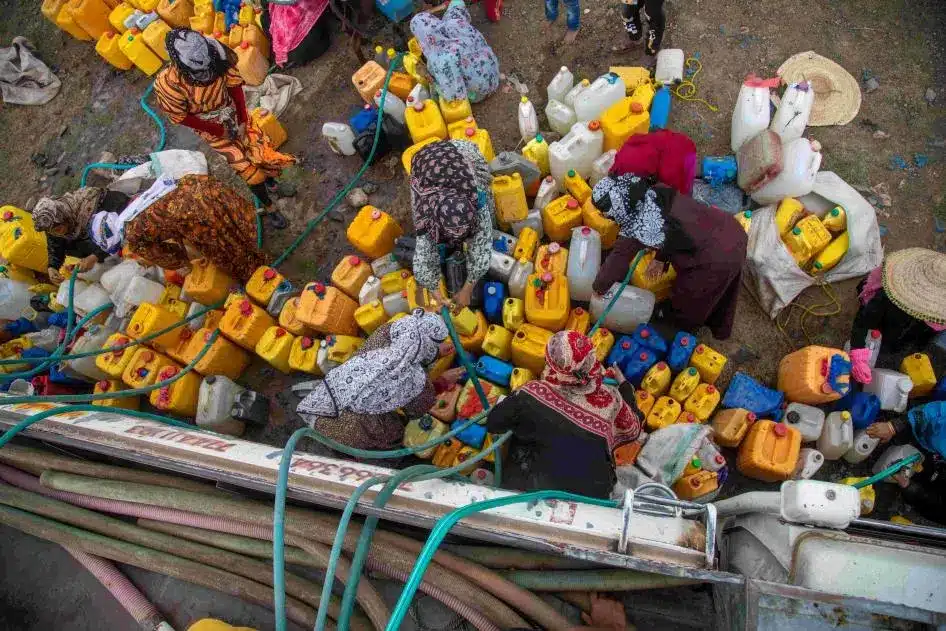
Despite this slight improvement, security remains precarious, and logistical hurdles persist. Most of Taiz remains difficult to access, intensifying hardships for people seeking essentials and services.
Before the partial reopening, residents had to navigate treacherous terrain daily. Ahmed Al-Sabri, an employee at a factory in Taiz, described his experience to Noon Post:
“Before the war, life was relatively normal. I used to reach work in 15 minutes. Now, the main roads are closed, and the alternatives are unsafe and exhausting. My commute takes hours, especially during bad weather or at night. Sometimes I can only afford to go home once a month.”
Ongoing Challenges and Hopes for Peace
Despite persistent challenges, many in Taiz still hope for a political resolution that will open more roads and end the city’s suffering.
Nabeel Abdul Hafeez, Deputy Minister of Legal and Human Rights Affairs in Yemen’s internationally recognized government, told Noon Post that the siege of Taiz is “a crime against humanity that must end immediately.”
He described it as a systematic campaign targeting civilians and inflicting indiscriminate suffering. The blockade, he argued, has severely deepened the city’s humanitarian crisis, making daily life increasingly unbearable.
Abdul Hafeez asserted that the siege is being used as a punitive measure against Taiz’s resistance, violating international law. He also condemned the continued shelling of civilians, calling it a war crime.
He accused the Houthis of stalling and exploiting the blockade for political leverage, obstructing international peace efforts. He stressed that any viable peace agreement must include an end to the siege, urging the global community to apply pressure on the Houthis to lift it and allow the flow of humanitarian aid into the city.


