






Amid the smoke of a widening conflict between Iran, the United States, and Israel, Pakistan has abruptly stepped forward as a self-appointed intermediary particularly as the flames of confrontation begin to lick the edges of the Gulf states.
This time, the mediator’s chair is not occupied by Oman, Qatar, or a European power, but by a South Asian nation that shares a long border with Iran, maintains security ties with Riyadh and Washington, and notably hosts no American military bases.
Islamabad’s emergence at this moment raises a complex question: are we witnessing a fleeting diplomatic role imposed by war and the collapse of traditional channels, or a deliberate Pakistani effort to redefine its position between Tehran, Washington, the Gulf, and the wider maritime arena?
Why Pakistan Now?
Pakistan’s sudden appearance as a mediator is no coincidence, but rather the product of a convergence of specific circumstances.
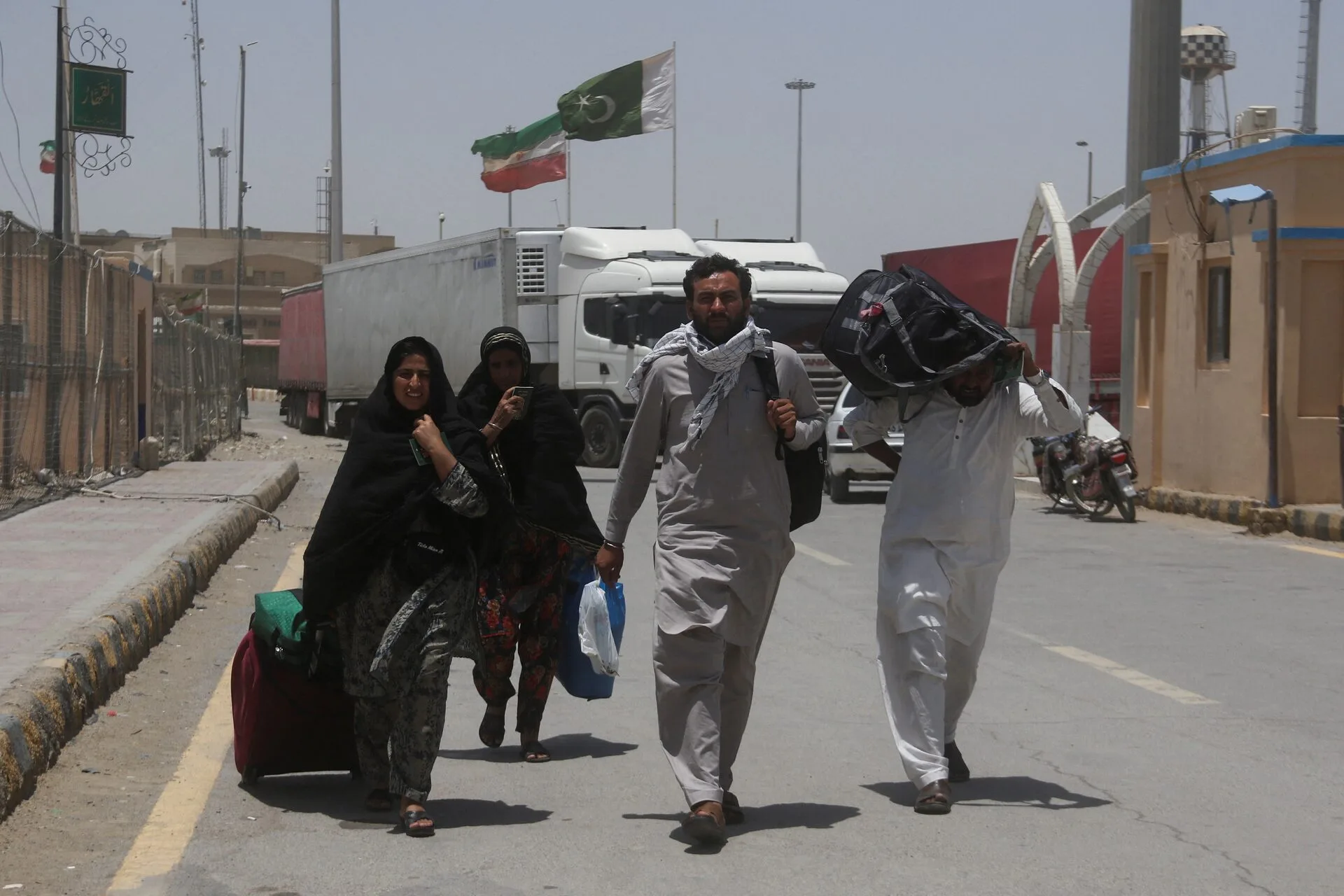
First, Pakistan shares a roughly 900-kilometer land border with Iran, inhabited by Baloch tribes that move across both sides. The collapse of the Iranian state, therefore, threatens to turn this frontier into an ungoverned space a scenario Islamabad warned of in June 2025, when a 12-day confrontation erupted between Tehran and Tel Aviv.
At the time, Pakistan’s army chief, Asim Munir, reportedly told U.S. President Donald Trump that chaos in Iran would embolden what he described as “Baloch separatist groups” along the border to launch attacks inside Pakistan making de-escalation an urgent priority.
Second, Pakistan maintains a rare balance in its relations with both Washington and Tehran. Since 1979, it has hosted an Iranian interests section within its embassy in Washington, preserving a legal channel for communication even after formal diplomatic ties were severed.
That legacy has regained relevance during the current conflict. Reuters reported that Pakistani officials relayed at least six messages between the United States and Iran in the early weeks of the war.
At the same time, the government of Shehbaz Sharif and the military establishment have strengthened ties with the Trump administration through meetings at the White House, providing Islamabad with direct access to U.S. decision-making circles.
Third, Pakistan is not a party to the ongoing military confrontation. While it maintains a defense agreement with Saudi Arabia, it hosts no U.S. bases. Although Washington and Riyadh have previously sought logistical support, Islamabad has consistently refused to allow foreign troops on its soil.
From Tehran’s perspective, this relative neutrality gives Pakistan more distance than Qatar or Oman, both of which host U.S. military facilities. Moreover, Pakistan does not recognize Israel, facilitating communication with Iran. It is also home to the world’s second-largest Shiite population after Iran, making it particularly sensitive to the war’s repercussions.
Fourth, domestically, Pakistan’s economy remains fragile especially in the energy sector. Most of its fuel supplies pass through the Strait of Hormuz.
When Iran closed the strait at the onset of the war, prices surged, sparking protests across Pakistani cities. The government responded by shutting schools for two weeks and cutting fuel consumption in state institutions to manage the crisis making the reopening of the strait an urgent national priority.
What Does Islamabad Seek from Mediation?
Pakistani officials have framed their efforts around “ending the war” and promoting “dialogue and diplomacy.” Yet a closer look at their interests reveals a set of layered motivations:
1. Preventing the war from spilling inward:
Warnings about the Iran border turning into an ungoverned zone underscore a powerful security concern. Islamabad is already battling the Pakistani Taliban and conducting strikes inside Afghanistan; it has no appetite for opening another front with Baloch groups potentially energized by Iranian instability.
2. Safeguarding energy supplies and trade:
After the closure of Hormuz, Pakistan asked Saudi Arabia to reroute part of its oil shipments through the Red Sea port of Yanbu, as most imports had previously passed through the strait. The government also imposed austerity measures to manage the fuel crisis.
The immediate goal of Pakistan’s diplomatic push, therefore, is either to reopen the maritime corridor or establish alternative arrangements ensuring the steady flow of oil and goods. This is reflected in proposals Islamabad has floated with Turkey, Egypt, and Saudi Arabia to form a coalition to manage the strait or introduce toll mechanisms akin to the Suez Canal.
3. Boosting its standing with Washington and the Gulf:
Analysts suggest Islamabad is leveraging mediation to strengthen ties with the United States. A report by the Center for a New American Security (CNAS) noted that a successful mediation effort would provide Pakistan with a “significant boost” in relations with the Trump administration after years of strain.
At the same time, the Pakistani military is positioning itself as a reliable partner for Saudi Arabia, Turkey, and Egypt in preventing the conflict’s expansion potentially unlocking economic and political support from Gulf allies.
4. Converting geography into logistical influence:
Another theory holds that Islamabad seeks to capitalize on disrupted shipping routes by promoting its Arabian Sea ports as alternative corridors.
Indeed, reports indicate that in October 2025, the Pakistani military presented Washington with a plan to build a new port in Pasni, Balochistan, granting U.S. investors access to Pakistan’s mineral resources.
The proposal excludes the establishment of U.S. military bases and instead focuses on linking the port to railway lines across western Pakistan.
Leverage and Limits of Mediation
Pakistan’s ability to play a mediating role rests on several assets but also faces clear constraints.
Strengths
1. Multiple communication channels:
Islamabad benefits from open lines of communication with both Washington and Tehran. Its personal connections with figures in the White House such as special envoy Steve Witkoff and Jared Kushner alongside its hosting of Iran’s interests section, allow it to transmit messages quickly between the two sides.
2. Relative trust from all parties:
Pakistan’s refusal to host U.S. bases and its cautious approach toward Iran have earned it a degree of credibility. Tehran’s decision to allow twenty Pakistan-flagged vessels to pass through the strait in late March signaled goodwill.
Simultaneously, Pakistan’s defense ties with Saudi Arabia and close relations with Turkey and Egypt position it to convene Arab and Muslim actors at the same table.
Still, this trust remains limited. Iran is demanding guarantees against attacks, compensation, and control over the strait conditions that complicate any settlement beyond Pakistan’s capacity alone.
3. Chinese backing and regional alignments:
China has endorsed Pakistan’s initiative, issuing a joint five-point plan calling for an immediate ceasefire and respect for freedom of navigation in the Strait of Hormuz.
While this support strengthens Islamabad’s hand, it also ties mediation to Beijing’s interests particularly its heavy investments in Gwadar port and the China–Pakistan Economic Corridor. Any escalation in Iran could threaten these projects, prompting China to act behind the scenes.
Key Challenges
1. Limited leverage:
Pakistan lacks the military and economic tools needed to impose an agreement on the warring parties. It remains economically dependent on Gulf aid and Chinese support, and its naval capabilities are modest. Meanwhile, armed groups along its borders expose it to instability if the conflict drags on.
Even proposals about managing the strait would require approval from major powers such as the United States, Iran, and Saudi Arabia suggesting Islamabad’s role may remain confined to backchannel diplomacy until a broader settlement emerges.
2. An uncertain timeframe:
There is a real possibility that Pakistan’s role is temporary, born of the breakdown of traditional mediation channels.
Although Islamabad has hosted meetings involving Turkey, Egypt, and Saudi Arabia to develop proposals on Hormuz, it has yet to secure formal commitments from Washington or Tehran for direct talks.
Meanwhile, countries such as Iraq and Oman are seeking to re-enter the diplomatic arena. Pakistan’s role could therefore fade as soon as established mediation tracks are restored or if positions harden on both sides.