







هذا التقرير متاح أيضًا بـ العربية
Israel has never been a danger to Palestine alone since the very idea of its founding. The plans devised by the founding Zionists aimed to reshape the region in line with their settler-colonial visions, which they had decided from the outset would know no borders. This was made clear in a famous quote attributed to one of their foremost leaders, David Ben-Gurion: “Israel’s borders are wherever the boots of the last Israeli soldier reach.”
Although this quote dates back decades, it seems to offer the best explanation for the escalating series of violations committed by the Israeli occupation in southern Syria. It also aligns perfectly with the statements of current Israeli officials. In a radio interview, Israeli Finance Minister Bezalel Smotrich incited the occupation of additional territory, saying: “This war must end with changing Israel’s borders — in Gaza, Lebanon, Syria, and Judea and Samaria.”
The significance of these statements is not limited to rhetoric; it extends to the simultaneous developments on the ground they point to. Indeed, the Israeli occupation army now controls the strategic Mount Hermon area and large parts of the countryside of Syria’s Quneitra province after violating the 1974 disengagement agreement, while continuing a series of violations and incursions that have not been limited to military actions alone but have also included repeated settler incursions into land in the country’s south.
At the same time, with negotiations with the Syrian government over a new agreement stalled, “Tel Aviv” is exploiting this reality to impose a new fait accompli in southern Syria, at a moment when political tools of influence intersect with field and security tools.
All of this raises historical questions that take us back to the starting point for unpacking the current context: What is the basis of Israeli settler discourse toward Syria? Which parts are intended for occupation? Where are they mentioned in Jewish literature? And do Syrian lands fundamentally fall within Israel’s “Promised Land”?
How did Israeli expansionist discourse toward Syria evolve?
Since the earliest beginnings of the Zionist project, Syria has occupied a central place in settler-colonial conceptions, with parts of Syrian territory included among the demands put forward by Chaim Weizmann, one of the leading founders of the Zionist movement, during the 1919 Paris Peace Conference in the context of efforts to establish a national home for the Jews. The conference was a pivotal moment that moved the Zionist project from the realm of political promises to a path of legal and international recognition.
Weizmann, who headed the Zionist delegation at the conference, argued that “the eastern border of the Jewish homeland begins directly west of the Hejaz Railway line running from Damascus through Amman to Medina.” Zionist demands also stressed the strategic importance of Mount Hermon as a vital water source for the envisioned Jewish state.
These demands reflected early on the expansionist impulse embedded in Zionist thought an impulse that did not recede even after the declaration of the establishment of “Israel” on Palestinian land on May 14, 1948. David Ben-Gurion deliberately refrained from defining final borders for the nascent state, based on an expansionist conception that went beyond the borders of historic Palestine.
As stated in one of his letters to the General Staff in May 1948: “We must move to the offensive. Our aim is to crush Lebanon, Transjordan and Syria; we will eliminate Transjordan, Syria will fall into our hands, and then we will advance toward Port Said, Alexandria and Sinai.”
Over the following years, tensions escalated between “Israel” and Syria, which became one of the hottest Arab fronts because of border disputes and conflict over water resources, especially the course of the Jordan River. After the occupation of the Golan in 1967, later Israeli testimonies revealed that the decision to seize the plateau was not merely the product of wartime circumstances, but rather an extension of premeditated intent.
In an interview published 16 years after his death, admitted Moshe Dayan, then Israel’s defense minister, that “Israel” had initiated the escalation in most clashes with Syria before the war, explaining that they would send tractors into demilitarized zones knowing in advance that the Syrians would open fire, thereby providing a pretext for broader military attacks.
Dayan also refuted the Israeli narrative that presented the occupation of the Golan as a defensive necessity against the Syrian threat, confirming that pressure from settlers coveting the fertile agricultural land played a central role in pushing for the occupation of the plateau. This is reinforced by the fact that “Israel,” less than a month after occupying the Golan, began establishing its first settlements there as part of a systematic settlement policy aimed at entrenching control over the land and imposing new facts on the ground.
However, the repercussions of the 1973 and 1982 wars gradually pushed Israeli discourse away from direct expansionism toward a partition-based approach, with increasing focus on consolidating territorial gains and perpetuating control over occupied areas. This shift was clearly reflected in the document by Oded Yinon, an adviser to former Israeli Prime Minister Ariel Sharon, titled “A Strategy for “Israel” in the 1980s,” which held that “the dissolution of Syria into ethnic or sectarian entities, along the lines of the Lebanese model, represents Israel’s supreme objective on the eastern front in the long term.”
Over the following decades, Tel Aviv continued to adopt this approach, especially after the outbreak of the Syrian revolution, as partitionist discourse emerged as the dominant feature of Israel’s vision toward Syria. “Israel” saw in the continuation of internal conflict and the attrition of Syrian forces an opportunity to remove Syria from the Arab-Israeli conflict equation by pushing toward a reality of fragmentation and sectarian and ethnic division.
In 2016, at the height of the Syrian war, the director general of “Israel’s” Intelligence Ministry said that partition constituted “the only possible solution,” adding that “Syria should be divided into areas controlled by the groups present there: the Alawites in their areas, the Sunnis in theirs.”
With the fall of the Assad regime, Israeli expansionist discourse returned to the fore more clearly, as Israeli figures quickly called for expanding military control inside Syrian territory. Within hours, called for Israeli Diaspora Affairs Minister Amichai Chikli to reoccupy the summit of Mount Hermon under the pretext of protecting settlements in the occupied Golan.
Within two days, Israeli forces had advanced into the Mount Hermon area and established positions there. Despite Israeli claims that the military presence was temporary and tied to the security situation, statements by Israeli Defense Minister Israel Katz about remaining there for an “unlimited period” reflected a tendency toward entrenching a long-term presence carrying clear implications of occupation.
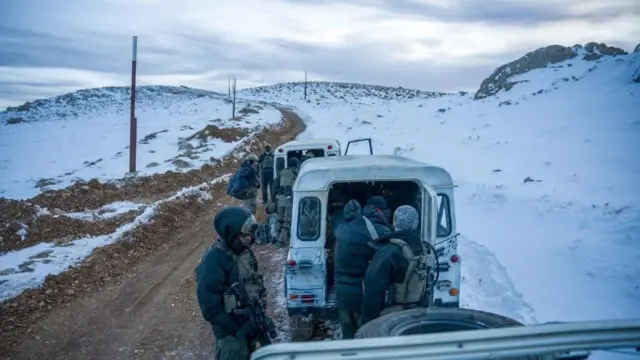
Meanwhile, made it a condition Israeli Prime Minister Benjamin Netanyahu, for any security understanding with Damascus, that an area stretching from Damascus to Mount Hermon be demilitarized a proposal that expands Israel’s security sphere deep inside Syrian territory by more than 70 kilometers, directly infringing on Syrian sovereignty.
The expansionist impulse appeared even more explicit in statements by Israeli Finance Minister Bezalel Smotrich, who spoke of a regional project to redraw borders, saying that there is “a political clause in Gaza to expand our borders, another clause extending in Lebanon to the Litani River within defensible borders, and a third extending into Syria up to the summit of Mount Beit Shean (Hermon) and at least the security zone.”
The on-the-ground reflection of Israeli discourse
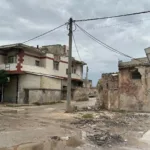
Israeli expansionist discourse toward Syria is being translated on the ground through near-daily incursions and violations, including the installation of smart military gates, land confiscation, and assaults and arrests targeting residents of southern Syria, in a relentless effort to impose a new fait accompli and seize more land.
Since Dec. 8, 2024, Israeli forces have established control over the UN-monitored buffer zone and occupied large parts of the demilitarized area stretching more than 75 kilometers, pushing deep into Quneitra province and parts of western rural Daraa, while setting up nine military points in an attempt to consolidate this presence and turn it from a temporary deployment into a permanent reality.
To that end, “Israel” has followed a deliberate, gradual plan based on slow, continuous expansion, relying primarily on a policy of systematic violations. The “Sijil” center, which specializes in monitoring Israeli operations in Syria, documented at least 1,672 violations inside Syrian territory between August 2025 and May 2026. They peaked in March, when Israeli forces carried out more than 321 military operations, including 121 airstrikes, in addition to the arrest of 41 civilians the highest monthly rate the center has documented so far.
Israeli violations are concentrated in Quneitra province as the main theater of operations, especially in the center of the province and its northern countryside, including the villages of Ofania, Khan Arnabeh and Jabata al-Khashab, where Israeli forces established a military point that they later developed into a fortified base following extensive bulldozing operations affecting about 2,500 dunams of forest and agricultural land.
Although Israeli operations in Daraa province appear fewer in number, they are more selective in nature, relying mainly on targeted artillery shelling and swift nighttime raids rather than broad military sweep operations, according to the same center.
Israel’s expansionist methodology has also extended to spraying unknown chemicals over agricultural land and pastures adjacent to the buffer strip, damaging wide areas of green land. In southern rural Quneitra alone, an estimated 3,500 dunams of pastureland were affected, in a move seen as aimed at displacing residents and destroying their livelihoods in preparation for seizing their land.
At the same time, the Israeli army has worked to establish a new security fence stretching for dozens of kilometers inside Syrian territory. The center documented the construction of four military gates, each serving a specific operational function. This project is based on strategic control of commanding natural high ground, ensuring permanent surveillance capabilities and broad fire control covering the depth of southern Syria.
In the same context, launched “Israel” recently launched several security- and technology-oriented projects to reshape its border with Syria. The US company Ondas Holding stands out as one of the main parties involved in this process, presented as being responsible for contracts related to technological surveying and demining operations along the eastern border. It has also obtained an additional contract to clear mines from the Syrian-Israeli border.
These projects come as part of a broader plan led by the Israeli Defense Ministry to build a massive wall along the Syrian-Jordanian border, known as the “Eastern Border Security Barrier,” at an estimated cost of about $1.7 billion and a length of roughly 500 kilometers.
According to analyses by the Sijil center, these projects fall within a broader context intersecting with ongoing military movements aimed at redrawing field geography through a strategy of gradual encroachment and the imposition of new military facts, effectively undermining the obligations of the 1974 agreement and integrating parts of Syrian geography into an Israeli buffer security system.
Biblically: Is Syria part of the “Promised Land”?
The methodology “Israel” is pursuing in southern Syria appears closer to the slow annexation policy it has followed for years in the West Bank, not only through similar actions on the ground but also through the adoption of biblical religious discourse used to justify violations and expansionist policies. This makes it important to shed light on Syria’s place in Zionist biblical discourse for a broader understanding of Tel Aviv’s settler intentions in Syrian territory.
The “Promised Land” is a core ideological and religious pillar in Jewish thought and Zionism, and settlement plans proceed from it. So is Syria part of the Promised Land?
Part of the answer lies in a study by Israeli academic Yoel Elitzur, a researcher who offers biblical interpretations used to support settler visions. He published it through the Har Etzion Institute, one of the most prominent institutions of religious Zionism in “Israel,” which describes itself as having led settlement projects and helped merge religious study with service in the Israeli army.
From the two biblical verses:
- “I will set your borders from the Red Sea to the Sea of the Philistines, and from the wilderness to the Euphrates” (Exodus 23:31).
- “The Lord will drive out all these nations before you, and you will dispossess nations greater and mightier than yourselves. Every place on which the sole of your foot treads shall be yours. Your territory shall be from the wilderness to Lebanon, and from the River, the Euphrates, to the western sea.” Deuteronomy (11:23-24).
The Israeli researcher concludes in his paper titled “The Borders of the Promised Land of Israel” what indicates Syria is mentioned in the following way:
- The Euphrates River and the northern region: The Euphrates is considered the northern boundary in the texts cited by the author, who explains that what is meant is the river’s northwestern section, specifically at the river’s “knee,” the area that today includes an artificial basin adjacent to the Syrian town of Maskanah, about 50 miles southeast of Aleppo.
- The Syrian desert (the eastern boundary): The author interprets the “wilderness” mentioned in the texts as a border limit to mean the great Syrian desert east of the inhabited areas of eastern Jordan.
- Mount Hermon and the Anti-Lebanon mountain range: The author argues that the mention of “Lebanon” as a boundary refers to the Anti-Lebanon mountains, noting that this range begins at Mount Hermon (Jabal al-Sheikh) and extends northeastward; these are the mountains east of the Beqaa Valley.
- Damascus and its countryside: The author infers that the Anti-Lebanon mountains are what is meant because they overlook Damascus and Damascus can be seen from them, pointing to a biblical description of a tower in Lebanon “looking toward Damascus.” He also defines the border line as passing along the northeastern slopes of these mountains near the Syrian town of al-Qaryatayn, then heading north toward the “knee” of the Euphrates.
Elitzur concludes that what was formerly known as “Greater Syria,” located between Egypt and Mesopotamia, constitutes the final and destined borders of “Israel,” extending to include the entire Fertile Crescent as part of a long-term religious strategic vision. He stresses that these borders are not merely “divine promises” awaiting fulfillment by God, but rather a commandment and practical mission that the people were ordered to realize and settle when circumstances permit.
The study speaks of two strategic phases for the borders of the “Land of Israel”:
Phase (A) is the limited borders designated for immediate conquest and settlement, suited to population size and intended to prevent the land from falling into ruin.
Phase (B) is the expanded borders that include “Greater Syria” from Egypt to the Euphrates, considered a future goal and a binding legitimate commandment to be realized gradually as the population increases and full religious commitment is achieved.
It links this to a principle it calls “little by little,” based on the Torah a rule meaning that settlement will not be immediate but gradual, because the number of the Children of “Israel” when they entered the land was not sufficient to fill and settle the vast areas within the expanded borders.
Syria within the conception of the “Greater Israel” project
The biblical religious argument outlined above is also used to revive the “Greater Israel” project, which threatens Arab states including Syria. Israeli officials have promoted this over the past year. Among the most notable statements reflecting “Israel’s” adoption of this vision is what was expressed by Israeli Prime Minister Benjamin Netanyahu when he spoke of feeling that he was carrying out a “historic and spiritual mission” to establish what is known as “Greater Israel.”
This is not limited to political statements alone. A widely circulated image of an Israeli soldier wearing a military uniform bearing a map that includes Arab lands within the borders of “Israel” sparked widespread anger in Arab circles, as an indication that Tel Aviv continues to promote this expansionist conception.
The Greater Israel project is based on biblical narratives holding that the borders of the “Promised Land” extend “from the River of Egypt to the Euphrates.” This idea formed one of the early intellectual foundations of the Zionist movement. Theodor Herzl laid the political basis for this conception in his writings and diaries, as the concept moved from the diplomatically proposed idea of a “Jewish homeland” to a broader vision of a state encompassing parts of Sinai, Jordan, Lebanon and Syria. Since the Euphrates represented the eastern boundary of this vision, vast areas of Syrian geography were considered part of the biblical scope within which the future Jewish state should fall.
Later, attempts also emerged to give this vision a more detailed geographic and historical dimension, most notably what the Zionist researcher Rabbi Isaac presented in 1906 in his famous book “The True Boundaries of the Holy Land,” in which he drew the imagined borders of “Greater Israel.”
Large parts of Syrian territory occupied an important place in Isaac’s conception. In defining the northern borders, the rabbi considered the scope of “Greater Israel” to extend deep into present-day Syrian and Turkish geography, linking the biblical Mount Hor to the Amanus Mountains in the far northwest of Syria, in the Alexandretta region, then extending this reach to the Taurus Mountains, which he regarded as the farthest northern boundary.
He also reinterpreted the “entrance to Hamath” to place it near those mountain ranges, meaning northern Syria would be included within these borders, reaching as far as Aintab, which he considered the northeastern corner of the Promised Land.
As for the eastern borders, he drew a line descending from northern Syria through inland areas, locating the biblical Shepham in the area of Qalaat al-Madiq in Hama province, then passing through Riblah near the Orontes River before heading toward Damascus and its southeastern countryside through Wadi al-Liwa and Marj Buraq, placing the Syrian capital and its surroundings within the border zone he envisioned.
In southern Syria and the desert, Isaac’s vision included broad strategic areas. He indicated that the eastern border curves to include the volcanic Lajat region in southern Syria, in addition to the plains of Hauran and Gilead (located in the eastern highlands of the Jordan River), which he described as agriculturally and economically vital areas. He also considered Bosra al-Sham a border landmark from which the line heads south toward the Gulf of Aqaba, while his map also includes Mount Hermon, the Syrian coast and large parts of central Syria.
Yet the concept of “Greater Israel” did not remain confined to religious and biblical propositions or to the idea of direct geographic expansion. In later decades, it underwent a strategic shift toward approaches based on geopolitical dominance and reshaping the regional environment surrounding “Israel,” with the previously mentioned Yinon Plan emerging as a contemporary strategic dimension of the “Greater Israel” idea.
Unlike the traditional biblical argument, which focused on expanding formal borders based on religious and historical claims, Oded Yinon’s vision was based on ensuring Israeli superiority by fragmenting surrounding Arab states and turning them into small, weak and mutually hostile entities, thereby preventing the emergence of any regional power capable of threatening “Israel” politically or militarily. In this way, expansionist thought moved from the concept of “annexing land” to that of “dominating the surrounding environment” by reshaping the political and social structure of the region’s states.
Syria occupied a central place in this vision, as Yinon regarded it as one of the Arab states most susceptible to fragmentation because of its complex sectarian and ethnic composition. The plan focused on the existence of a ruling Alawite minority controlling a Sunni majority, considering these divisions an entry point for breaking the Syrian state into separate sectarian entities, including an Alawite state on the coast, a Sunni one inland and a Druze one in the south.
According to this conception, fragmenting Syria would weaken its central military capabilities, prevent the formation of any unified Arab front, and create weak “buffer zones” preoccupied with their internal conflicts, making them more dependent on outside powers and less capable of confronting “Israel.”
The Golan’s special place in Zionist narratives
When discussing Syria’s place in the Zionist imagination, one must pause at the case of the occupied Golan, which holds a special and central place in biblical-Zionist narratives. It is presented not merely as a border area of military importance, but as an organic part of the concept of the “Land of Israel” tied to the biblical promise and Jewish historical memory.
In Zionist literature, the Golan is invoked as a land where Jesus fulfilled 800-year-old prophecies and performed miracles. It is believed that he lived in Galilee, moved through the areas surrounding the Sea of Tiberias, and crossed east of the Jordan River — the area where the Golan lies — thus fulfilling Isaiah’s prophecy: “In the latter time he will honor the way of the sea, beyond the Jordan, Galilee of the nations” (Isaiah 9:1), in an effort to present the Golan as a land of sanctity and religious significance in the Judeo-Christian heritage and as a means of justifying its occupation.
That is not all. The biblical Zionist narrative claims that the Golan region was a divine promise granted by God to the “Children of Israel,” drawing on Deuteronomy — “God had given the city of Golan to the Children of ‘Israel’ during their wandering in the wilderness” — and the Tanakh, which states: “And the Lord had commanded the prophet Moses to designate six cities of refuge: three east of the Jordan River and three west of it, so that the unintentional killer might flee there; among them was ‘Golan in Bashan for the Manassites.’” Manasseh is believed to be the eldest son of the prophet Joseph and the grandson of “Israel” (the prophet Jacob, peace be upon him).
This Zionist vision is reflected in the statements of Israeli leaders since the occupation of the Golan. Less than two months after its seizure, Israeli Gen. Yigal Allon affirmed that the Golan “is no less important than Hebron and Nablus as part of ancient ‘Israel.’”
Beyond the religious conception of the Golan, biblical Zionist theories are employed as a justification for maintaining its occupation as part of an equation of “survival,” not merely geographic expansion. The claim to the Golan was framed not only as the recovery of a “historic right,” but also as a security, water and economic necessity to ensure the viability of a Jewish state.
This was stated in the Zionist memorandum submitted to the 1919 Paris Conference, which said that control over the headwaters was “indispensable” for sustainable economic and social growth, and that any Jewish state that did not control northern water resources — including the Golan and the Yarmouk — would be economically unviable.
But the paradox lies in the failure of Zionist archaeologists to discover any evidence proving biblical narratives in the Golan. Arab historians interested in critiquing biblical geography even suggest that the narratives related to the Syrian Golan are merely a projection of a place called Golan that does not lie within Syria’s borders.
Who is fueling expansionist discourse in Syria?
On the other hand, Zionist ideologues understood that narratives need people to embrace and promote them on the ground in order to turn from mere projects into lived reality and become applicable. For that reason, associations and settlement movements were established that adopted expansionist and settler discourse and pushed to spread it as widely as possible.
“Israel” worked from the outset to entrench its occupation by strengthening settlement through settler movements and bodies. In 1974, the Gush Emunim movement was founded as a fundamentalist religious movement aimed at retaining occupied lands, including the Golan, as part of the “Greater Land of Israel.” The movement worked to transform settlement from a mere security necessity into a religious and national duty.
Five years later, this movement established the Amana organization as a settlement arm concerned with building settlements and outposts in occupied territory. In 2013, the organization oversaw the construction of 36 housing units in the Katzrin settlement and also contributed to the development of the “Bnei Yehuda” neighborhood in the occupied Syrian Golan. Amana continues to work to this day to strengthen and expand the settlement presence.
On the political level, the Gush Emunim movement — which ceased to exist as a formal entity in the early 1980s — formed the “Land of Israel Lobby” in the Knesset, bringing together members from across the right-wing spectrum. Its task was to direct funds toward building new settlements and ensure continued political support for settlement, while also helping obstruct any negotiations between Syria and “Israel” based on the idea of “land for peace.”
In this context, the movement organized mass demonstrations and strong opposition against government policies that considered the principle of “land for peace” with Syria, arguing that biblical rules prohibit relinquishing any part of the lands conceived as part of the “Promised Land.”
Settlement in the Golan also received key support from “Yesha,” the regional council of settlements, which reached a formal agreement with the “Golan Settlements Committee” for joint cooperation against any possible Israeli withdrawal from the Golan Heights. Under this agreement, the council pledged to provide the funds and organizational means necessary for settler leaders in the Golan.
This council operates as an “unofficial” public body bringing together mayors and local authorities in occupied territory, and politically aims to promote settlers’ fears, pressure the government and Knesset members to prevent any territorial concessions, and strengthen settlement there.
While settlement activity in the Golan is clearly escalating — especially after the Israeli government approved a $334 million plan last April to strengthen settlement there — support for settlement in the rest of Syrian territory remains limited and nascent.
Even so, five incidents were recorded in which groups of settlers breached the border fence near Majdal Shams into Syrian territory. They were far-right activists belonging to a movement calling itself “Pioneers of Bashan,” which, according to Hebrew sources, “aims to strengthen settlement on the summit of Mount Hermon, in addition to enhancing the Israeli civilian presence in the Syrian border area.”
View this post on Instagram
This movement, founded in April 2025, claims that “settlement throughout the Bashan region is a natural continuation of settlement in the Golan, and will help stabilize the area, strengthen Israel’s security, and realize our historic right to the lands we lost.”
Behind the movement’s activity is far-right Israeli academic Amos Azaria, known as one of the most prominent advocates of expanding settlement activity beyond the borders of the occupied Palestinian territories, based on a conception that sees civilian settlement as a tool for entrenching the Israeli military presence and providing long-term cover for the deployment of the occupation army in the border areas of neighboring states.
Under his leadership, the movement seeks to mobilize Israeli public opinion and raise donations to support it and join its activities linked to storming Syrian territory under the slogan “Together toward realizing settlement in Bashan.” It is also trying to legitimize settlement in Syria, having launched an online petition on an Israeli petitions website calling on the Israeli ministerial cabinet to approve the establishment of settlements in southern Syria.
In the latest infiltration by a group of settlers affiliated with the movement, they declared that “without settling civilians, even long-term military endurance will not hold. We will remain here until they allow the families of the ‘Pioneers of Bashan’ movement to enter and live here. Help them and help all of us.”
In another incident reflecting their expansionist ambitions, more than 40 settlers crossed the border fence toward a destroyed Circassian village near the town of Breiqa in Quneitra province, appearing in a video laying the “cornerstone” for a new settlement outpost under the name “Navaeh Habashan.”
Although the Israeli army sends the settlers back each time they infiltrate and condemns these incursions, sources say it is impossible for them to enter Syrian territory without tacit approval from Israeli forces, noting that hundreds of miles of fencing separate the occupied Golan from Syrian territory and that the area is reinforced with hundreds of thousands of land mines.
Commenting on the movement’s activities, Israeli settlement monitor and Kerem Navot founder Dror Etkes, whose organization tracks Israeli land seizures in the West Bank, says it is proceeding according to the Israeli settlement movement’s method of changing reality on the ground until what was once impossible becomes reality, noting that this is the movement’s goal whether in Syria, Lebanon, Gaza or the West Bank.
Etkes, who observed settlers building their first outposts in the West Bank, says: “It has been nearly 58 years since this project began, and everything started illegally or semi-legally, without official authorization. This is a model they are trying to copy and paste in Syria and Lebanon. They are the same people, coming from the same places and the same ideological environments,” in a clear warning about the slow expansion “Israel” is pursuing in Syria.
Minorities … “Israel’s” tool for chaos
Israeli tools aimed at expanding settlement in Syrian territory have been numerous, but “minorities” have historically been one means “Israel” has tried to employ in this framework, within the strategy of the “periphery doctrine,” which is based on forging alliances with non-Arab or non-Sunni ethnic and religious minorities in order to ensure its dominance and consolidate its influence.
In Syria, the Druze minority emerged as a group “Israel” sought to court from the early stages of its establishment. In 1930, Zionist leader “Yitzhak Ben-Zvi” asked the political department of the Jewish Agency to look for channels of communication with Syria’s Druze through the Druze of Palestine. During the 1948 Nakba war, the nascent Israeli leadership floated the idea of sponsoring a Druze rebellion against the regime in Damascus to ease Arab military pressure from the north.
But the first clear Israeli attempts aimed at exploiting the Druze to weaken the Syrian state were recorded in 1954 during the Druze Jabal al-Arab revolt against the Syrian government led by Adib al-Shishakli. Israeli intelligence tried, via the border, to provide some local notables with information and facilitate channels of communication and coordination to inflame the rebellion against Damascus. It also launched a diplomatic and media campaign against Syria in international forums, portraying the Syrian regime as dictatorial and oppressive toward minorities.
After occupying the Golan, where the Druze are the majority, Yigal Allon proposed creating a buffer entity extending 70 kilometers east of the Golan to connect with Jabal al-Arab, the Druze stronghold in Syria, with the aim of inciting the Druze of the Golan to spark a revolt in Jabal al-Arab that would lead to the establishment of an independent Druze state allied with “Israel.” But the plan failed before it was approved because of the peace negotiations then underway between Syria and “Israel.”
This draft proposal was based on a confident assumption that the experience of “alliance” with the Druze inside occupied Palestine could be repeated, so the authorities worked to impose Israeli citizenship and alter national identity through educational reforms aimed at instilling loyalty to “Israel.”
Nevertheless, these efforts failed in the face of the firm resistance and strong attachment of the Druze of the Golan to their Syrian identity. The community used social and religious ostracism and denial of funeral rites against anyone who accepted Israeli citizenship. This failure reached its peak in the general strike of 1982 that confronted attempts at forced annexation, proving “Israel’s” inability to “reimagine” the identity of the Druze of the Golan or win them over as a subordinate minority despite harsh coercive policies.
Israeli interest in Syria’s Druze returned after 2011 within Tel Aviv’s “alliance of minorities” policy, particularly in the context of the geopolitical shifts accompanying the weakening of the Assad regime and the emergence of opposition forces with an Islamist character that “Israel” considers a threat to its security. This prompted it to exploit the Druze’s circumstances — especially amid threats targeting some villages — to present itself as a “protector” of minorities.
Projects were also floated involving the establishment of a buffer zone in southern Syria, and the war in Syria was portrayed as an opportunity for this minority to create an entity of its own.
But after the fall of the Assad regime, Tel Aviv found itself facing a greater opportunity to court the Druze, amid the cooling of their relationship with the emerging Syrian state on the one hand, and the appearance of the Alawites as a minority that could be inserted into the same equation, alongside the Kurds in northeastern Syria during the period of SDF administration, within a broader framework of the “alliance of minorities.”
From an Israeli perspective, these shifts appeared to offer space for political and security investment serving its arrangements of influence in the region.
In this context, what is known as the “David Corridor” or “Saladin Corridor” returned to the fore as one of the most prominent conceptions proposed for the post-regime period. The project, which was first proposed by Israeli academic David Kama in his 1975 book “The Conflict: Why and Until When?” is based on creating a “Druze-Israeli” corridor extending from southern Syria along the Jordanian border to the tri-border area with Iraq, where it would connect with Kurdish areas of influence in the northeast, creating a continuous geographic strip linking minority areas away from the center in Damascus.
According to these conceptions, the corridor aims to isolate the Syrian capital and surround it with politically and sectarianly heterogeneous peripheries, while creating something akin to a “natural barrier” in the Jabal al-Arab area to prevent the expansion of forces Tel Aviv sees as threatening, whether from the Turkish side or from Sunni Islamist groups.
The project also carries symbolic and political dimensions, as it has at times been promoted under the name “Saladin Corridor” in an attempt to appeal to the Kurds by invoking the symbolism of Saladin and presenting him as a historical leader “tolerant of Jews,” while the name “David Corridor,” with its biblical connotations, is used in internal Israeli discourse.
Indeed, Tel Aviv quickly moved to exploit tensions between the Druze and Syrian forces to reinforce this discourse. On April 30, 2025, Israeli Prime Minister Benjamin Netanyahu announced that the Israeli army had carried out a strike near Damascus to send a “firm message” to the Syrian authorities to protect the Druze community.
It later escalated its military intervention, especially after statements by Druze spiritual leader Hikmat al-Hijri calling on Netanyahu personally to intervene to protect the Druze, providing “Israel” with an ideal pretext to expand its “protection of minorities” discourse.
Thus, the Israeli army carried out strikes in July 2025 targeting Syrian government sites, including the Ministry of Defense building in Damascus, in addition to targeting government forces that had intervened to stop clashes between Druze and Bedouin groups in Sweida, which ended with those forces withdrawing.
At the same time, the Israeli occupation exploited these calls to demand the creation of a “humanitarian corridor” to Sweida under the pretext of delivering aid, in a step that observers saw as an attempt to revive the “David Corridor” project in practical form by entrenching a long-term geographic and security presence in southern Syria under humanitarian and minority-related cover.
But the project suffered a major blow after one of its most important geographic and political pillars receded namely, the areas controlled by the Syrian Democratic Forces, or SDF. The dissolution of the force and the signing of an agreement with the Syrian government to hand over the areas it had controlled undermined this idea.
By contrast, the decline in the project’s chances of implementation does not appear to mean that “Israel” has abandoned its bets inside Syria. Rather, it continues to provide various forms of military and “humanitarian” support to factions linked to Hikmat al-Hijri in Sweida, with the aim of expanding its influence within Syrian territory.
“Israel’s” objective in southern Syria
What has been discussed above regarding the history of Israeli expansionist discourse in Syria and its tools raises fundamental questions about the possible scenarios for the shape of Israeli presence and influence in Syria, especially in light of the continuing incursions and violations in southern Syria and the emergence of limited settlement activity.
In this context, Mahmoud Alloush, an expert in regional affairs, told NoonPost that “Israel wants to entrench a long-term reality of direct occupation in Syria, while gradually expanding this reality through the policy of forced displacement it is pursuing in southern Syria, especially in the villages of rural Quneitra.”
Alloush added that “Israel,” at the same time, is seeking to entrench indirect influence through support for Hikmat al-Hijri’s militias in Sweida, as Tel Aviv wants the Druze of Sweida to become a security proxy that serves its interests in southern Syria.
He argues that “Israel” is seeking to reach a model that combines direct occupation with reliance on local proxies to achieve its interests, noting a clear similarity between Israeli objectives in southern Lebanon and southern Syria, which are presented under the title of a “security belt” or “buffer zone,” while the real goal is to seize more land under security pretexts.
For his part, Wael Alwan, a researcher at the Jusoor Center for Studies, told NoonPost that “Israel” is seeking to entrench a claimed right to intervene in Syria whenever it sees that its interests or security require it, in a way that ensures the consolidation of its influence inside Syrian territory and keeps the new Syrian government in a state of weakness, preventing it from becoming a future source of threat.
Unlike Alloush, Alwan believes Tel Aviv is not moving toward direct geographic occupation of Syrian territory for several reasons, most notably regional and international pressures, especially from the United States, in addition to the Israeli army’s inability to bear new human costs after already being exhausted in Gaza and southern Lebanon. Therefore, he says, it will not open a new front for itself.
Alwan argues that Tel Aviv is trying to apply the southern Lebanon model to southern Syria, but within limited geographic sectors, aiming to create a devastated security belt through which it can carry out periodic inspection operations to ensure there are no cells threatening it, mainly because it fears waking up to a new Al-Aqsa Flood in any of its border areas, in his words.
In the same context, Alloush believes this Israeli security approach intersects with its desire to keep negotiations with the Syrian government frozen for as long as possible for three reasons: first, it attaches no real importance to the negotiating process; second, the continuation of the status quo serves its interests; and third, its objectives in Syria are expansionist in nature.
Alloush stresses that Syria is part of Israel’s expansionist scheme, just like Gaza, the West Bank and Lebanon. “Tel Aviv”, he says, sees Syria as an opportunity to occupy more of its territory, especially after Assad’s fall, because it believes the emerging state is incapable of challenging Israeli expansionism, amid the international community’s inability to stop its expansionist behavior in the region.
For his part, Alwan rules out Syria being part of Israeli settlement plans and proposes three expected scenarios for the shape of the Israeli presence: first, the continuation of chaos along the Syrian-Israeli border as conflict zones rather than settlements; second, de-escalation leading to a ceasefire that reduces attacks without stopping them, leaving the area in a state of constant anxiety; and third — which he sees as unlikely and difficult to achieve — the establishment of a joint economic zone with US backing.
In conclusion, history shows that Israeli expansion was not the product of a passing moment, but the result of settlement projects that were planned and implemented gradually and cumulatively through political, security and military tools similar to those being used today in southern Syria.
Accordingly, reviewing Israeli discourse related to Syria is not intended to draw definitive conclusions so much as it is an attempt to read early indicators and warn of the possibility of a future settler threat.