







“Were it not for certain factions of the Popular Mobilization Forces (PMF) that have been fighting on Syrian territory for the past six years, the Syrian regime would have fallen into the hands of ISIS,” said Ahmad al-Asadi, the PMF’s media official in Iraq, on August 14, 2017.
Iraqi militias began supporting the Syrian regime in the early days of the Syrian uprising in 2011. Fighters from the Mahdi Army, affiliated with the Sadrist Movement, entered Syria in November 2011, according to Anbar’s then-governor Qassim Mohammed al-Fahdawi, who said he had obtained evidence confirming the entry of armed Mahdi Army elements into Syria to assist the now-ousted regime.
The Syrian Network for Human Rights documented at least ten massacres committed between March 2011 and December 2014 by Shiite militias—including Iraqi factions—alongside Syrian government forces, resulting in the deaths of no fewer than 1,005 people.
The PMF or Its Factions?
Since 2003, Tehran has viewed Iraq as an opportunity to expand its influence by backing Shiite armed factions, many of which later became part of the PMF. Established in 2014 to combat ISIS, the PMF was eventually incorporated into Iraq’s formal military structure and placed under the armed forces.
On November 26, 2016, the Iraqi parliament passed the Popular Mobilization Commission law, amid a boycott by lawmakers from the Sunni Iraqi Forces Alliance, who described the legislation as “a blow to national partnership.”
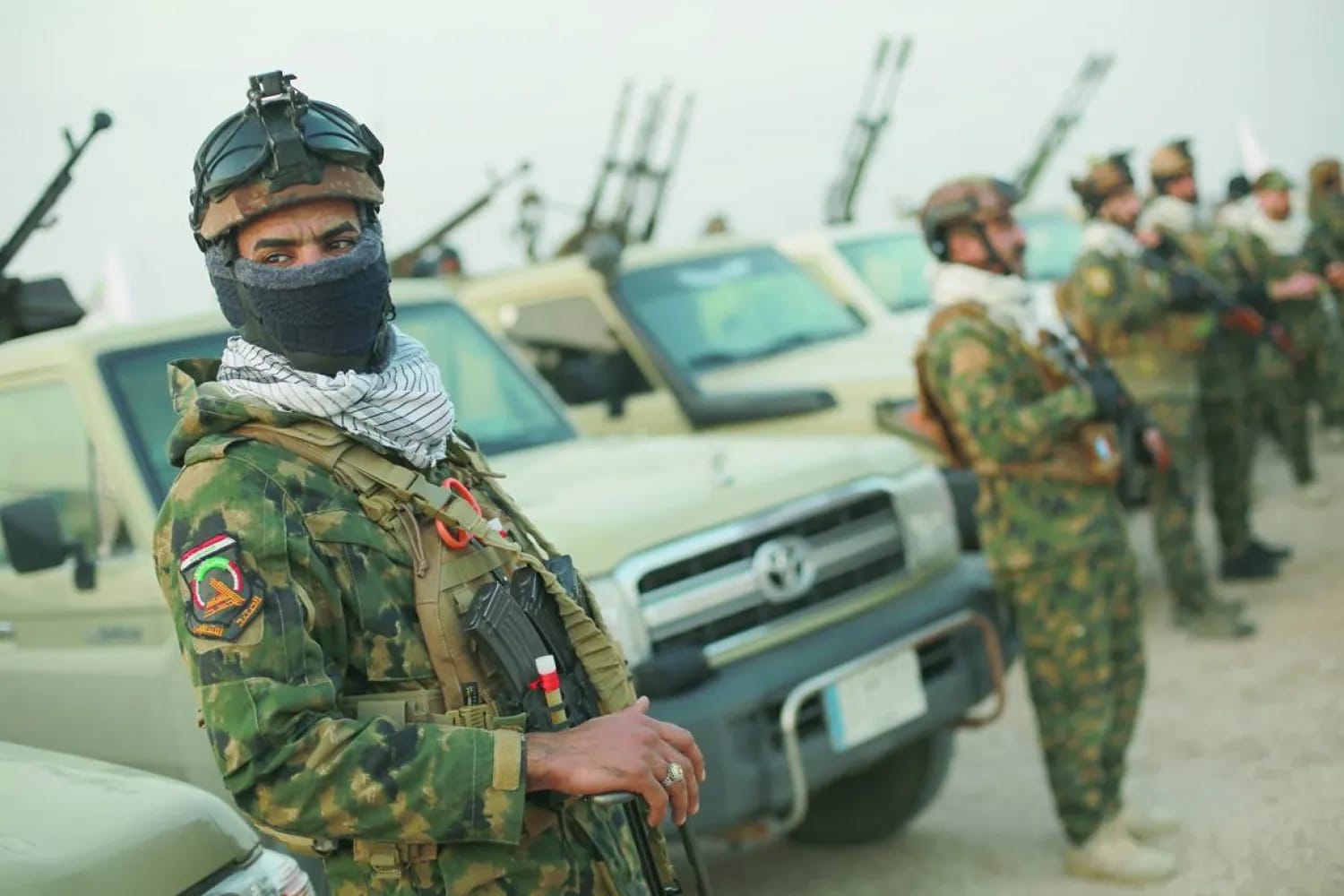
Despite the PMF’s denial of involvement in combat operations in Syria, factions operating under its umbrella supported the Syrian army in battles against armed opposition groups. These included Kataib Hezbollah, Harakat al-Nujaba, the Badr Organization, and Asaib Ahl al-Haq, among others.
Iraqi political researchers told Noon Post that Syrian circles often conflate the PMF with Iraqi factions, arguing that the PMF itself did not directly participate in fighting against the opposition forces that now govern Syria.
However, this distinction is challenged by the participation of brigades and units affiliated with the PMF in Syria. Iraqi Foreign Minister Fuad Hussein stated in a March 26 interview with Dijlah TV that it is difficult to distinguish between the PMF and Iraqi factions, particularly when these groups use the PMF’s equipment, logistics, and identities.
From the outset of Iraqi factions’ involvement in Syria, the Iraqi position has appeared deeply contradictory marked by a gap between official rhetoric and realities on the ground. While Iraqi authorities consistently denied allowing fighters to be sent to Syria even under the pretext of protecting Shiite shrines such as Sayyida Zainab near Damascus field evidence pointed to the steady movement of Iraqi fighters, either individually or through informal networks, often with logistical backing or encouragement from Shiite factions and political parties.
Inside Iraq, the effects of this involvement were unmistakable. Funeral ceremonies for fighters killed in Syria were held publicly in central and southern cities, attended by local figures and officials from ruling parties lending a semi-official character to activities the government officially denied.
Groups such as Asaib Ahl al-Haq, Kataib Hezbollah, and Hezbollah–Islamic Renaissance acknowledged, to varying degrees, that their presence in Syria was part of a “religious duty” to protect holy sites, while maintaining that their role did not involve direct combat alongside regime forces.
Political divisions further complicated the picture. The Sadrist Movement denied sending Mahdi Army fighters to Syria, insisting its activities were confined to Iraq. In contrast, figures from the Islamic Supreme Council, such as Abdul Hussein Abtan, argued that the deployment of Shiite fighters to Syria did not violate the law, framing it as a voluntary effort to protect shrines if the Syrian state failed to do so.
Monitoring Syrian-Lebanese Coordination to Disarm Hezbollah
Iraqi factions have exploited the US-Israeli war on Iran to justify strikes on Syrian territory, ostensibly targeting US bases. However, some attacks have hit Syrian army positions. The al-Tanf base recently handed over to Syrian forces was struck on March 28, while Syrian military sources reported repelling a large-scale drone attack on March 30 targeting multiple bases near the Iraqi border.
It remains unclear whether these actions are attempts to provoke the Syrian government into a broader conflict or serve as warning signals against Damascus’ involvement in Israeli efforts to disarm Hezbollah in Lebanon.
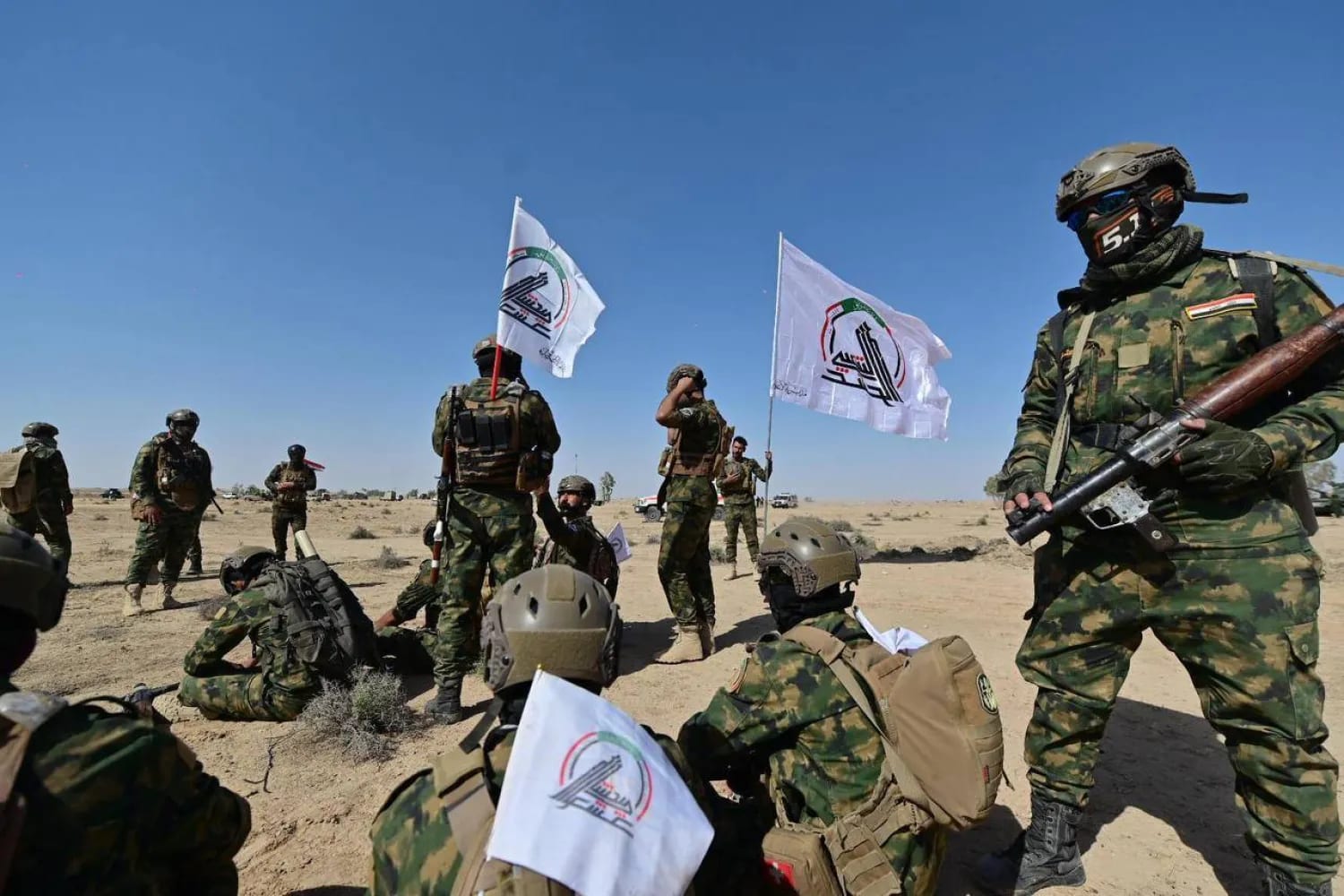
Iraqi factions themselves fear a similar fate to Hezbollah, as Baghdad under US pressure moves to disarm armed groups, including some within the PMF. This effort faces significant political and security challenges.
Security analyst Nawwar Shaaban told Noon Post that Hezbollah’s disarmament could be part of a broader regional restructuring driven by international pressure, led by the United States to gradually dismantle Iran-linked armed actors.
Shaaban added that the PMF fears the Lebanese model could later be applied in Iraq, making any Syrian support for Hezbollah’s disarmament particularly sensitive.
Conversely, Iraqi political analyst Mohammed Nasser Turki argued that the PMF views the issue primarily through the lens of sovereignty, distinguishing between state positions and factional roles. From this perspective, developments in Lebanon should remain an internal matter handled by Lebanese institutions, free from external pressure.
The Future of PMF–Syrian Government Relations
Recent videos have shown PMF-affiliated fighters criticizing Syria’s new government and former opposition factions, accusing them of ties to al-Qaeda and likening them to ISIS. They also claim that the Sayyida Zainab shrine in Damascus is unsafe under the new authorities.
Officially, however, PMF head Faleh al-Fayyad stated in December 2024 that the group would not interfere in Syrian affairs, reaffirming adherence to directives from Prime Minister Mohammed Shia al-Sudani.
In February 2025, al-Fayyad expressed support for the changes chosen by the Syrian people and endorsed engagement between Baghdad and Damascus.
Shaaban suggests that relations are more likely to be recalibrated than to escalate into open conflict. While the PMF remains a key actor along the Iraq–Syria border, Damascus seeks to assert sovereignty and regulate military activity.
Potential scenarios range from controlled friction with continued coordination to limited escalation through calibrated strikes short of full-scale confrontation.
Turki similarly expects no major escalation, emphasizing the distinction between the PMF as a state institution and independent armed factions.
Oil as a Driver of De-escalation
On March 26, Iraq’s Oil Ministry unveiled plans to expand export infrastructure, including a new pipeline to Syria’s Baniyas port.
Officials are studying routes from southern Iraq branching toward Jordan and Syria as part of a broader strategy to enhance export flexibility amid geopolitical risks.
Rather than rehabilitating the old Kirkuk–Baniyas pipeline, Iraq now favors building a new integrated line. Historically, the pipeline established in 1952 has been deeply affected by regional politics, including shutdowns during wars and sanctions.
Amid the current energy crisis triggered by the US-Israeli war on Iran and the closure of the Strait of Hormuz, the project could offer an opportunity to improve Iraqi-Syrian relations.
Economic expert Nawwar al-Saadi argues that while tensions involving PMF factions may complicate cooperation, they are unlikely to derail major energy projects, which are driven by long-term economic logic rather than short-term political dynamics.
Cross-border energy projects have historically acted as stabilizing mechanisms by creating mutual dependencies. The Kirkuk–Baniyas line, for instance, would generate transit revenues, support refining operations, and meet domestic energy needs encouraging all parties to maintain stability.
If implemented, the project could shift Iraqi-Syrian relations from volatile political ties to more stable, interest-based economic cooperation provided a minimum level of security is maintained.