






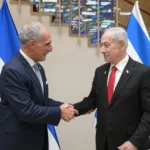


On March 30, Egypt and Cyprus signed a gas cooperation agreement in the presence of Egyptian President Abdel Fattah el-Sisi and his Cypriot counterpart Nikos Christodoulides, on the sidelines of the opening of the Egypt Energy Show (EGYPS 2026) in Cairo.
The agreement aims to maximize the utilization of Cyprus’s gas resources by directing them to Egypt, thereby helping meet part of domestic demand while leveraging Egypt’s liquefaction and processing infrastructure. It also allows for the re-export of a portion of these volumes to other markets, foremost among them Europe.
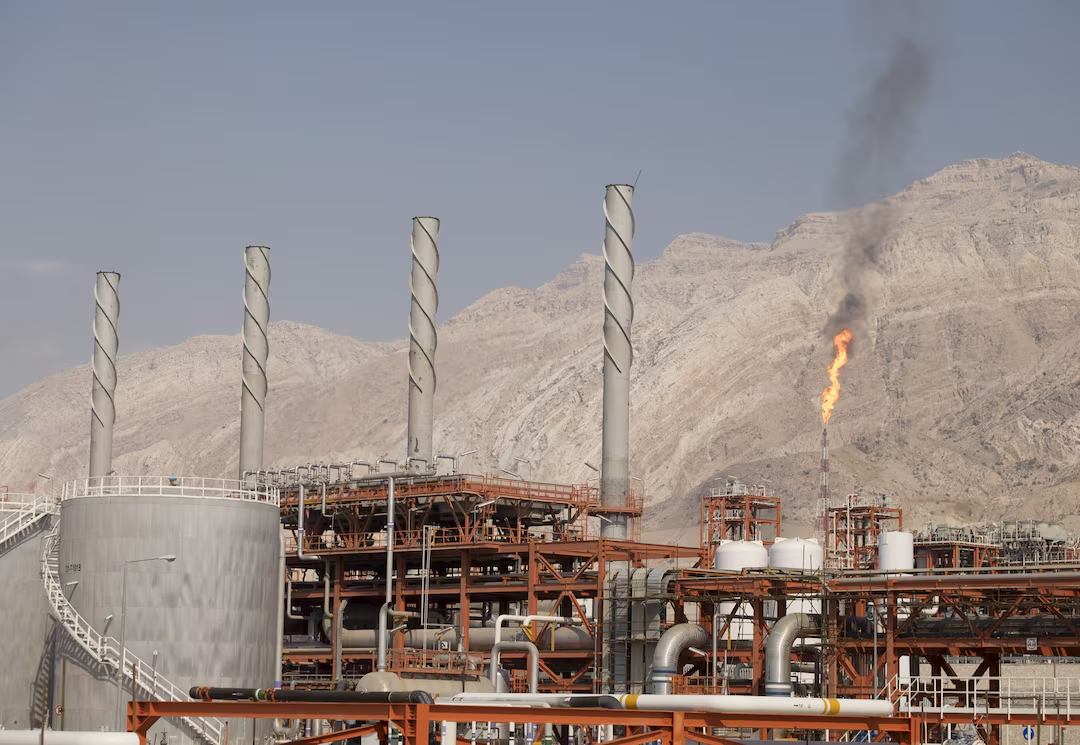
This step cannot be viewed in isolation from the region’s volatile context. Rather, it comes at the heart of the U.S.–Israeli war against Iran and its severe repercussions on global energy markets particularly following the closure of the Strait of Hormuz, through which roughly one-fifth of the world’s energy supplies pass.
Egypt was quickly affected by the fallout, prompting the adoption of austerity measures to cope with mounting pressures on energy supplies.
In this context, the agreement reflects an accelerating trend among Eastern Mediterranean states to redraw the map of energy cooperation in a way that reduces reliance on Gulf bottlenecks and seeks safer, more stable routes amid the disruptions surrounding Hormuz.
No longer merely a vital maritime corridor, the strait has become an arena of international power competition threatening global energy security, with ripple effects extending to food and logistics supply chains.
Agreement Details
At the outset, it is important to note that the agreement between Egypt and Cyprus is not a final, binding deal in the full executive sense. Rather, it represents a political and negotiating framework governing the development and exploitation of Cypriot gas particularly from the Cronos and Aphrodite fields in preparation for its sale or transfer to Egypt, either directly or through roles undertaken by Egyptian state-owned companies.
The agreement also provides for the formation of a joint committee tasked with shaping the rules and principles governing cooperation between the two sides, as well as coordinating ongoing negotiations among the various stakeholders involved in offshore exploration and production projects off the Cypriot coast.
Politically, however, the most significant aspect of the agreement is that it does not inaugurate a new path so much as it builds upon an existing one. The arrangement announced on March 30 is an extension of earlier agreements concluded in February 2025, which opened the door for exporting gas from Cypriot fields to Egypt for liquefaction and re-export to Europe.
Accordingly, what took place in Cairo should not be read as a founding moment, but rather as an additional step aimed at accelerating prior understandings moving them from general alignment to a more structured phase aligned with rapidly evolving regional dynamics, roughly fourteen months after the initial groundwork for this cooperation was laid.
Why Now? War as the Key Driver
Although the agreement dates back more than a year, its activation today raises questions about the underlying motivations. Here, the ongoing war and the severe shocks it has inflicted on global energy markets appears to be the decisive factor in reviving this track and accelerating its transition from deferred understandings to actual implementation.
The war has delivered a sharp jolt to Egypt’s energy market, disrupting government calculations in unexpected ways. Within days of its outbreak, Cairo adopted austerity measures to contain rising pressures. The costs did not stop there: revenues from the Suez Canal declined, while widespread disruptions to supply chains compounded the strain.
These developments have been clearly reflected domestically, heightening the sensitivity of the energy file as a sovereign issue that brooks no delay.
On the Cypriot side, the picture has been no less severe. The economy has faced tangible shocks, including rising fuel prices and a marked decline in tourism, alongside mounting concerns over energy security and supply sustainability.
Against this backdrop, accelerating the agreement with Egypt emerged as both a practical and strategic choice offering Cyprus a more readily available outlet for marketing its gas while enhancing its flexibility in navigating regional instability.
Thus, activating an agreement concluded more than a year ago should not be seen as belated, but rather as a framework whose full conditions only matured under the pressure of war. What was once viewed as a useful regional project is now understood as a tool for mitigating wartime risks, cushioning the impact of disruptions in the Strait of Hormuz, and absorbing part of the shock of rising energy prices.
That said, the agreement’s direct impact will not be immediate. Estimates suggest that actual gas extraction from Cypriot fields will not begin before late 2027 or early 2028, meaning tangible results will take time to materialize.
Nonetheless, this does not diminish its importance. Its true value lies in its role as a proactive step within a broader strategy aimed at strengthening future energy security and building resilience against sudden shocks and regional crises.
An Opportunity for Egypt
This agreement along with similar arrangements with Greece and other regional states represents a meaningful opportunity for Egypt to reinforce its position as a regional hub for gas liquefaction and re-export. While the country possesses the necessary infrastructure, this alone has not been sufficient to secure that role, given the lack of stable and adequate gas supplies needed to operate the system efficiently.
Cairo has liquefaction plants and logistical capacity, but it has long faced a more fundamental challenge: insufficient domestic production, forcing it to rely on costly imports that place increasing pressure on the national economy. This comes alongside rising domestic demand for gas, both for household consumption and industrial needs.
The war has further exacerbated this imbalance, driving up the cost of importing gas and other energy sources, and placing Egypt’s ambition to become a regional liquefaction hub under significant strain.
Herein lies the importance of the Cyprus agreement. It may provide Egypt with what it has lacked in recent years: an additional gas supply that can help operate its liquefaction plants more efficiently.
This would support domestic needs and ease pressure on the local market, while also enabling the re-export of part of these volumes generating valuable foreign currency revenues and reviving Egypt’s regional role in the Eastern Mediterranean energy equation.
Can This Path Help Resolve the Crisis?
There is little doubt that activating this track carries clear advantages. Chief among them is the creation of an alternative route for production, processing, and export outside the Gulf and the Strait of Hormuz whose extreme sensitivity in the global energy equation has been starkly exposed by the current war.
As tensions rise in that region, the world becomes increasingly vulnerable to supply disruptions and rising costs, giving any alternative pathway strategic value beyond immediate commercial calculations.
The Egypt–Cyprus route also provides Europe and Middle Eastern countries with greater flexibility to diversify suppliers and transit routes, in line with the European Union’s recent strategy of reducing reliance on traditional pathways and building a more diversified and resilient gas network.
As such, these arrangements extend beyond limited bilateral cooperation, forming part of a broader reshaping of the Eastern Mediterranean energy landscape.
At the same time, this track reinforces a model of regional cooperation among Mediterranean states based on shared interests, existing infrastructure, and the mutual utilization of available resources rather than dependence on more costly and geopolitically fragile alliances and routes.
Toward an Energy System Independent of the Gulf?
Despite its positive dimensions, this trajectory raises a central question: can it lead to the creation of an energy system independent of the Gulf? More precisely, can it replace it?
The likely answer is no. Even if additional Eastern Mediterranean states join these efforts, such routes cannot match the Gulf’s weight in the global energy map whether in terms of supply volumes or export capacity. Moreover, the Strait of Hormuz remains a critical artery through which a substantial share of global energy flows, making it difficult to envision a complete alternative in the foreseeable future.
However, the Egypt–Cyprus agreement and similar arrangements that may follow can help reduce excessive dependence on the Gulf by creating partial alternatives: safer, more stable routes and resources less exposed to the recurring geopolitical tensions surrounding Hormuz.
Thus, the importance of such arrangements lies not in their ability to fully replace existing systems, but in their capacity to mitigate risk, absorb shocks, and provide additional options during periods of disruption.
In conclusion, these pathways do not establish full independence from the Gulf, but they grant the region greater room for maneuver whenever its routes are disrupted, costs rise, or risks intensify.
In this sense, the Eastern Mediterranean may evolve into a critical balancing factor in times of crisis not as a comprehensive alternative, but as a strategic lever that reduces vulnerability. This is a reality the current war has brought sharply into focus.