











هذا التقرير متاح أيضًا بـ العربية
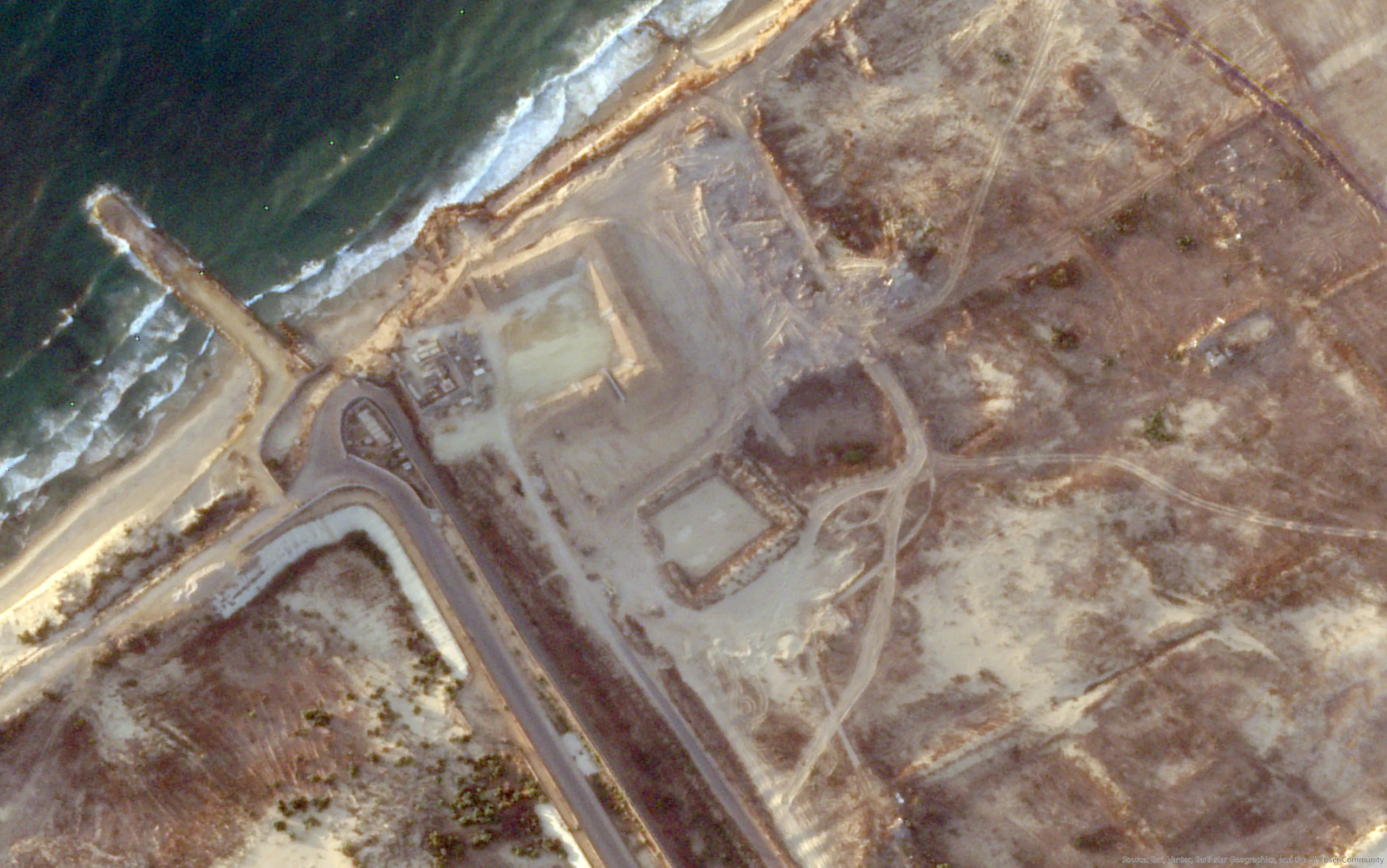
On 3 August, Avi Scharf, an Israeli journalist at Haaretz, shared clips on X filmed by an Israeli settler and posted by the settlement organisation Nahala in a private WhatsApp group for its members. The footage appeared to show a newly built military base in the Rafah area, established on the ruins of a Palestinian village, with fortifications, facilities and infrastructure, including a tarmacked road and elevated observation points.
After the clips circulated, several Hebrew-language outlets and Arabic-language Egyptian outlets published reports on the new Israeli military base near the Egyptian border. They examined its location, layout and facilities using satellite images of the site.
Reports of an Israeli military base being established in the Gaza Strip are not new. They have surfaced repeatedly since the occupation army seized the southern part of the enclave in 2024. The issue remained a subject of media, military and political debate before, according to the available data and circulating images, becoming a reality on the ground. This has highly sensitive security and political implications and poses a particularly delicate test for Egyptian national security and sovereignty.
2/ Rafah's Swedish Village, now a full blown Israeli base on Egypt's border. satimages by Plant Labs PBC + fresh ground footage (from Nachala Settlement Movement WhatsApp group) pic.twitter.com/CwfvKEskmy
— avi scharf (@avischarf) August 3, 2026
Building the base: a timeline
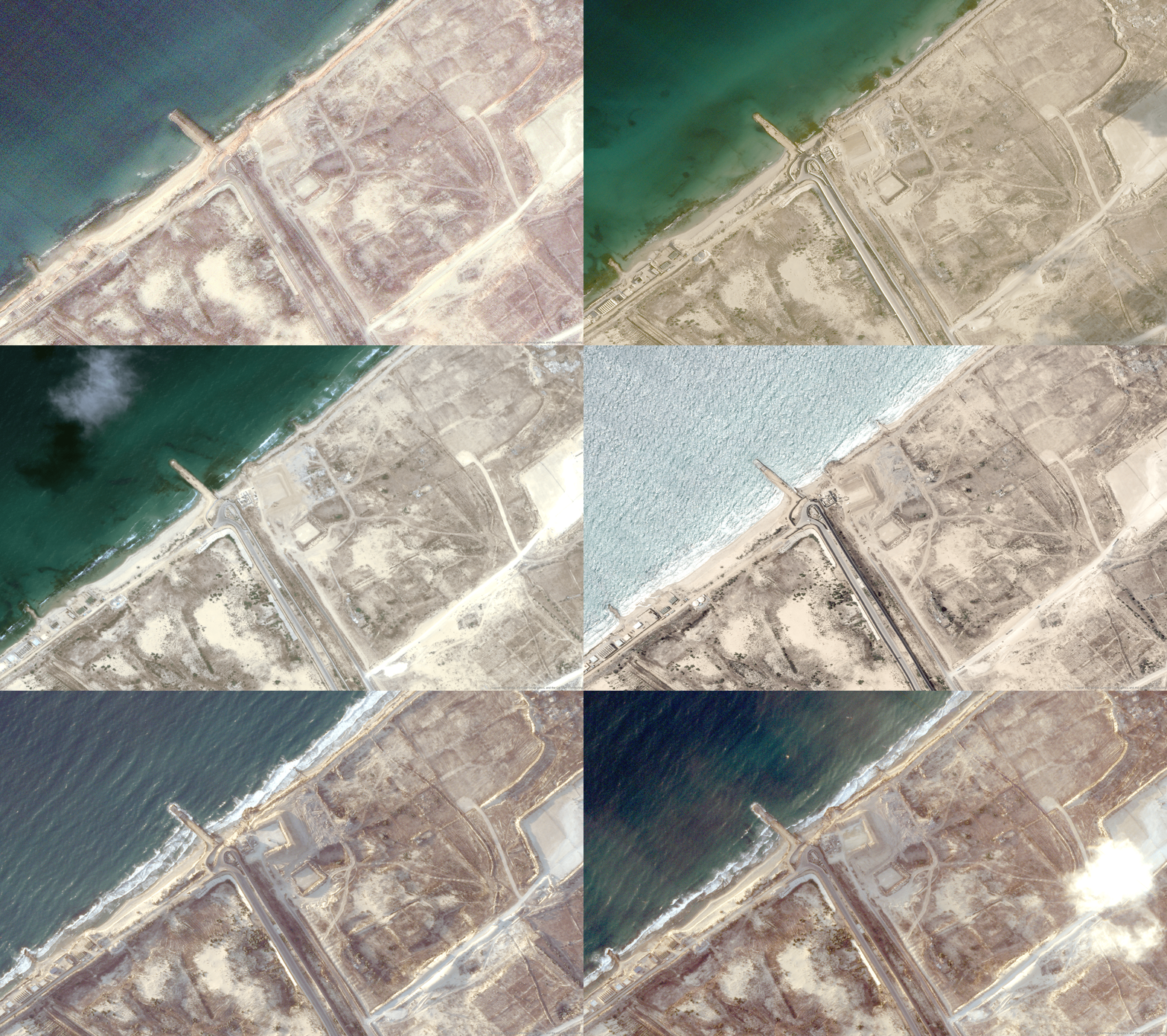
The geographical coordinates indicate that the base stands on the ruins of the village of al-Suwaydiya, where the northern end of the Philadelphi Corridor meets the Mediterranean coast. At the start of the Gaza war, the site was simply a temporary observation point. It was later turned into a military base measuring 110 metres long and 85 metres wide, with fortifications, paved surfaces and military vehicles.
Satellite images captured by Planet Labs and the European Copernicus Earth observation system show the sequence of al-Suwaydiya’s destruction beside the Egyptian border and the subsequent construction of the base on its ruins. Images taken in April 2024 showed the village before it was bulldozed, with a clearly defined cluster of homes and a network of internal streets stretching along the shore.
Images taken in February 2026 revealed the extent of the bulldozing, after the village’s homes had been razed and its built environment completely erased in preparation for military facilities at this vital location. The outlines of the base began to emerge clearly last July.
According to the investigative platform “Saheeh Masr”, which tracked images captured by the Sentinel-2 satellite through the Copernicus programme, military construction accelerated markedly this summer. An image taken on 18 July showed the village land completely bulldozed, with no new structures visible. Images from 23 July showed work beginning on concrete foundations for a central facility at the site. Images taken on 25 July showed the building more clearly, with its outer structure complete.
By 2 August, construction was nearing completion. Images showed a fortified main building surrounded by massive sand berms along the base’s outer perimeter. This reflects Israel’s determination to establish a permanent military foothold where the northern end of the Philadelphi Corridor meets the Mediterranean coast, a highly sensitive location because of its proximity to the Egyptian border.
A clear breach of security agreements with Cairo
According to the post and the coordinates circulated, the planned base represents a clear and direct breach of the security agreements between the occupying entity and Egypt. The first concerns the peace treaty, whose security annex divides the area stretching from east of the Suez Canal to the Gaza Strip into four zones. Three of them — Zones A, B and C — lie within Egyptian territory, where a military presence is permitted under specific restrictions. The fourth, Zone D, is under Israeli occupation control.
Under Article 2 of the security annex, Israel’s military presence in Zone D is limited to four infantry battalions, with a maximum of 4,000 troops and about 180 armoured personnel carriers, alongside specified fortifications and military installations. The circulating images, however, indicate the construction of military infrastructure believed to be intended to accommodate heavy weapons such as tanks and artillery. This could constitute a clear violation of the arrangements set out in the agreement.
🔴 على ساحل البحر المتوسط في مدينة رفح الفلسطينية، وبالقرب من الحدود المصرية، وقف أحد أعضاء منظمة "نحالا" الاستيطانية متفاخرًا وهو يقول: "صباح الخير يا بحر رفح، إنه لأمر مؤثر للغاية.. اليوم بعون الله، ستُبنى رفح اليهودية.. سنعود إلى هذا البحر بقوة أكبر".
◾وبعيدًا عن تلك النوايا… pic.twitter.com/H9rQEzzioP
— صحيح مصر (@SaheehMasr) August 4, 2026
The base also constitutes a breach of the Philadelphi Agreement, signed between Egypt and the occupying entity in 2005 as a security protocol annexed to the peace treaty. The agreement stipulates the full withdrawal of Israeli forces from the Philadelphi Corridor and the transfer of administration of the border strip to the Palestinian side, in exchange for the deployment of Egyptian border guards on the other side. But Tel Aviv overturned these arrangements after its forces occupied Rafah in May 2024 and took control of parts of the border corridor.
On this basis, even taking steps to establish an Israeli military base in this particular area constitutes a new violation of the 2005 agreement. It also represents an attempt to change border security arrangements unilaterally, without the consent of the parties concerned, as well as a breach of one of the core clauses in the peace treaty’s security annex.
A threat to Egyptian security and sovereignty
If the circulating information proves accurate, establishing an Israeli military base about 45 miles from the Egyptian border would constitute a direct threat to Egypt’s national security. Egypt has faced mounting pressure and growing vulnerability since the outbreak of the war on Gaza, particularly following the erosion of the forward strategic buffer provided by the Gaza Strip, its population and its resistance forces. That buffer had served as an extension of Egyptian national security on its eastern flank.
With reports of this base being built, Israel moves closer to becoming Egypt’s direct neighbour, after the Palestinian presence had served as a geographical and security buffer between the two sides. This would mean a permanent presence of occupation forces on the edge of Sinai and along the Egyptian border, increasing the likelihood of direct friction between Egyptian and Israeli forces. Several such incidents have already occurred, some disclosed publicly and others remaining unpublicised.
The Israeli military presence near the Egyptian border, together with elevated watchtowers and surveillance and reconnaissance systems, could also give Israel greater capacity to monitor military movements inside Sinai over long distances. This would create additional security challenges for Egyptian forces deployed in Sinai and the border areas, placing their movements under constant observation.
This military presence near the Rafah crossing also threatens the Egyptian and Palestinian roles in administering it. It could make the crossing’s continued operation dependent on Israeli approval, with the possibility of closures or suspensions from time to time. This would directly affect the movement of aid, goods and supplies into the Gaza Strip, threatening the lives of hundreds of thousands of residents and placing Cairo in a political and humanitarian dilemma over its role and sovereignty in managing the crossing.
The potential base also has implications for the future demographic engineering of the Gaza Strip. A permanent military presence could bring stricter security arrangements, tighter restrictions on residents’ movement and compounded hardship for those remaining in the enclave. Such conditions would heighten the risk of displacement and push larger numbers of Palestinians to try to leave the Strip by any means possible. An Israeli military base controlling the border area could make the arrangements needed to carry out such a plan more readily available and effective.
The violations did not begin today
This Israeli expansion and the accompanying violations of security arrangements with Egypt cannot be seen as a sudden development that began with construction of the military base last February, as indicated by the circulating satellite images. These violations date back to the outbreak of the war on Gaza in October 2023, when the occupation was given considerable room to manoeuvre without any real regional deterrent or sufficient pressure to curb its operations.
With each expansion on the ground inside the Strip, Egypt’s response failed to match the gravity of the developments, encouraging the occupation to extend its violations. These began with the seizure of the Philadelphi Corridor and included incidents in which Egyptian soldiers were targeted on the border, as well as projectiles landing inside Egyptian territory. Some incidents ended with Israeli apologies, without any publicly declared Egyptian escalation proportionate to their sensitivity.
Israel’s formal takeover of the Philadelphi Corridor in 2024 was, in particular, a test of Cairo’s reaction that would undoubtedly shape Israel’s subsequent actions. Yet Egypt’s response did not put sufficient pressure on the Israeli government, despite the leverage Cairo possessed, which could have made a difference had it been used. Its response was largely limited to statements and warnings through media and diplomatic channels, including those issued by the State Information Service. In the absence of more effective measures, Israel continued to escalate and expand its military presence in the border area, culminating in talk of establishing a military base near the Egyptian border.
Seen in this light, the establishment of an Israeli military base roughly 43 miles from the Egyptian border can be understood as the culmination of a succession of incidents and violations that Egypt failed to deter or halt. This encouraged Benjamin Netanyahu’s government to continue escalating and imposing new facts on the ground. That trajectory may not end with the base’s construction, but could lead to further steps with even more sensitive and dangerous consequences for Egyptian national security and regional security arrangements.
A sensitive test for Cairo
Cairo now faces an acutely sensitive test of its sovereignty and security. The issue is no longer one of limited violations that can be contained or whose effects can be remedied. It is a direct and declared threat, reflecting clear disregard for Egypt’s standing and for the reservations, demands and warnings it has expressed in recent months over developments on its eastern border.
Cairo has several sources of leverage. Its political options concern the future of the peace treaty, while economic measures include freezing or scaling back trade relations after their marked expansion during the war. It also has diplomatic and legal tools available through international institutions. So far, however, it has not used them in a way that matches the gravity of the situation. What makes Egypt’s predicament still more troubling is that it could have drawn on the experience of countries such as South Africa, which do not face a direct Israeli threat on the same scale but have used international institutions and courts to exert political and legal pressure on Tel Aviv.
This development reveals the limits of the diplomatic approach Egyptian authorities have pursued throughout the war and how effective it has been. Over the past two years, Cairo continued to expand certain aspects of economic and security cooperation with Israel while refraining from joining international initiatives that could have further isolated Benjamin Netanyahu’s government and put pressure on it. Intentionally or not, this policy helped ease some of the pressure on Israel without persuading it to take Egyptian concerns into account or respect the lines Cairo had drawn over Rafah, the Philadelphi Corridor and displacement.
Egypt now appears to face the reality that its policy of flexibility and containment has failed to achieve the desired results or prevent Netanyahu’s government from imposing new facts on the ground. Tel Aviv may even have interpreted this approach as Cairo being forced to retreat from using its leverage, and as political submission and acquiescence to a fait accompli, rather than a desire to reach an understanding and preserve stability. Has the time come for Cairo to act?
