








هذا التقرير متاح أيضًا بـ العربية
In the Al Dhafra region west of Abu Dhabi, the Barakah plant stands as one of the Gulf’s most sensitive energy facilities: the first commercial nuclear power plant in the Arab world, and a source that supplies about a quarter of the UAE’s electricity.
That is why the fire recorded on its outskirts after mid-May was no ordinary incident at a power facility, after it was targeted by drones amid tensions between the United States and Iran.
This report answers the key questions about the Barakah plant, its importance to the UAE’s energy sector, the nature of the incident, and the limits of risk when drone warfare approaches civilian nuclear infrastructure.
1. What happened near the Barakah plant?
According to the official account, three drones entered UAE airspace from the western border on May 17, 2026. Air defenses intercepted two of them, while the third struck an electrical generator outside the plant’s inner perimeter.
This caused a limited fire that was quickly brought under control. No injuries were reported among workers or residents, and no increase in radiation levels was recorded, according to Abu Dhabi.
The International Atomic Energy Agency said that emergency diesel generators were supplying power to Unit 3, and that it was closely monitoring the situation while urging restraint and warning against endangering nuclear facilities.
For its part, the Ministry of Defense described the incident as a “terrorist attack” under investigation and did not accuse any specific party, amid tensions between the United States and Iran.
2. What is the Barakah nuclear plant?
Barakah is the Arab world’s first commercial nuclear power plant . It is located in the Al Dhafra region on the Gulf coast in the emirate of Abu Dhabi, and consists of four South Korean APR‑1400 reactors.
Each has a net capacity of about 1.345 gigawatts, bringing total capacity to around 5.6 gigawatts, making the plant one of the largest nuclear energy projects currently operating in the region.
The project was developed by the Emirates Nuclear Energy Corporation in partnership with a South Korean consortium led by Korea Electric Power Corporation (KEPCO).
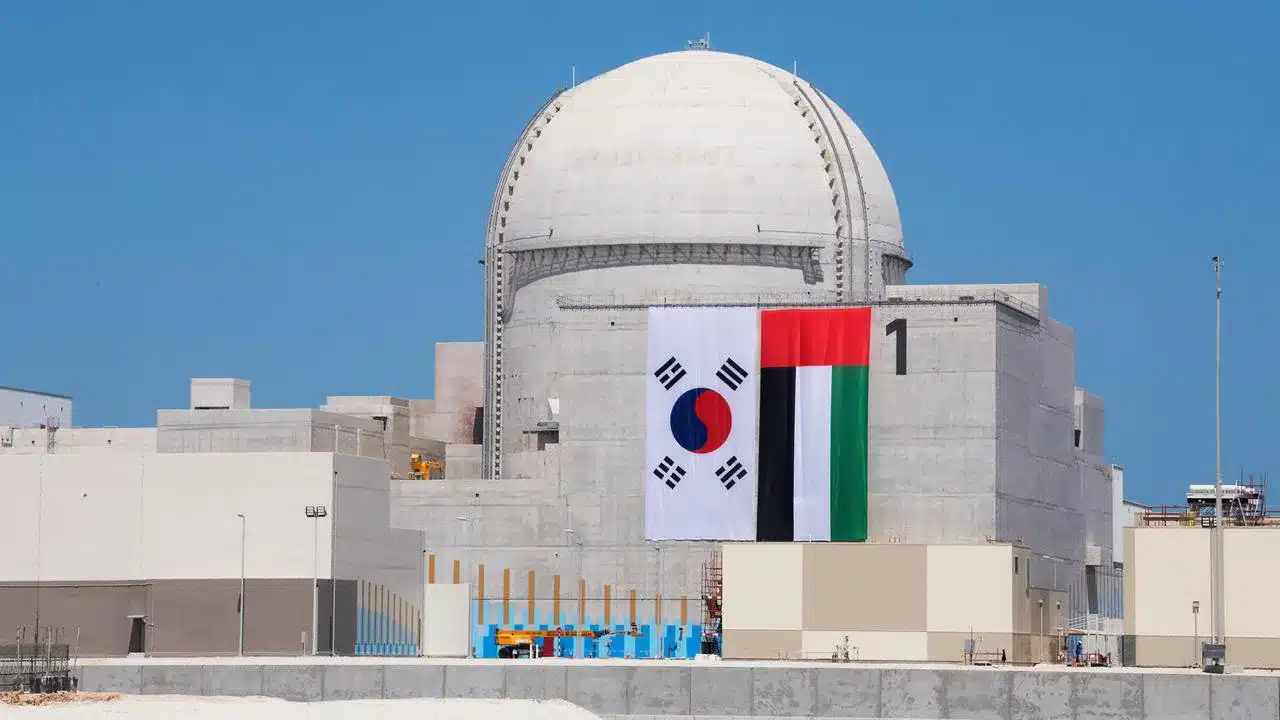
Unit 1 began commercial operations in 2021, followed by Unit 2 in 2022 and Unit 3 in 2023, while Unit 4 was connected to the grid in March 2024.
The plant is operated by Nawah Energy, a subsidiary of the Emirates Nuclear Energy Corporation, which holds 82%, while KEPCO owns 18%.
3. How important is Barakah to the UAE’s energy sector?
Barakah is not merely a symbolic project; it produces nearly 40 terawatt-hours annually, equivalent to around 25% of the UAE’s electricity needs.
This output helps reduce reliance on fossil fuels, especially natural gas, and cuts carbon dioxide emissions by more than 22 million tons annually.
The plant also underpins the UAE’s plans to achieve carbon neutrality by 2050, while providing a stable source of baseload power that can be relied on compared with intermittent renewable energy sources.
4. Is the danger inside the plant or around it?
The plant consists of multiple zones . The inner perimeter includes the reactor itself, its steel vessel, the concrete containment building, and cooling systems, all protected by robust layers.
The outer perimeter, meanwhile, includes electrical generators, turbines, administrative buildings, power connection stations, and other non-nuclear facilities.
That is why a strike on a generator or support facility may cause a fire or power outage, but it does not automatically mean that nuclear fuel or cooling systems have been affected.
Even so, the incident remains serious from a security standpoint because it targeted strategic infrastructure. It reveals the ability of drones to strike vital facilities and tests air defenses, whereas nuclear accidents are defined by the inability to cool the reactor or the failure of the containment system.
5. How is a nuclear plant like Barakah protected?
Nuclear plants rely on the principle of “defense in depth,” meaning successive layers of protection rather than reliance on a single barrier.
These layers begin with the fuel itself, as radioactive materials are contained within ceramic pellets and metal tubes, then inside a steel pressure vessel, and finally within a concrete containment building designed to isolate the reactor in emergencies.
These barriers are supported by essential safety systems , including primary and backup cooling, emergency generators, water injection systems, and control rods that are automatically inserted to halt the nuclear reaction when a malfunction occurs.
From a security standpoint, the plant is protected through surveillance, physical security, emergency plans, and air defense within the state’s capabilities. That is why experts distinguish between nuclear safety, which prevents technical accidents, and nuclear security, which protects the facility from attacks or sabotage.
6. Why might a civilian nuclear facility be targeted?
The aim of such attacks is not necessarily to cause a radiation leak. In many conflicts, drones are used to project power, send deterrent messages, or exert political and economic pressure.
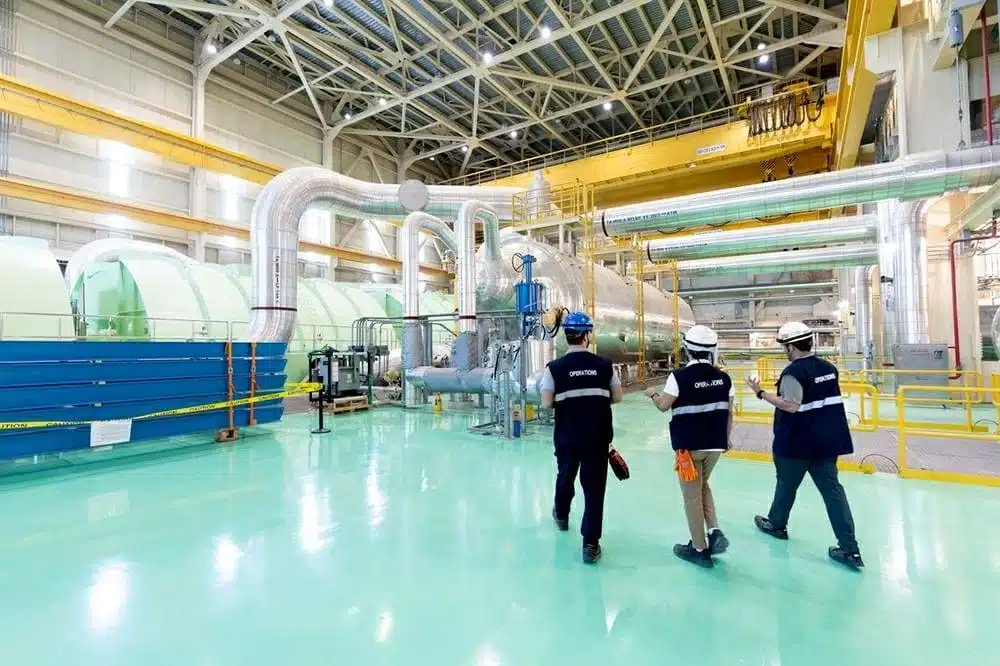
Nuclear facilities symbolize progress and energy stability, and targeting them may test defenses, undermine investor confidence, and increase the cost of war—something Iran sought to achieve after the US-Israeli war against it began in late February 2026 by escalating its strikes on the Gulf.
Attacks may also aim to cut electricity or disrupt industries linked to the plant, underscoring the importance of protecting critical infrastructure in the region.
7. Who oversees nuclear safety in the UAE?
Within the UAE, the Federal Authority for Nuclear Regulation (FANR) sets safety and security standards, issues licenses, conducts inspections, and ensures emergency preparedness.
Globally, the International Atomic Energy Agency (IAEA) monitors the plant’s performance through safeguards agreements and provides technical support. It has previously issued a statement confirming stable radiation levels in the latest Barakah incident.
The World Association of Nuclear Operators (WANO) also works to assess performance and share expertise among operators worldwide.
8. What is the main security takeaway from the Barakah incident?
Available information does not point to a nuclear incident inside Barakah, but rather to the targeting of a supporting electrical facility on the plant’s perimeter. Therefore, the danger was directly security-related and operational, not radiological.
But the most important lesson is that drones are capable of shifting military pressure to the vicinity of highly sensitive civilian facilities. A nuclear plant does not become dangerous only when the reactor itself is hit, but also when its electricity, protection, access, or emergency response systems are repeatedly put to the test.
In this sense, Barakah serves as an early warning, revealing that energy security in the Gulf has entered a new phase in which power plants, ports, water facilities, and civilian nuclear installations may become part of deterrence and pressure calculations in drone warfare.