









هذا التقرير متاح أيضًا بـ العربية
Gadi Eisenkot’s trajectory, from a member of Israel’s war cabinet to the figure at the forefront of the opposition, offers a revealing case study of the shifts in Israel’s political landscape after Oct. 7. In December 2023, while serving on the cabinet that oversaw the genocidal war on the Gaza Strip, his son Gal was killed there, followed months later by his nephew in the same war.
When he left the cabinet in June 2024, he justified the move by saying the government had, in his view, lost the competence to manage the war and hostage file. From this dual position combining military leadership and personal cost he moved into the role of Benjamin Netanyahu’s most prominent opponent after having fought the war alongside him.
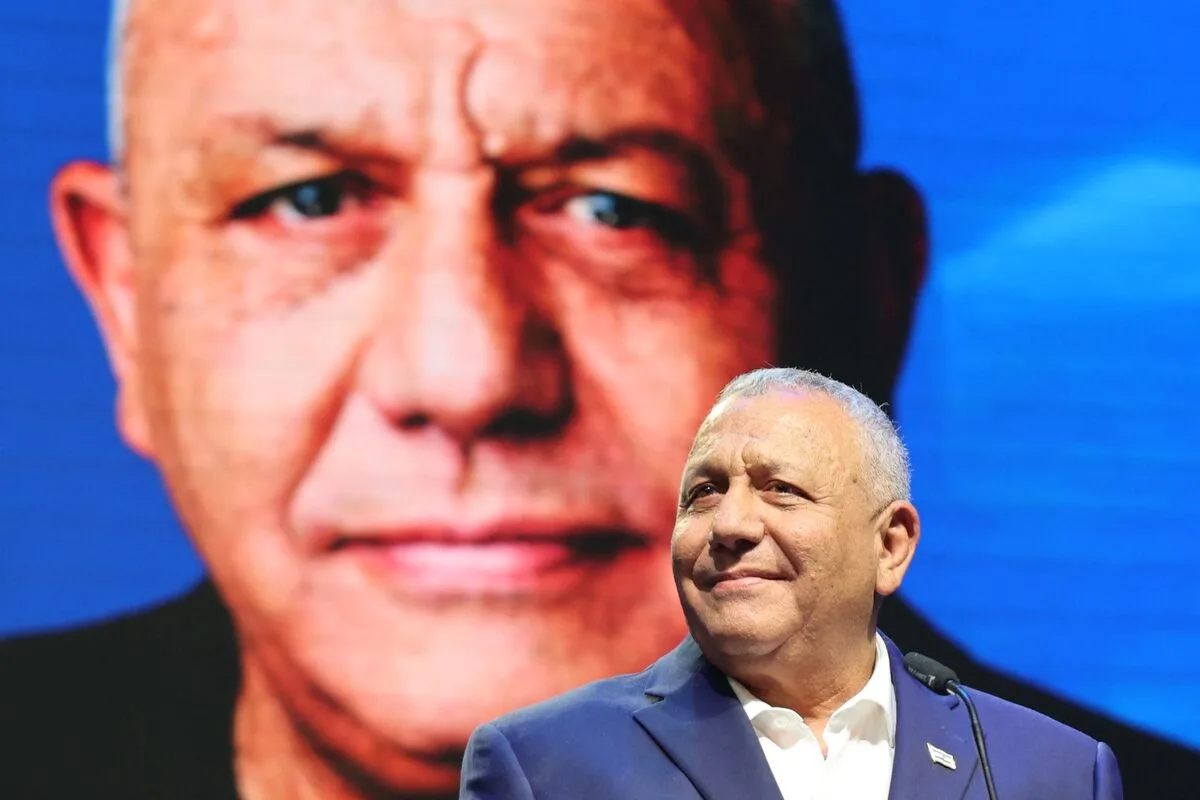
This shift coincided with a renewed attempt to return to what might be called the “era of the generals” in Israeli politics. Eisenkot entered the Knesset in 2022 on Benny Gantz’s list, then split from him and founded the Yashar party in September 2025, before topping opinion polls in the summer of 2026 as the most acceptable candidate to lead the government.
This rise rests on a set of overlapping factors, foremost among them the erosion of Benjamin Netanyahu’s security image, the exhaustion left by the war, Eisenkot’s remaining outside the circle of direct responsibility for the failure of Oct. 7, and his military record as the chief of staff who led one of the most notable modernization drives in the Israeli army over the past decade.
Eisenkot’s importance extends beyond his political future. His biography offers a window into deeper shifts within the Israeli establishment: He combines the role of a military theorist who shaped some of the most influential combat doctrines with that of a politician presenting himself as an alternative to Netanyahu, while preserving the same core security approach toward the Palestinians.
From the margins of Eilat to chief of staff
Born Gadi Eisenkot in Tiberias on May 19, 1960, he was the second of four children in a Jewish family of Moroccan origin that immigrated to occupied Palestine during the great migration wave of the 1950s. His father was from Marrakesh and his mother from Casablanca, and the family’s original name is believed to have been “Azankot” before it was altered during registration.
He grew up in the occupied coastal city of Umm al-Rashrash (Eilat), where his father worked in copper mines, and studied at Goldwater High School, specializing in maritime studies.
This background combines belonging to Mizrahi Jews and growing up on the “state’s” periphery before rising through the military establishment rather than through traditional parties or economic elites. In the Israeli consciousness, this gave him the image of an officer coming from “the periphery,” broadening his ability to speak to social groups that do not see themselves represented by the traditional political elite.

Eisenkot joined the Israeli army in 1978 and shortly afterward transferred from flight training to the “Golani” Brigade, with which his name remained associated throughout his military career. He rose through command positions until he led the brigade between 1997 and 1998, after having served in it as a company commander during the first Lebanon war. In 1999, he was appointed military secretary to Prime Minister Ehud Barak, before going on to command Division 366 and the “Judea and Samaria Division” in the West Bank during the final years of the second intifada — an experience that left a clear mark on his security approach toward the Palestinians.
His rise within the General Staff continued at a rapid pace. He became head of the Operations Directorate in 2005, then commander of the Northern Command after the second Lebanon war in October 2006, before being appointed deputy chief of staff at the start of 2013. In November 2014, Prime Minister Benjamin Netanyahu and Defense Minister Moshe Ya’alon chose him as chief of staff, and he assumed the post in February 2015 as the 21st chief of staff of the Israeli army and the first to reach the position from a Mizrahi background. He ended his term at the start of 2019 after more than four decades of military service.
Alongside his military career, Eisenkot holds a bachelor’s degree in history from Tel Aviv University, pursued graduate studies in political science at the University of Haifa, and received military education at the US Army War College.
Rebuilding the army
Within Israel’s military establishment, Gadi Eisenkot’s name became associated with a comprehensive project to rebuild the army, combining the development of military doctrine, the restructuring of force and the formulation of new patterns for its use. From the moment he became chief of staff, he sought to present himself as a commander with a strategic vision that went beyond managing day-to-day operations.
In August 2015, he issued the Israeli army’s first official written strategy document, titled “IDF Strategy,” after decades in which combat doctrine had been managed without a declared framework. The document was intended to serve as a reference for force-building and force employment, and as a tool for regulating the relationship between the military establishment and the political level in the absence of a written government strategy prompting international research institutions, including Harvard’s Belfer Center, to translate and study it.
At the same time, he led the preparation of the multiyear “Gideon” plan, approved by the security cabinet in 2016. It focused on strengthening ground forces, developing maneuvering capabilities, reducing excess military structures and establishing a cyber command, with the central goal of deciding any confrontation in the shortest possible time.
“Gideon” is considered one of the most complete force-building plans of the past two decades, after most of its components were implemented, unlike a number of previous plans that were halted before completion.
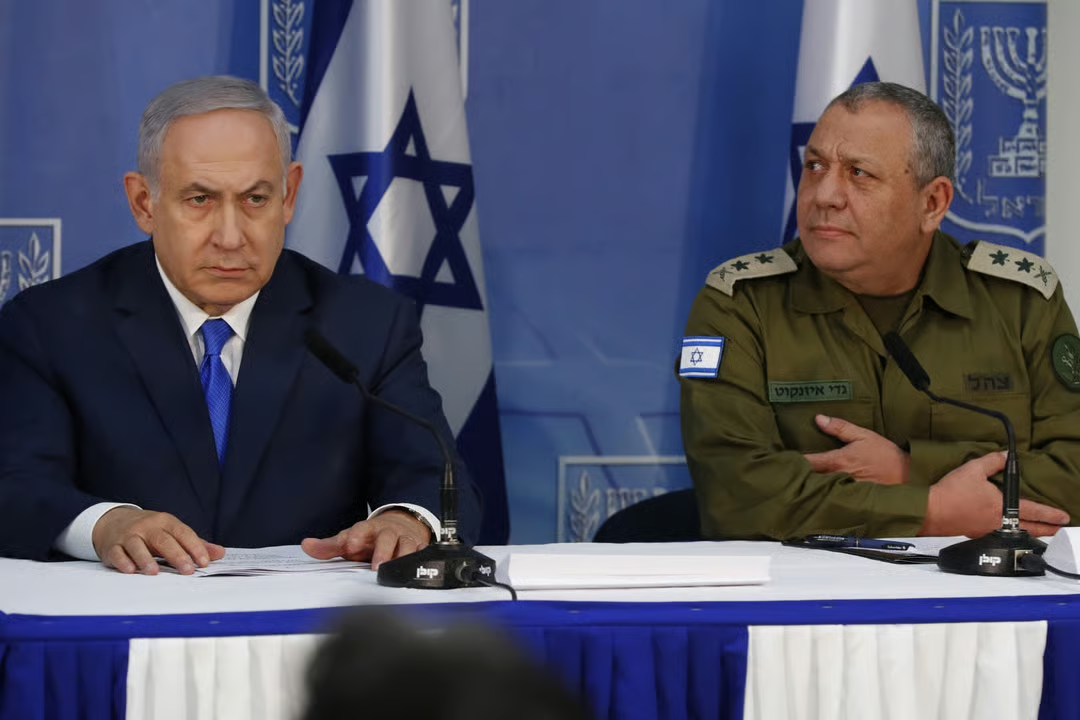
His name was also linked to the development of the concept of the “campaign between wars,” which he developed with researcher Gabi Siboni. The concept is based on carrying out continuous, low-intensity military and intelligence operations to weaken adversaries’ capabilities before they become a direct threat. It governed a broad part of Israeli military activity against what Israel calls the “Iran axis” in Syria and aligned with his strategic priority of placing Hezbollah at the top of the threat list.
In later years, Eisenkot revealed a number of projects that remained shelved because of political decisions. He spoke of a plan codenamed “Lightning Strike,” aimed at carrying out a concentrated blow against Hamas leadership inside the tunnel network. He said it could have produced a decisive shift before Oct. 7 and accused Netanyahu’s poor policies of preventing its successful implementation in 2021.
He also disclosed a joint program with the Mossad launched in 2015, which he described as far broader than the later “pager” operation targeting Hezbollah, arguing that its cancellation reflected a recurring Netanyahu pattern of managing crises rather than creating them.
But the military project most closely associated with Eisenkot, more than any other achievement, was what later became known as the “Dahiya doctrine,” which he formulated after the second Lebanon war in 2006 while commanding the Northern Command. It was based on the widespread destruction inflicted on Beirut’s southern suburbs as a model for achieving deterrence.
Eisenkot presented this doctrine explicitly in an interview with Yedioth Ahronoth in 2008, when he said: “What happened in the Dahiya neighborhood of Beirut in 2006 will happen in every village from which fire is launched toward Israel. We will use disproportionate force and cause immense damage and destruction there. From our perspective, these are not civilian villages, they are military bases,” adding that this was “not a recommendation, but a plan that has been approved.”
The doctrine was based on treating the civilian environment as part of the power structure on which armed groups rely, making it a target as a means of imposing deterrence by raising the cost on the supporting society. From that standpoint, it marked a shift from a policy of limited periodic strikes to the adoption of large-scale destruction as a military tool for achieving political and security objectives.
This conception drew broad criticism from the perspective of international humanitarian law. The Goldstone Report issued in 2009 referred to the doctrine as one based on causing widespread destruction and inflicting suffering on civilians for deterrent purposes, concluding that it had been applied during the assault on the Gaza Strip in late 2008 and early 2009. Former UN special rapporteur Richard Falk also argued that Eisenkot had offered nothing consistent with the principle of proportionality in international humanitarian law.
The significance of this doctrine lies in its persistence within Israeli military thinking. After Oct. 7, it reemerged as one of the frameworks governing military operations in Gaza and Lebanon through an approach of comprehensive destruction of all urban infrastructure in targeted areas for the purpose of exacting revenge on society as a whole.
Security as a program
Gadi Eisenkot’s political positions do not represent a break with his military career, but rather its extension into the political sphere. His view of regional and domestic issues starts from the primacy of security and reflects an institutional approach that sees force-building and conflict management as the main route to stability.
On the Palestinian issue, Eisenkot rejects the establishment of a Palestinian state at the present stage, arguing that the events of Oct. 7 changed the environment in which that option had been proposed. In May 2025, he told Channel 12 that “a Palestinian state is irrelevant after Oct. 7,” adding in a later statement that talk of “peace now and two states for two peoples” reflected, in his view, a misunderstanding of the nature of the conflict, and calling instead for “other solutions in the Palestinian arena.” These positions reflect a security vision that treats the Palestinian territories as a strategic space for managing threats more than as a question of self-determination.
The same approach is evident in his position on Iran, one of his most prominent points of difference with Benjamin Netanyahu. While he describes Iran as a strategic threat, he rejects classifying it as an existential danger unless it possesses a nuclear weapon, and he was among the security voices that saw the 2015 nuclear deal as an opportunity to postpone confrontation and allow the army to focus on other threats.
This disagreement peaked in June 2026, when he accused Netanyahu of exaggerating the Iranian nuclear threat to serve political and electoral considerations, stressing that, given his familiarity with intelligence assessments, he did not share that characterization.

In the same context, he showed openness to security cooperation with a number of Arab states in confronting Iran, something he had expressed since becoming chief of staff, making his approach to normalization an extension of his security priorities rather than a path tied to resolving the Palestinian issue.
Domestically, he has made the issue of Haredi conscription one of the main banners of his political project under the slogan “service for all,” proposing to limit religious exemptions to a small percentage of each annual cohort and end the system of near-universal exemption. He also places at the center of his program the formation of an official commission of inquiry into the failure of Oct. 7, along with the adoption of a written national security strategy binding on governments, on the grounds that the absence of strategic planning was one of the causes of the failure.
The war on the Gaza Strip has been the clearest test of this vision. Eisenkot joined the emergency government days after Oct. 7 and took a seat in the war cabinet, where he supported the ground invasion and, alongside Benny Gantz, helped prevent the opening of a broad front with Hezbollah in the war’s early days, based on an assessment that the army was not prepared to fight on two fronts at once.
During his time in the war cabinet, he suffered a severe personal loss with the killing of his son Gal in December 2023 inside the Gaza Strip, followed by the killing of two of his nephews in the same war. Despite that, he affirmed at his son’s eulogy that the fighting would continue, reinforcing his image within Israeli society as a leader who paid a personal price in the war.
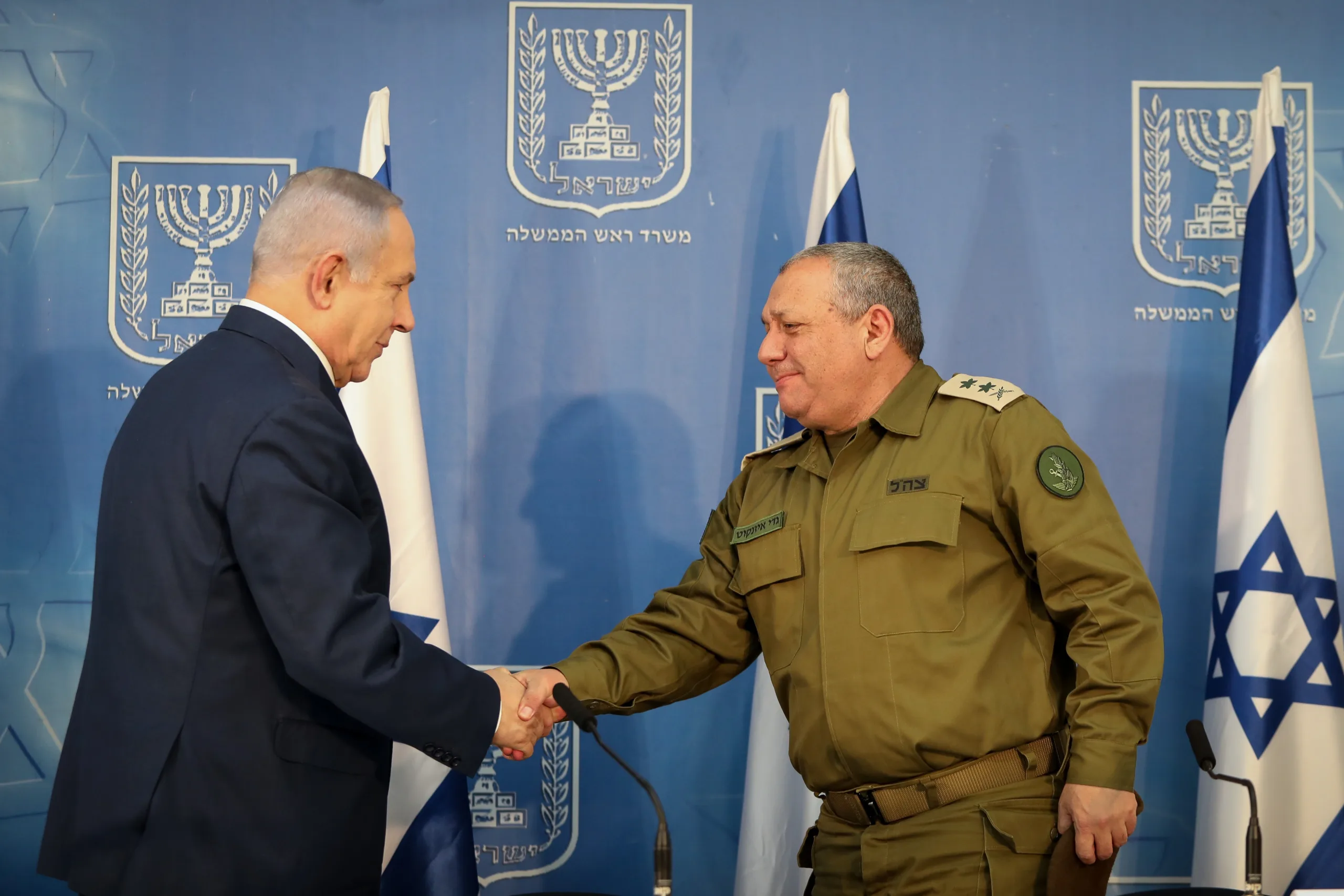
As military operations dragged on, his disagreement with Netanyahu widened. In January 2024, he described talk of the “absolute defeat” of Hamas as unrealistic and called for prioritizing a prisoner exchange deal to bring back Israeli captives. He then warned in a message to the war cabinet in February of that year that the war was being run according to a logic of tactical gains in the absence of a clear strategic vision, before resigning with Benny Gantz in June 2024, declaring that the government had lost the ability to manage the war and chart a political path for what comes after.
Yet this disagreement did not touch on the essence of the war or its humanitarian cost to the Palestinians. It focused instead on how it was being managed and its ability to achieve its declared goals. Eisenkot continued to call for the elimination of Hamas militarily and politically, criticized the government for failing to formulate a vision for the day after in Gaza, and, regarding the Lebanese front, expressed his belief that Israel had missed an opportunity to deliver a harsher blow to Hezbollah.
His opposition to Netanyahu is therefore tied to the core of Israeli security approaches rather than representing a departure from them. He offers a more disciplined alternative in planning and decision-making while retaining the basic pillars that have governed Israel’s use of force in recent years, making the dispute between the two men closer to a disagreement over managing the conflict than a difference in defining it or its goals.
Rise and limits
Gadi Eisenkot’s departure from the war cabinet marked the real turning point in his political career. In June 2024, he left the government with Benny Gantz, then split from him for good in mid-2025, explaining that the move was necessary to rebuild the centrist camp on new foundations. Months later, he founded the “Yashar” party, attracting prominent security and economic figures, including former Shin Bet chief Yoram Cohen, along with a number of retired generals and center-right figures, giving the party more of a security-technocratic character than that of a traditional ideological party.
During the summer of 2026, the “Yashar” party topped opinion polls for the first time, leading Likud or tying with it according to several surveys, while the Bennett-Lapid alliance fell to third place and Benny Gantz’s party effectively dropped out of contention. Polls also showed Eisenkot ahead of Benjamin Netanyahu in suitability for the premiership, in addition to outperforming the other leading opposition figures.

This rise rests on three main factors. The first is the continuing decline in Netanyahu’s security image, especially after the war on Gaza and the subsequent US-Iran agreement, which some Israelis viewed as a failure to achieve the goals the government had set. The second is the exhaustion produced by the war and internal division, which created growing demand for a figure combining military experience with institutional discipline.
The third factor is tied to Eisenkot’s own image: a general associated with rebuilding the army, who paid a direct personal price in the war and remained outside the circle of responsibility for the failure of Oct. 7, reinforcing his presentation as Netanyahu’s opposite in style and form of leadership.
Yet this advance in public opinion has not, so far, translated into a parliamentary majority capable of forming a government. Most polls give his camp a number of seats below the threshold of 61 needed to form a coalition, and his political positions narrow his coalition options. His stance on Haredi conscription makes an alliance with religious parties extremely difficult, while his dispute with the religious right closes the door to partnership with its parties, even as he still refuses to fall in behind another political leader within the centrist camp.
This equation shows that Eisenkot’s problem is not popularity or the ability to compete with Netanyahu, but rather translating that lead into a governing majority within a highly fragmented political system. It also sets clear limits on the idea of the “alternative” he presents: The change he promises is centered on reforming decision-making mechanisms, reorganizing the security establishment and holding those responsible for the failure of Oct. 7 accountable, without carrying a fundamental shift in Israel’s approach to the conflict with the Palestinians.
Accordingly, Eisenkot’s rise reflects Israeli society’s search for more disciplined, institutional leadership after years of polarization more than it reflects a shift in the direction of Israeli politics or a reconsideration of its basic foundations.