


هذا التقرير متاح أيضًا بـ العربية
Caught between the loose tongue of US President Donald Trump, who keeps no secrets, and the power of Iran’s Revolutionary Guard and its preemptive plans, Iraq’s Kurdistan Region has found itself between a rock and a hard place. The region hosts fellow ethnic Kurds from Iran, who have found no safe haven except the geographic expanse on the other side of the border.
The region’s territory has become a recurring arena for bombardment, some of it targeting headquarters belonging to Iranian Kurdish groups based in Sulaymaniyah and Erbil provinces. Trump had said these groups received US weapons to help bring down the Iranian regime, days after the outbreak of the US-Israeli war on Iran in late February 2026.
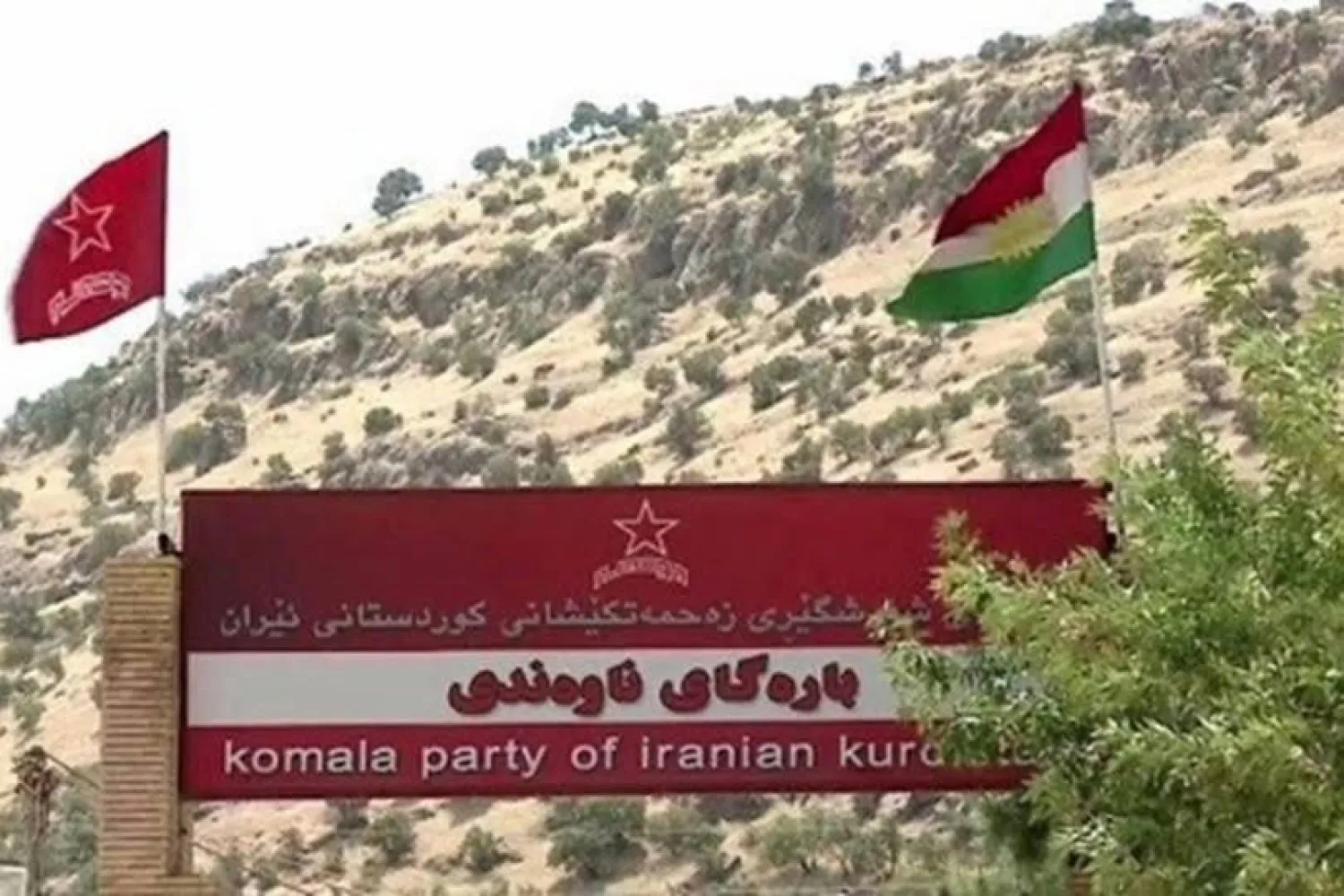
At dawn on July 17, 2026, the headquarters of the Iranian Kurdish Komala Party in Iraq’s Kurdistan Region came under missile attack by Iran’s Revolutionary Guard, killing 9 party members and wounding others, in what has become an almost daily routine since Tehran began sensing danger on its western flank namely the Iranian Kurdish provinces bordering Iraq’s Kurdistan Region, which hosts Iranian Kurdish opposition groups and parties.
The nature of the repeated targeting of these parties’ headquarters cannot be understood without going back to the circumstances that drove Kurdish political forces to leave Iran and seek refuge in Iraq’s Kurdistan Region.
The roots of the Iranian Kurdish presence in Kurdistan Region
After the 1979 Iranian Revolution and the rise of hard-line religious groups to power, the Iranian Constitution was rewritten. Although it provided for the establishment of political parties and associations, it restricted that right on the condition that they not undermine national unity and Islamic standards a condition the regime used as a pretext to pursue its opponents.
This legal framework gave the Iranian authorities broad latitude to prevent the formation of ethnic parties, including Kurdish ones, on the grounds that their political demands conflicted with the regime’s concept of national unity.
As a result, Iranian Kurdish parties some of which predated the Iranian Revolution by decades turned to underground activity before finding a safe haven in Iraq’s Kurdistan Region, especially after the 1991 Gulf War, when the United States decided to impose a no-fly zone and ban any military activity by Iraqi forces in northern Iraq, including the provinces of Sulaymaniyah, Erbil and Dohuk.
The Iran-Iraq War from 1980 to 1988 had a major impact on the activity of Kurdish groups and parties inside Iran, especially amid the wave of anger that gripped the Iranian regime toward every dissenting voice. Even so, the Kurdish provinces in western Iran remained among the areas most opposed to the regime at the time, benefiting from support from the other side of the border namely the Iraqi regime, which sought to strike Iran’s internal front, just as Iran was doing the same.
Against this complex reality, the relationship emerged between the two Kurdish sides across the border the Kurds of Iraq and the Kurds of Iran. It cannot be explained solely by ethnic ties or the shared goal of establishing a Kurdistan state; rather, it took shape under extremely difficult and complex circumstances.
When dozens of Kurdish villages in Iraq were displaced because of the Anfal campaigns led by the former regime under the pretext of confronting the infiltration of Iranian forces into northern Iraq between 1987 and 1988, and then Iraqi Kurds fled after the 1991 Gulf War and the outbreak of what became known as the Shaabaniyah Intifada in which Kurdish political and armed groups in northern Iraq also took part, and which was not confined to the south about 1.5 million Iraqi Kurdish citizens moved to border areas in Iran and Türkiye.
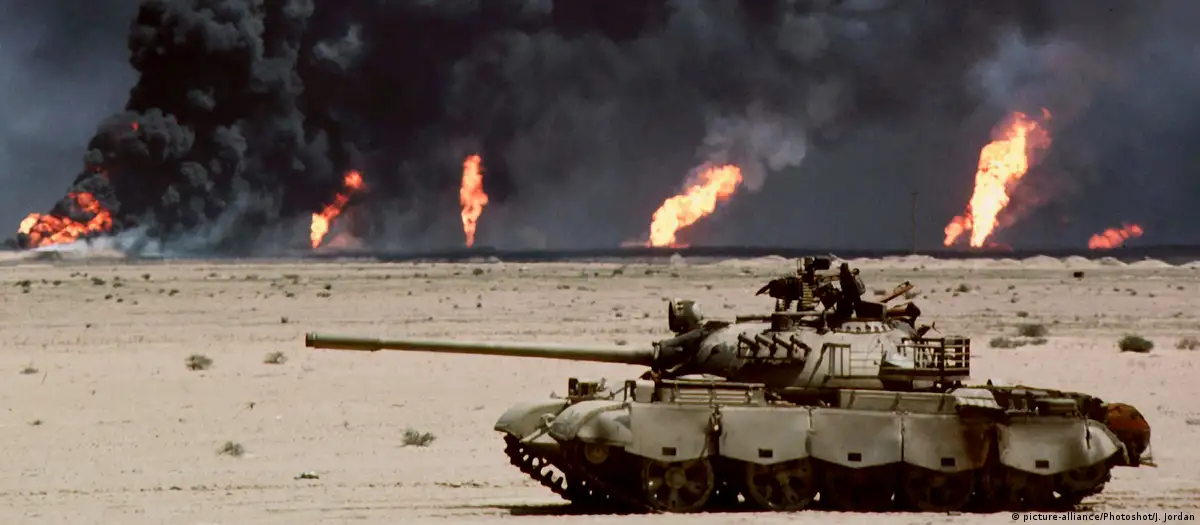
By contrast, Iraq was a haven for hundreds of thousands of Iranian Kurds during different stages of their opposition to Iranian regimes, whether the former shah’s regime or the Islamic Republic that succeeded it.
This relationship went beyond ethnic ties and a shared objective. It was forged through decades of suffering and mutual displacement, which explains why political and governmental forces in Iraq’s Kurdistan Region have refused to expel Iranian Kurdish opposition groups despite the near-daily bombardment the region faces from Iran’s Revolutionary Guard and Iran-backed militias inside Iraq.
“Quick trigger” strategy and the internationalization of the Kurdish file in 2026
The beginning of 2026 saw rapid security shifts. In the wake of the Dec. 28, 2025 protests in Tehran, the wave of security escalation quickly spread to Iran’s Kurdish areas, where the security services swiftly adopted an approach known as the “quick trigger” in dealing with the Kurds. It is based on lowering the threshold of suspicion and intensifying the security response through tighter surveillance restrictions and the dismantling of internal networks.
This was reflected in the arrest of 11 leaders of the Kurdistan Free Life Party (PJAK) in Kermanshah. Estimates issued by Iranian Kurdish opposition groups and parties indicate that Kurds accounted for about 51 percent of all political detainees in Iran in 2024 alone. They also topped annual execution lists on charges including “membership in banned parties” and “enmity against God,” according to rights organizations such as the Hengaw Organization for Human Rights.

Official Iranian fears were mounting as the regime armed with the experiences of countries in the region in dealing with nationalist movements watched the growing wave of anger in provinces whose residents make up about 10 percent of the country’s total population. Most Iranian Kurds are Sunni Muslims, divided among different intellectual and party schools, and most live in the provinces of Kurdistan, Kermanshah, Ilam and West Azerbaijan.
The killing of the young Iranian Kurdish woman Mahsa Amini marked one of the most defining moments in the history of relations between the Kurds and the Iranian regime. In 2022, she was arrested by the morality police on the pretext of violating hijab rules, then died in custody amid accusations that she had been tortured, triggering one of the largest waves of popular protest Iran had seen and nearly turning into a sweeping revolution.
Mahsa Amini had traveled from Kurdistan province in western Iran to Tehran to visit relatives before her story became the spark for protests that spread across the country and a new sign of deepening strain in relations between the Iranian regime and the Kurds.
These historical factors have made Tehran more fearful that Kurdish areas could become a soft western flank from which protests are launched and through which armed Kurdish opposition factions bound to the regime by decades of bloody conflict — might infiltrate.
The map of armed groups and the formation of the “February 2026 coalition”
The map of Kurdish political forces is marked by diversity, split between nationalist groups and others that are secular and leftist, while the goal of establishing a Kurdish entity in Iran is almost a common denominator among them, guided by the experience of Iraq’s Kurdistan Region.
Among the most prominent of these groups is the Kurdistan Democratic Party of Iran (KDPI), founded in 1945 in the historic Republic of Mahabad under the leadership of Qazi Muhammad. It is a moderate democratic party currently led by Mustafa Hijri, with about 2,000 fighters. It advocates federalism in Iran and is headquartered in Koysinjaq in Erbil.
As for the Komala Party its history dates back to 1969. It is a secular socialist leftist party with about 1,000 fighters, and it also supports federalism in Iran. Its activity is concentrated among intellectuals and students in the areas of Sanandaj and Marivan inside Iran, and it has a well-known headquarters in the Zargwez area of Iraq’s Sulaymaniyah province.
Other Iranian Kurdish parties are also present in Iraq, including the Kurdistan Freedom Party, a radical nationalist party founded in 1991 that explicitly calls for the establishment of an independent Republic of Kurdistan. It is active in the provinces of Kermanshah, Lorestan and Ilam, and has headquarters in Erbil and Kirkuk inside Iraq.
The Kurdistan Free Life Party, meanwhile, is a group linked to Türkiye’s Kurdistan Workers’ Party and is designated a terrorist organization by both Washington and Tehran.
Why does Iran fear its “western flank”?
By the language of numbers, it is difficult for a group of parties based in a neighboring country to pose a direct threat to an entrenched, deeply rooted and ideological system like the Iranian regime. The total manpower and capabilities possessed by the Iranian Kurdish parties in Iraq appear limited compared with the arsenal and ideology the Iranian regime commands.
The real fear stems from these parties’ ability to mobilize the Kurdish provinces and turn them into dominoes that detonate internal contradictions and the minorities file. The Iranian regime believes that the simultaneous unraveling of the country’s nationalities, along with the spread of chaos on the periphery, could amount to the coup de grace fired at its head: the Kurds in the west, the Baloch in the east, the Arabs in Ahvaz in the southwest of the country, and the Azerbaijanis in the north.
What makes this file even more dangerous is that Iran’s Kurdish inside suffers from systematic marginalization, making it fertile ground for accepting the rhetoric of rebellion. Economically, Iran’s Kurdish provinces suffer from high and chronic unemployment, which reached 13.7 percent in the winter of 2024, compared with 7.8 percent nationwide, in addition to the region’s deprivation of the returns from its natural resources.
Marginalization also extends to the linguistic and cultural spheres. The Iranian regime has practiced repression against the Kurds that peaked in 2024 with the arrest and trial of Kurdish teachers on charges of teaching in the Kurdish language. In 2025, the Iranian Parliament rejected a proposal allowing instruction in non-Persian languages in the regions where they are spoken.
Constitutional discrimination against the Kurds and other nationalities and ethnic groups in Iran is reflected in Articles 12 and 115 of the constitution, which stipulate that the Twelver Jaafari school is the official and unalterable doctrine, and require anyone assuming the post of supreme leader, head of the judiciary or president to believe in the official doctrine.
This text bars the Kurds most of whom are Sunni from reaching top positions, in addition to the use of the security vetting system known as “gozinesh” to restrict their employment in state institutions.
The gateway to the US-Israeli plan and shifts in the Western position
Iranian suspicions are intensifying and growing more ferocious with Tehran’s certainty that the Kurdistan Region represents the ideal environment for launching a “hybrid war” led by Washington and Tel Aviv. With the outbreak of the US-Israeli attack on Iran on Feb. 28, the Kurdish file was thrown wide open, and intelligence and diplomatic reports laid out details of secret meetings.
US President Donald Trump held phone calls with Iraq’s two Kurdish leaders, Masoud Barzani and Bafel Talabani, in which he told them explicitly that “neutrality is no longer an option in the conflict with Iran,” urging them to align with the United States in exchange for incentives including military protection, investments in the energy and gas sectors, and the internationalization of the region’s status.
Coordination also extended to Iran’s Kurds, as the US administration and the CIA held secret meetings with leaders of Iranian Kurdish parties to discuss the role these groups could play in toppling the regime. Press reports said Trump also held a separate call with Mustafa Hijri the leader of the Kurdistan Democratic Party of Iran (KDPI), to discuss a plan to send forces across the border deep into Iranian territory.
Talk also escalated about sending medium weapons to Iranian Kurdish opposition groups in Iraq’s Kurdistan Region, especially after Trump’s famous statement. Press reports revealed that those weapons had indeed reached the opposition Kurdish parties, but that they kept them and did not pass them into Iran. This is consistent with what Hebrew reports recently disclosed about Türkiye thwarting an Israeli intelligence plan to mobilize Iran’s Kurds.
The Iranian Kurdish opposition factions and groups in Iraq’s Kurdistan Region understand that becoming involved in the military and security dimensions of the ongoing war on Iran will not end well under any circumstances. Desire alone does not produce the hoped-for change, especially since these groups have previous experience with the West. For that reason, they will not, for now, risk entering the fray inside Iran before obtaining clear guarantees.
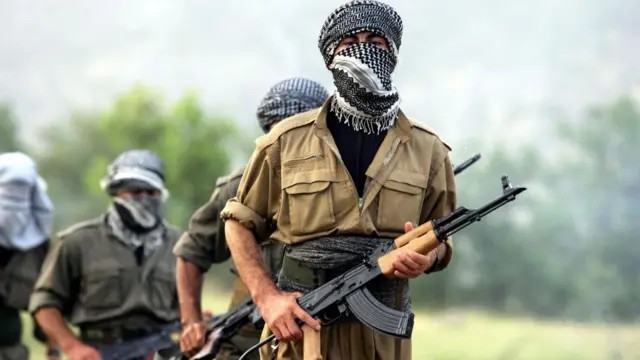
Even so, on Feb. 22 these groups announced the formation of a bloc uniting them around one central goal: “toppling the Iranian regime, achieving the principle of the right to self-determination, and establishing a democratic administrative system in Rojhelat Kurdistan,” in reference to Iran’s Kurdish provinces.
Northern Iraq … bombardment from within and without
The forms of targeting in Iraq’s Kurdistan Region are varied. In addition to the bombardment hitting the sites and headquarters of Iranian Kurdish opposition parties hosted by the region usually carried out by units of Iran’s Revolutionary Guard using ballistic missiles and drones Iran-backed Iraqi militias carry out other operations, some targeting those party headquarters and camps, while others strike the US consulate in the region.
The bombardment has been accompanied by public threats from Iran, including a recent call by Iranian Foreign Minister Abbas Araghchi to officials in Iraq’s Kurdistan Region, warning them against allowing Iranian Kurdish groups to become a factor in destabilizing Iran. This was preceded by a warning from Iran’s “Defense Council,” which threatened Erbil with targeting the region’s entire infrastructure if any ground incursion were facilitated.
Iranian fears are mounting. Tehran realizes that its internal front, however cohesive it may appear, harbors the seeds of chaos and contains sparks of vengeance within it. From this perspective, it sees no problem with directing its fire toward Iraq’s Kurdistan Region, because it views what is coming as a danger that cannot wait and cannot be contained by diplomacy or by the sweet talk with which it has long addressed its surroundings.