



هذا التقرير متاح أيضًا بـ العربية
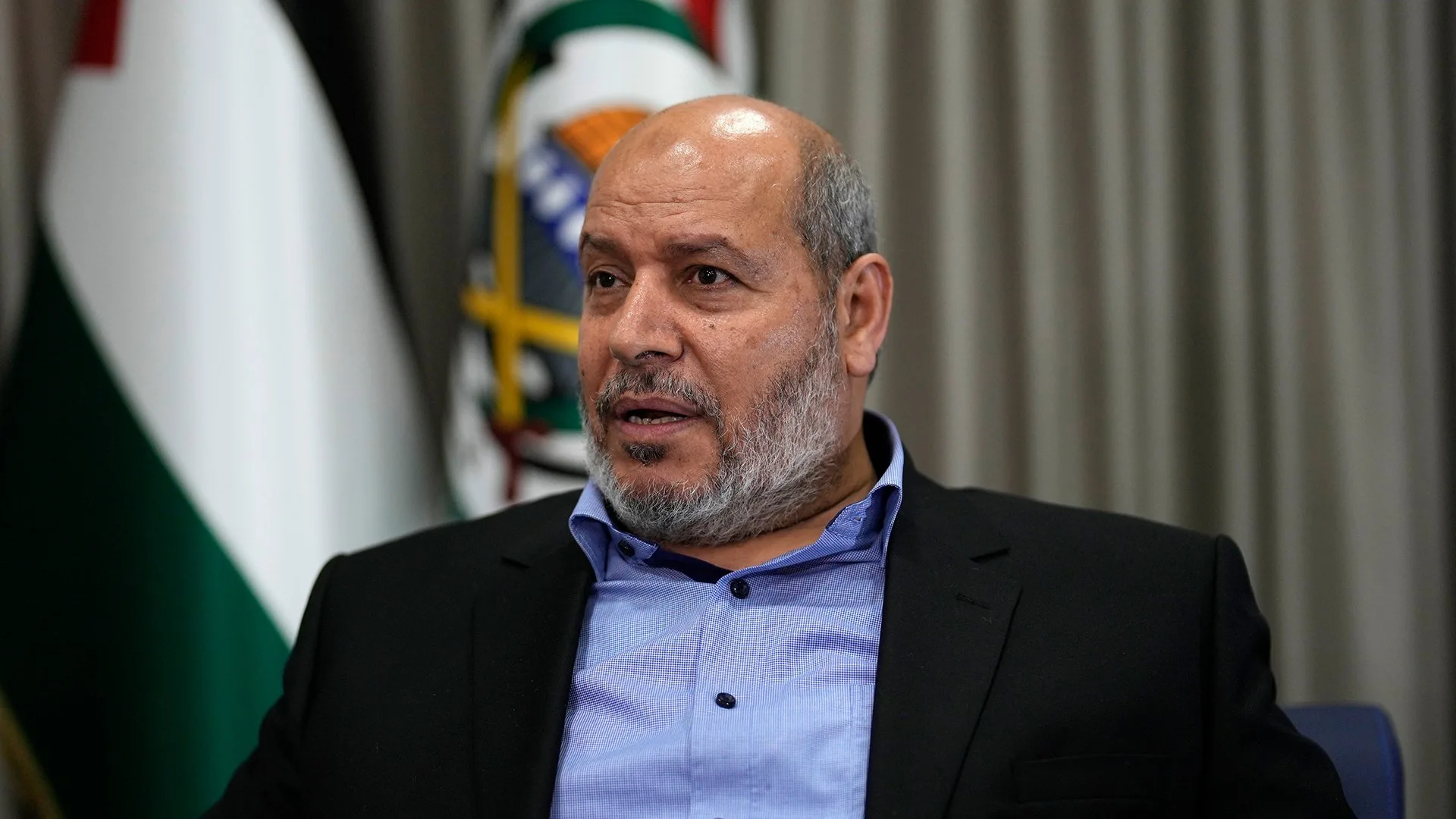
By a margin of one vote, Dr. Khalil al-Hayya won the race for the presidency of Hamas’ political bureau, after securing 35 votes to 34 for Khaled Meshaal, the movement’s leader abroad and former political bureau chief. His election was announced on Monday, July 20, 2026, succeeding the martyred leader Yahya Sinwar.
The movement’s bylaws required a candidate to obtain 36 votes from the 69-member General Shura Council, which equally represents the movement’s regions in Gaza, the West Bank and abroad. Neither candidate achieved that threshold in the previous round because of the intensity of the competition, necessitating a decisive runoff.
This came amid the Israeli machinery of killing and disruption that targeted the overwhelming majority of the movement’s leadership in the Gaza Strip and attempted to assassinate those who remained abroad, making the completion of the consultative-electoral process itself an event whose significance went beyond mere procedure.
Hamas expressed this in its statement, considering the fulfillment of this process at this particular moment, under extremely complex security and political conditions, as confirmation that Hamas is a movement governed by its institutions and its shura, and bound by its systems and regulations.
The competition between Meshaal and al-Hayya was for a position whose three most recent holders were killed during the war of extermination alone: former political bureau chief Yahya Sinwar, his predecessor Ismail Haniyeh, and deputy political bureau chief Saleh al-Arouri. It is a post whose risks outweigh its rewards, and yet reaching it was no easy matter for either candidate.
Completing the election and filling the most pivotal vacancy in the movement’s leadership through a process governed by its internal regulations is in itself an important sign. But many other implications are tied specifically to the figure of Dr. Khalil al-Hayya, in terms of experience, history and what his selection suggests about the movement’s future, at what is the most sensitive moment in Hamas’ history as it faces a war of uprooting, dismantlement and liquidation. That makes this leadership term the most sensitive, pivotal and consequential for the future of the Palestinian resistance as a whole, not just for Hamas.
The third chief during the flood
With his formal election as head of the political bureau, Dr. Khalil al-Hayya becomes the third Hamas leader to hold this position during Al-Aqsa Flood and the war of extermination against the Palestinian people. The flood began with the martyr Ismail Haniyeh at the head of the political bureau, a position he had held since 2017 until his assassination on July 31, 2024.
On Aug. 6, 2024, Hamas’ Shura Council unanimously elected the head of its political bureau in the Gaza Strip, the martyr Yahya Sinwar, the commander of the flood and at the time Israel’s No. 1 assassination target, as the movement’s political bureau chief. The move carried important implications about the movement’s adherence to the path of confrontation and resistance, and to the course of the flood in the face of the war of uprooting and extermination targeting the Gaza Strip, even if its symbolism outweighed its actual effectiveness.
As became clear in the circumstances of his martyrdom, Sinwar was on the front lines of confrontation and combat with the occupation, offering a living example of leaders advancing to the front and exercising their leadership in the field, until he was killed on Oct. 16, 2024, while fighting an Israeli army force in the Tel al-Sultan neighborhood west of Rafah.
In the period between Sinwar’s assassination and the success of the current electoral round, Hamas operated under the formula of a “leadership council,” which assumed collective responsibility for the movement’s affairs after the successive assassinations of its two political bureau chiefs, and was tasked with handling the critical conditions and major challenges facing the movement and the Palestinian cause.
The council included Khaled Meshaal, head of the movement in the external region; Zaher Jabarin, head of the movement in the West Bank region; Nizar Awadallah, secretary-general of the political bureau; and Khalil al-Hayya, head of the movement in the Gaza Strip and chief of its negotiating delegation, under the chairmanship of General Shura Council head Mohammed Ismail Darwish.
The collective leadership formula succeeded in ensuring the continuity of the movement’s work, bodies and committees. But despite its advantages, it remained a temporary arrangement carrying many complications that burdened the decision-making process and its dynamics, making the election of a president a central and primary issue.
Scion of the historic leadership
Al-Hayya is considered one of Hamas’ most prominent political leaders, having played pivotal roles in recent years in managing political files and foreign relations, in addition to leading the movement’s delegation in indirect negotiations related to a ceasefire and prisoner exchange.
He is known as a historic leadership figure for the movement in the Gaza Strip, having held membership in the political bureau for more than two decades, during which he worked closely with Hamas’ historic leadership in the enclave. He was one of the most prominent and active political faces in Palestinian political circles during the most sensitive periods, from the Al-Aqsa Intifada to the flood, and through the pivotal stages in between.
Khalil Ismail Ibrahim al-Hayya was born on Nov. 5, 1960, in the Gaza Strip. He received his education in the enclave’s schools before earning a bachelor’s degree from the Islamic University of Gaza. In 1989, he obtained a master’s degree in the Sunnah and Hadith sciences from the University of Jordan, then earned a doctorate in the same specialty from the Holy Quran and Islamic Sciences University in Sudan in 1997.
Al-Hayya became involved in Islamic and union work from his youth, rising through positions of responsibility within Hamas. He served as head of the employees’ association at the Islamic University and was a member of its student council. He was arrested by the occupation authorities in the early 1990s and spent about three years in prison.
In 2006, he was elected to the Palestinian Legislative Council on behalf of the Change and Reform bloc, representing Gaza City, and headed the movement’s parliamentary bloc before becoming one of the most prominent members of the political bureau and serving as deputy head of the movement in the Gaza Strip. In recent years, he emerged as one of the movement’s leading political and diplomatic figures, and throughout the past period remained head of the movement in Gaza, head of its negotiating delegation for a ceasefire in the enclave, and a member of the leadership council.
Al-Hayya was subjected to multiple assassination attempts, most notably in May 2007, when an Israeli airstrike targeted his family home in the Shujaiya neighborhood of Gaza City, killing a number of his family members and relatives, in addition to the targeting of his office during the 2014 war on the Gaza Strip. In September 2025, he was targeted in an assassination operation along with movement leaders in the Qatari capital, Doha, which killed his son Hummam and three other aides.
Al-Hayya has lost four sons as martyrs: Osama, Hamza, Hummam and Azzam. Of his sons, only Izz al-Din remains, after being wounded in an Israeli strike on the Tuffah neighborhood in April 2025. His son Hamza was killed on Feb. 28, 2008, by a missile fired from an Israeli surveillance aircraft east of Gaza City. He was followed by his older brother Osama, who was killed along with his wife and three of his children in a strike on his home during Israel’s 2014 war on the enclave.
His fourth son, Azzam, was killed in a strike that targeted him alongside a fighter from the Izz al-Din al-Qassam Brigades, the movement’s armed wing.
Five implications of al-Hayya’s election
An event of the magnitude of completing the electoral process for the presidency of the political bureau, and choosing Khalil al-Hayya to fill it, carries a set of pivotal implications reflecting essential dimensions within Hamas’ organizational and political structure, and within the broader landscape of Palestinian resistance forces, after nearly three years of a war of extermination aimed at the complete destruction of the Palestinian national structure.
First, organizational vitality: Despite the scale of the blows and assassinations that struck the movement’s leadership, including most members of its political bureau in the Gaza Strip, the head of its General Shura Council in the enclave, and the overwhelming majority of the members of its military council, Hamas was able to fill vacancies and organize its structure in a way that qualified it to conduct an election process.
That process began in the regions and with filling their vacancies, including first rearranging the leadership scene inside the Gaza Strip before the enclave joined the other regions in electing the political bureau chief.
This reflects the resilience of the movement’s institutional structure and its ability to deal with the realities of assassinations and the challenges of Israeli pursuit, which did not stop at the borders of the Gaza Strip. Political bureau chief Ismail Haniyeh was killed in an Israeli operation in the Iranian capital, Tehran; his deputy was killed in a strike on the Lebanese capital, Beirut; while the negotiating delegation survived a strike on the Qatari capital, Doha.
This came within a complex security environment spanning all arenas of the movement’s activity, magnifying the importance of the safety, cohesion and integrity of its organizational and institutional structure in this highly exceptional moment.
Second, the centrality of the Gaza Strip: At a time when the national structure in the enclave is being subjected to an attempt at complete dismantlement and neutralization from influencing the Palestinian national scene — with Hamas, its presence and its influence at the heart of that structure — Gaza’s retention of the presidency of the political bureau reflects the centrality of that weight within the movement’s structure, its commitment to all its areas of presence, and a reaffirmation of that centrality through the election of the movement’s leader in Gaza to head the overall political bureau.
Third, messages of defiance and cohesion: By insisting on completing the election process and by choosing its leader in the Gaza Strip and the head of its negotiating delegation a survivor of an assassination attempt who has sacrificed his sons and grandchildren as martyrs on the altar of freedom Hamas affirms its commitment to the choice of confrontation, steadfastness and cohesion in the face of Israel’s war of uprooting.
Fourth, independence of decision-making: The movement affirms that its decision is consultative and subject to its internal systems and regulations, independent of any regional or international influences, and of attempts at framing or reengineering that sought to push ideas related to reshaping the movement and its leadership, or influencing its structure and the way it chooses its leaders. The form, nature and sequence of the election process established the rule that the internal system and regulations are the only decisive determinant in the equation of electing and selecting the leadership.
Fifth, the number of votes and rounds: The details of the vote present a clear picture of the degree of transparency and responsible competition over the most pivotal post in the movement’s leadership. Al-Hayya won by a single vote over his rival, former political bureau chief Khaled Meshaal. Both men possess rich and extensive histories and experience, and each has his own base across the movement’s regions.
This makes the competition and the cited vote totals a model of peaceful transfer of power, the values of collective work, respect for election results, and readiness and sacrifice in assuming positions even those whose occupant effectively places himself at the top of the assassination list.
Unprecedented challenges
As much as the completion of the election for the presidency of the political bureau, and the selection of Dr. Khalil al-Hayya for the post, reflects pivotal implications, it also opens the way for the new chief to confront unprecedented challenges buffeting the course of the movement, the Palestinian resistance and the Palestinian national project, on multiple internal, national and regional levels, making the leadership position the most influential post in the coming phase of the Palestinian cause.
On the internal level, Hamas’ leadership is required to present clear approaches on how the movement will deal with the coming phase, including recognition that the movement, by its own decision, has stepped down from governing the Gaza Strip and dissolved its government committee and severed its political connection to the forms of government work.
That means moving into the opposition, with all the changes that entails in internal positioning, its nature and political stances, at a time when the movement’s leadership and cadres are already suffering from an intense campaign of pursuit and daily assassinations.
This situation requires the preparation of new mechanisms for work in the Gaza Strip that ensure dealing with the current security reality and what is expected in the future, including how to handle a situation in which the technocratic committee assumes governmental responsibility in the enclave, the extent of the space available for open political activity and the nature of its expressions, in addition to confronting the challenge linked to attempts to disarm the movement, dismantle its military wing and neutralize it from political and field influence.
In the same context, the situation in the West Bank is no less challenging than that in the enclave. There, the movement is suffering from broad arrest campaigns targeting its cadres and institutions and preventing it from carrying out its role, which means a need for new mechanisms of work that deal with this reality and regenerate the movement through tools and forms of action that allow it to survive and remain effective, in line with the urgent national need to confront settler expansion and attempts to dismantle geographic unity and political identity.
On the national level, Dr. Khalil al-Hayya and his leadership team are required to work seriously and tirelessly to reach formulas for national unity and ending division, especially after relinquishing rule in the Gaza Strip, which places the movement outside the equation of administrative and institutional division.
What is required here is agreement on a shared national program of action, and if that proves impossible in its broad sense, then the goal should be to reach a broad Palestinian alliance around a unifying program that addresses the requirements and challenges of the political reality, including attempts to dismantle or reengineer the Palestinian political system.
In this framework, dealing with the challenge of Palestinian elections called for by Palestinian Authority President Mahmoud Abbas represents one of the first milestones on Hamas’ path under its new leadership, pending how it will deal with this development as it arrives at an extremely sensitive political moment in the life of the Palestinian political system and in Hamas’ place within it.
On the regional level, Hamas which sees its positioning within the axis of resistance as an important guarantee for the continuation of the support it receives from Iran to rebuild its military structure and capacity for confrontation and resistance also faces the challenge of not becoming a victim of the region’s axis conflicts at a delicate political moment in its history, especially with war raging across the region and Palestinians needing harmony with Arab and Islamic states in a way that ensures their support for steps to neutralize the strategic dangers looming over the Palestinian scene.
This requires Dr. Khalil al-Hayya, who previously led the movement’s Arab and Islamic relations department, to present precise approaches that make it possible to preserve the movement’s lines of support, both military and political, and to mobilize a broad Arab and Islamic front that contributes to dismantling the dangers looming on the horizon.
The greatest and most urgent challenge on Hamas’ leadership table remains dealing with the manifestations of the ceasefire agreement, which has so far turned into a vicious cycle of ongoing attrition of resistance cadres and of society in the Gaza Strip, through the continuation of the catastrophic reality of extermination, the occupation’s evasion of all its first-phase commitments foremost among them the humanitarian protocol and the blatant bias of the Peace Council and its executive director toward the Israeli agenda in implementing the agreement.
This challenge requires the head of the negotiating delegation, who has now become the political bureau chief, to move within the powers and legitimacy now available to him to create new approaches that preserve the path of halting the extermination and the existing agreement, and push for it to become a genuine path to fully ending the war and its consequences.
That requires forging a unified Palestinian position on the shape of the expected remedies, forming the basis for an Arab-Islamic position that serves as the banner of pressure to stop the extermination, rebuild the Palestinian political system, and neutralize the dangers of displacement and internationalization.
The presidency of Hamas’ political bureau amounts in practice to moving into the top spot on Israel’s assassination lists, making it a sacrificial martyrdom mission at this critical historical moment full of challenges. That makes Dr. Khalil al-Hayya’s arrival there the focus of attention and multiple expectations at every level, while taking into account the prior assessment that the political determinants of Hamas’ leadership will remain the same, and that any desired changes will fall within the tactical space that the system grants the holder of this post in terms of powers.