





هذا التقرير متاح أيضًا بـ العربية
Geography and history have imposed a unique pattern of mutual economic dependence between Syria and Lebanon, with each country serving as a strategic and vital depth for the other that cannot be dispensed with under any circumstances. With the fundamental change that has taken place in the Syrian landscape since late 2024, following the fall of the Assad regime and the rise of a new transitional leadership headed by President Ahmed al-Sharaa, bilateral relations have entered a phase that requires this dependence to be reformulated.
Syria, Lebanon’s northern neighbor, is the country’s only vital overland gateway to major Arab and regional markets in Iraq and the Arab Gulf.
Conversely, Lebanon, with its maritime and institutional facilities, has served as an economic and financial lung through which Syria has breathed, especially during periods of economic siege and the suffocating structural crises Syria endured under Assad’s rule.
Why do Lebanon and Syria need each other?
Historically, official economic relations between the two countries have been governed by a set of legal agreements, foremost among them the Treaty of Brotherhood, Cooperation and Coordination signed in 1991, in addition to the Greater Arab Free Trade Area (GAFTA), which entered into force in 2005 and exempted nationally produced goods exchanged between member states from customs duties.
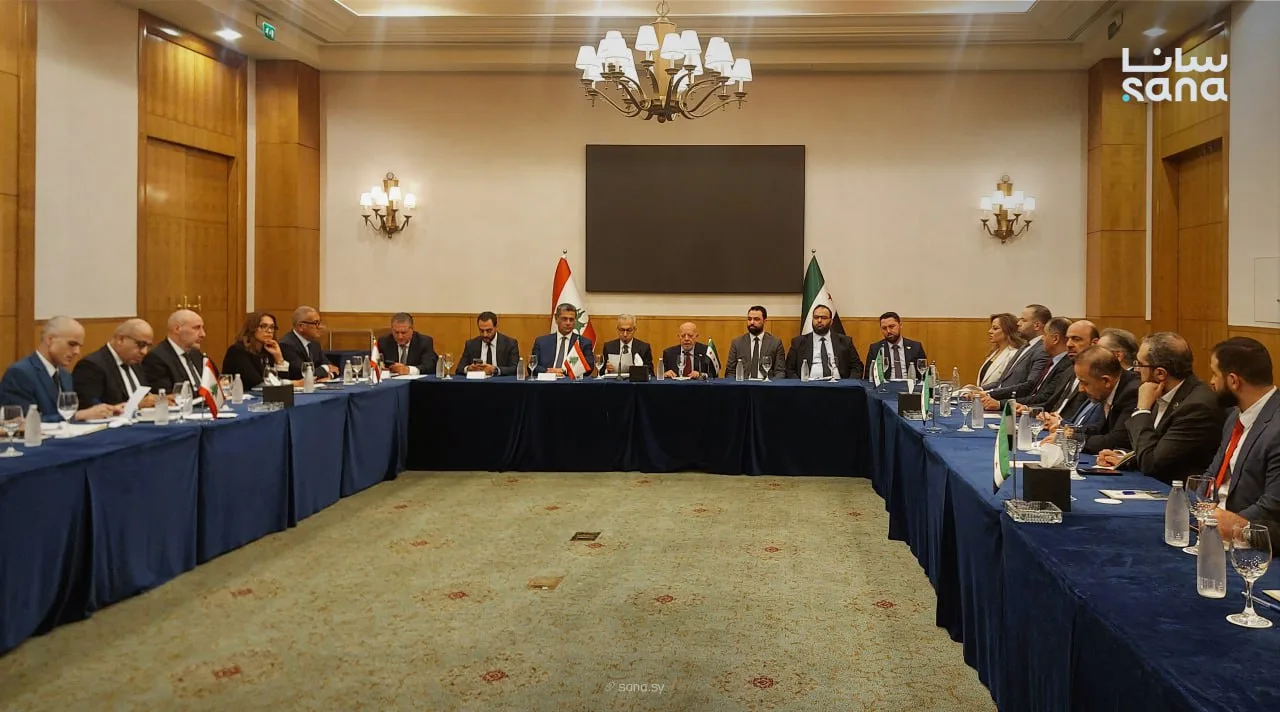
On July 16, Lebanese Economy Minister Amer Bisat told Reuters that Lebanon and Syria would begin reviewing trade agreements in the coming months, some of them decades old, with the aim of reviving economic relations between the two countries after the ouster of former President Bashar Assad in 2024.
Bisat said the two countries could ultimately move toward concluding a broader bilateral trade agreement, a day after he held talks with his Syrian counterpart in Damascus.
Bisat added: “That economic relationship needed a reset, and it has the potential to become the most important bilateral relationship for both countries.”
Despite these legal frameworks, official trade fell sharply from about $704.9 million in 2013 to around $202.5 million in 2024, a decline estimated at roughly 159%. This drop pushed both countries toward entrenching patterns of “informal dependence” and parallel economies to meet essential market needs.
The following table shows the official and historical trade indicators that reflect this mutual structural dependence:
| Official trade indicator between the two countries | Value in US dollars | Type of goods |
| Average annual Lebanese exports to Syria (past 10 years) | $172,464,000 | Concentrated in food products, bananas, citrus fruits, machinery, and plastic products |
| Average annual Lebanese imports from Syria (past 10 years) | $117,464,000 | Concentrated in agricultural products, plants, glass, detergents, and clothing |
| Peak Lebanese exports to Syria (2013) | $523,600,000 | Included $318 million in petroleum derivatives as a result of sanctions imposed on Syria at the time |
| Peak Lebanese imports from Syria (2010) | $339,400,000 | Led by cement and basic construction materials as the أبرز imported goods |
| Trade surplus in Lebanon’s favor (2022) | $245,500,000 | Resulted mainly from exports of plastics and plastic products worth $279 million |
| Lebanese trade deficit with Syria (2023) | $34,100,000 | The surplus shifted in Syria’s favor due to logistical changes and import obstacles |
These figures make clear that the two countries’ economic structures are complementary by nature; a structural shortage on one side is immediately offset by the other.
When Syria’s GDP contracted by a catastrophic 84% between 2010 and 2023, falling from $60 billion to just $17.5 billion, that was directly reflected in the stability of the Lebanese economy, which lost a large part of its traditional consumer market as well as sources of energy and cheap raw materials.
On this point, Minister Bisat told Reuters that the trade relationship between the two countries “should be measured in the billions.”
In this context, economist Mohammed al-Alabi believes Syria’s importance to Lebanon goes beyond the volume of direct trade, as it constitutes the main overland corridor for Lebanese exports heading to Jordan, Iraq and the Gulf states, making border stability a key factor in lowering trade costs.
Al-Alabi added in remarks to NoonPost that the Syrian market is particularly important for the food, pharmaceutical, packaging materials, engineering services, education and health sectors, in addition to offering Lebanese small and medium-sized companies an easier and less costly entry point compared with the more competitive Gulf markets.
For his part, international law expert Dr. Elie Hatem said the relationship between Lebanon and Syria goes beyond geography and politics, as the two countries form an interconnected historical, social and economic space, making the idea of a rupture between them unrealistic. The overlap between the two societies, the intertwining of interests, and each side’s reliance on the other’s assets impose a model based on cooperation rather than isolation.
Hatem, a former adviser to Lebanese political figures, considers the main challenge facing the two countries to be their ability to build a common framework for managing these differences and turning weaknesses into opportunities for integration. Syria possesses geographic depth, resources and productive capacities, while Lebanon has extensive experience in trade, services and the financial sector, making integration between them an economic option more than merely a political rapprochement.
Ports: Beirut and Tripoli as vital gateways for Syria
During a television interview conducted by journalist Tony Khalife on Al Mashhad channel with Syrian President Ahmed al-Sharaa in June 2026, the Syrian president outlined a new strategic vision based on redefining shared geography. He stated clearly that Beirut was and would remain Damascus’ natural maritime facade, while the Port of Tripoli constitutes the main and vital logistical outlet linking Homs and central Syria to the Mediterranean Sea.
The Port of Tripoli is a promising model for integration between the two countries. The Lebanese state has invested about $300 million over the past 18 years to modernize it and develop its facilities, making it fully prepared to provide advanced logistical services to Syria and regional transit trade.
Benjamin Feve, senior researcher and analyst at Karam Shaar Advisory believes Lebanon’s ports can play a complementary role alongside Syrian ports during the recovery and reconstruction phase, given the geographic and economic overlap between the Syrian coast and Lebanon.
Feve told NoonPost that the massive need to import construction materials and equipment currently exceeds the capacity of the Port of Tartus, making temporary use of the Port of Beirut, alongside Tartus, a practical option to facilitate import, export, storage and logistics operations and ease pressure on Syrian ports.
Likewise, economist Mohammed al-Alabi believes the Port of Tripoli has the assets to qualify as a gateway for Syria’s reconstruction, but that this requires completing an integrated logistics chain, beginning with developing roads and rail links to the Syrian interior, creating a fast customs corridor, and digitizing procedures between the two countries.
According to al-Alabi, it is also necessary to provide logistics zones and warehouses, enhance the port’s capacity to handle heavy cargo, and offer insurance and financing services along with stable fees.
The Lebanese government is currently preparing vital plans to revive and activate the railway network linking the Port of Tripoli directly to the Syrian border, which would help significantly reduce the cost of overland truck transport and facilitate the smooth flow of goods.
The economic benefit of transit operations through these ports is also enormous for Lebanon. Transit goods are not subject to customs duties and are not consumed locally; rather, they feed the national economy through direct revenues from ship docking and unloading fees, customs broker charges, maritime agents’ fees, in addition to the earnings of Lebanese trucks, which control 90% of the transport of these goods.
The Lebanese economy’s revenues from unloading and transporting a single transit shipment of 5,000 tons of iron are estimated at no less than $100,000. This activity takes on added importance in light of recent privatization contracts led by the Lebanese government to operate and supply three advanced scanners for the ports of Beirut and Tripoli at a cost of $9 million in cooperation with the French company CMA CGM — the same company that, on April 1, 2025, signed a 30-year, 230 million euro contract with Syria’s General Authority for Land and Sea Ports to manage and develop the Port of Latakia.
The Syrian market: Between official trade and smuggling networks
The official trade balance and trade exchange between Syria and Lebanon received a strong boost in 2025. Lebanese customs records show that Syria ranked first in imports of goods from Lebanon during the first seven months of 2025, with a value of $103.434 million, while the value of official Syrian exports to Lebanon during the same period reached $70.437 million, recording a trade surplus in Lebanon’s favor of $32.997 million.
This increase represents significant growth of 68% in Lebanese exports to Syria in 2025, with animal, agricultural and food products accounting for about 44% of total exports exchanged between the two sides, worth $75 million for each side.
Yet these official figures represent only a tiny part of the reality of actual trade flows. Along the Syrian-Lebanese border, a vast informal economy prevails, fueled by chronic and active smuggling through roughly illegal crossing points scattered across rugged mountainous areas.
According to an investigation conducted by the ARIJ platform in 2025, discussion over the past 10 years had centered on the existence of more than 130 illegal land crossings between Lebanon and Syria.
A source in the Lebanese army told the platform that the entire border is effectively one crossing, comprising hundreds of shifting points for smuggling operations.
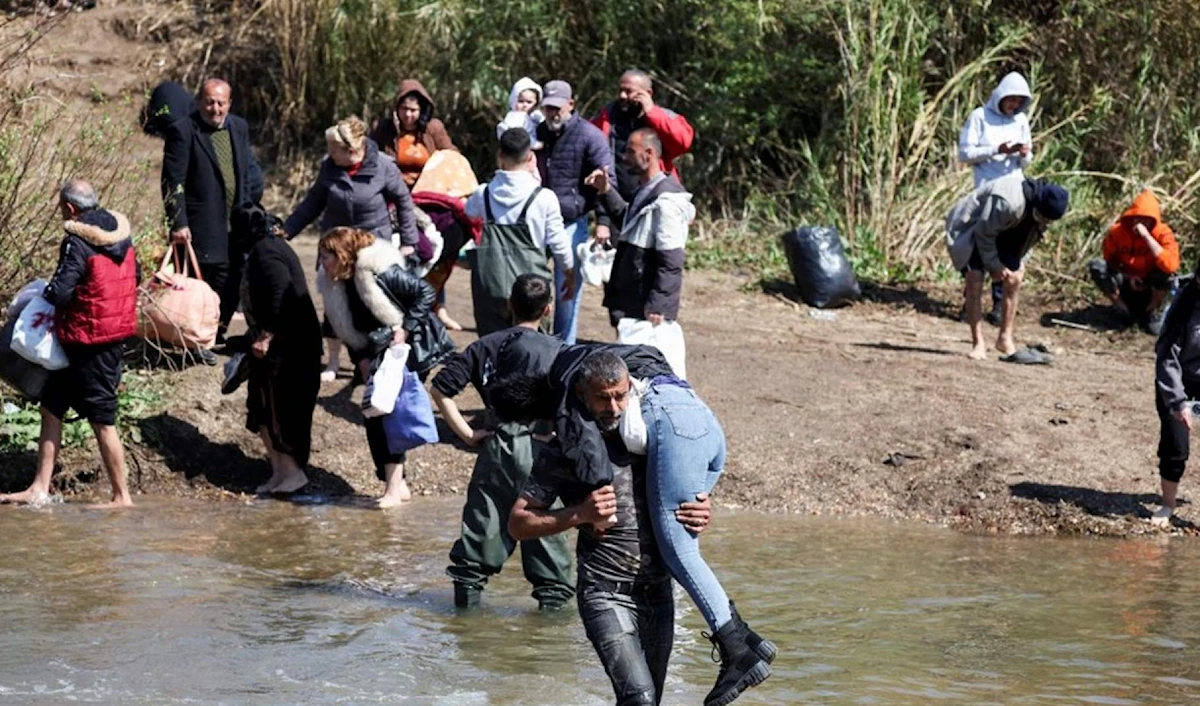
According to Lebanon’s MTV channel, the number of irregular crossings between the two countries reached 373 in 2025.
The scale of this customs evasion is evident in Lebanon’s official indicators. In 2024, customs revenues collected for the treasury amounted to only $548 million on massive total imports of between $16 billion and $17 billion, representing just 3.3% of imports, even though the lowest officially applied customs duty is 5%.
Although customs collection improved in 2025 to reach $457 million in the first four months of the year — with expectations of reaching $1.4 billion, or 7%, on imports estimated at $20 billion — smuggling networks continue to drain both economies.
Smuggling across the border is active for several reasons, including subsidy policies for goods and fuel and price differences between the two countries.
Smuggling networks use complex methods, including human smuggling at low cost, along with the use of mules capable of climbing rugged mountains to transport electrical appliances, electronics, cleaning supplies, medicines and clothing between the two sides.
Syrian labor in Lebanon and the Lebanese labor market gap
Syrian labor has formed the lifeblood of many vital economic sectors in Lebanon, especially in construction, seasonal agriculture and services.
Before the outbreak of the Syrian revolution in 2011, Syrian labor represented a flexible and semi-stable pattern of movement, with the number of Syrian workers in Lebanon ranging between 500,000 and 700,000, moving seasonally to meet the needs of harvest collection and construction projects. Some Amnesty International estimates indicate that their number reached about half a million workers in 2000.
As the humanitarian crisis worsened and displacement intensified after 2011, these figures doubled sharply as huge numbers of refugees entered the unregulated labor market in an attempt to escape harsh living conditions. These workers faced severe legal and social conditions, including municipal restrictions, curfews, and declining ability to obtain official work permits.
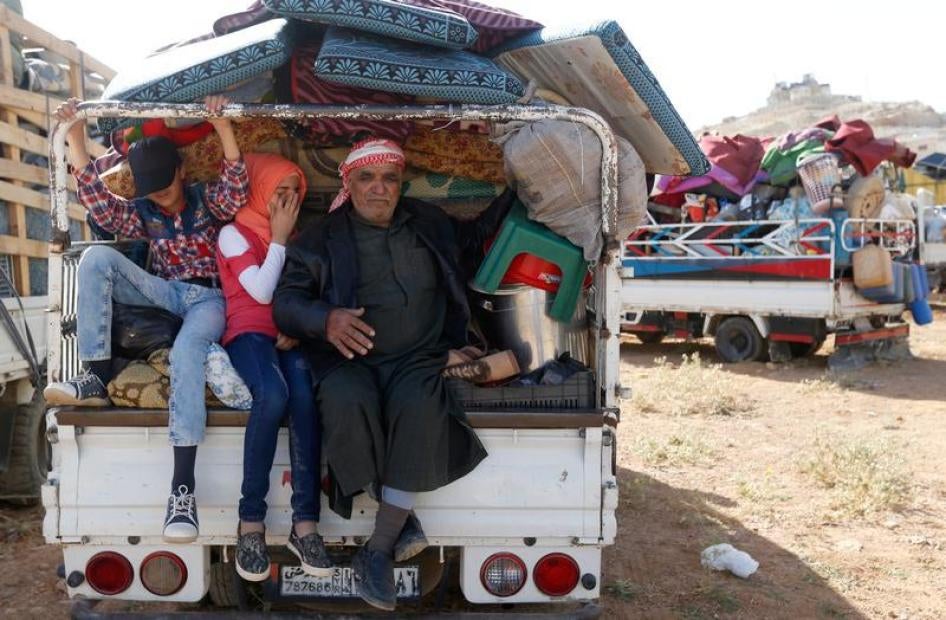
Nevertheless, this presence continued to meet broad local demand for young, low-cost labor.
But the geopolitical shift and the fall of the former Syrian regime in December 2024 led to a major demographic turn, as the voluntary return of Syrian nationals to their country accelerated at an unprecedented pace.
Official data issued by Syria’s General Authority for Border Crossings and Customs indicate that more than 369,000 Syrian citizens voluntarily returned from Lebanon between the fall of the regime and the end of May 2026, while local reports confirm that the total number of returnees during 2025 surpassed half a million refugees.
This heavy reverse migration created an employment gap and a sudden shortage of labor in Lebanon, negatively affecting production rates in factories, workshops and seasonal agricultural activities such as the potato harvest in the Bekaa and Akkar.
This shortage prompted Lebanon’s General Security Directorate to provide additional facilities to regularize the status of foreign labor, organize Syrian labor, and extend the deadline for violators to leave without fines until July 30, 2026, in order to address the interconnected labor market crises in both countries.
Syria’s reconstruction as a strategic opportunity for Lebanon
The reconstruction of Syria represents the greatest challenge and the most prominent economic opportunity for the entire Levant. Structural damage caused by the war affected about 40% of homes and housing units, which were totally or partially destroyed.
According to World Bank reports , damage to physical infrastructure alone — electricity networks, water, roads and public facilities — accounts for about 68% of the country’s total material losses.
Reflecting the opportunities available in Syria after the fall of the ousted Assad regime, President Ahmed al-Sharaa announced on Aug. 17 that Syria had attracted $28.5 billion in foreign direct investment in the first seven months of 2025, with expectations of reaching $100 billion, and that Saudi companies had begun preparing to inject billions of dollars into promising development partnerships.
The historic turning point came on Dec. 17, 2025, when the US Senate, followed by the House of Representatives, voted to repeal Caesar Act sanctions imposed on Syria as part of the 2026 Defense Department budget, referring the legislation to President Donald Trump, who signed it into law.
That repeal opened the closed doors to the return of Arab and international capital and direct investment for Syria’s reconstruction without fear of secondary sanctions.
In connection with the above, Lebanon’s private sector and commercial companies have a golden opportunity to participate effectively in this massive undertaking and benefit from its returns through several key beneficiary sectors , such as engineering, contracting and construction, banking and finance, and industry and exports.
These preparations were crowned by the announcement from Lebanese Economy and Trade Minister Amer Bisat and the head of Lebanon’s economic bodies, Mohammad Choucair, of the launch of the “Lebanese-Syrian Higher Business Council.”
The council aims to institutionalize cooperation between the private sectors in both countries, facilitate the passage of goods across the border, and attract joint capital for manufacturing, tourism, energy and agriculture, paving the way for building real and comprehensive economic integration.
On reconstruction opportunities, economist Mohammed al-Alabi told NoonPost that Syria’s reconstruction represents a major economic opportunity for Lebanon, but Lebanon’s ability to benefit from it remains limited by internal political and economic factors.
Al-Alabi believes Lebanon faces strong competition from Turkey, the Gulf states, China and Europe, in addition to internal challenges linked to the banking crisis, energy costs and weak infrastructure. It therefore needs an approach based on integration rather than competition, through developing trade and transit agreements, improving the performance of ports and customs, and providing a transparent investment environment.
In al-Alabi’s view, the greatest opportunity lies not in exporting specific products to Syria, but in building an economic system linking Lebanese ports to the Syrian and Iraqi markets, and combining Lebanese expertise and services with Syria’s location and Iraq’s resources, thereby turning reconstruction into a regional development project.
Will the economy once again become a gateway to political influence?
Despite promising investment opportunities and positive statements from Syria’s new leadership under Ahmed al-Sharaa about the desire to build relations based on equal economic interests, respect for Lebanon’s sovereignty, and rejection of any negative interference or security domination, the history of economic relations between the two countries remains burdened by fears of politicization and transformation into a tool for imposing political influence.
Historically, Syria’s geographic position gave it major influence over Lebanese overland trade, as Lebanon’s exports to Arab markets depended on passing through Syrian territory. During various phases since the Lebanese civil war, Lebanese exporters complained about the fees and administrative procedures imposed on trucks, arguing that they raised transport costs and at times became linked to political tensions between the two countries, while Damascus justified them on regulatory and sovereign grounds.
In his recent remarks to Reuters, Lebanese Economy Minister Amer Bisat said the process of reviewing agreements between the two countries would address logistical obstacles to overland transport, in addition to dealing with customs duties that are “not unified.”
Bisat added: “Lebanese exporters pay export fees, while Syrians do not.”
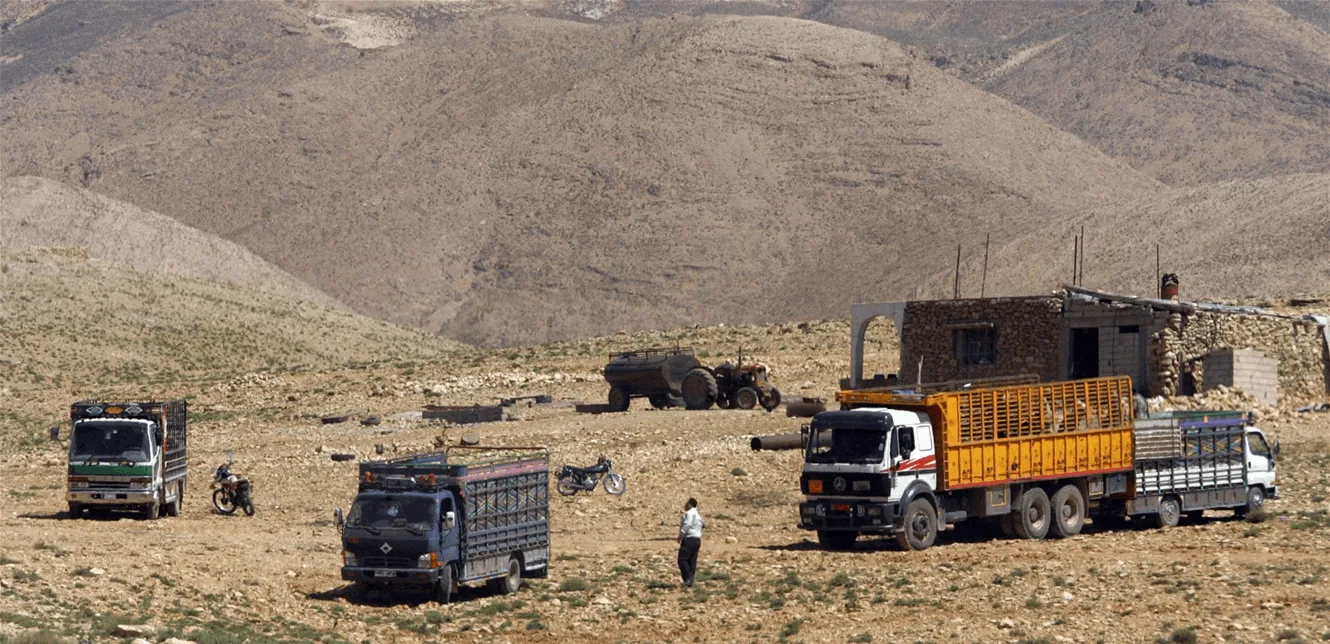
To avoid repeating these experiences and to build real and sustainable economic integration, the two countries must find radical solutions to a set of administrative, regulatory and structural obstacles that still hinder the growth of trade exchange and push a large part of it toward the informal sector.
On this issue, Dr. Elie Hatem believes that developing the relationship between Lebanon and Syria requires moving from a framework of circumstantial relations to the institutionalization of economic cooperation through clear legal and regulatory rules, arguing that the two countries possess complementary assets that can form the basis for shared growth.
Syria, Hatem told NoonPost, has an industrial base and natural resources, particularly in the oil and gas sectors, while Lebanon has historical expertise in trade, business and services, making integration between the two countries’ capacities an important economic opportunity.
On the economic side, Hatem stresses that Lebanon and Syria, by virtue of geography and history, form an interconnected system, with each possessing elements that complement the other, and that developing resources and benefiting from shared capacities can serve both peoples. He believes building this partnership requires overcoming political anxieties and entrenching the idea that cooperation and integration are a source of strength.
Hatem cites the European experience, particularly the path of rapprochement between France and Germany after decades of conflict, when shared economic interests became the foundation for building a broad regional project. In his view, Lebanon and Syria can benefit from this experience by transforming economic relations from an arena of dispute into a framework for cooperation and shared development.
Meanwhile, political economy researcher Ayman al-Desouki does not believe the chances of repeating the previous model of tutelage in its former form are realistic, and argues that economic integration requires a foundation of cooperation and trust, not hostility, negative competition and tutelage.
Al-Desouki therefore told NoonPost that any Syrian role in Lebanon would be consistent with considerations of cooperation, joint coordination and mutual respect, and that since the fall of the Assad regime, serious steps have been taken by both countries to dismantle the illicit activities of the informal economy between them.
There is no doubt, according to al-Desouki, that the matter depends on an institutional partnership that requires time to complete, perhaps relying on the political will of both countries’ leaderships and on regional and international support to achieve this integration, while confronting the forces harmed by it in order to contain or dismantle them.