







هذا التقرير متاح أيضًا بـ العربية
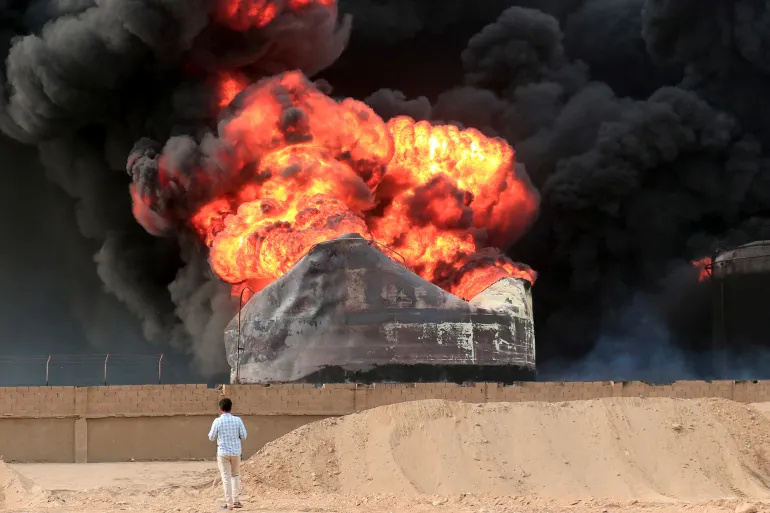
Renewed sporadic clashes and military movements along several axes in southern Hodeidah province on the western coast front have thrust the Yemeni scene back into focus, after years of reduced fighting driven by understandings linked to the Stockholm Agreement signed in 2018.
The renewed friction in contact areas came amid an exchange of accusations between government forces and the Houthi group over responsibility for the clashes, with no declared signs so far of any major shift in lines of control or of the fighting entering a new phase.
These developments carry particular significance because of Hodeidah’s military and economic position, and its connection to issues that extend beyond the local conflict, at a time when the region is witnessing escalating regional tensions. That raises questions once again about the nature of what is happening: Does it represent a continuation of the pattern of limited violations, or is it a sign of the fragility of the truce that has preserved relative calm in the province?
What happened in Hodeidah?
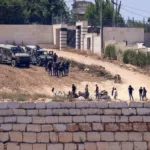
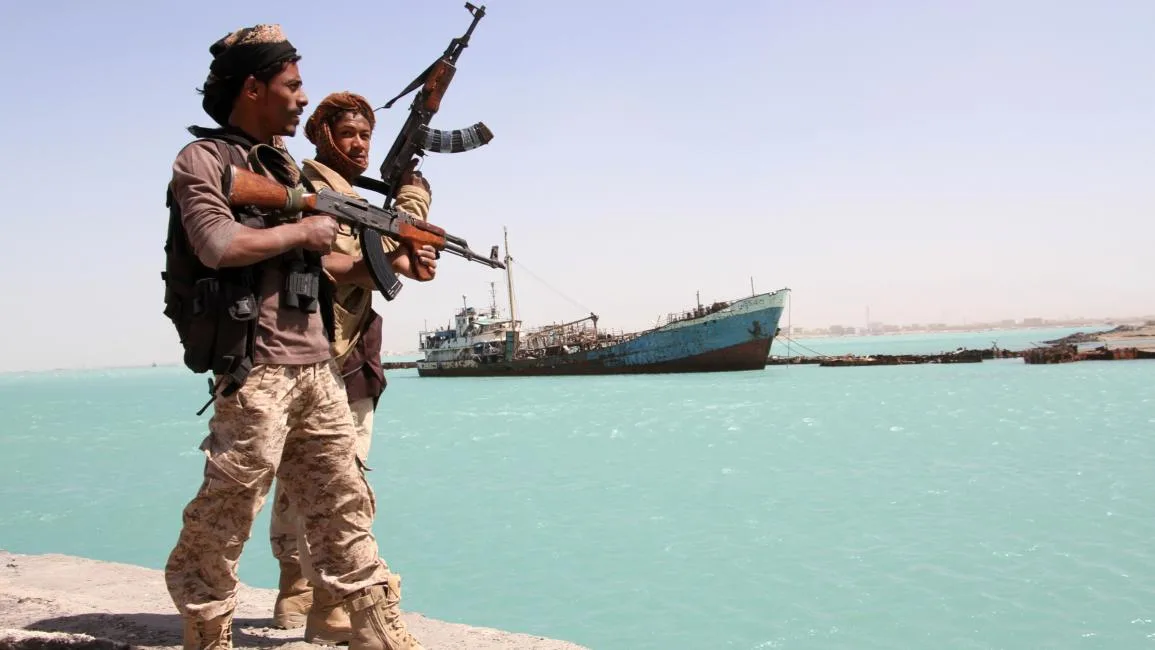
At the beginning of July 2026, the western coast fronts witnessed sporadic clashes and military movements in several contact areas south of Hodeidah province, amid an exchange of accusations between government forces and the Houthi group over responsibility for the outbreak of the confrontations.
Although no major changes in lines of control or geographic expansion of the fighting were recorded, the return of friction to a front that had remained quieter in recent years has once again highlighted the fragility of the status quo in the province.
A strategic front
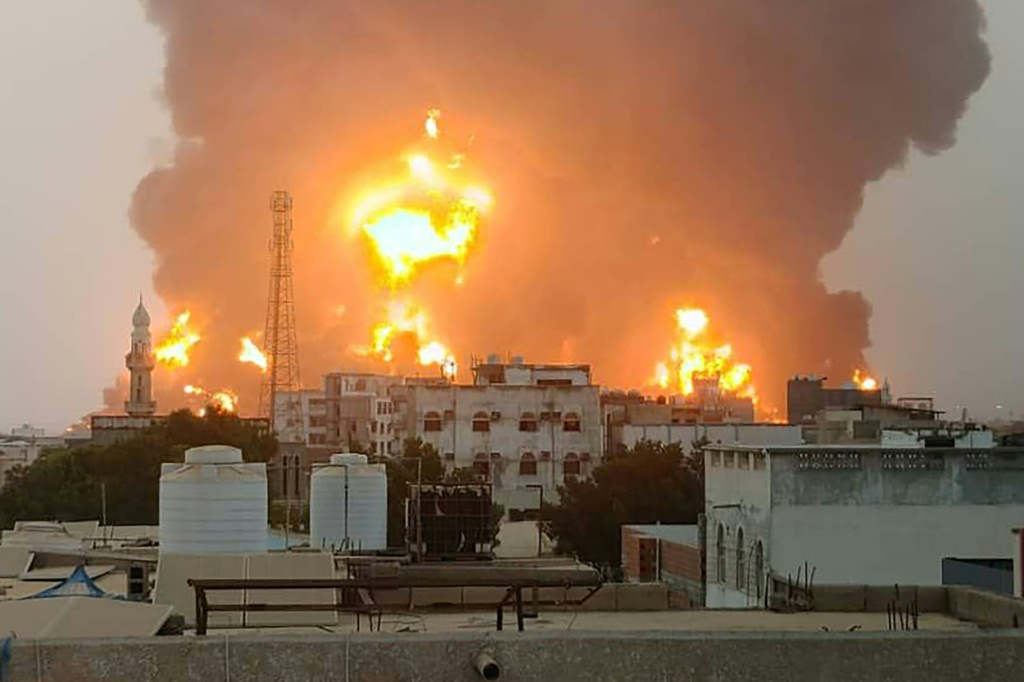
Hodeidah’s sensitivity cannot be understood without looking at its place in Yemen’s war. The province, located on the western coast, includes three main ports: Hodeidah, Salif and Ras Issa and represents one of the most important gateways through which commercial goods and humanitarian aid enter Yemen.
Since the Houthi group took control of the city in 2014, Hodeidah has become one of the most prominent flashpoints of the conflict. Its location overlooking the Red Sea gave it military and economic importance that extended beyond the province itself, making any battle there a matter of international concern because of its potential impact on the humanitarian situation and maritime security.
In 2018, the fighting escalated around the city after forces backed by the Yemeni government and the coalition advanced toward the outskirts of Hodeidah, amid U.N. warnings about the consequences of any military operation inside the city or near its ports for millions of Yemenis who depend on imports arriving by sea.
International pressure at the time pushed the parties toward the Stockholm Agreement, which halted large-scale fighting around the city and its ports, but did not end disputes over the province’s future.
A Fragile Agreement
The Yemeni government and the Houthi group signed an agreement Stockholm In December 2018, under U.N. auspices, it stipulated a ceasefire in Hodeidah province, the redeployment of forces in designated areas, and the establishment of a U.N. mechanism to monitor implementation of the agreement.
But the agreement was not a comprehensive political settlement to the Yemen war; rather, it focused primarily on preventing the collapse of the military and humanitarian situation in Hodeidah. Over time, implementation faltered because of disagreements between the parties over how to interpret its provisions and the mechanisms for carrying them out, while mutual accusations of violations continued.
As a result, the province remained in a state between war and peace: Major fighting stopped, but the security and political arrangements stipulated by the agreement were never fully completed.
The end of the mandate of the United Nations Mission to Support the Hodeidah Agreement (UNMHA) a new dimension to the scene, after the mission had remained in recent years an essential part of the monitoring mechanisms the agreement and curb the escalation.
Field Indicators
Despite the return of clashes and military movements, there are still no public indications of any change in the map of territorial control on the ground or of the confrontations shifting into a phase of large-scale military operations.
The current developments remain within the scope of the friction seen in frontline areas over the past several years. Their significance, however, lies in their timing, as they come amid a turbulent regional environment that could make any local escalation more closely tied to calculations that extend beyond Yemen’s internal arena.
It is believed Journalist and writer Abdullah DublahWhat is happening on the western coast cannot be separated from regional developments, he said, arguing that the recent military movements come within a broader context tied to the tensions gripping the region.
Doubla told Noon Post that the level of escalation in Hodeidah is closely linked to the course of the regional confrontation, explaining that any escalation between the influential powers in the region could be reflected across Yemen’s various front lines.
By contrast, Brig. Gen. Abdulsalam Amer, military and strategic expert At the Ministry of Defense of the Sanaa government, the recent developments do not represent a new shift in the course of the front, but rather come as part of the continued mutual violations since the agreement was signed.
Amer told Noon Post that the ceasefire agreement had not, in his view, seen full compliance from either side, considering the recent movements to be part of attempts to project strength and impose facts on the ground.
UN role
The United Nations stresses that preserving calm in Hodeidah is a priority to prevent the situation from sliding into a broader confrontation, particularly given the governorate’s sensitivity and its connection to the humanitarian situation and security in the Red Sea.
The Office of the UN envoy to Yemen told Noon Post that the latest developments in Hodeidah do not change the United Nations’ objective of preventing the circle of violence from expanding, noting that communication with the parties is continuing through military channels to contain tensions.
The office explained that since the truce announced in 2022, Yemen has experienced a period of relative calm along the front lines, despite the continued occurrence of limited incidents, and that it is continuing to monitor developments and work to create the conditions for reaching a comprehensive ceasefire and resuming the political process under UN auspices.
This comes after the mandate of the United Nations Mission to Support the Hodeidah Agreement (UNMHA) ended. Over the past several years, the mission played a role in monitoring implementation of the agreement and tracking ceasefire violations, raising questions about the future of international mechanisms concerned with preventing escalation in the governorate.
Regional calculations
The future of the western coast cannot be separated from the regional environment surrounding Yemen. Hodeidah’s location on the Red Sea ties it to issues that go beyond the internal conflict, from maritime security to the region’s political and military balances.
Brig. Gen. Abdulilah Abdulwasi al-Khadr, a political analyst, believes that developments in Hodeidah largely reflect the nature of regional balances more than they represent a shift in the balance of power inside the governorate.
Al-Khadr told Noon Post that the course of war and de-escalation in Yemen has become tied to external influences affecting the various parties, noting that what Hodeidah is currently witnessing does not rise to the level of a full-scale battle, but rather comes within the framework of pressure and movements linked to the regional scene.
He added that any broad military shift on the western coast will remain tied to regional and international understandings, not to a unilateral battlefield decision, stressing that the future of the front cannot be read in isolation from the trajectory of the Yemeni crisis as a whole.
Humanitarian cost
As tensions persist in contact-line areas, their effects quickly become apparent for residents living near the front lines, as any increase in violence complicates civilian movement, affects economic activity and makes aid delivery more difficult.
Journalist and rights advocate Mohammed al-Shali told Noon Post that renewed tensions on the western coast are affecting residents’ lives, particularly in transportation, fishing and agriculture, while also increasing the challenges facing the delivery of humanitarian aid to areas near the front lines.
He added that continued clashes could drive more families to flee toward the areas of Khokha and Mokha, amid limited services in displacement camps, warning that any widening of the confrontations could worsen the humanitarian situation in the governorate.
He pointed out that land mines and unexploded ordnance remain among the most prominent threats facing civilians on the western coast, calling for the protection of civilian areas and for ensuring the continued delivery of aid and basic services.
Testing the truce
So far, Hodeidah does not appear to be on the verge of a return to the large-scale fighting that preceded the Stockholm Agreement. But recent developments have shown that the relative calm in the province remains tied more to the parties’ ability to manage the pace of confrontation than to any fully realized political settlement.
The province, which international understandings succeeded in keeping outside the scope of full-scale war, has not yet entered a phase of stable peace. Military, humanitarian and regional considerations intersect there, making any shift in the calculations of local actors or those surrounding the Yemen file a factor capable of shaping its future.
While current indicators do not point to an imminent return of major battles, the continued friction is putting Hodeidah’s truce to a new test: its ability to withstand mounting pressure and preserve the space that has kept the province from sliding into another round of war.