


هذا التقرير متاح أيضًا بـ العربية
On July 9, Palestinian President Mahmoud Abbas issued a presidential decree setting Saturday, Nov. 28, 2026, as the date for elections to the Legislative Council in East Jerusalem, the West Bank and the Gaza Strip. It is the second decree related to elections in 20 years, and perhaps the first that will actually be implemented, after he backed away from holding them in 2021.
Abbas’s decree comes at what is arguably the most dangerous phase for Palestinians in terms of existence, identity and land. The Gaza Strip has been subjected to a continuing war of extermination for three years, claiming the lives of more than 71,000 Palestinians, while nearly 2.1 million Palestinians in the enclave have been displaced, 90% of whom are now living in tents, in addition to 36,000 Palestinians in the West Bank as a result of displacement and annexation.
That is not all. Palestinians are also suffering from the continued division, the absence of national consensus on the shape of the next phase and its representation, while the occupation places obstacles before the participation of Palestinians in Jerusalem. Arab states and UNRWA reject the participation of Palestinians in their areas, and Abbas has avoided specifying a date for presidential elections, even as measures to annex territory and undermine the Palestinian Authority and its legitimacy inside and outside Palestine escalate under the current Israeli government, in parallel with support from the Abraham Accords states.
This accumulation of crises makes the timing of the presidential decree akin to opening a Palestinian Pandora’s box, with all the sensitive files it contains files that Palestinian elections are unlikely to resolve or overcome. That raises doubts and questions about the timing of the decree, the prospects of holding elections, and even the priority of holding them under these circumstances.
Jerusalem and Gaza: The first and most complex files
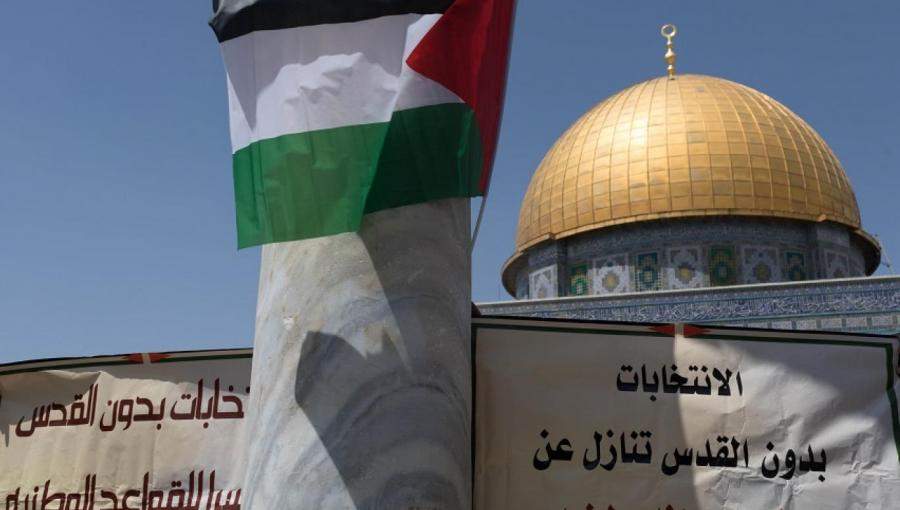
In 2021, four months after Palestinian President Mahmoud Abbas announced his intention to hold comprehensive legislative and presidential elections, he reversed course, citing the obstacles that “Israel” placed before the participation of Palestinians in East Jerusalem in the Palestinian elections — in voting, candidacy and campaigning — saying at the time: “No elections without Jerusalem.”
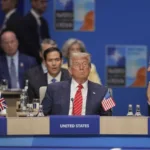
Today, five years later, Israeli restrictions on Jerusalem and its residents remain in place and have increased significantly. Dozens of Palestinian institutions have been shut down, in addition to UNRWA institutions, while Palestinian schools and educational institutions have been targeted. Meanwhile, President Donald Trump’s declaration of “united Jerusalem as Israel’s capital” effectively settled, in American and “Israeli” terms, the status of Jerusalem in favor of its occupiers.
It does not appear in any way whatsoever that the current “Israeli” government, or its parties feverishly competing in the upcoming election race, would be interested in returning Jerusalem and its Palestinian identity to the Authority through the ballot box, nor that the US administration or the European Union would exert pressure of any kind, or devise a voting mechanism that circumvents the occupation and provokes its anger in favor of giving Palestinians at least a small sense of democracy and political practice, even if that feeling is part of the Oslo Accords themselves.
Yet the absence so far of any signs of real international movement, or Palestinian movement in that direction, makes the issue of Jerusalem and its residents a ticking time bomb capable of blowing up the entire electoral process, or of being used once again as a pretext for postponement and cancellation, exactly as happened five years ago.
By contrast, elections in the Gaza Strip appear as a distortion of the reality of rubble and displacement that Palestinians there have been living through for three years. Any electoral process faces compounded challenges, beginning with the continuation of the genocide at a slower but daily pace, the faltering reconstruction process because of “Israeli” conditions, and the destruction of most government and official records related to population registries and who is entitled to vote and run, in addition to the absence of any qualified and secure infrastructure for conducting the electoral process, from ballot boxes and supervisory and monitoring committees to data collection and verification.
In light of these realities, holding legislative elections in Gaza on a broad scale, under the military occupation of large parts of the enclave — including the northern, central and southern governorates — amid population movement between governorates, and with “Israeli” efforts to impose a new political reality based on a civil administration or Palestinian figures committed to security arrangements that ensure Gaza will not again become a future source of threat, appears uncertain and fraught with doubts and complications.
While the experience of holding local elections in the municipality of Deir al-Balah earlier this year, in parallel with local elections in the West Bank, has been cited as a model for legislative elections, the scale of destruction in Deir al-Balah is the lowest in the Strip, and its institutions are almost the only ones still standing.
In this reality of humanitarian and political collapse, it is difficult to imagine fair and transparent elections being held in a territory that lacks the most basic conditions of normal life, let alone in the absence of a unified Palestinian body, accepted locally and internationally, to manage this thorny file.
The absence and presence of national consensus and international support
In a report, Saudi Arabia’s Asharq Al-Awsat revealed on July 11 that Arab and international contacts had preceded the presidential decree, including an exchange of messages between leaders of Fatah and Hamas, monitored by some Arab states, especially Egypt, aimed at carrying out reforms in the Palestinian body politic and strengthening its democratic path through comprehensive elections.
This track explains the absence of any official statement from Hamas, or any positive or negative position from it toward the presidential decree. It also largely explains the silence of most Palestinian factions, especially leftist ones such as the Popular Front, while at the same time hinting at the driving force behind the decree, opening the possibility that elections may indeed be held as an entry point to a new Palestinian consensus that overcomes the stumbling blocks of division.
At the same time, the historical symbolism of the decree is not lost on anyone. The last legislative elections in the Palestinian territories were held in 2006, when Hamas won, outperforming the previously dominant Fatah movement, after which sharp disputes erupted between the two movements and ended in the geographic and political division that persists to this day.
As for the presidency, it has not seen any vote since 2005, leading to a gradual erosion in the legitimacy of elected Palestinian institutions. Yet that erosion did not prompt the president to indicate a specific date for presidential elections; he merely set a preliminary timing in the first quarter of 2027. The same neglect extended to elections for the Palestinian National Council abroad, raising questions about the completeness of the declared democratic process.
On the other hand, this decree cannot be read in isolation from a recent precedent. In 2021, Abbas issued a similar decision setting a date for elections, only to cancel it later on the pretext that the Israeli occupation refused to allow them to be held in occupied East Jerusalem. Palestinian forces inside and outside Fatah, however, revealed that the decision was driven by fear of the ballot-box results and by what the preparation phase had exposed in terms of splits within Fatah and a decline in its current in a number of traditional strongholds, raising the possibility that it would fail to decisively control the entire political scene.

Before the current date was announced, substantial amendments were introduced to the election law, including raising the number of Legislative Council members from 132 to 200, lowering the candidacy age from 28 to 23 to broaden youth participation, reducing the electoral threshold to 1% to facilitate the representation of smaller forces, and requiring each list to include at least one woman among every three candidates.
Those amendments were rejected by a number of Palestinian factions, including Hamas, which considered them reflective of a desire to dominate the political system and to entrench a unilateral approach to Palestinian national decision-making, as they amount to an attempt to tailor the electoral process to the measurements of the current Authority leadership.
The core dispute over the new legal amendments does not concern the candidacy age or the percentage of women, but rather the requirement to commit to the program of the Palestine Liberation Organization and the signed international agreements. That is a condition Hamas is unlikely to accept in the foreseeable future unless it is part of a comprehensive national settlement that guarantees its participation in the institutions of the political system, foremost among them the PLO itself, while also assuring it that the crisis of the 2006 elections will not be repeated, when the electoral system theoretically opened the door to Hamas while the accompanying political conditions effectively shut it.
Among those rejecting the electoral amendments is a coalition of Palestinian civil forces and institutions, which called for them to be reversed on the grounds that they undermine the principle of pluralism and citizens’ right to choose freely, while also calling for simultaneous presidential and legislative elections on the same day rather than separating them, in accordance with the Basic Law.
Against this declared rejection, leaks point to consultations within Fatah itself to form a unified electoral list that includes figures close to the current of imprisoned leader Marwan Barghouti and others who have recently been marginalized and excluded, indicating that the division is not limited to the historic dispute between Fatah and Hamas, but extends to deeper internal struggles over who has the right to represent the movement itself.
This gains importance in light of other leaks about the intention of imprisoned leader Marwan Barghouti, who has been held in Israeli prisons for about 25 years, to enter the presidential race, especially since previous opinion polls showed him ahead of any potential rival. Meanwhile, it is rumored that the Palestinian president intends to make a new legal amendment regarding the elections that would return the number of Legislative Council members to 132, as it was previously.
They would be joined by 68 members to be agreed upon in the National Council from within the occupied Palestinian territories, after he had previously issued a decree raising the number to 200 members.
If the anticipated legal amendment is adopted, and given the poor relationship between the Authority leadership and Barghouti, then not appointing him to the National Council — as expected — would block his path to entering the National Council or the Executive Committee and thus to the presidency of the PLO.
To a large extent, Barghouti’s intentions, the internal struggles and the opacity of the political system are enough to justify leaving the presidential elections suspended without a specific date or explicit legal commitment. That makes linking the date of the presidential election to the “first quarter of next year” more like a safety valve that allows the Palestinian decision-maker to maneuver or postpone again if political calculations require it.
Internationally, the European Union officially welcomed the holding of Palestinian elections, stressing their importance in strengthening the democratic path. In fact, Brussels had earlier proposed a comprehensive multiyear support program worth up to 1.6 billion euros to bolster Palestinian recovery and resilience.
Yet this support was not always without conditions. Palestinian sources revealed that the European Union had set parameters related to the electoral process, including halting preparations for the Palestinian constitution draft, which the Authority had been working on since last August, with that track to resume after a new Legislative Council is elected; and not holding elections for the Palestinian National Council, as the legislative body of the PLO, while limiting the process to elections for the Authority’s Legislative Council on the grounds that this would be sufficient for recognizing the Authority’s reform steps.
The same sources also revealed additional amendments in the coming days, including raising the electoral threshold to 2% or 1.5%, along with reducing the percentage of women’s representation and the Christian quota in the Legislative Council.
Renewing legitimacy or excluding rivals
While Palestinian factions remain silent in defining their position on the upcoming elections, out of deference to their understandings with Arab states or as part of rearranging their ranks to participate, it is difficult at present to determine the course of the elections or the likelihood of their acceptance. What is certain, however, is that both opponents and supporters have reasonable arguments, though these are not yet tied to an organizing political umbrella.
While former Hamas lawmaker in the previous Legislative Council, Hussein Abu Kuwaik, wrote in a post on his Facebook page that holding legislative elections is an urgent necessity legitimate, existential and national in light of the democratic vacuum afflicting Palestinian society, which has stripped institutions of their legitimacy; the division since 2007, which elections may provide a gateway to ending; growing financial and administrative corruption in the Authority’s institutions; and difficult social and economic conditions.
In addition to what opinion polls have indicated — that 70% of Palestinians support holding elections — he also points to the importance of abolishing impossible candidacy conditions, achieving factional consensus, and securing international guarantees for holding them in Jerusalem and Gaza and protecting them from the overreach of the occupation.
Fatah leader, Ahmed Ghoneim, considered the election formula and its limitation to the Legislative Council as confirmation of a state of political confusion afflicting the Palestinian leadership, and that its decisions come under external pressure and foreign dictates. He even suggested that presidential elections may later be ruled out depending on what the legislative elections reveal.
By contrast, the director-general of the Jerusalem Center for Political Studies, researcher Oraib Rantawi, believes the upcoming elections represent an opportunity for the Authority to engineer the system by guaranteeing the outcome of the electoral process, so that it is decided in advance in favor of the Authority camp, through soft or hard power and through tools for subduing rivals and opponents and silencing protesters and dissenters.
Rantawi’s view extends to the upcoming elections as embodying an “engineering of Palestinian demography and geography,” especially since the ceiling for elections to the PLO’s National Council is constrained by an American veto. That means reducing the Palestinian people to the residents of the West Bank and Gaza, and refashioning the Authority to fit a new mold and what remains of the homeland.
Between those who see the elections as a necessary step to strengthen the democratic approach and restore the “legitimacy of the ballot box,” and as a form of geographic unity between the West Bank and Gaza — even without most of their parts and factions — and an opportunity to demonstrate a degree of unified governance over divided Palestinian geography, enabling the production of an elected Legislative Council that gives the Authority negotiating leverage and legitimacy in the face of international tutelage models proposed for the Strip, foremost among them the newly created “Peace Council” under UN Security Council Resolution 2803.
And those who see them as a window for reproducing Fatah after its Revolutionary Council, and for legitimizing the Palestinian political system on the side of one camp, without consultation with the rest of the Palestinian components, amid a prolonged division and a law and conditions intended to exclude the other side rather than integrate and contain it which would make the elections a cause of deepening the division rather than a bridge toward unity.
In conclusion, regardless of whether one sides with the opponent or the supporter, the certain or the skeptic, one question hangs in the modest Palestinian imagination, shaped by its ignorance of the future and its knowledge of its enemy and occupier a question that the current presidential decree seems hard-pressed to answer.
How can a Palestinian expect “Israel,” led by a government more hard-line than its counterparts in 2021 and 2006, to approve elections that strengthen national legitimacy and the unity of the West Bank and Gaza, unless it is reassured that their outcome will produce an Authority that is weaker and more submissive, or that they will deepen internal division rather than heal it?